Arista Networks and the Scope 3 of AI infrastructure
Roughly 3.6 million tCO2e in Scope 3 against 30k in Scopes 1 and 2. Nearly the entire footprint sits with suppliers and product use.
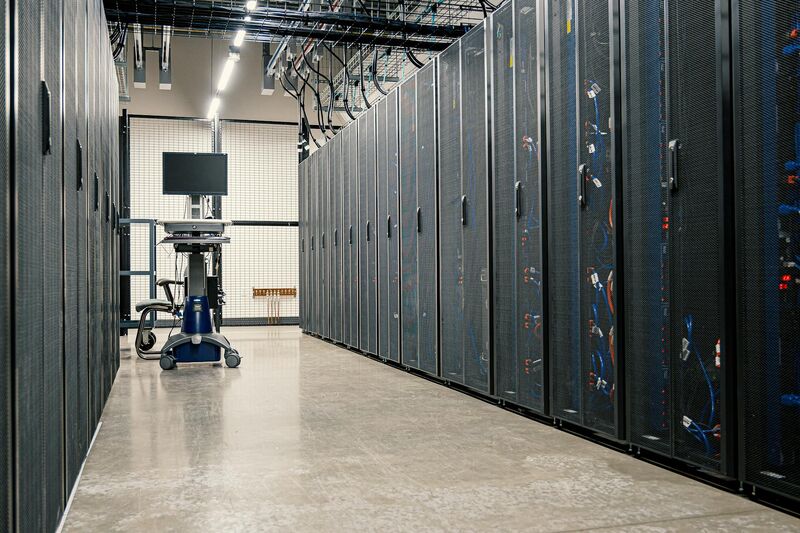
As AI infrastructure and hyperscale data centers expand, technology suppliers are facing increasing scrutiny over the Scope 3 emissions embedded in digital infrastructure.
For companies like Arista Networks, those value-chain emissions dominate the climate footprint.
According to Arista’s latest Corporate Responsibility reporting, the company’s Scope 3 emissions total roughly 3.6 million tCO₂e, compared with about 28,600 tCO₂e in Scope 2 and roughly 1,300 tCO₂e in Scope 1. In other words, nearly the entire footprint sits across suppliers and downstream product use.
That pattern is becoming common across networking and semiconductor ecosystems that power modern data centers.
As hyperscalers and enterprise buyers tighten climate requirements in procurement processes, and as disclosure expectations evolve under frameworks like TCFD and emerging Scope 3 regulations globally, suppliers increasingly need to demonstrate credible decarbonization pathways across their value chains.
For infrastructure companies supplying AI clusters, cloud networking, and large-scale data centers, this is quickly becoming both a sustainability issue and a competitive differentiator.
Arista’s emphasis on product efficiency, supplier engagement, and long-term net-zero targets reflects how technology firms are beginning to approach this challenge.
What approaches are proving most effective for reducing Scope 3 emissions across technology supply chains supporting AI infrastructure?
Arista Networks Kimm Jarden
Originally published on LinkedIn, 16 March 2026.
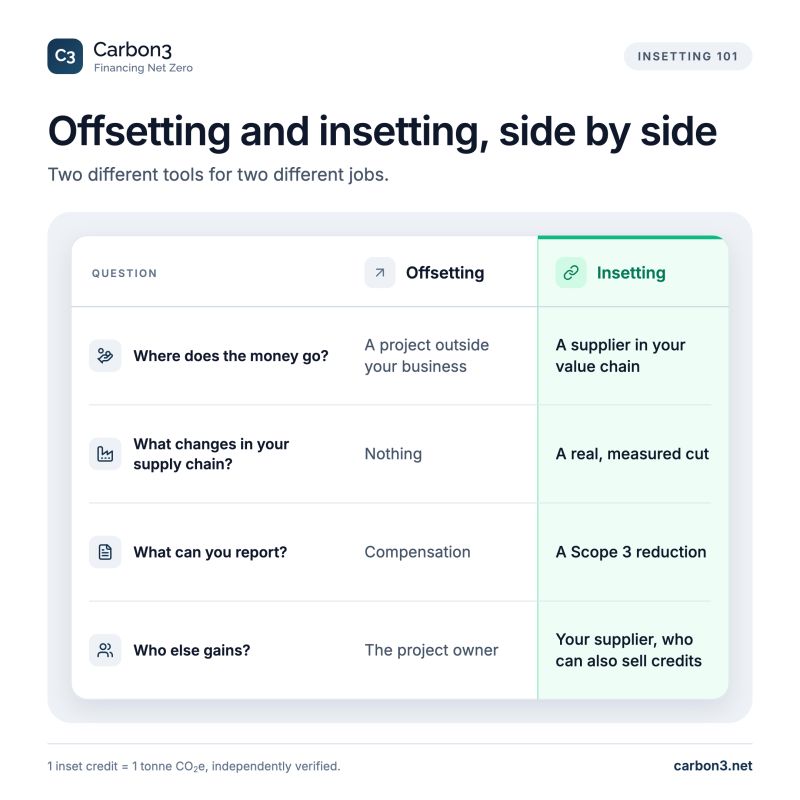
Insetting turns a sustainability expense into a supplier relationship
BASF and Boortmalt on barley emissions, Royal Canin and Soil Capital on 300,000 hectares of farmland, and ZEMBA on pooled buying power for low-emission shipping.
Read insight
DP World's Insetify: inset credits at commercial scale
Offering credits at no cost to customers is a deliberate market-building strategy. Create the buyer habit first; price discovery follows.
Read insight