Financing the cuts
inside the value chain.
Sector outlooks, policy signals and field notes on insetting, Scope 3 and the capital that moves them.
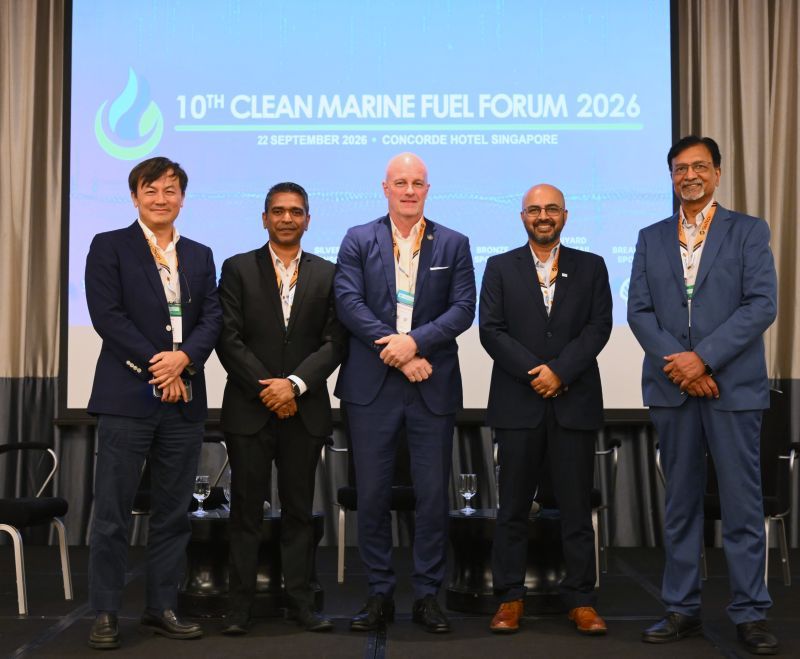
Ethanol isn't a better marine fuel. It's an earlier one.
At the Clean Marine Fuel Forum in Singapore, the case for ethanol rests on three tests: the molecules exist, the assets already work, and the economics clear today.
Read insight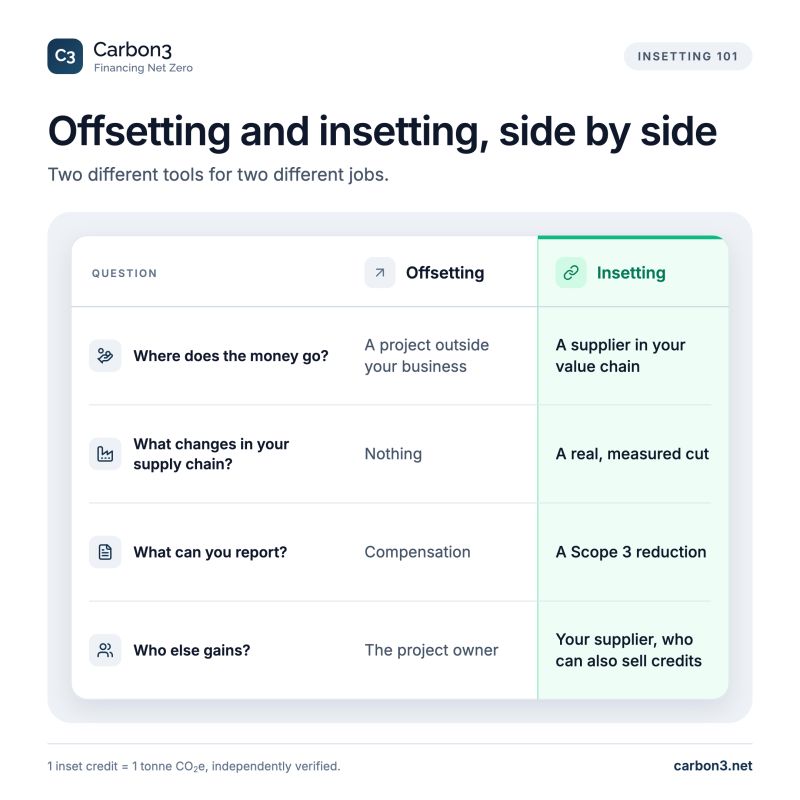
Insetting turns a sustainability expense into a supplier relationship
BASF and Boortmalt on barley emissions, Royal Canin and Soil Capital on 300,000 hectares of farmland, and ZEMBA on pooled buying power for low-emission shipping.
Read insight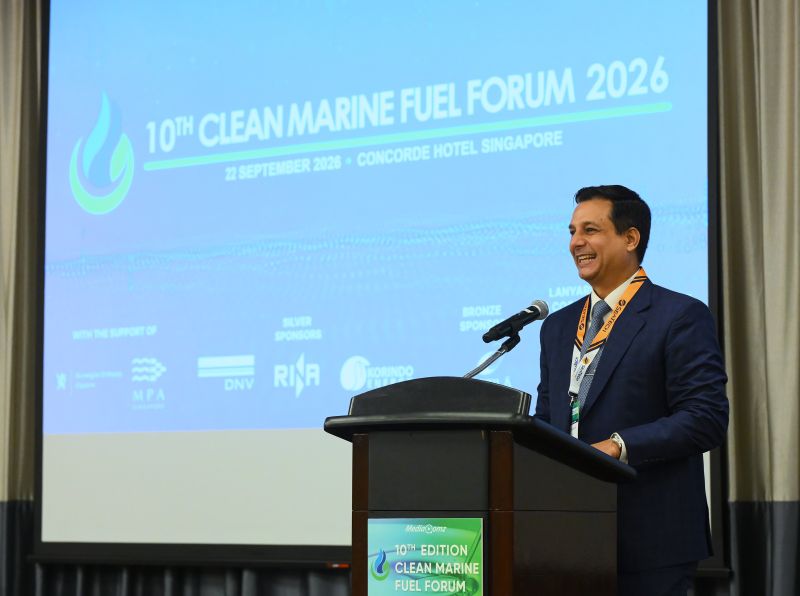
Ten years of the Clean Marine Fuel Forum
No single fuel or pathway to net zero, but progress cannot wait for perfect certainty. A recap of the 10th Clean Marine Fuel Forum in Singapore.
Read insight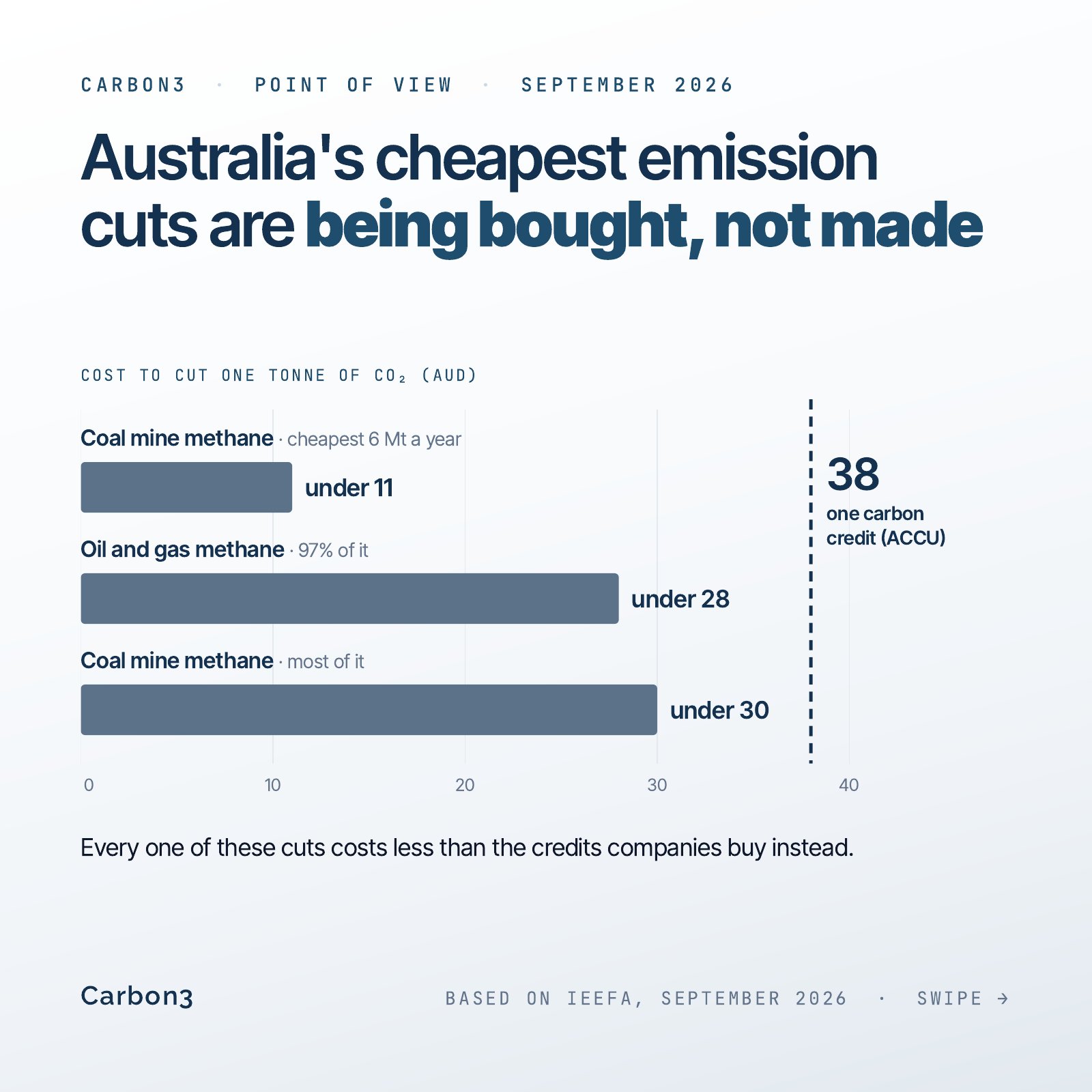
Australia's cheapest emission cuts are being bought, not made
IEEFA finds capturing methane from coal and gas would cost less than AUD 30 a tonne, well under the price of a carbon credit. Most facilities are not doing it.
Read insight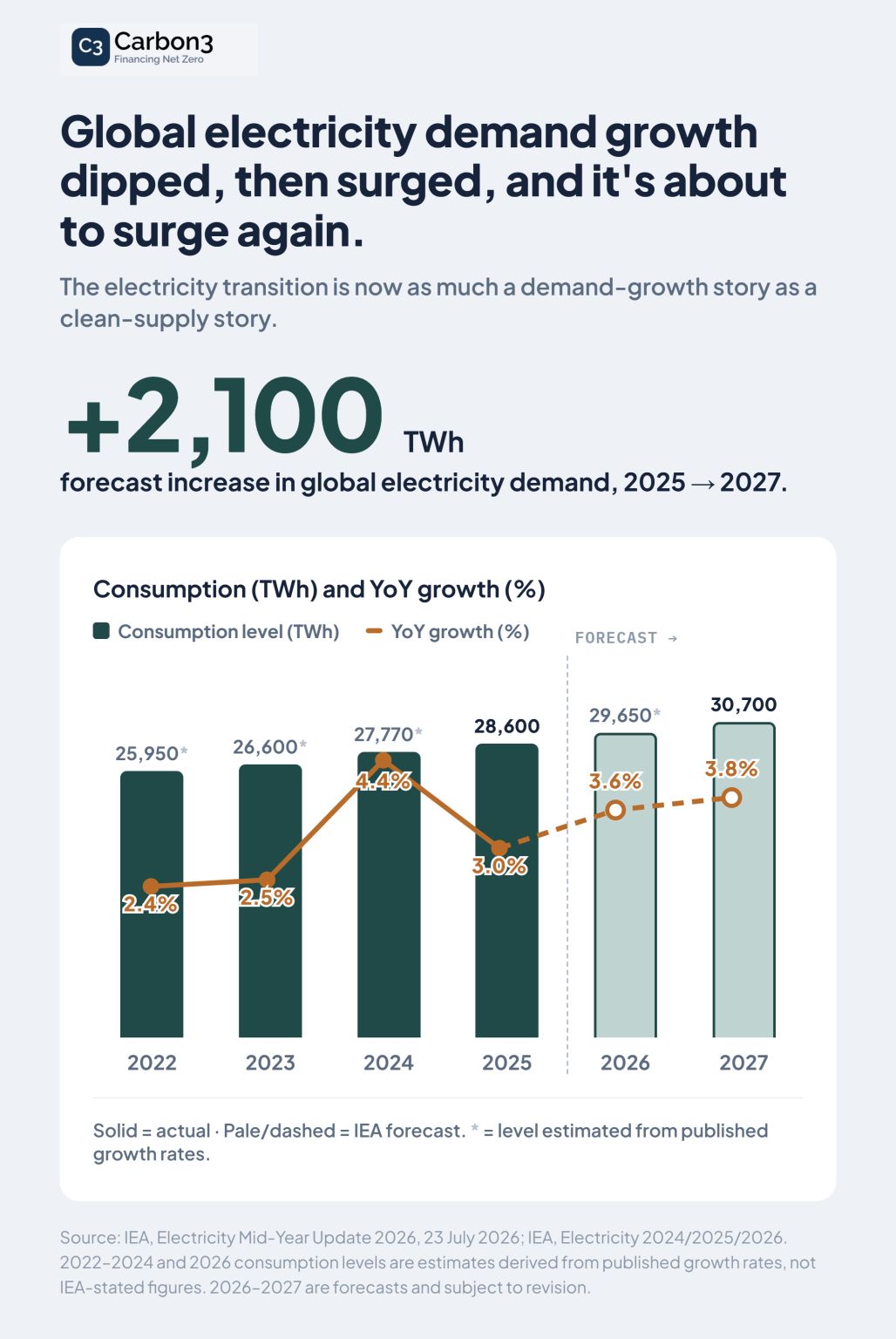
Global electricity demand growth is accelerating again
After easing in 2025, the IEA expects demand growth to climb through 2027, adding more than the annual use of many major economies in two years.
Read insight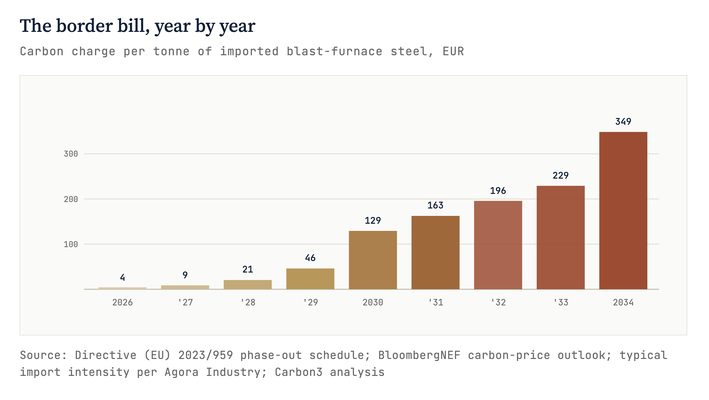
The cost of delayed action in the steel sector
Europe's carbon border charge phases in slowly at first, then steeply. The next three years look cheap; the four after that are a cliff.
Read insight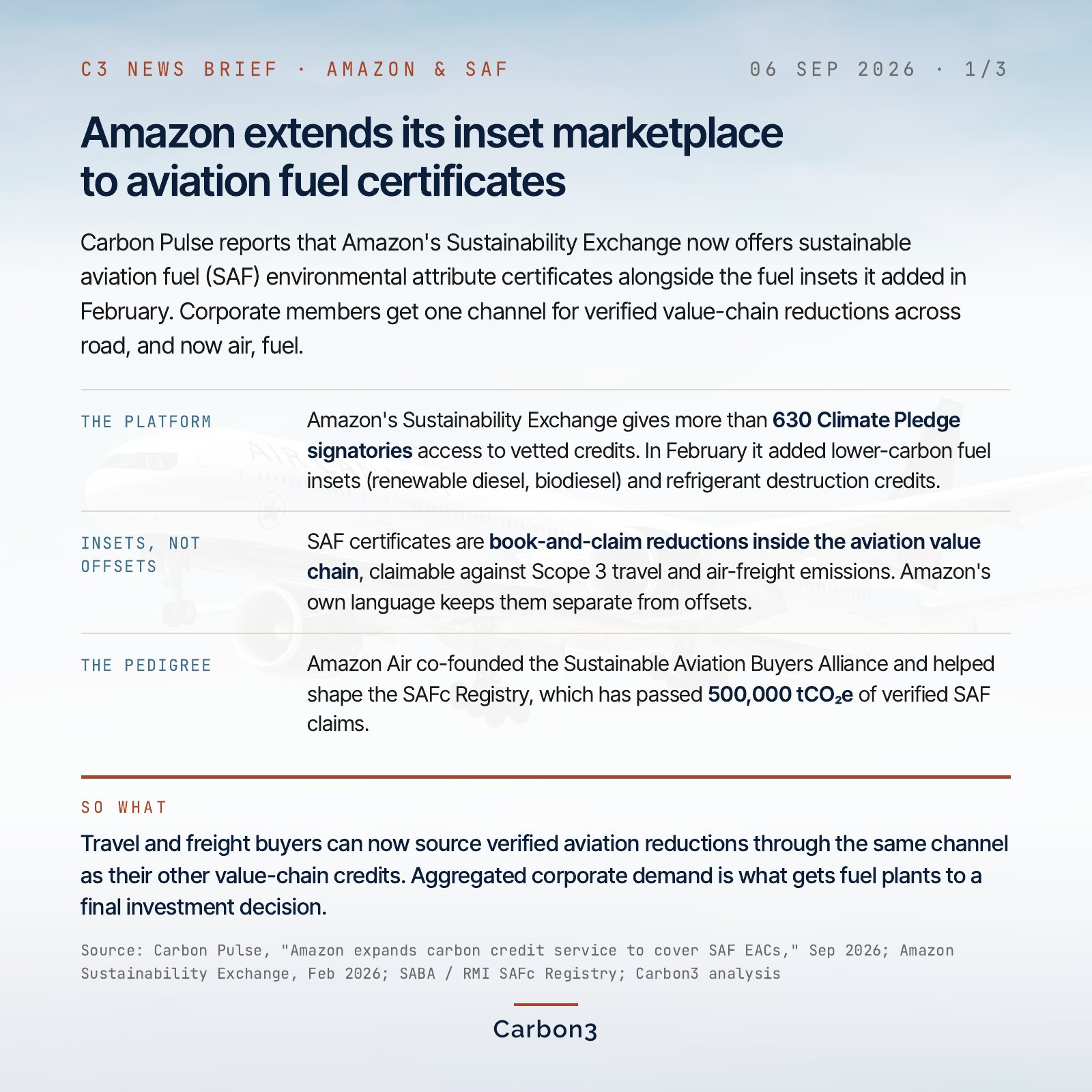
Three signals from the first week of September 2026
Amazon extends its inset marketplace to aviation fuel, a study brackets the carbon tax level that works, and Singapore signs a credit agreement with Laos.
Read insight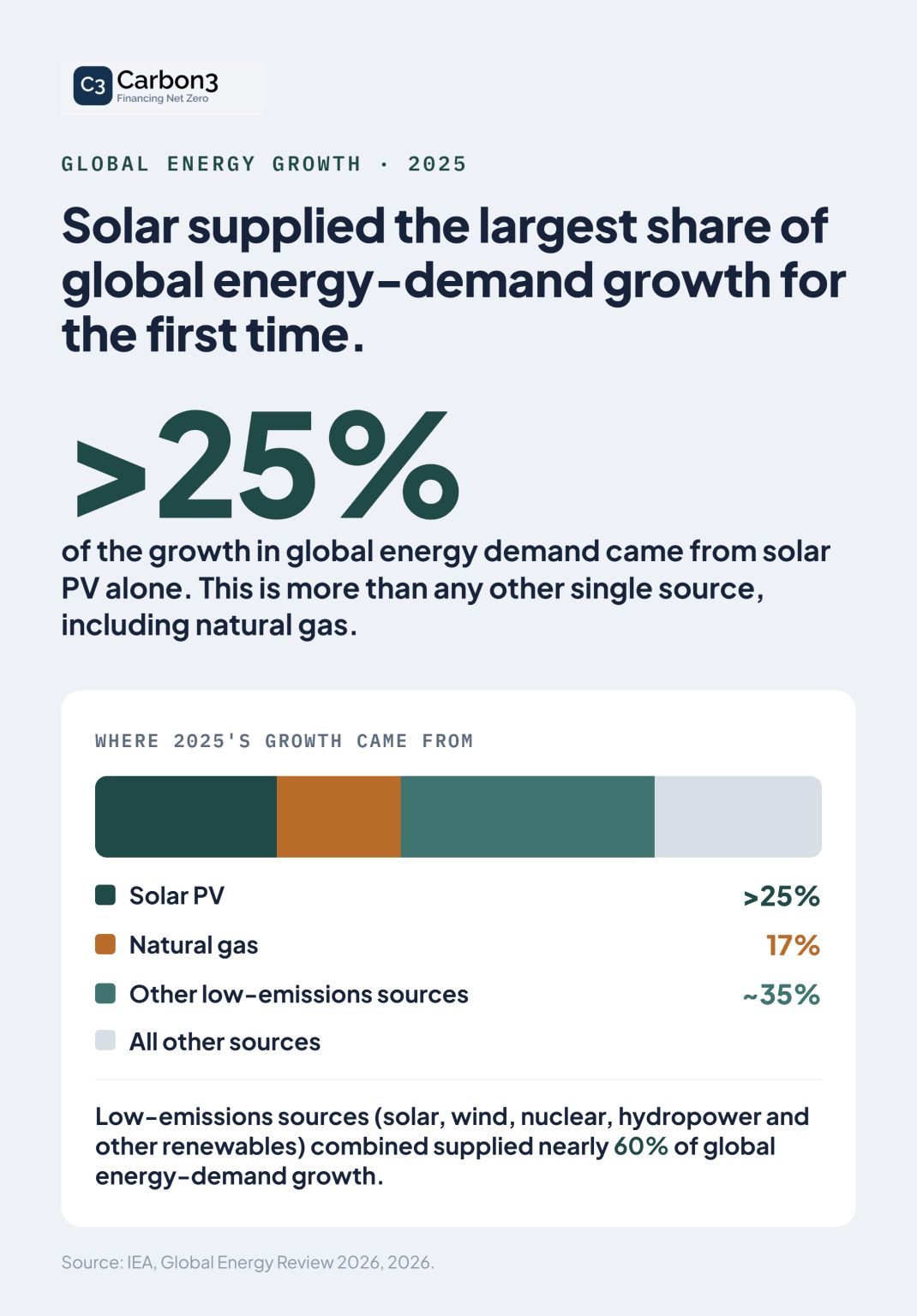
Solar is now the largest source of global energy-demand growth
For the first time solar supplied more than a quarter of the growth in global energy demand, and low-emissions sources together delivered nearly 60 percent.
Read insight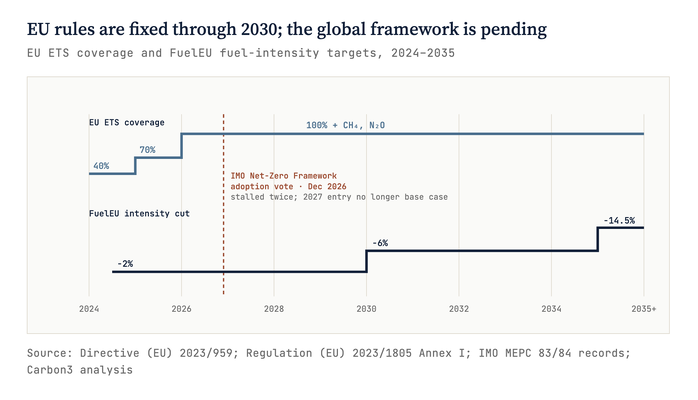
The cost of delayed action in maritime shipping
Green fuel supply through 2030 is effectively spoken for by early movers. A late start cannot catch up.
Read insight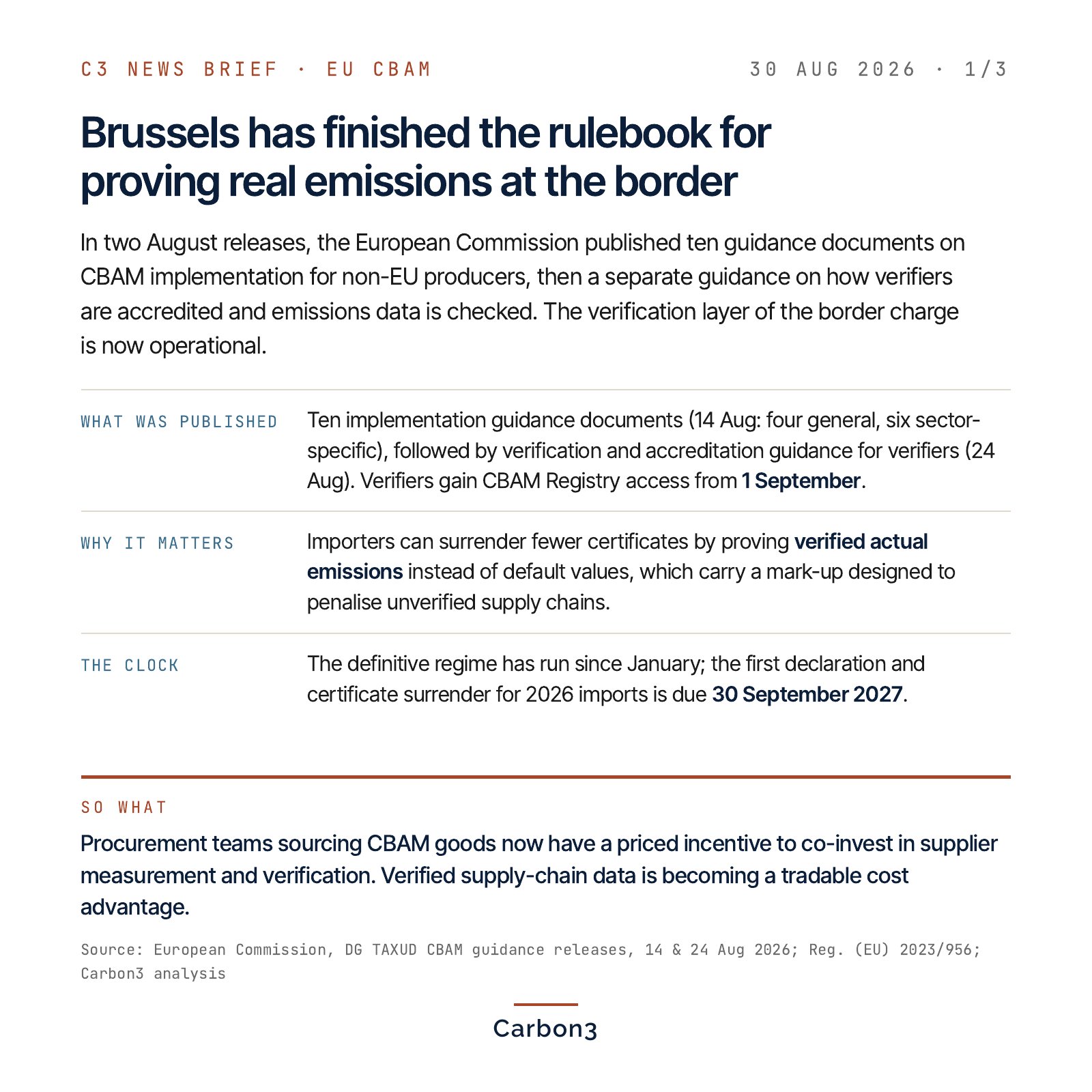
Three signals from the last week of August 2026
CBAM verification guidance, Japan's carbon market design and an EU ETS price above EUR 80 all point the same way for procurement teams.
Read insight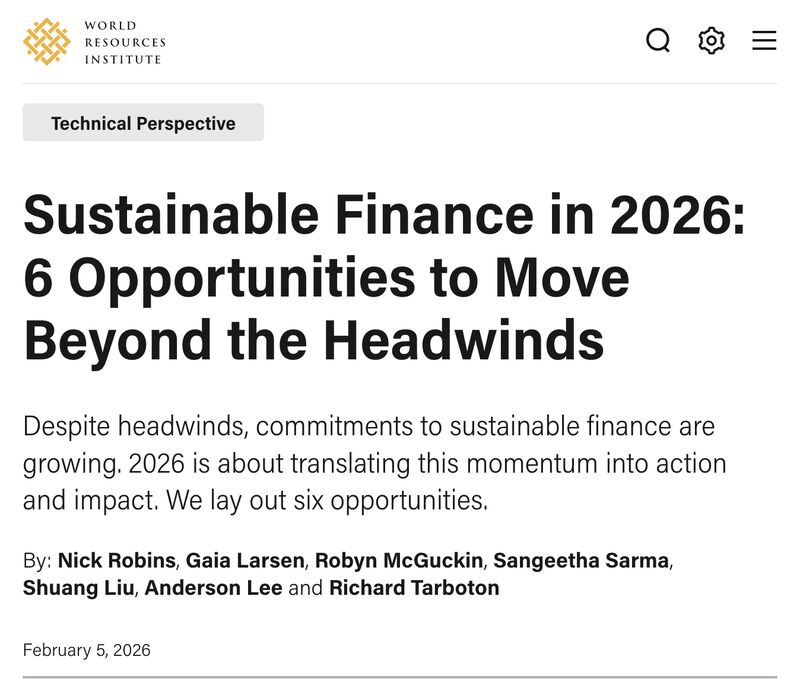
Six opportunities for sustainable finance, and the gap beneath them
WRI's 2026 list is right about the institutional constraints. Underneath them sits a market-design problem: Scope 3 reductions remain an unpriced cost.
Read insight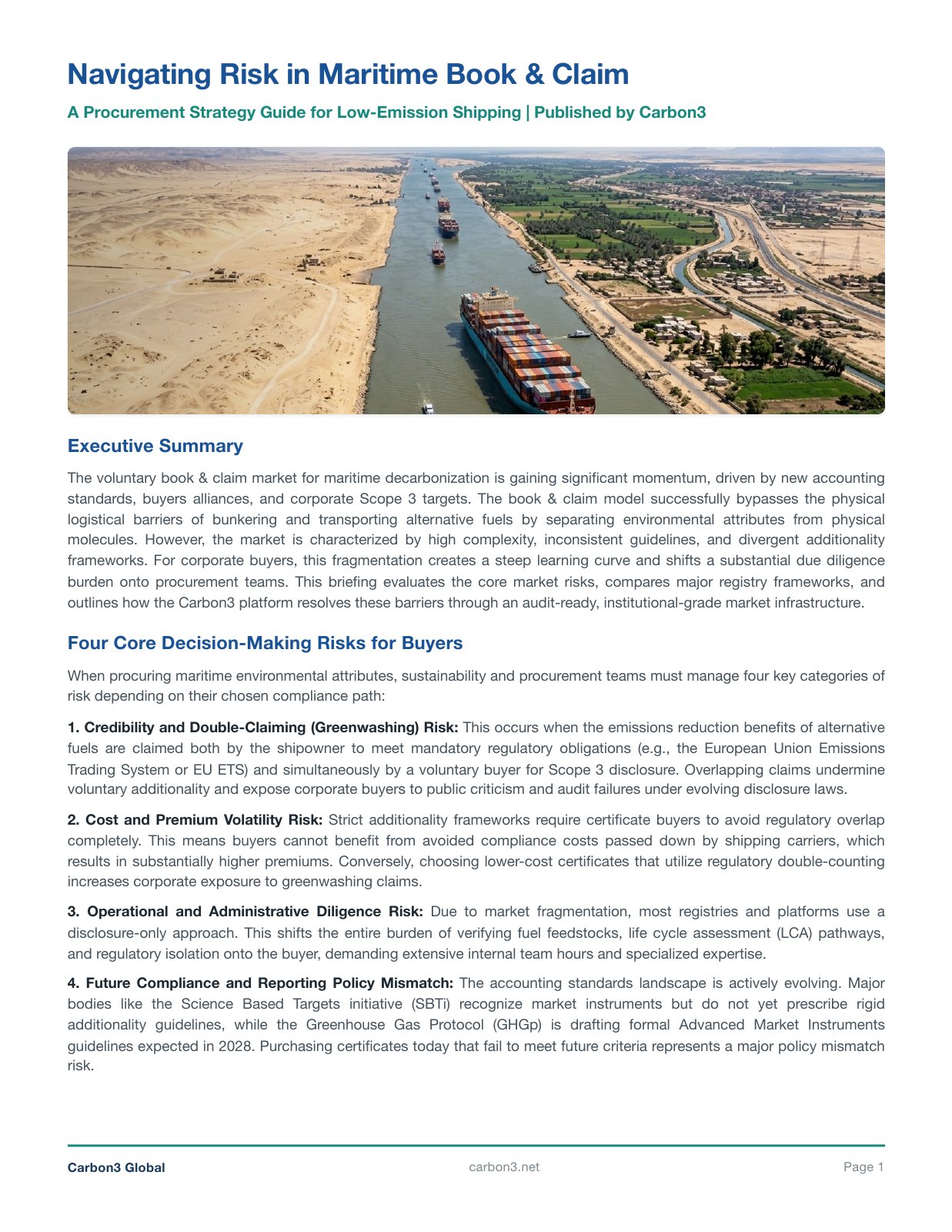
Book and claim for maritime decarbonisation: momentum and fragmentation
The model is gaining traction with buyers and standards bodies, but inconsistent frameworks push a heavy due-diligence burden onto procurement teams.
Read insight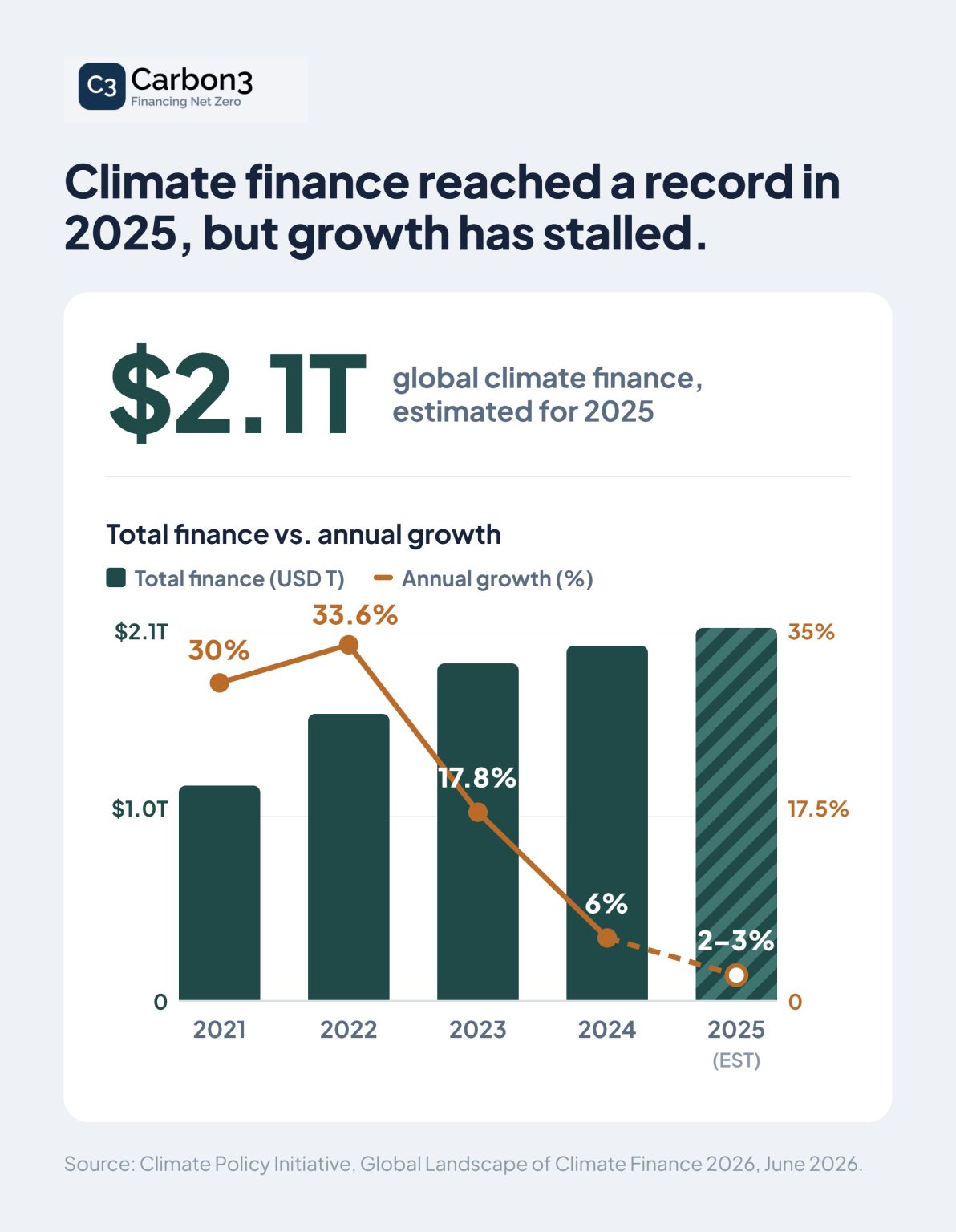
Global climate finance has crossed USD 2 trillion, but growth is slowing
Annual flows passed USD 2 trillion, while the growth rate fell from 30 percent in 2021 to an estimated 2 to 3 percent in 2025.
Read insight