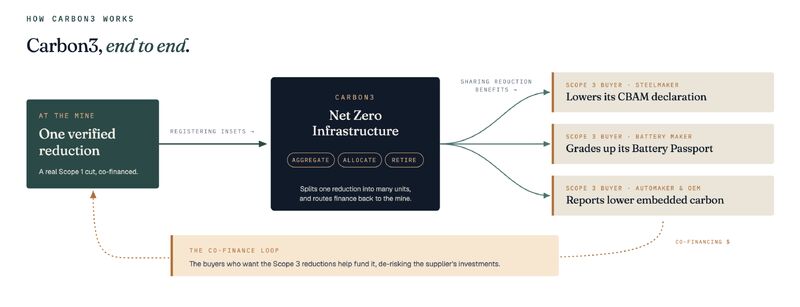
Linking Scope 1 reductions to the buyers who need them
Upstream companies struggle to finance decarbonisation. Downstream companies need credible Scope 3 progress. One model connects the two.
Read insight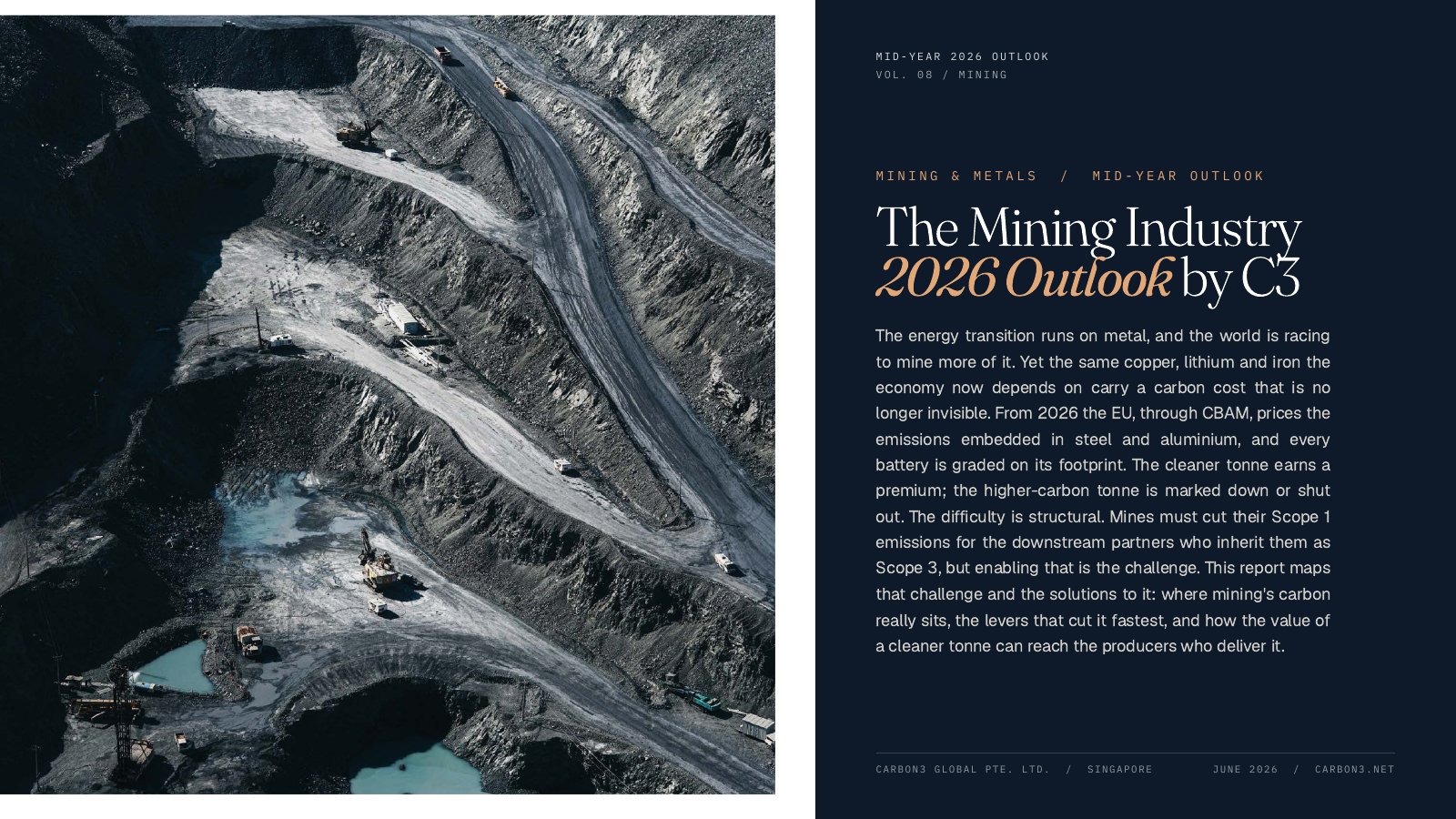
The Mining Outlook 2026
A mine's Scope 1 is its customers' Scope 3. From January 2026 CBAM prices it at the border and the Battery Passport grades every cell.
Read insight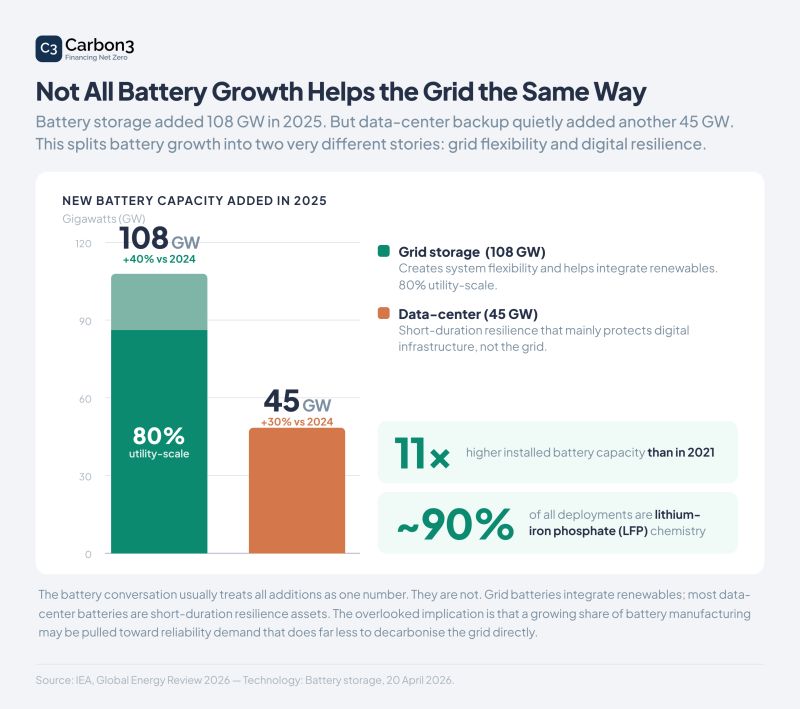
The battery boom is no longer one story
Grid-scale storage is scaling fast, while data centres add backup capacity to protect uptime rather than to make the grid more flexible.
Read insight
Cement could emit twice the remaining carbon budget
Around 30 to 45 carbon capture plants are needed by 2030. The barrier is finance, not technology.
Read insight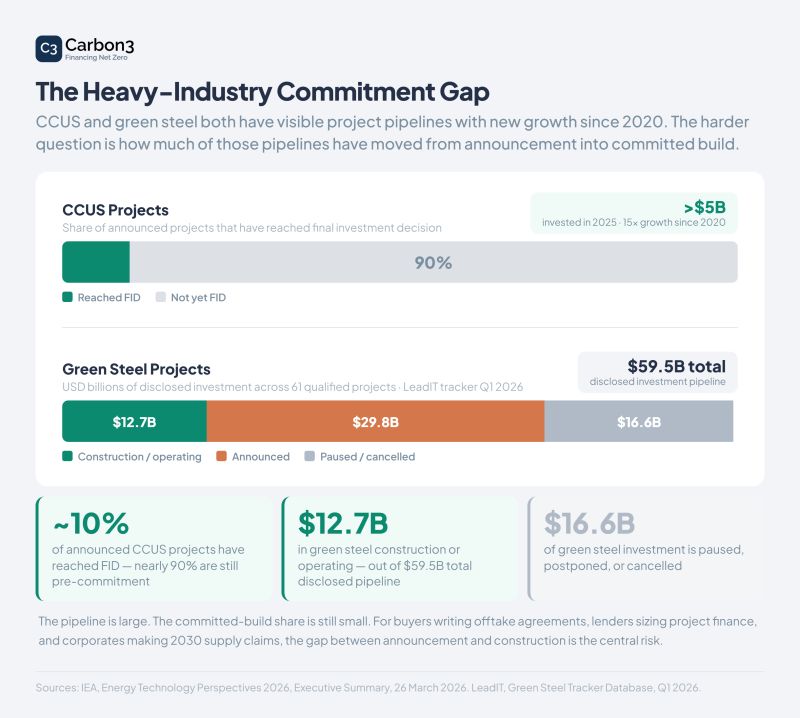
Heavy industry has a pipeline, not yet a committed build
CCUS investment has grown more than fifteen-fold since 2020, yet almost 90 percent of announced projects have not reached final investment decision.
Read insight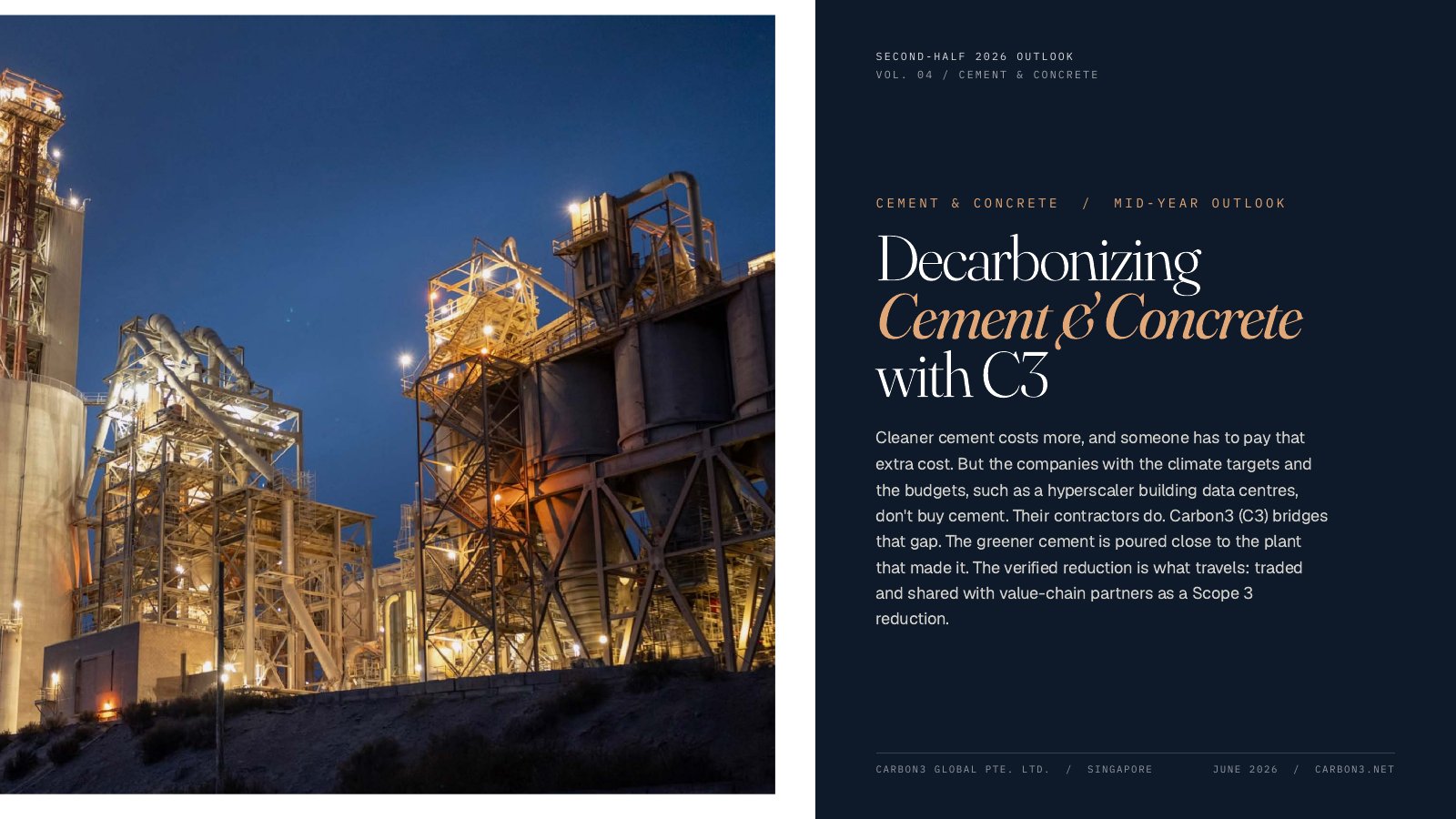
The Cement & Concrete Outlook 2026
Low-carbon cement is not a technology problem. The final investment decision is missing because the green premium has no buyer.
Read insight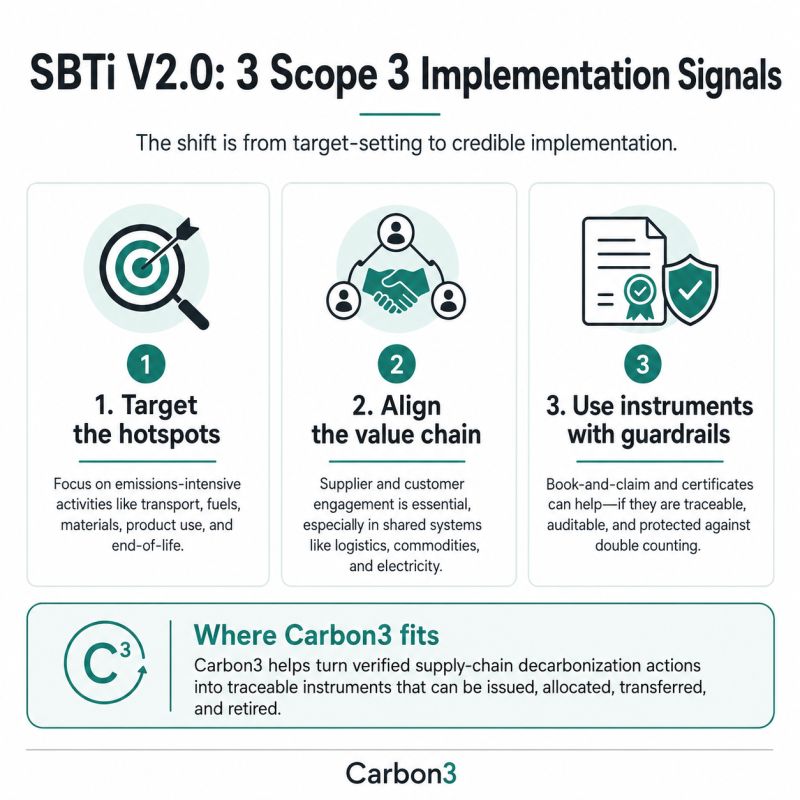
What SBTi's Net-Zero Standard V2.0 changes for Scope 3 implementation
Activity-specific action, supplier alignment, shared systems and high-integrity instruments under clear guardrails.
Read insight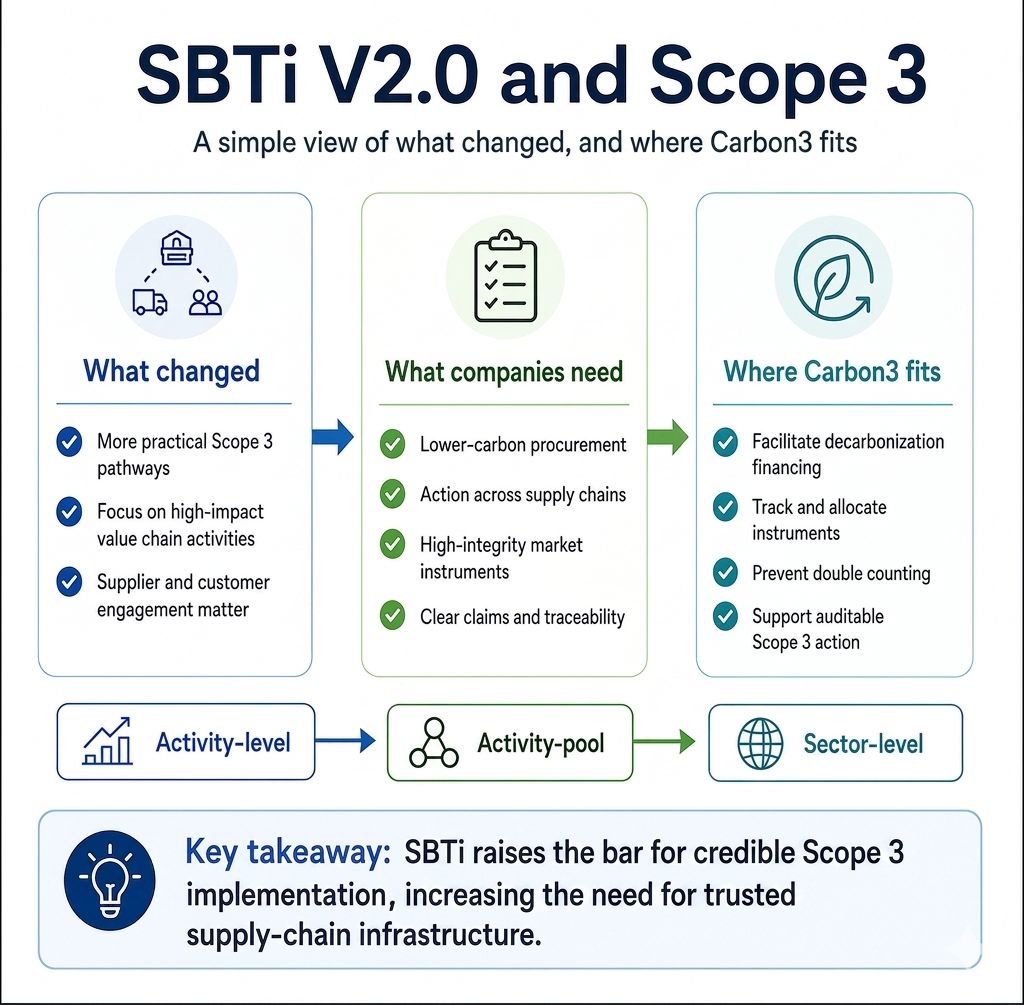
SBTi Net-Zero Standard V2.0 raises the bar for Scope 3
Setting targets is no longer enough. Companies need credible, transparent ways to implement them across value chains.
Read insight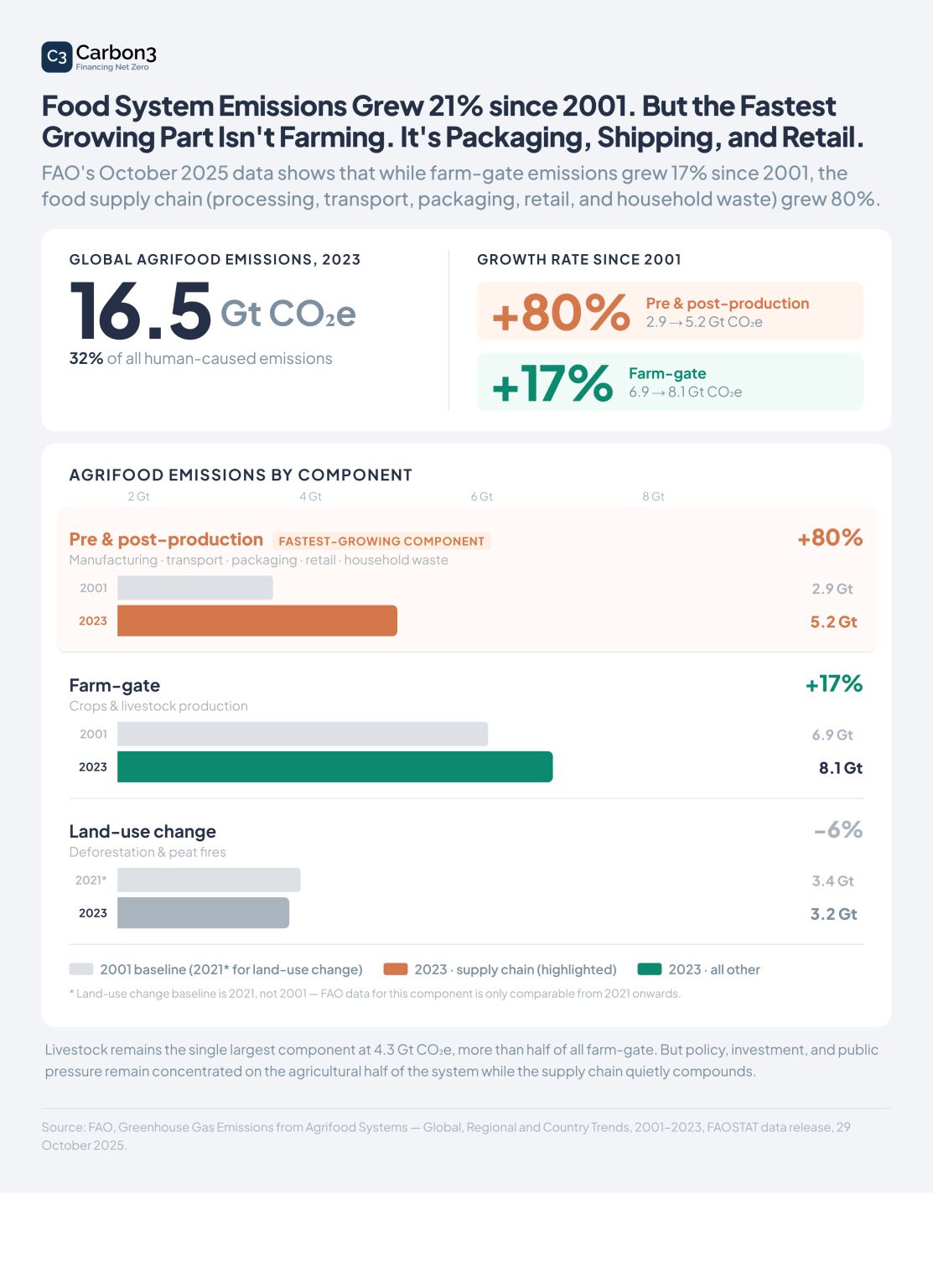
Agrifood emissions growth has shifted to packaging, shipping, waste and retail
On-farm practices remain the largest driver, but pre- and post-production services deserve closer attention for their Scope 3 impact.
Read insight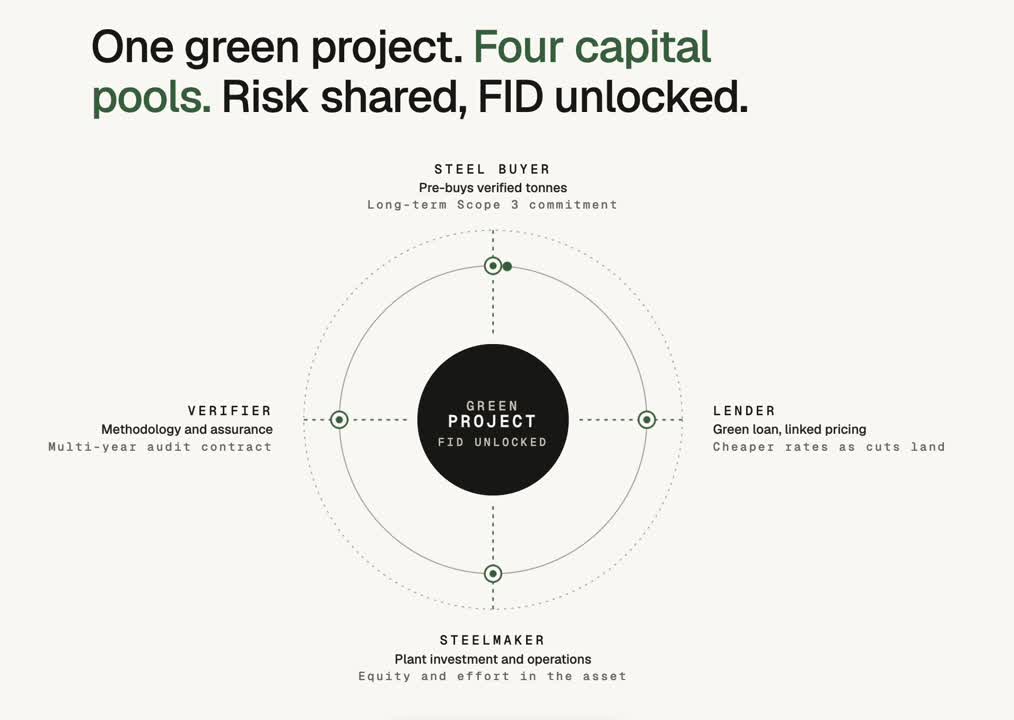
Collaborative financing beats compliance pressure
Suppliers will not decarbonise sustainably if the costs and risks are pushed entirely onto them.
Read insight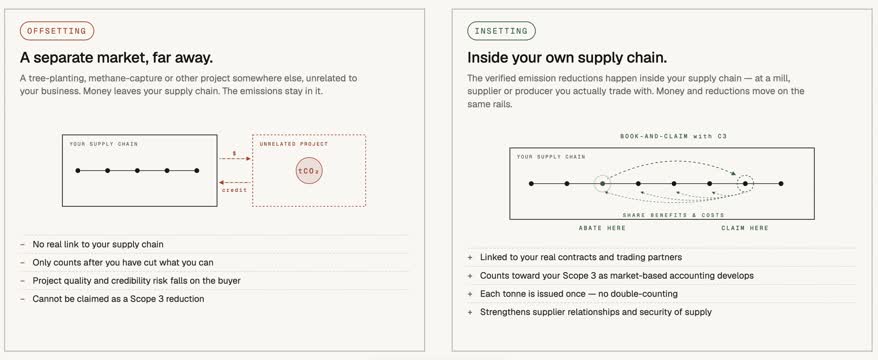
Offsetting sends money sideways. Insetting sends it to the source.
Producers will not build without buyers; buyers will not commit without supply. Financing reductions from the value chain breaks the standoff.
Read insight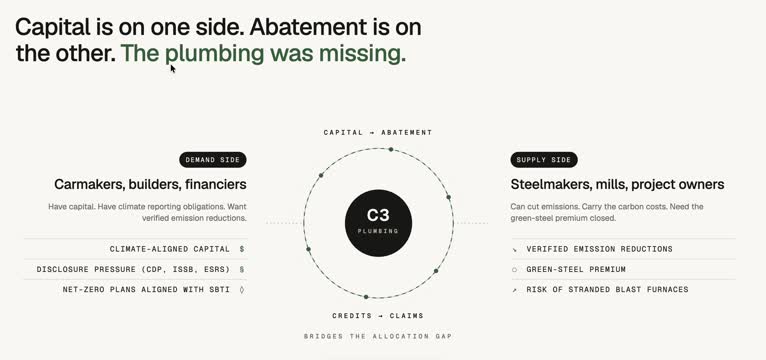
Even free money was not enough for hydrogen steel
ArcelorMittal put its European hydrogen plans on hold and turned down EUR 1.3 billion. The missing piece is a buyer prepared to pay the premium.
Read insight