The Cement & Concrete Outlook 2026
Low-carbon cement is not a technology problem. The final investment decision is missing because the green premium has no buyer.
 Open the document (PDF)
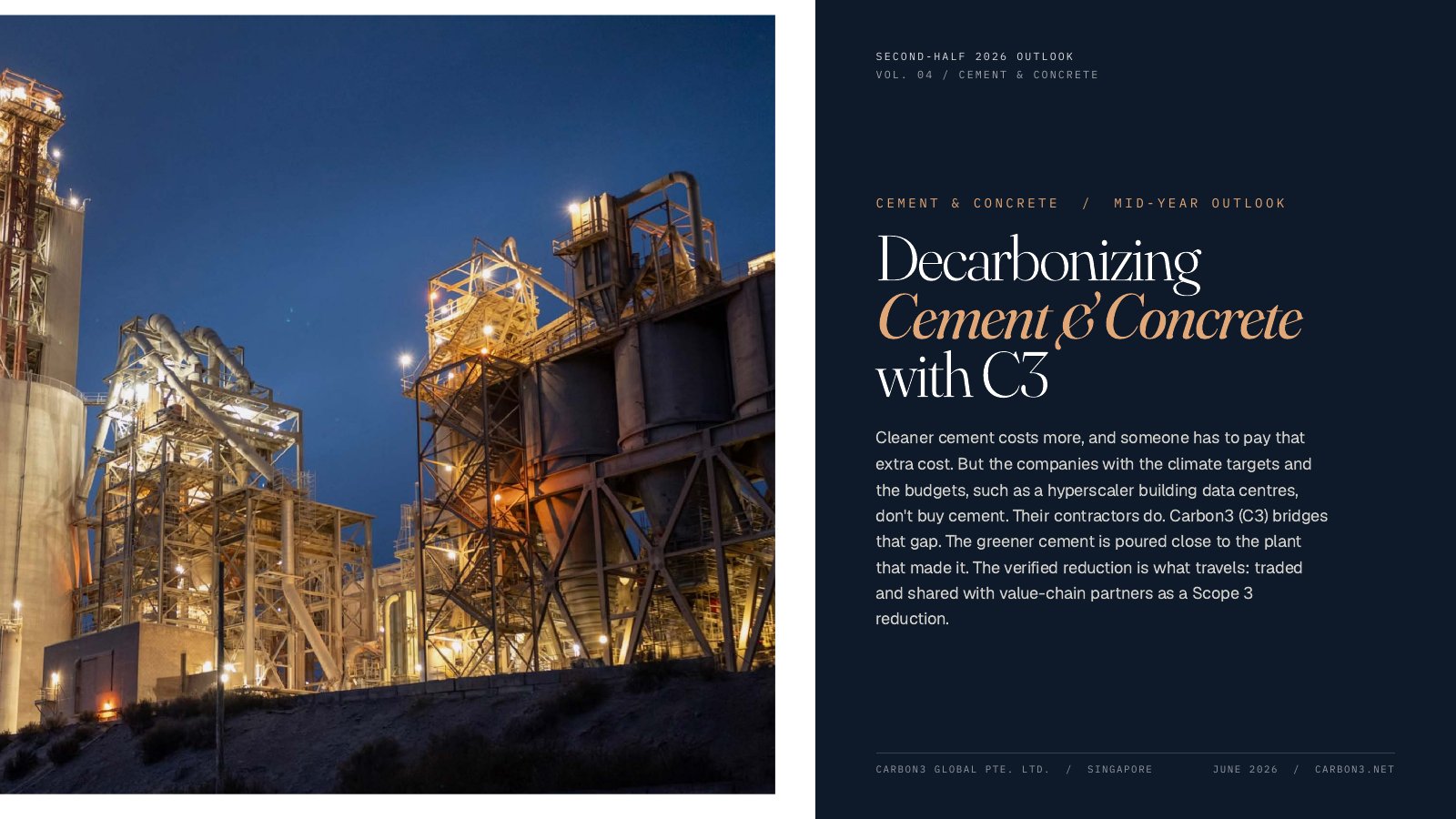
Our 2026 Sustainable Cement & Concrete Outlook
For builders, infrastructure developers, or real estate owners, cement and concrete sit squarely in Scope 3 emissions, often dominating corporate carbon footprints and among the toughest to reduce. From January 2026, those embedded emissions will carry a direct price at the EU border under CBAM. The pressure to act is real and rising.
Low-carbon cement is not primarily a technology problem. Proven pathways, from clinker substitution and alternative fuels to CCUS and novel binders, already exist, and pilot plants are demonstrating near-zero carbon concrete.
Demand & finance have to lead. GCCA says CCUS must deliver +30% of the net-zero pathway. No producer has full transition readiness yet. The question is no longer whether to decarbonise, it’s who captures the value as the sector cleans up, and who pays the carbon bill.
What’s missing is the final investment decision, because the green premium still lacks buyers ready to underwrite it at scale. This report maps the 2026 landscape and shows how C3 closes the gap equitably.
Authors: Ilja Nevolin, Paul Cruickshank, Chris Chatterton
GCCA, Global Cement and Concrete Association International Energy Agency (IEA)
Originally published on LinkedIn, 15 June 2026.
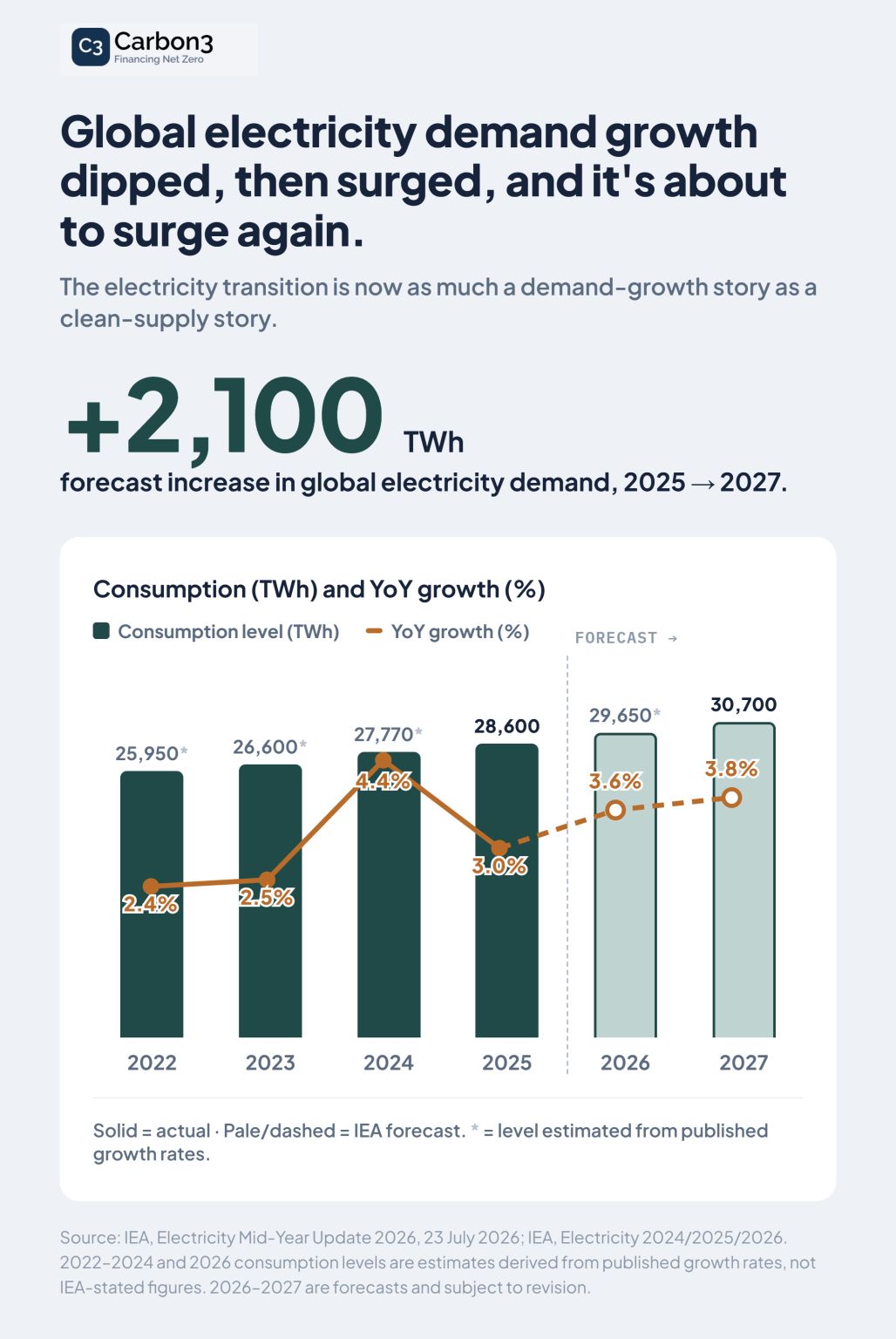
Global electricity demand growth is accelerating again
After easing in 2025, the IEA expects demand growth to climb through 2027, adding more than the annual use of many major economies in two years.
Read insight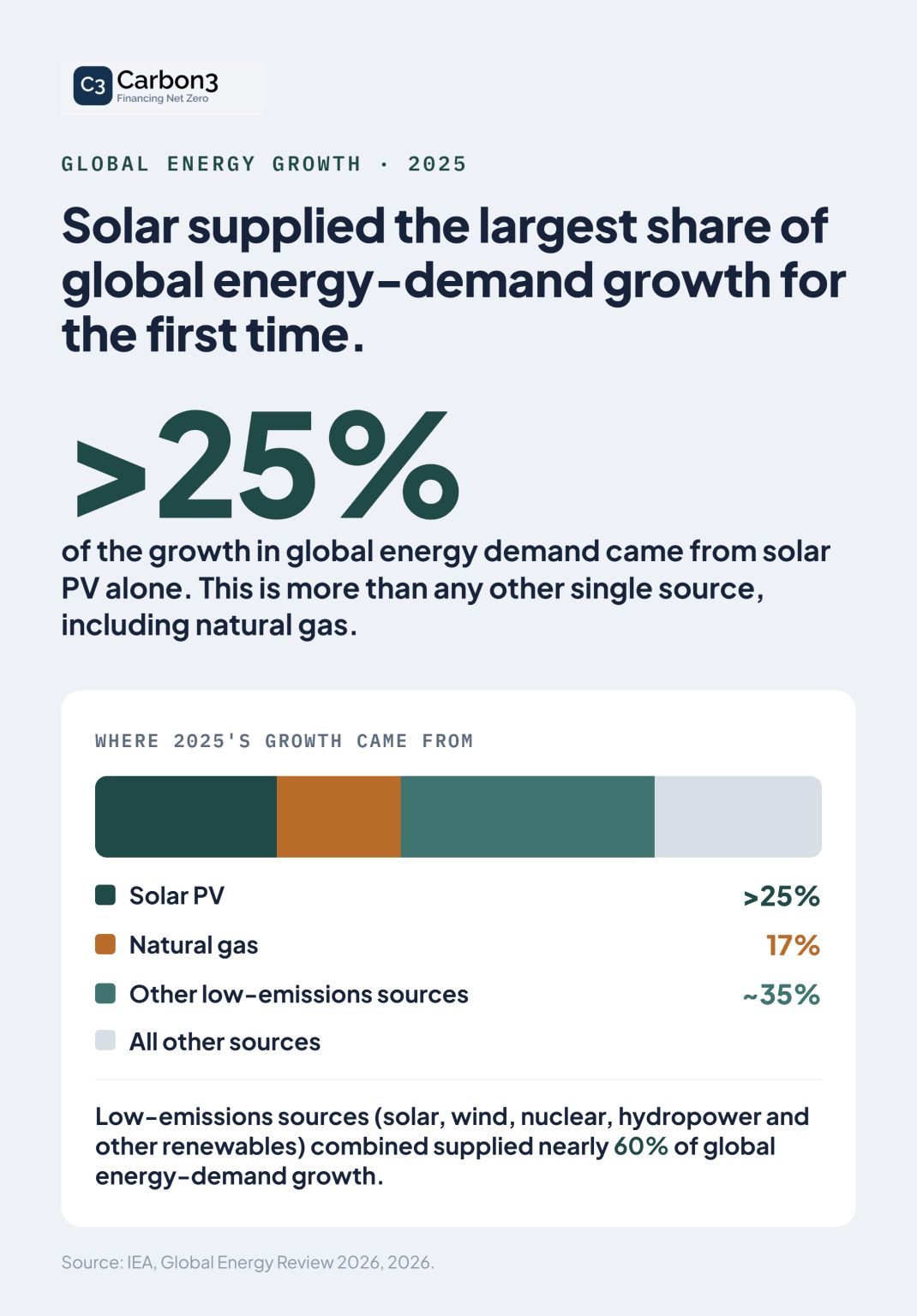
Solar is now the largest source of global energy-demand growth
For the first time solar supplied more than a quarter of the growth in global energy demand, and low-emissions sources together delivered nearly 60 percent.
Read insight