How Insetting Benefits Numerous Industries
Explore how inset credits can finance decarbonization, reduce Scope 3 exposure, and unlock tradable financial value across sectors. All scenarios shown are illustrative, based on real project archetypes and modeled market data.
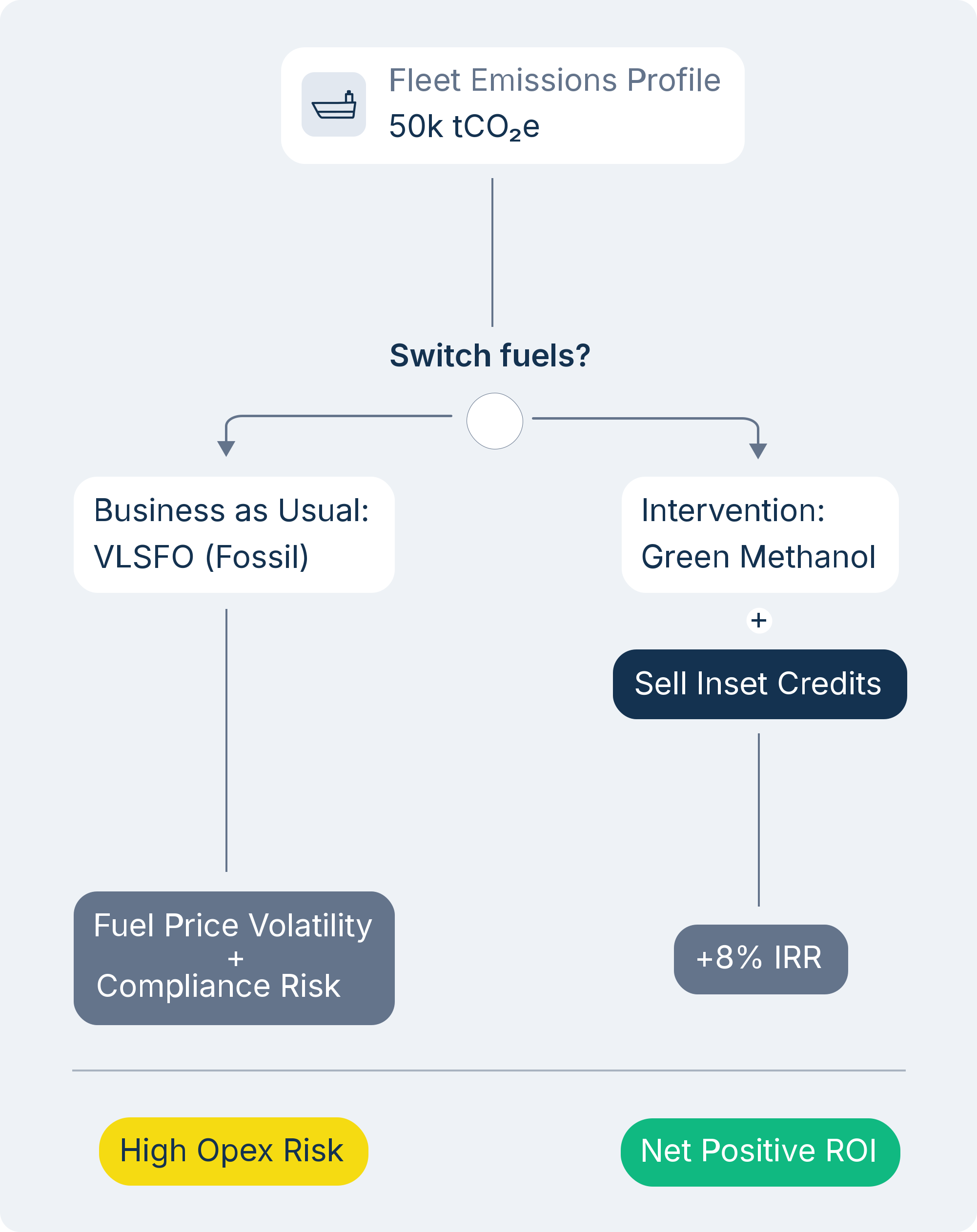
Maritime Fuels
Problem
Carbon3 Solution
Capital Impact
How Trading Changes Outcomes

Project Owners

Supply-Chain Partners

Market Participants
Industry Scenarios
Active market scenarios across sectors. Each represents modeled inset credit economics based on real project archetypes.
Steel
Problem
Bankability Gap: Low-carbon steel plants require billions in upfront capital, but banks will not finance projects without long-term, contractually guaranteed green-premium revenue.
Solution
Forward-sold Inset Credits create bankable revenue streams. Buyers lock in future Scope 3 supply, converting decarbonization into contracted cash flows that unlock project finance.
Capital Impact
Industrial Heat & Electricity
Problem
The Thermal Gap: Electrifying high-heat industrial processes requires massive CapEx that exceeds the internal hurdle rates of most manufacturing firms.
Solution
Manufacturers pre-sell verified Scope 1 reductions. Contracted inset agreements generate upfront liquidity that bridges electrification CapEx.
Capital Impact
Battery Recycling
Problem
Commodity Spread Volatility: Recovered mineral value fluctuates with global pricing, compressing recycler margins.
Solution
Carbon3 monetizes avoided mining emissions. EV manufacturers purchase inset credits linked to verified recycled content, creating a durable revenue floor that stabilises circular battery supply chains.
Capital Impact
Agriculture
Problem
Scale Fragmentation: Individual farms lack the scale to meet institutional verification and contracting thresholds.
Solution
Programmatic aggregation standardises measurement and contracts inset volumes across supply sheds, embedding soil carbon improvements into Scope 3 procurement.
Capital Impact
Aviation
Problem
SAF Cost Dislocation: Sustainable Aviation Fuel trades at 2–4× conventional Jet-A, exceeding airline margin capacity.
Solution
Corporate buyers contract verified SAF insets, distributing cost premiums across Scope 3 value chains while airlines execute physical fuel switching.
Capital Impact
Why These Scenarios Only Work with Carbon3
| Feature | Traditional Offsets | Bilateral Scope 3 | Carbon3 Platform |
|---|---|---|---|
| Asset Type | External (avoidance) | Internal (static) | Internal (allocatable, tradable) |
| Liquidity | High | None | Market-enabled |
| Benefit Sharing | None | Fixed, often opaque | Dynamic, allocation-based |
| Issuance Time | 12-18 months | Varies | Target: weeks, not months |
| Security | Registry record | Contract record | Tamper-evident audit trail |
Discuss Your Value Chain and Inset Economics
Carbon3 works across sectors with verifiable emissions reductions. Let's explore how inset credits could work for your specific supply chain and financial objectives.