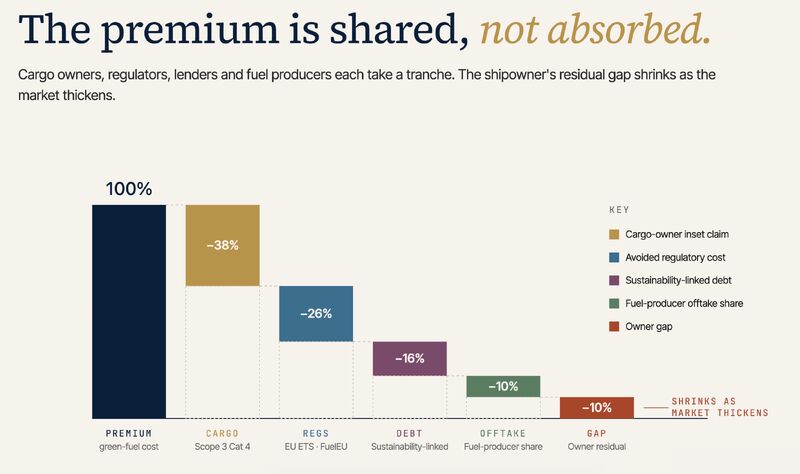
The green fuel premium is shared, not absorbed
Cargo owners, regulators, lenders and fuel producers can each take a tranche of the premium, leaving the shipowner a much smaller gap.
Read insight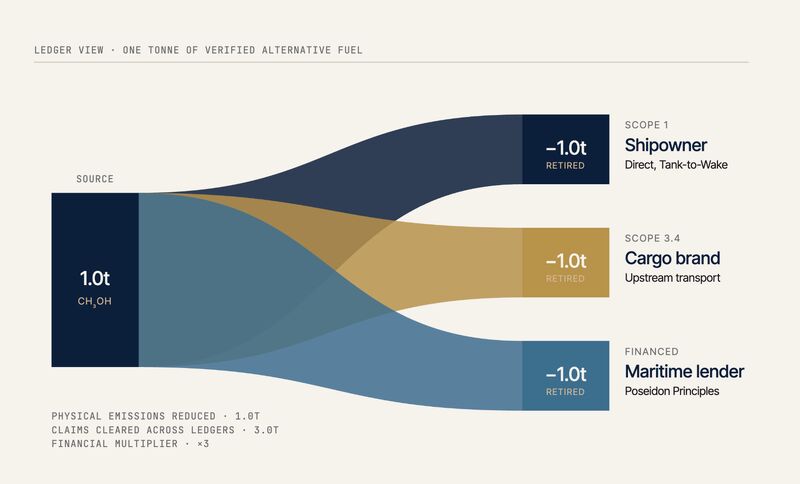
One tonne of green maritime fuel pays out three ways
Book-and-claim insetting fixes the shipowner's Scope 1, the brand's Scope 3 and the bank's financed emissions.
Read insight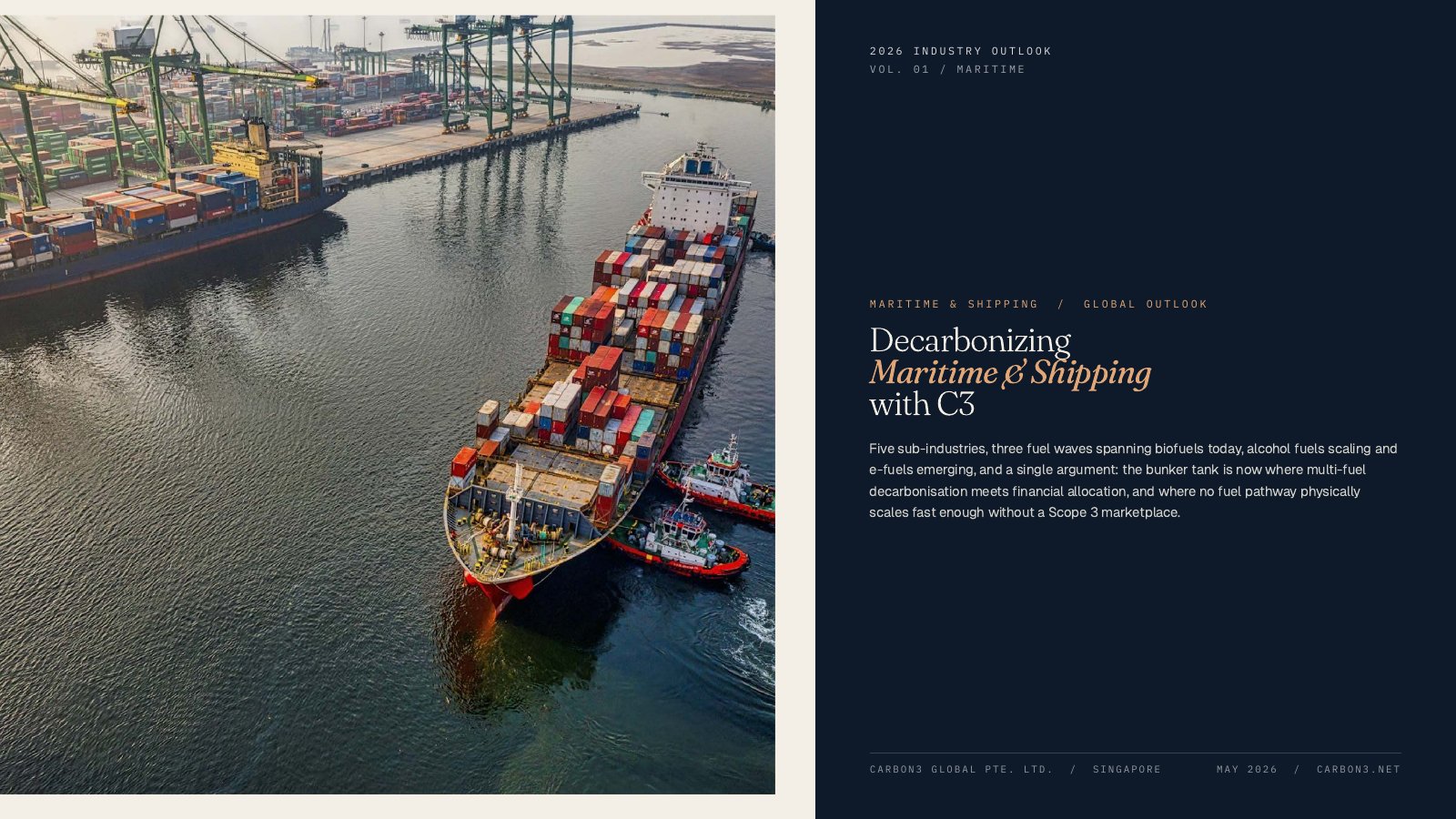
The Maritime & Shipping Outlook 2026
Carbon just became a P&L line. The building blocks are falling into place; the missing piece is routing cargo dollars to the bunker tank.
Read insight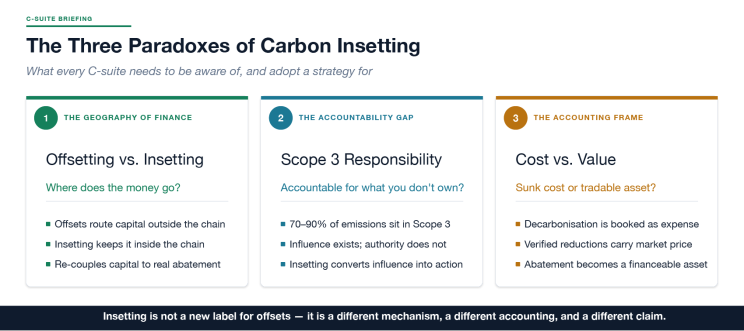
The carbon insetting paradox
Decoupled versus coupled finance, Scope 3 accountability, and the shift from sunk cost to recoverable value.
Read insight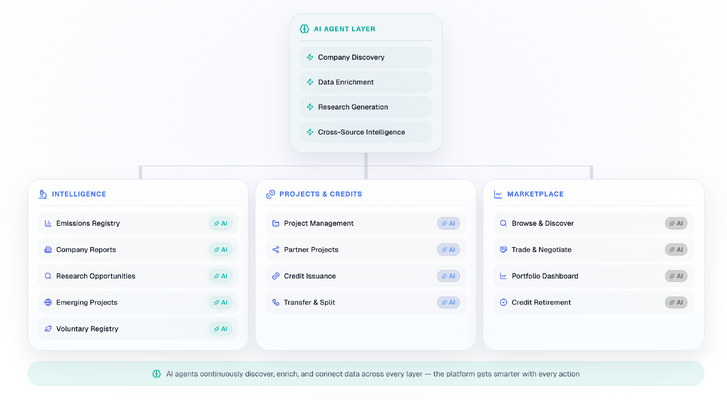
How we leverage AI agents at C3
How Carbon3 builds the financial infrastructure for supply-chain decarbonisation, and why AI is not a bolt-on feature.
Read insight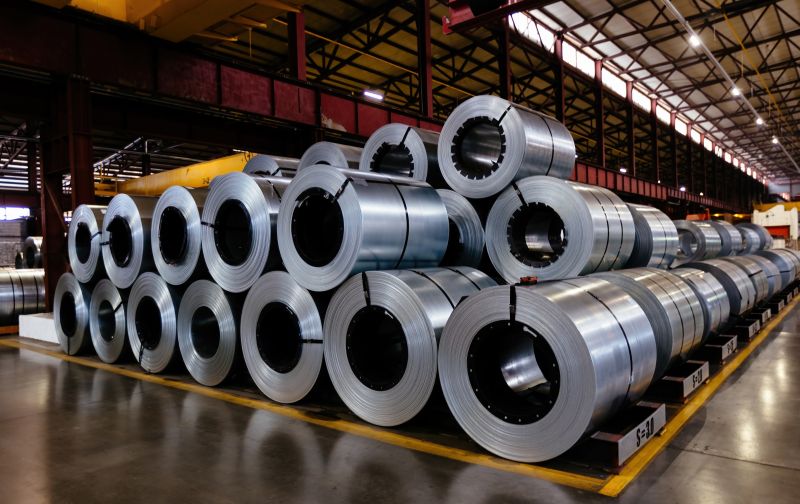
The EU's Temporary Decarbonisation Fund has an inverted incentive
The Court of Auditors warns that retroactive, history-based payouts deliver weak steering power. The same flaw plagues most supplier programmes.
Read insight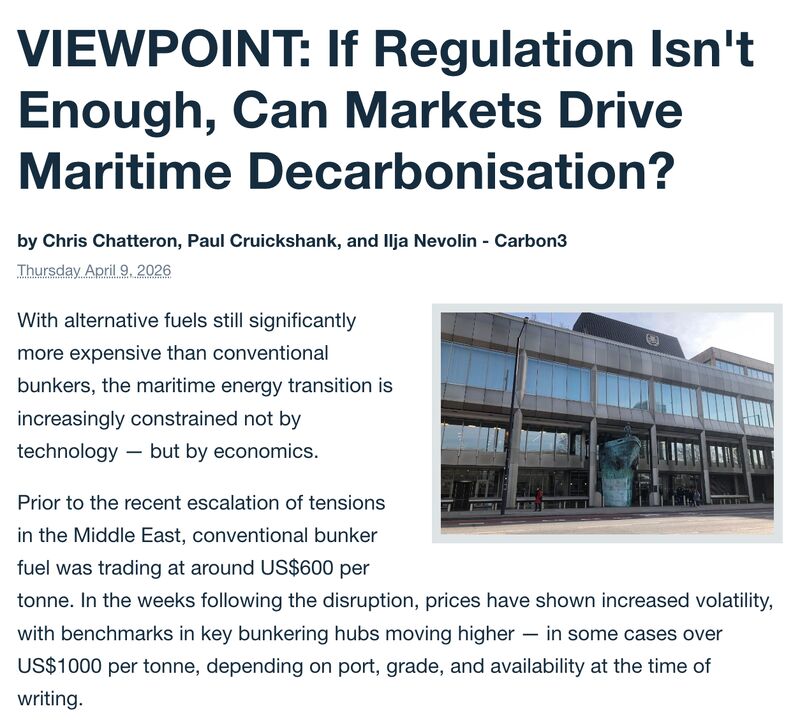
Cargo owners need reductions now, not at the deadline
Regulation promotes last-minute compliance. Market-based tools let cargo owners fund lower-carbon fuels on their contracted vessels today.
Read insightMarket-driven decarbonisation: our feature in Ship & Bunker
Green methanol and ammonia trade at USD 1,200 to 2,000 a tonne. Regulation alone will not close that gap.
Read insight
DP World's Insetify: inset credits at commercial scale
Offering credits at no cost to customers is a deliberate market-building strategy. Create the buyer habit first; price discovery follows.
Read insight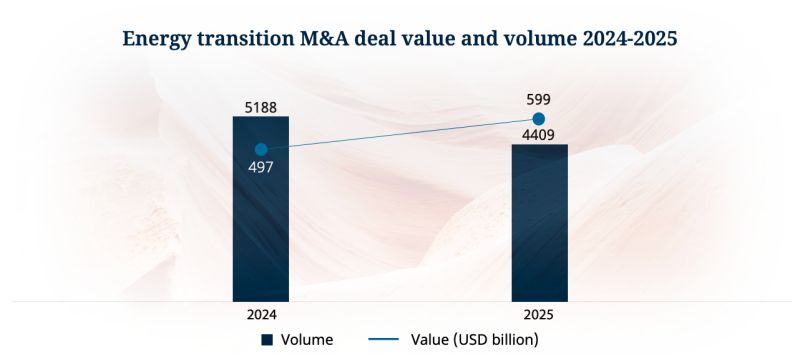
Energy transition M&A showed resilience in 2025
Deal volume fell 15 percent but value rose 20 percent to USD 599 billion. Capital shifted toward larger, higher-quality assets.
Read insight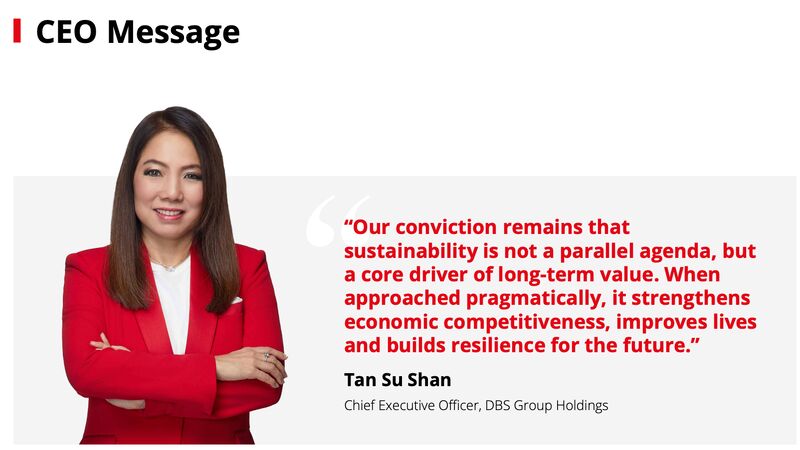
Banks are financing supplier upgrades to cut Scope 3
DBS's data centre retrofit initiative links supplier efficiency to sustainability-linked loans.
Read insight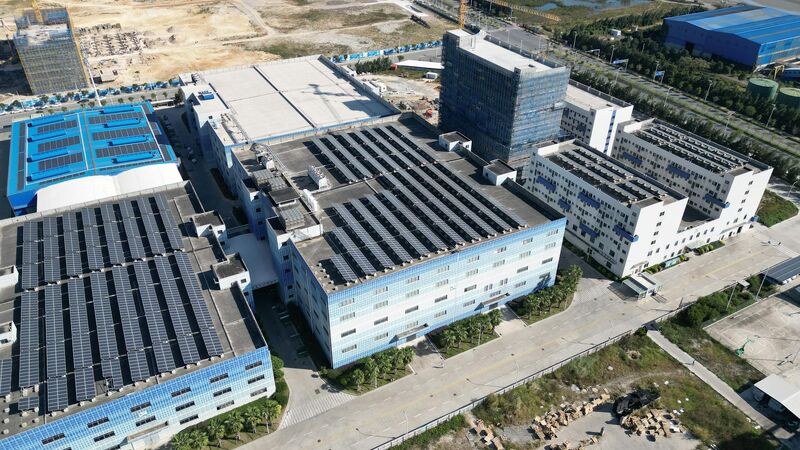
Decarbonisation is being reframed as energy security
The latest energy shock is a reminder that dependence on fossil supply carries geopolitical and commercial risk.
Read insight