The Maritime & Shipping Outlook 2026
Carbon just became a P&L line. The building blocks are falling into place; the missing piece is routing cargo dollars to the bunker tank.
 Open the document (PDF)
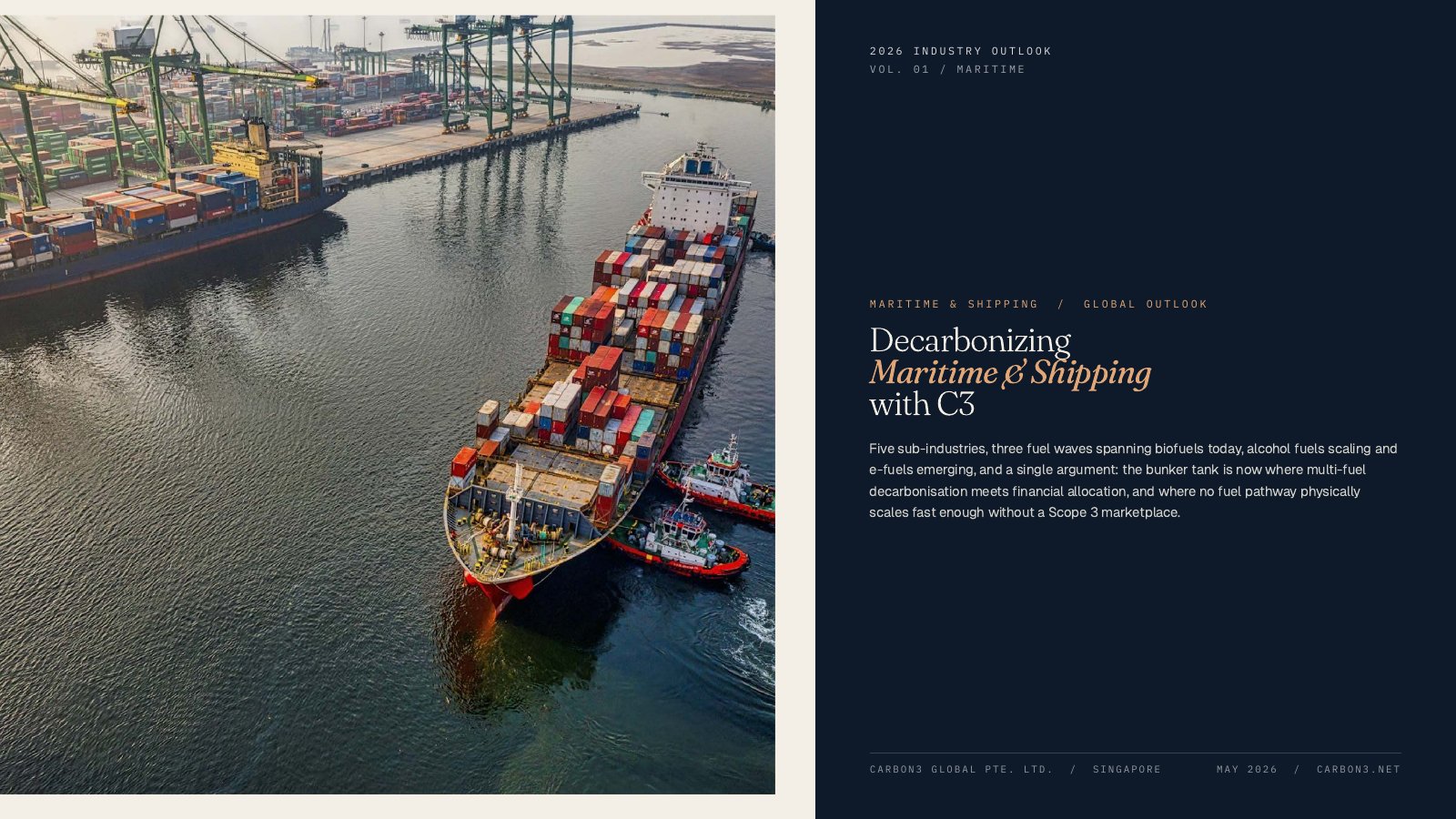
The 2026 Maritime & Shipping Outlook by C3
Carbon just stopped being a compliance line and became a P&L line: EU ETS is at full scope, FuelEU Maritime is biting, and the global price the IMO was meant to set has been blocked twice this year by a US-led coalition.
On top of that: the Strait of Hormuz crisis disrupted bunker supply, the Mærsk Mc-Kinney Møller Center cut ~30% of its workforce, and shipowners are sitting on a $250 Bn+ green-fuel orderbook while alternative fuels still make up only ~2% of bunkers sold.
Regulation is fragmented: Green fuels can't physically scale fast enough. And cargo owners are already paying climate premiums, they just aren't reaching the bunker tank where emissions actually happen.
But here's the good news: Despite the setbacks, the building blocks are quietly falling into place. Cargo-owner demand is real and scaling. Singapore booked record alternative-fuel volumes in 2025, the ZEMBA buyer pool now exceeds 25 corporates including Amazon, IKEA, Volvo and Schneider Electric, and the methanol dual-fuel orderbook has crossed 240 vessels. The abatement levers exist today. Many are already MAC-negative. The missing piece isn't technology. It's the financial infrastructure to route cargo dollars to the bunker tank. That piece is now being built.
"The challenge in maritime decarbonisation is not technology, but fairly distributing the green premium and benefits across the value chain."
Originally published on LinkedIn, 3 May 2026.
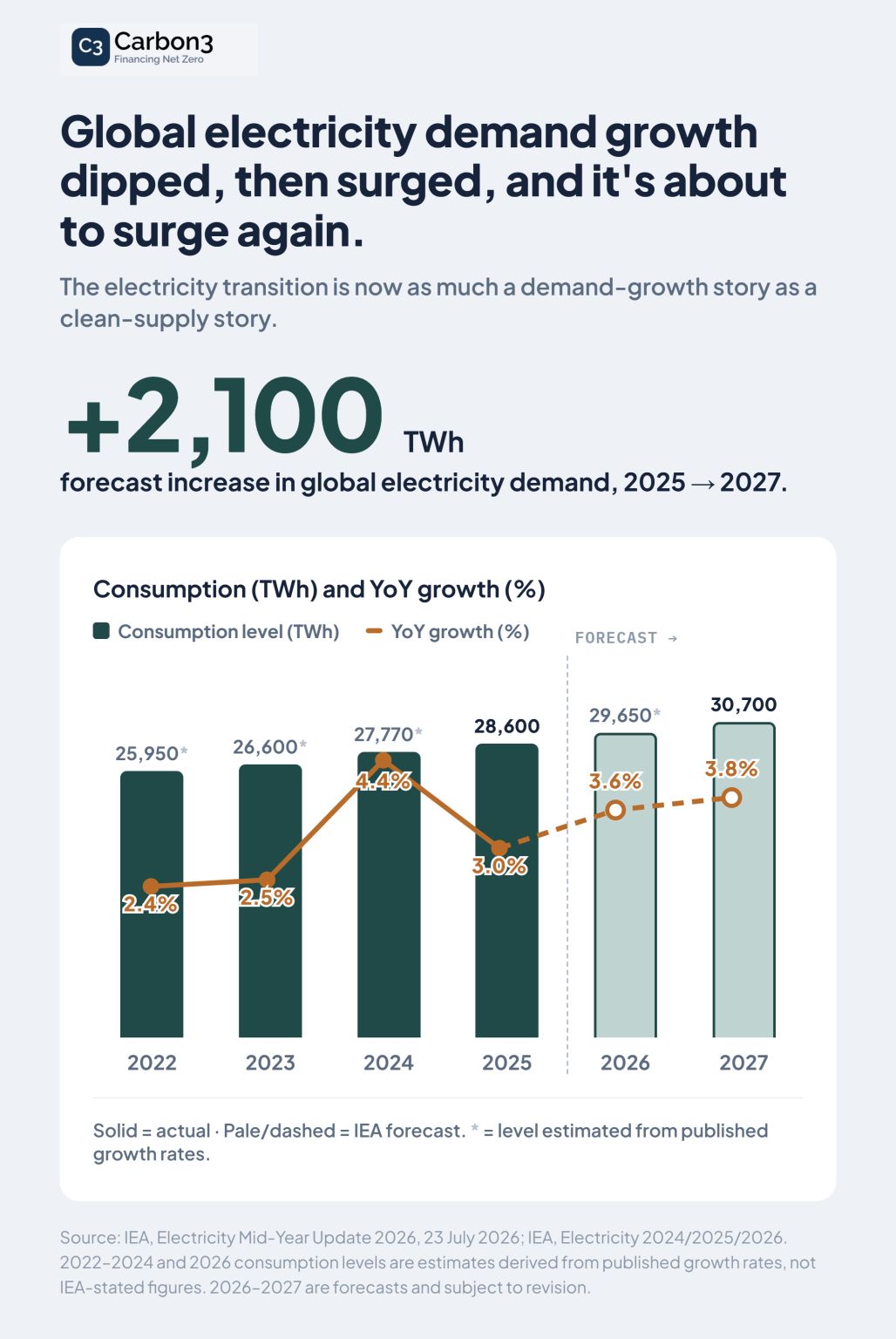
Global electricity demand growth is accelerating again
After easing in 2025, the IEA expects demand growth to climb through 2027, adding more than the annual use of many major economies in two years.
Read insight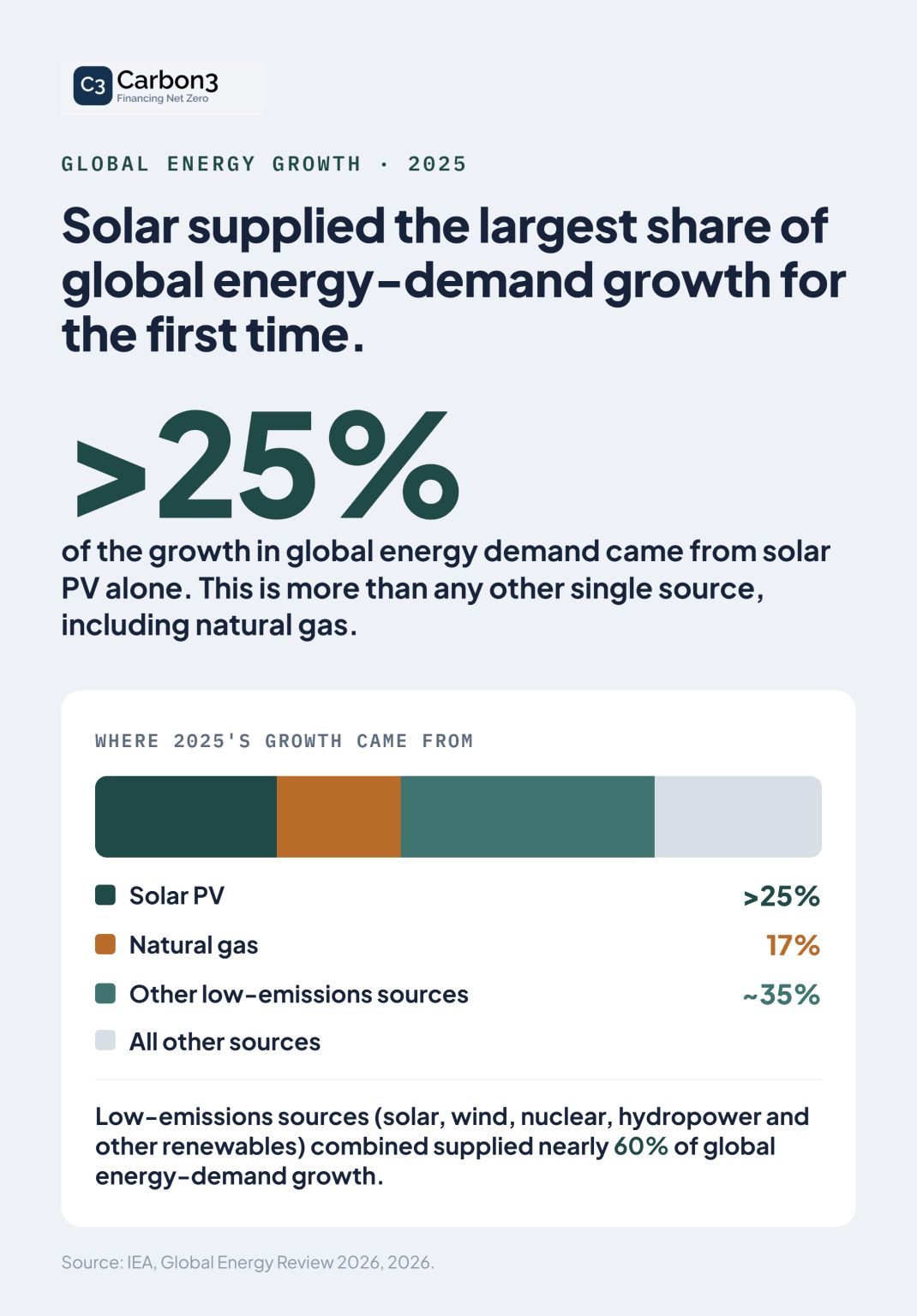
Solar is now the largest source of global energy-demand growth
For the first time solar supplied more than a quarter of the growth in global energy demand, and low-emissions sources together delivered nearly 60 percent.
Read insight