How we leverage AI agents at C3
How Carbon3 builds the financial infrastructure for supply-chain decarbonisation, and why AI is not a bolt-on feature.
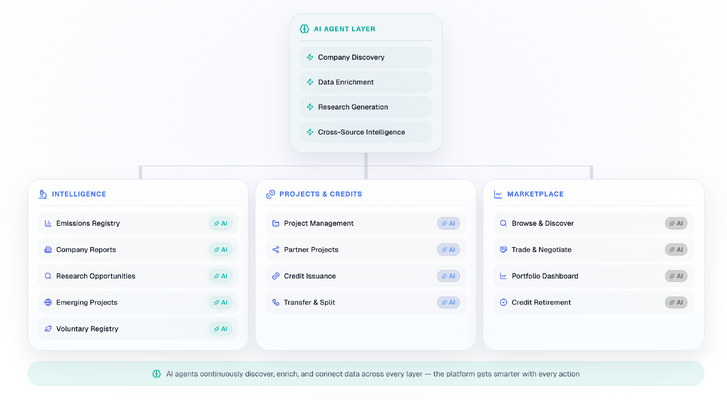
This is a deep-dive into how we are building the financial infrastructure for supply-chain decarbonization, and why we treat agentic AI as load-bearing infrastructure rather than a feature you bolt on. If you are an operator at a sustainability-driven business, a corporate buyer evaluating credible Scope 3 instruments, an investor mapping the climate-fintech landscape, or simply a builder thinking about how to make AI structurally useful inside a serious company, this case study is written for you.
Here is what’s in it for you:
-
**Discover **exactly how we structured a multi-agent system that runs 24/7 at a fraction of the cost of traditional operations, and how you can apply these same agent-first design patterns to drastically reduce administrative and data-processing overhead in your own business.
-
See how AI structurally **unlocks **the supply side of the carbon market, making Scope 3 insetting viable and affordable where it previously wasn't.
-
Whether you are looking to identify insetting opportunities in your supply chain, automate the MRV process, or run backoffice operations seamlessly, we provide the infrastructure. We handle the complex operations (pricing, onboarding, risk, fraud, and payments) so you can focus on actual decarbonisation.
Most of the architecture described here is already live and free to use at demo.carbon3.net. Some of it is the next frontier we are building toward. We are publishing both because the most useful thing we can do for the rest of the market is to show our work.
1. Why this matters: the bottleneck is cost of evidence
Scope 3 emissions, everything that happens in a company's value chain that is not directly owned or directly purchased energy, represent 70–90% of most corporate carbon footprints. Every credible decarbonization framework agrees that you cannot meaningfully reduce a corporate footprint without addressing Scope 3. Yet the market for financing those reductions barely exists.
The reason is unglamorous: measurement is too expensive. Independently verifying a single decarbonization project under traditional standards (Verra, Gold Standard, ISCC) can sometimes cost 6 or 7 digits, before any actual capital flows to the project. That cost floor excludes almost every small and mid-sized supplier, every smallholder farm, every regional logistics operator. The supply side of the carbon market is structurally locked out by the cost of being trusted.
This is the gap insetting is designed to close, financing reductions inside a verified supply-chain relationship rather than buying offsets from anywhere on earth. And it is the gap agentic AI is uniquely good at closing. AI does not replace verifiers, scientists, or auditors. It removes the parts of their workload that are repeatable evidence-collection, normalization, and report drafting, the parts that, today, dominate the cost.
2. The C3 thesis: agents as infrastructure, not features
Most companies use AI the way they used cloud functions in 2018: a sprinkle on top of a product they already built. A chatbot here, a summary widget there. This is fine for incremental gains and almost useless for category creation. We took a different bet. Carbon3 is built so that the data layer, the discovery layer, the product layer, the operational layer, and (next) the certification layer are all driven by autonomous or semi-autonomous agents. Humans set direction, write the methodology, and approve consequential output. Agents do the legwork, at a cost-per-task that is one to three orders of magnitude lower than the human-only equivalent.
Three principles shape every agent we ship:
-
Agents do evidence; humans do decisions. An agent can collect ten years of sustainability disclosures, normalize them to GHG Protocol categories, flag anomalies, and draft a verification narrative. A human or a Certification Body still signs the certificate.
-
Confidence is a first-class output. Every agent that takes an action emits a confidence score. Below a threshold, it does nothing. Above a threshold, it acts (often by submitting a draft for human review; occasionally, for low-risk public actions, by executing autonomously).
-
Retrieval-grounded, never speculative. Every claim an agent makes is backed by a real-time search or a database row. Agents that cannot show their evidence are not allowed to publish.
Everything that follows is a concrete instantiation of those three rules.
The interesting part is not that each tool exists. It is that the output of one tool is the input of another: A Company Report draws on cached Emissions Registry data plus live Research Opportunities; a Research Opportunities run is automatically deepened by what was already discovered for related companies; the Emerging Projects feed sharpens the partner suggestions inside Research Opportunities. The system gets smarter as it runs, not because of model retraining, but because the connective tissue between agents accumulates context.
3. Deep dive, the multi-agent Company Report
Of the five tools, the Company Report is the most sophisticated and the most instructive. You enter a company name. About 55 seconds later, you get back a structured dossier covering sustainability status, decarbonization opportunities (with mtCO₂e reduction estimates and rough ROI), recommended supply-chain partners, financial considerations, risks, and a custom action plan that maps Carbon3's capabilities to the company's specific situation.
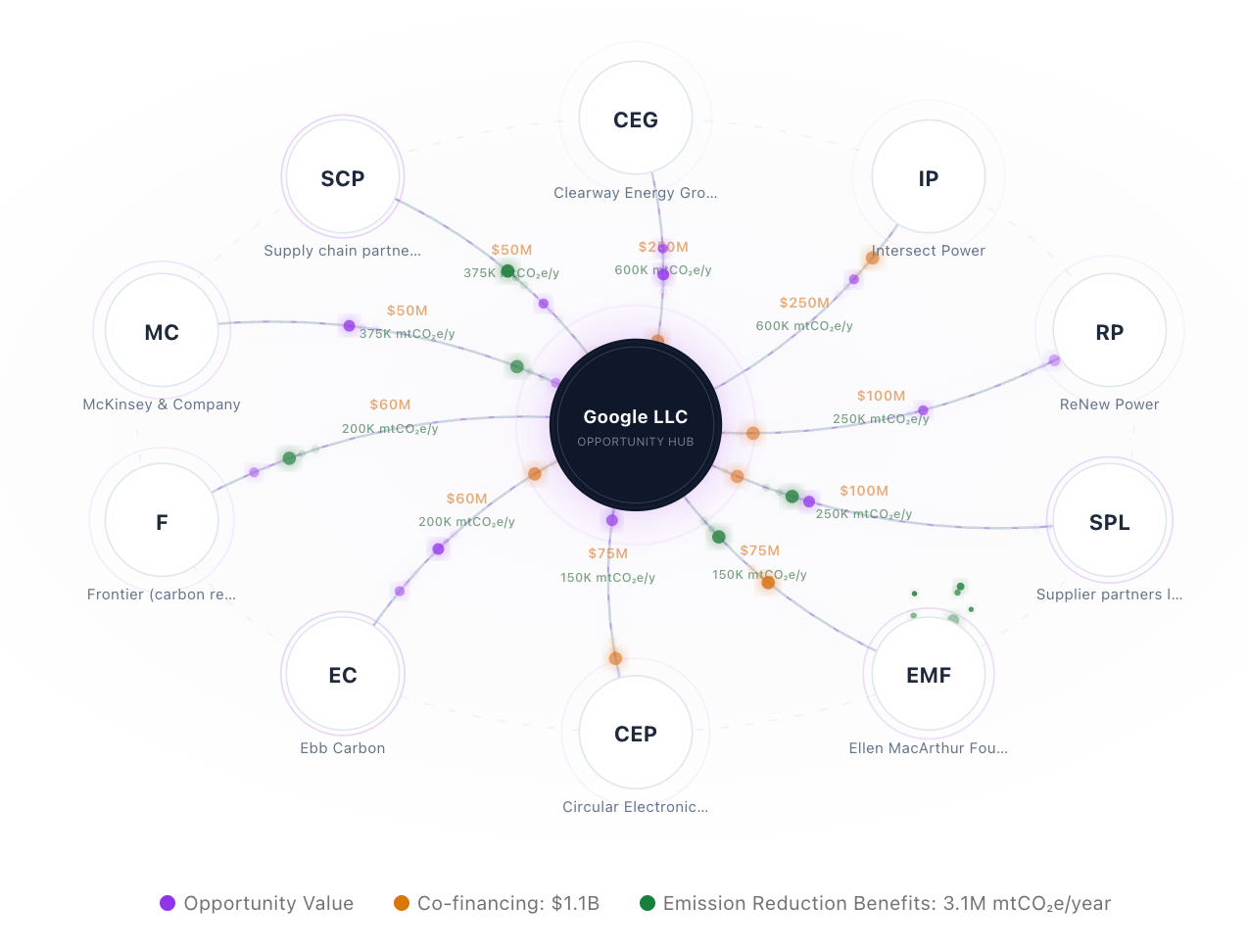
Underneath, this is not one prompt. It is five. Each specialist is an independent agent with its own prompt, its own grounding sources, and its own tool budget. They run in parallel. The synthesis layer reads all five outputs and produces the executive summary plus the action plan as a single coherent narrative.
4. Recursive Stakeholder Graphs
The Research Opportunities tool is small but it teaches something important about how agentic systems compound. You ask for insetting opportunities for one company. The agent researches it, identifies 3–5 high-impact projects, and, crucially, names the stakeholders involved in each opportunity. A project to electrify a logistics fleet names the logistics operator. A regenerative agriculture project names the cooperative.
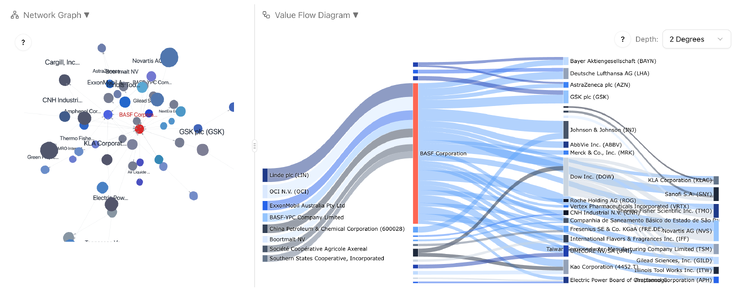
Each named stakeholder that turns out to be a real, identifiable company is automatically enqueued for its own Research Opportunities run. The next time someone queries us about that stakeholder, we already have its opportunity map. And its stakeholders are then enqueued in turn.
Over time the graph becomes a map of an industry's decarbonization surface area, which suppliers connect to which buyers, which projects already exist, which gaps are open. It is built without us writing a crawler, without us paying a data vendor, and without us running a single human-led research engagement. It is the byproduct of agents calling agents, gated at every step by guardrails on what counts as a real company and what does not. This is the pattern we keep returning to: don't pay for data; design a system where collecting the data is a side effect of doing the work.
5. Beyond Discovery: End-to-End Market Operations
The public tools described above, discovery, research, and opportunity mapping, are just the top of the funnel. They get companies in the door and answer the "what's in it for me?" question by identifying specific supply-chain partners and high-ROI projects. But the other half of the equation is what happens after a company is on the platform.
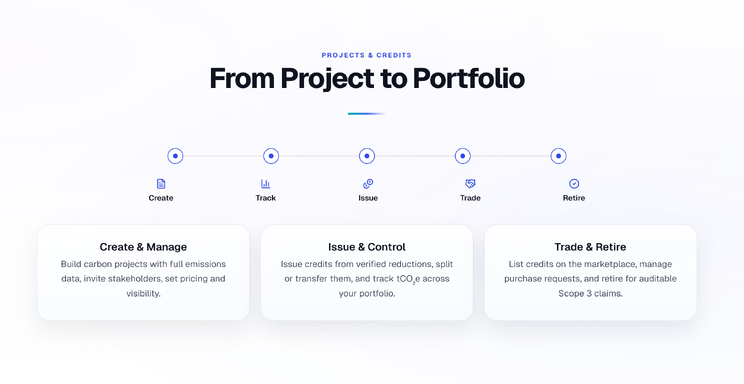
Once a project is underway, agentic infrastructure shifts from discovery to execution and ongoing management:
-
Market Operations & Pricing: Agents continuously analyze market liquidity, project risk profiles, and historical transaction data to provide dynamic pricing models and match buyers with the right insetting projects.
-
Onboarding & Risk/Fraud Mitigation: During onboarding, agents conduct automated KYC/KYB, cross-reference corporate registries, and flag anomalies or inconsistencies in stakeholder data to prevent fraud before capital flows.
-
Backoffice & Payments: Managing insetting projects involves significant administrative overhead. Agents automate the backoffice by extracting data from invoices, reconciling payments against project milestones, and structuring tax-compliant documentation.
-
Ongoing Project Monitoring: Instead of waiting for annual manual reviews, agents provide continuous monitoring by ingesting updated data streams (e.g., IoT sensors, supply chain software), drafting retirement certificates, and triggering automated disbursements when reduction milestones are met.
In short, AI handles the end-to-end operations, turning what used to be a heavily manual, expensive administrative burden into a streamlined, cost-effective programmatic workflow.
6. The Autonomous Ops Loop
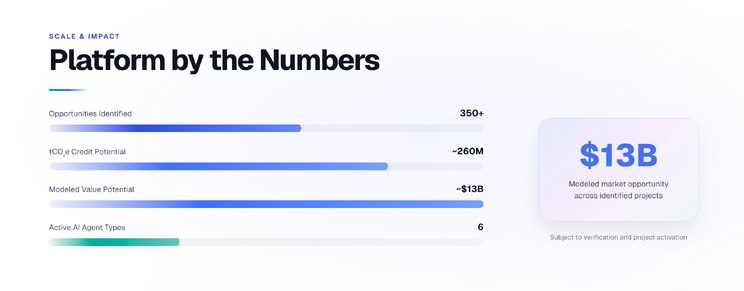
The same architecture extends inward, to how we run the company itself. Six stations form a closed loop:
-
Signals come in from founder conversations, market events, partner chats. Most of this is unstructured text in messengers and email threads.
-
A sync agent parses these signals, deduplicates them by topic, and writes structured pages into our shared Notion workspace, one page per topical thread, with action items, draft posts, and research briefs already attached.
-
Cron-driven research and enrichment agents run nightly. New companies surfaced in conversations get auto-discovered; missing emissions data gets backfilled; outdated reports get refreshed.
-
A draft generator produces specific outputs the team needs: LinkedIn posts in each founder's voice, cold-outreach email variants, one-pager structures, briefing notes, demo scripts. Every draft is clearly labelled AI draft, review before sending.
-
Confidence-gated autonomous contributions. Two of our agents continuously curate public open-source repositories the company maintains. They research the current state of the field, propose a contribution (a new resource, a new category, a structural improvement), grade their own confidence, and if the score clears 75/100 and their evidence trail clears a minimum bar (≥5 repo files reviewed, ≥1 open PR, ≥3 merged PRs studied), they open a real pull request. Below threshold, they skip the run silently.
-
An admin dashboard is the human-in-the-loop control surface. Every agent run is logged with a status, every job is inspectable, every action is triggerable manually. Failed jobs surface their full context for debugging.
The economics here matter. We are a small founding team. The ops loop above is the equivalent of a small content/research/community team running 24/7, but it costs the price of model tokens, and it scales linearly with how much signal we feed it.
Final words
Carbon3 is the financial infrastructure for supply-chain decarbonization, built on the bet that agentic AI changes the unit economics of the carbon market end-to-end, from discovery, to research, to certification, to settlement. Most of what we just described is live and free to use. The rest is the next eighteen months.
If any of this is useful to you:
-
Use the free tools at demo.carbon3.net, the Company Report is the fastest way to see the multi-agent stack in action.
-
Read the open repos at github.com/co3org, the autonomous contributor agents described in section 7 keep them current.
-
Talk to us, carbon3.net for project owners, supply-chain partners, credit buyers, ESG advisors, and infrastructure partners interested in CIS v1.0 piloting.
We are a small team building a large market. The most useful thing we can do for the rest of the climate-tech ecosystem is to publish the architecture and let others copy what works.
Originally published on LinkedIn, 15 April 2026.
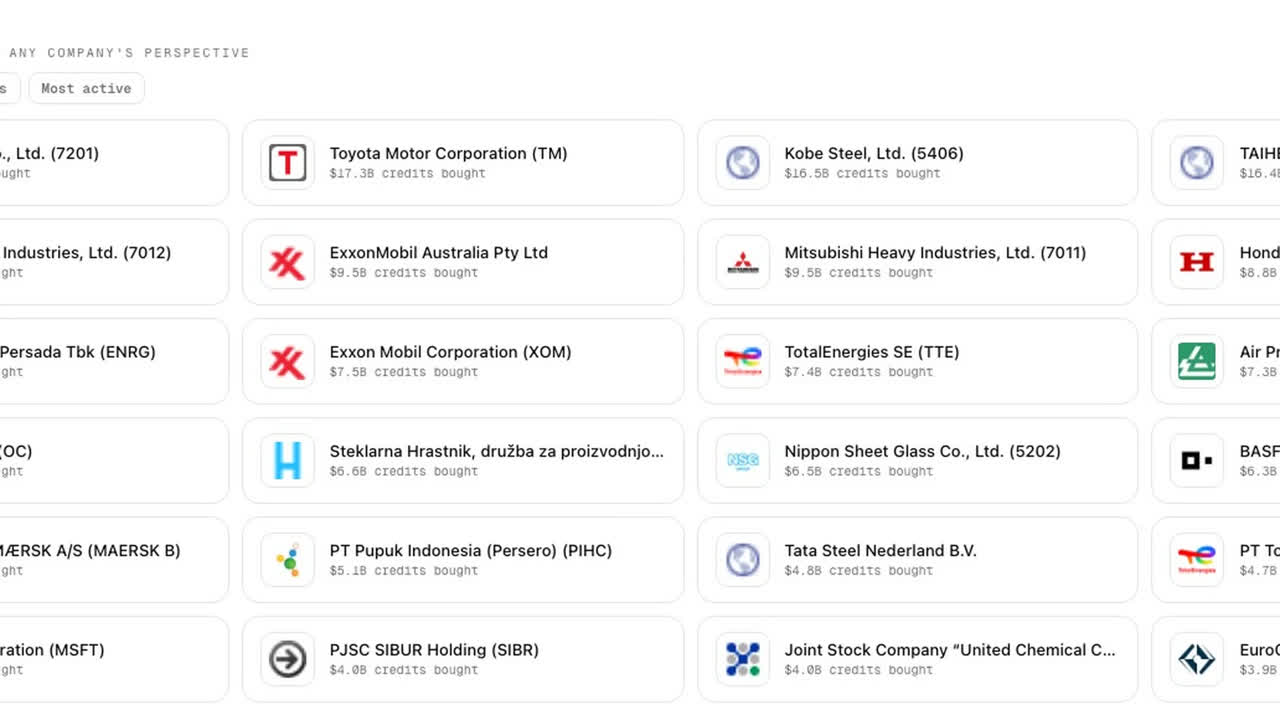
We built a global insetting market and simulated it end to end
Supply-chain decarbonisation is a financing problem. The question is who profits most when a Scope 3 market emerges.
Read insight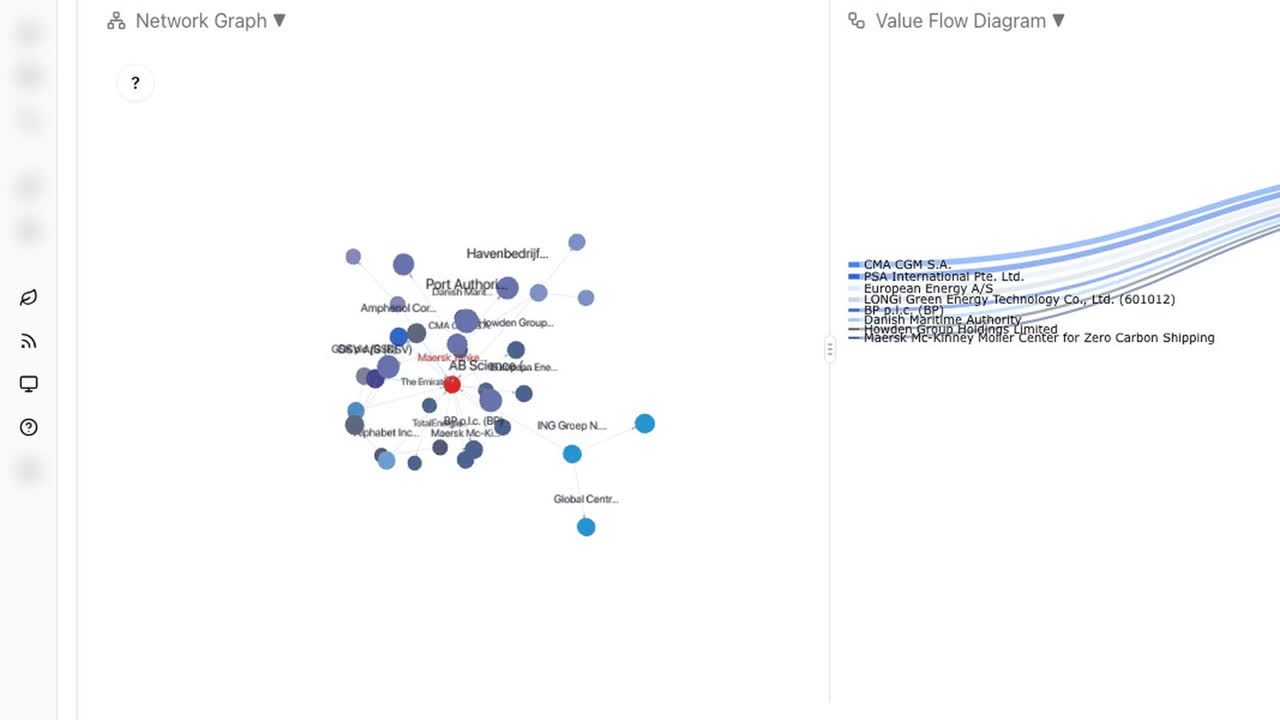
200 million tonnes of Scope 3 opportunities, mapped
C3's AI agents mapped 1,694 insetting opportunities across 364 companies and 1,500 value-chain partners.
Read insight