Heavy industry has a pipeline, not yet a committed build
CCUS investment has grown more than fifteen-fold since 2020, yet almost 90 percent of announced projects have not reached final investment decision.
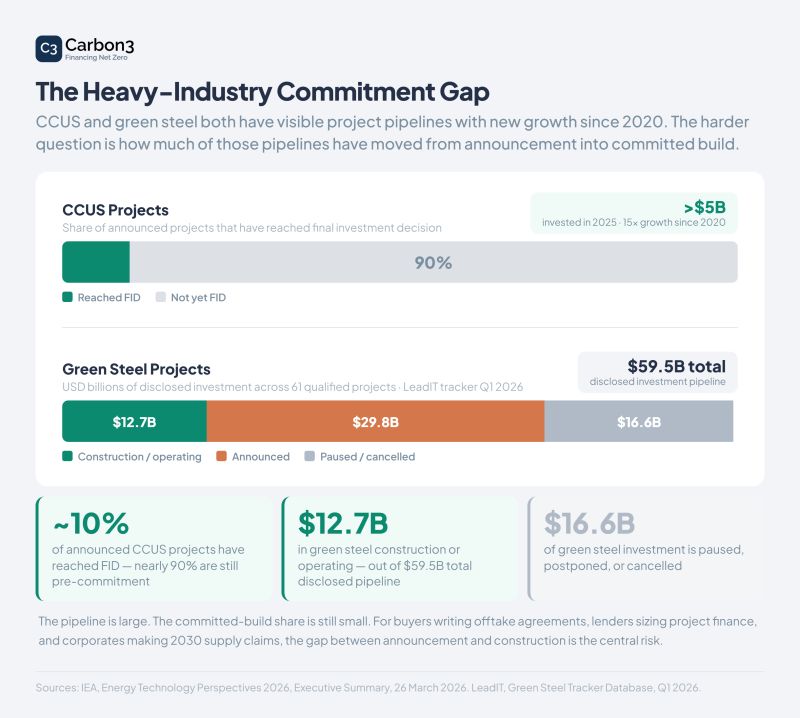
Heavy industry decarbonization is moving from theory to pipeline, but not yet from pipeline to committed build. CCUS investment has grown more than 15x since 2020, yet almost 90% of announced projects still haven’t reached FID; green steel shows a similar gap, with ~$59.5B of disclosed project investment but only ~$12.7B in projects already under construction or operating.
The gap between announced and committed capital is the clearest measure of what is missing in industrial decarbonisation. The technology is known and the projects are designed. What stops the final investment decision is the absence of a buyer who will pay the premium for the lower-carbon output over a term that a lender can finance against.
Downstream companies with Scope 3 targets are those buyers, whether or not they have recognised it. Forward commitments from them, structured as inset credits that allocate the verified reduction, can convert a share of the announced pipeline into projects under construction. That conversion is the point at which the transition becomes physical.
Originally published on LinkedIn, 15 June 2026.
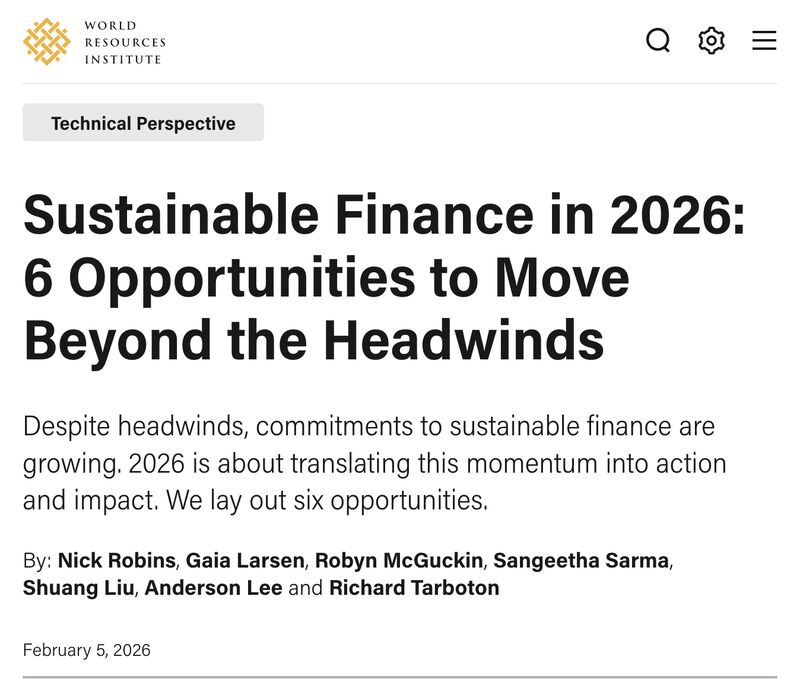
Six opportunities for sustainable finance, and the gap beneath them
WRI's 2026 list is right about the institutional constraints. Underneath them sits a market-design problem: Scope 3 reductions remain an unpriced cost.
Read insight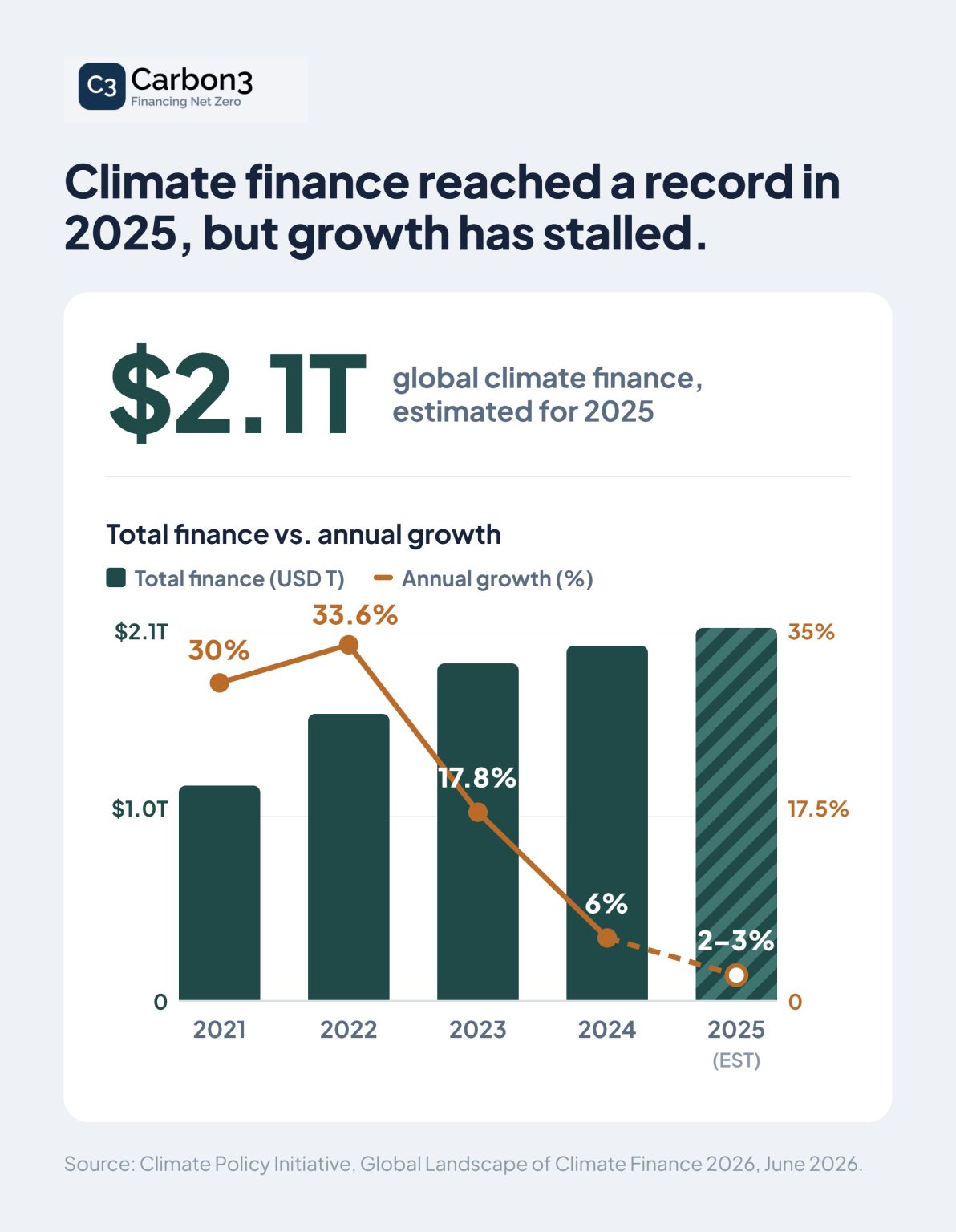
Global climate finance has crossed USD 2 trillion, but growth is slowing
Annual flows passed USD 2 trillion, while the growth rate fell from 30 percent in 2021 to an estimated 2 to 3 percent in 2025.
Read insight