Linking Scope 1 reductions to the buyers who need them
Upstream companies struggle to finance decarbonisation. Downstream companies need credible Scope 3 progress. One model connects the two.
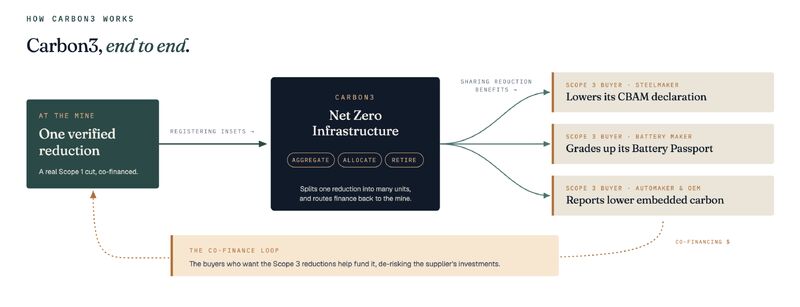
Many upstream companies struggle to finance decarbonisation initiatives because the capital required is high and traditional funders see limited direct returns from Scope 1 reductions. At the same time, downstream companies face growing pressure to deliver credible Scope 3 improvements to meet regulatory requirements and stakeholder expectations, yet often lack effective ways to drive actual reductions in their supply chains.
By linking verified Scope 1 reductions directly to the buyers who need them, this model allows buyers to co-finance the cuts that improve their own Scope 3 position. Project owners gain access to capital from the companies that benefit most from their emissions reductions, lowering financing barriers and risk. Buyers, in turn, secure traceable Scope 3 benefits that help lower carbon costs, strengthen product-level disclosures, and improve overall supply chain performance.
The result is a more efficient allocation of capital across the value chain. Reductions become easier to fund at source, and buyers gain a practical way to improve their regulatory and reporting position while actively supporting decarbonisation where it matters most.
Downstream companies receive direct, auditable benefits:
- Steelmakers lower the carbon intensity declared under CBAM.
- Battery makers improve the grade of their Battery Passport.
- Automakers and OEMs report lower embedded carbon in their products.
Learn more in our 2026 Mining Industry Report linkedin.com
Pilot your project(s) with C3 today: carbon3.net
Originally published on LinkedIn, 24 June 2026.
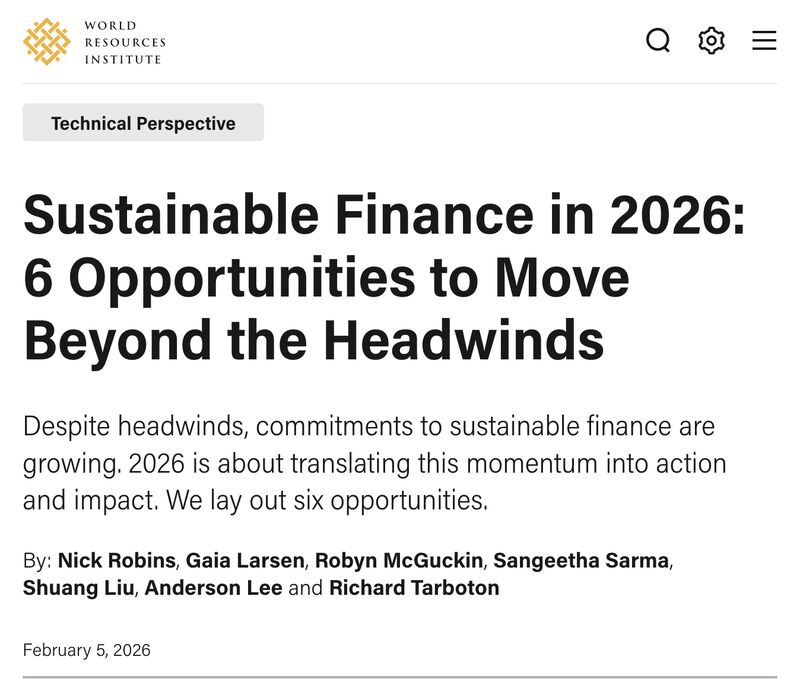
Six opportunities for sustainable finance, and the gap beneath them
WRI's 2026 list is right about the institutional constraints. Underneath them sits a market-design problem: Scope 3 reductions remain an unpriced cost.
Read insight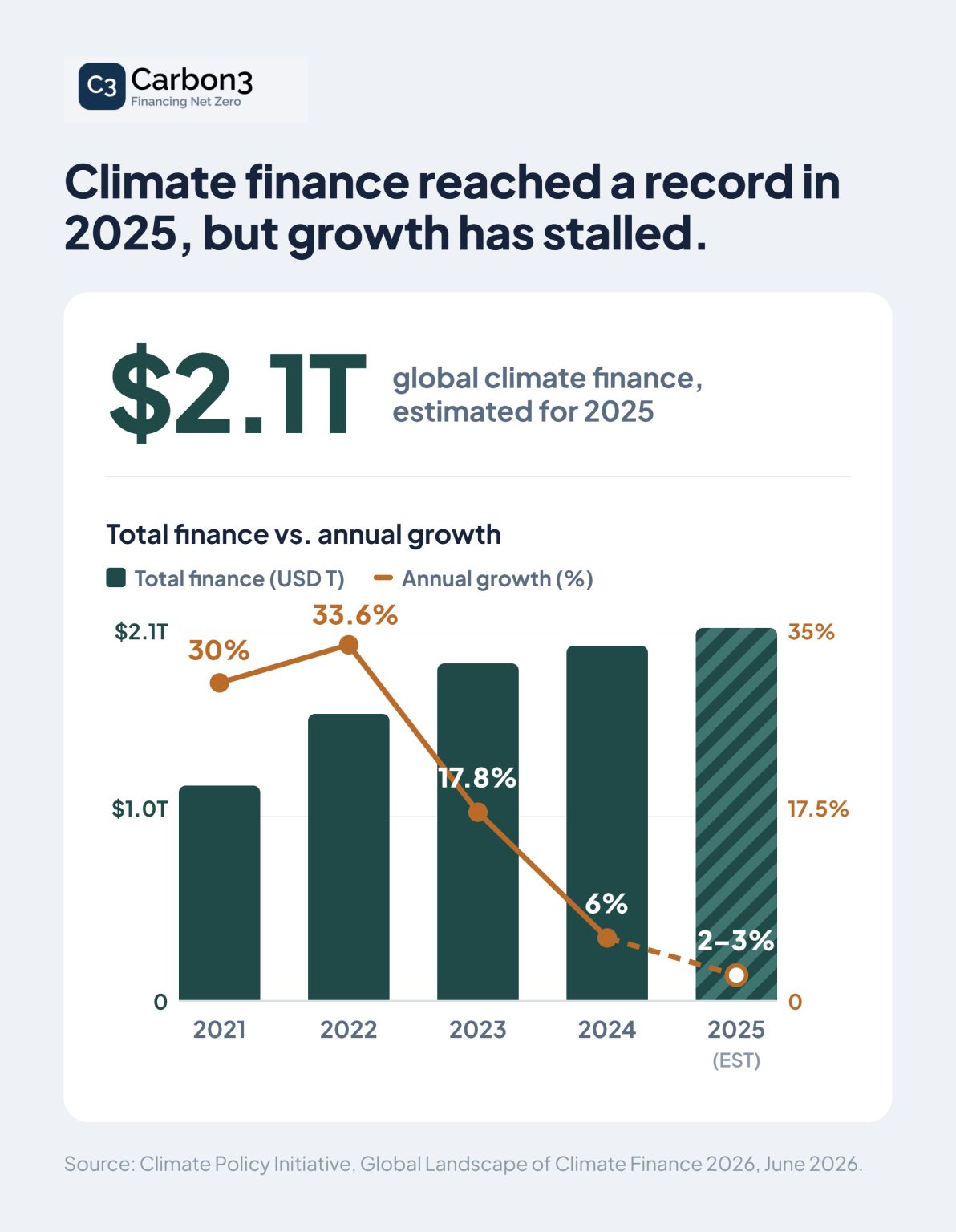
Global climate finance has crossed USD 2 trillion, but growth is slowing
Annual flows passed USD 2 trillion, while the growth rate fell from 30 percent in 2021 to an estimated 2 to 3 percent in 2025.
Read insight