What SBTi's Net-Zero Standard V2.0 changes for Scope 3 implementation
Activity-specific action, supplier alignment, shared systems and high-integrity instruments under clear guardrails.
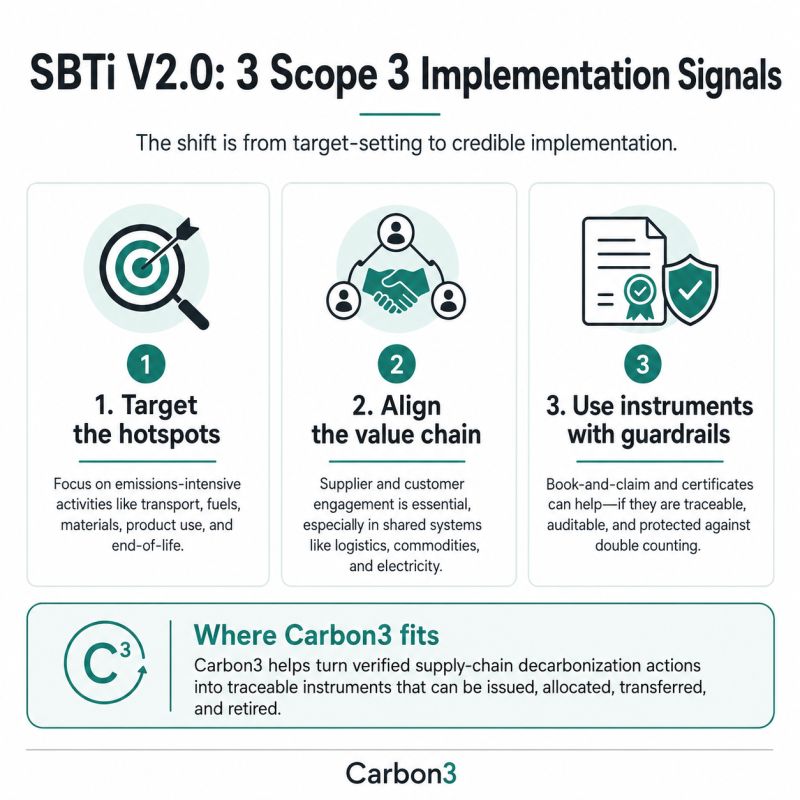
Last week, we shared an analysis on the SBTi Corporate Net-Zero Standard V2.0 and why it matters for Scope 3.
The standard is increasingly about how companies can credibly implement emissions reduction targets.
For many companies, Scope 3 is where climate ambition becomes operationally difficult. These emissions sit across suppliers, customers, logistics providers, materials, product use, and end-of-life pathways. Companies influence these systems, but do not directly control them.
The new SBTi framework gives companies more practical ways to act, while raising the bar for integrity.
First, Scope 3 action is becoming more activity-specific. Companies can focus on emissions-intensive parts of the value chain, such as transport, steel, cement, electricity use, or circular end-of-life solutions. A generic Scope 3 percentage target is often too blunt. Companies need to know which activities drive emissions, what interventions are possible, and how progress should be measured.
Second, supplier and customer alignment is becoming more central. It is not enough to publish a target and wait for emissions to fall. Companies need mechanisms to engage suppliers, procure lower-carbon inputs, and move counterparties toward credible climate alignment.
Third, many emissions sit in shared systems. A logistics network, commodity supply shed, or electricity grid cannot always be decarbonized by one company acting alone. Companies may need ways to support activity-pool or sector-level action, provided the action is relevant, measurable, auditable, and not a substitute for feasible direct reductions.
Fourth, high-integrity market instruments have a role, but only under clear guardrails. Commodity certificates, book-and-claim models, and other instruments can connect climate finance with real decarbonization. But they need strong tracking, chain of custody, double-counting prevention, and claims language.
This is where Carbon3 can add value.
Carbon3 is building infrastructure for Scope 3 implementation. Our platform helps companies and project partners turn verified supply-chain decarbonization actions into traceable instruments that can be issued, allocated, transferred, and retired. We focus on the operational plumbing companies need to move from “we have a target” to “we can document what action was taken, who funded it, and what claim is appropriate.”
That includes lower-carbon fuels, maritime and logistics decarbonization, circular materials, industrial supply chains, and other sectors where Scope 3 emissions are material but difficult to finance and track.
The key is to make real decarbonization easier to finance, verify, and connect to corporate climate strategies.
As the market moves from target-setting to implementation, companies will need better systems for evidence, attribution, claim discipline, and value-chain collaboration.
That is the gap Carbon3 is working to fill.
Originally published on LinkedIn, 15 June 2026.
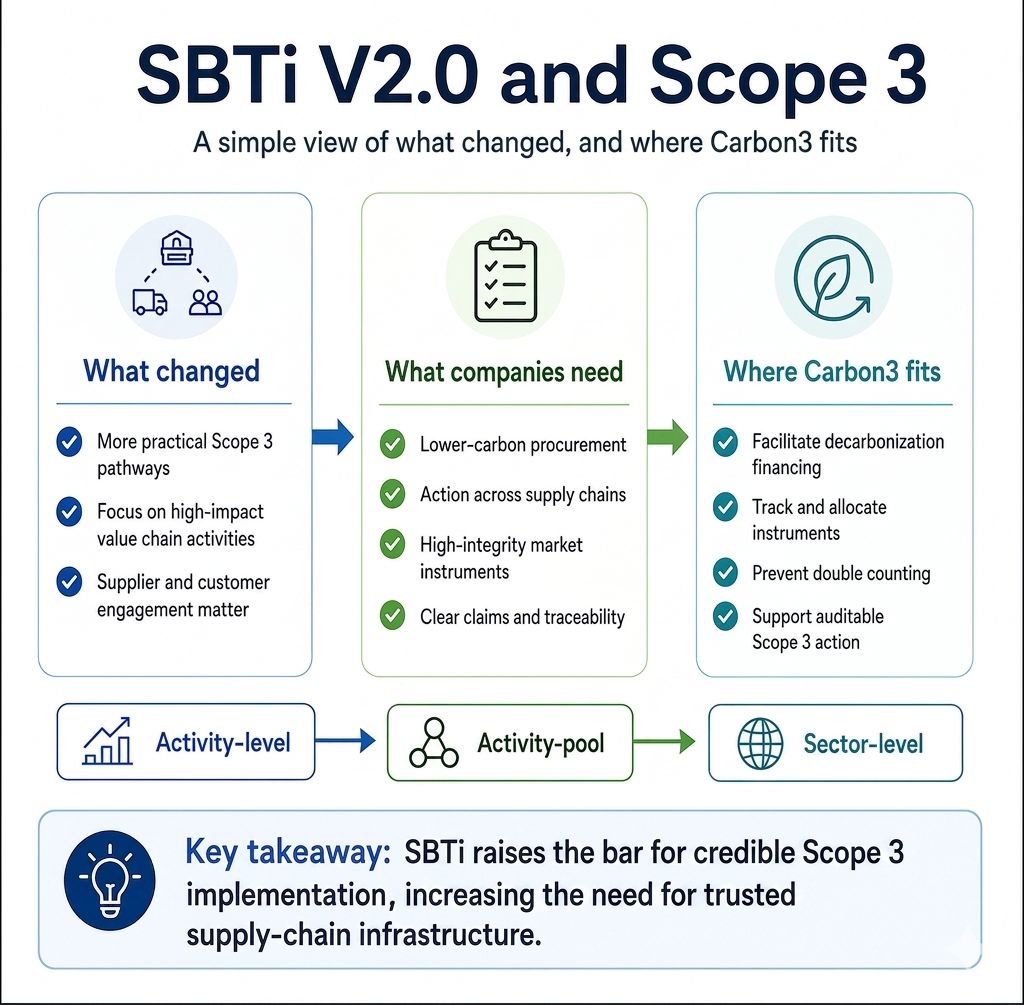
SBTi Net-Zero Standard V2.0 raises the bar for Scope 3
Setting targets is no longer enough. Companies need credible, transparent ways to implement them across value chains.
Read insight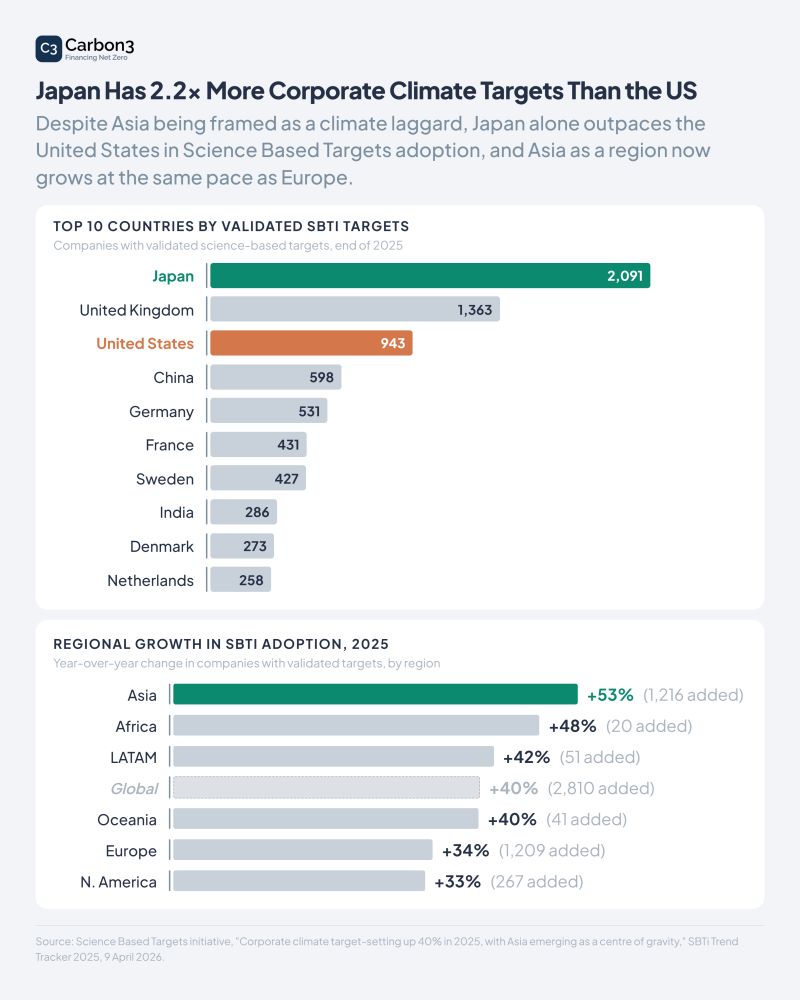
Japan has more than twice the validated SBTi targets of the United States
Asia's regional adoption of science-based targets is growing faster than Europe's.
Read insight