SBTi Net-Zero Standard V2.0 raises the bar for Scope 3
Setting targets is no longer enough. Companies need credible, transparent ways to implement them across value chains.
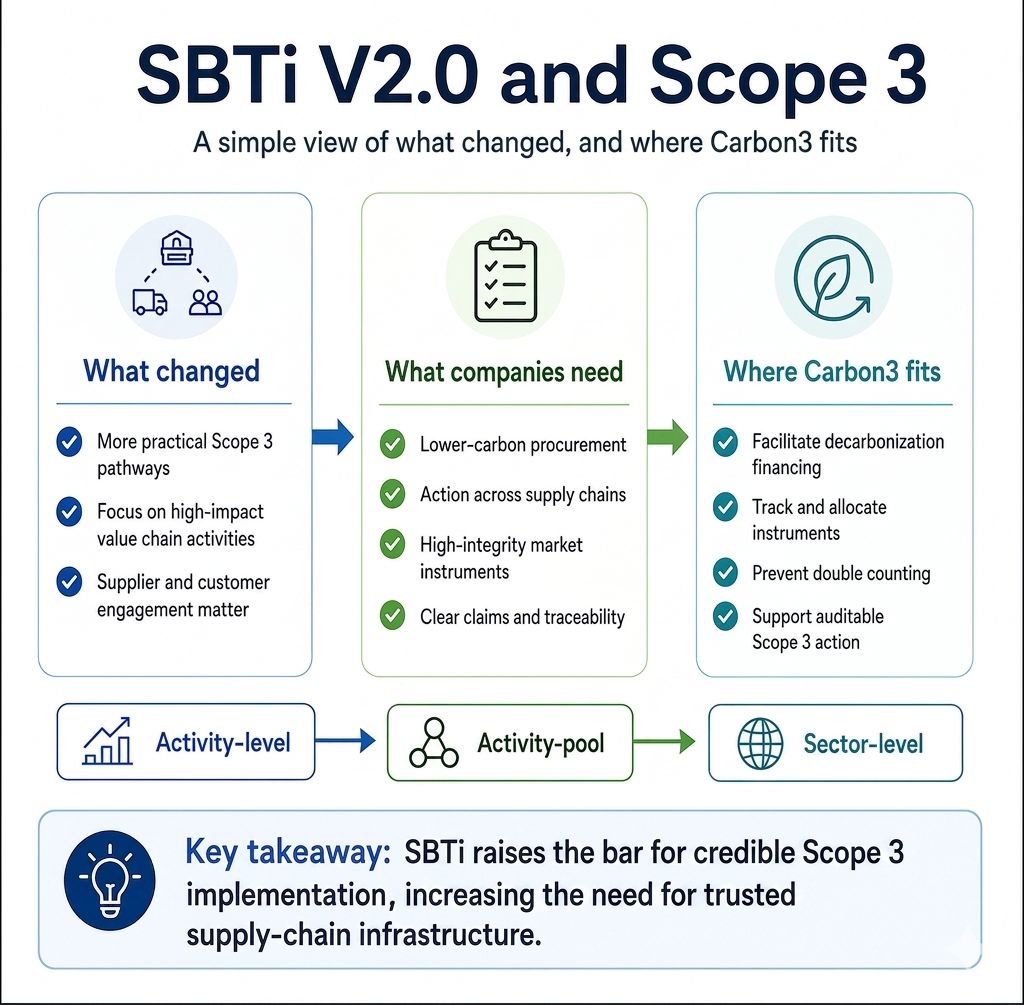
The new SBTi Corporate Net-Zero Standard V2.0 marks an important shift in how companies can think about Scope 3 decarbonization.
The key message is clear: setting climate targets is not enough. Companies now need credible, transparent ways to implement them across complex value chains.
For Scope 3, the updated framework places greater emphasis on practical action: supplier and customer engagement, lower-carbon procurement, activity-specific targets, emissions-intensive value chain activities, and the use of high-integrity market instruments where appropriate. It also recognizes that many emissions sit in shared systems, such as logistics networks, fuel supply chains, commodity markets, and other activity pools.
This is the challenge Carbon3 was built to address.
Carbon3 helps companies finance, track, allocate, transfer, and retire verified supply-chain decarbonization instruments. Our platform is designed to support the kinds of actions companies will increasingly need: funding lower-carbon projects, documenting chain of custody, preventing double counting, enabling appropriate claims, and connecting buyers with credible emissions-reduction opportunities across their value chains.
The new SBTi framework does not create a shortcut around real decarbonization. It raises the bar. But it also validates the need for better infrastructure to make Scope 3 action measurable, financeable, and scalable.
As companies move from target-setting to implementation, Carbon3 is building the platform layer to help turn supply-chain emissions reductions into credible, auditable climate action.
Originally published on LinkedIn, 11 June 2026.
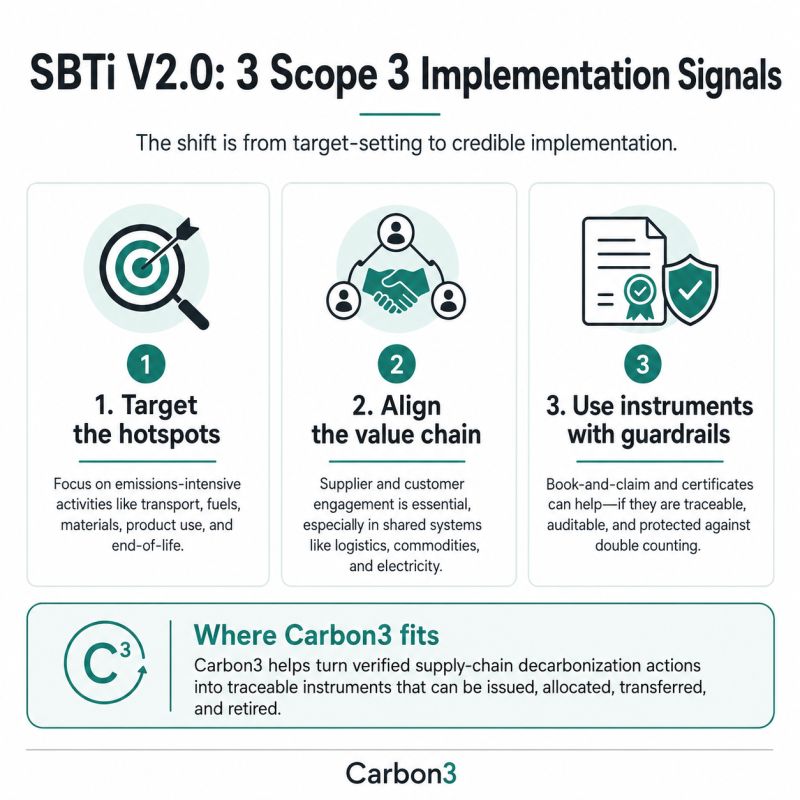
What SBTi's Net-Zero Standard V2.0 changes for Scope 3 implementation
Activity-specific action, supplier alignment, shared systems and high-integrity instruments under clear guardrails.
Read insight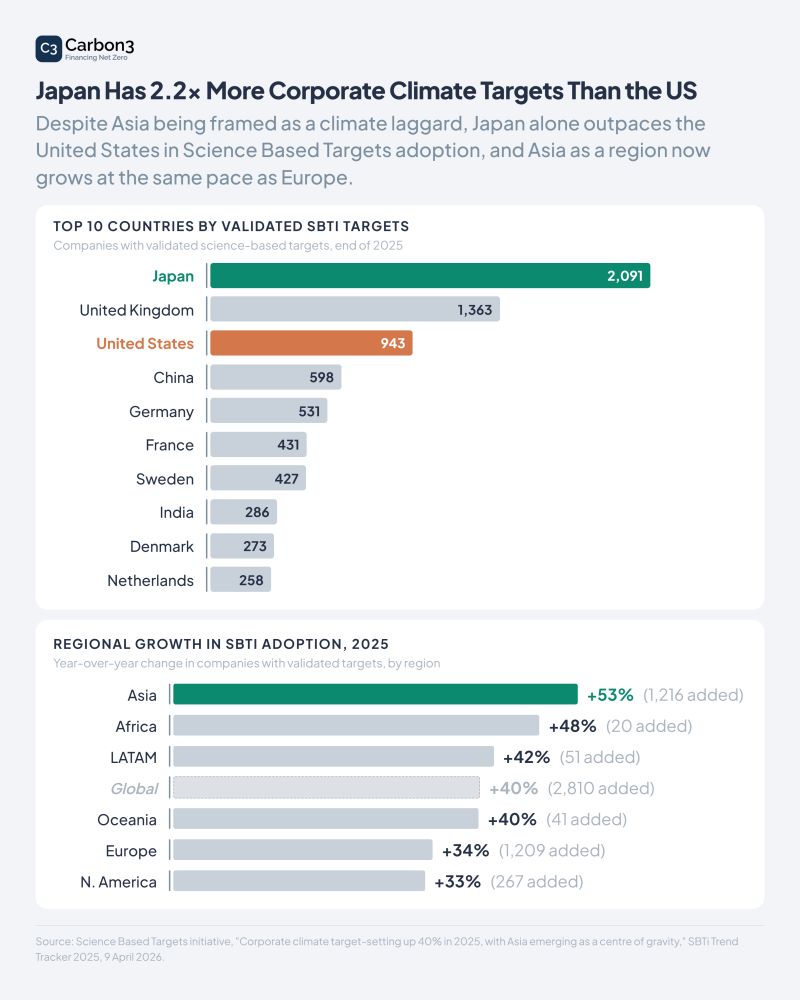
Japan has more than twice the validated SBTi targets of the United States
Asia's regional adoption of science-based targets is growing faster than Europe's.
Read insight