Carbon pricing covers nearly 30 percent of global emissions
Pricing systems raised more than USD 107 billion for public budgets in 2025. The next question is how those revenues are recycled.
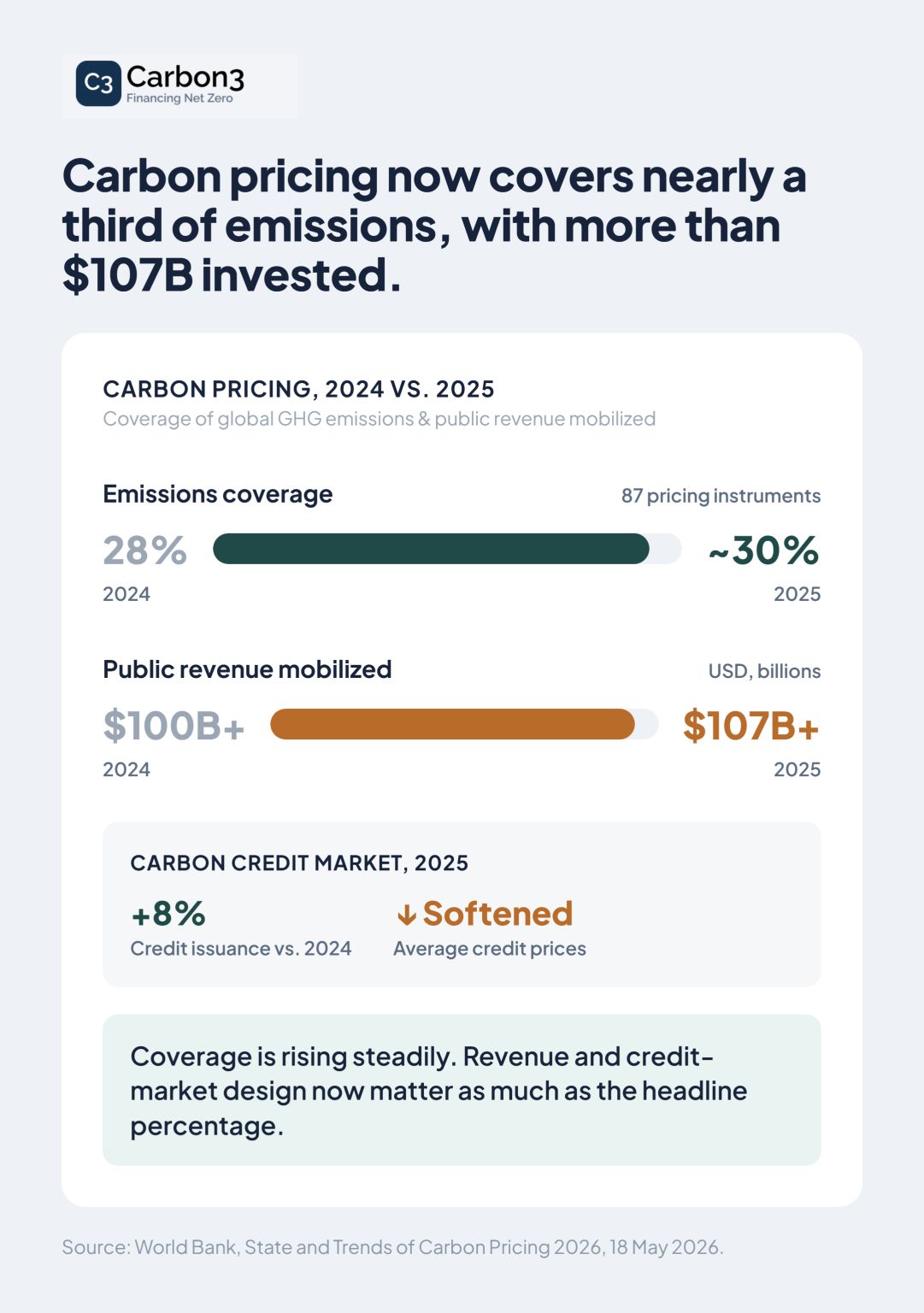
Carbon pricing now covers nearly 30% of global greenhouse gas emissions and raised more than USD 107 billion for public budgets in 2025. The next question is not just whether emissions are priced, but how those revenues are recycled into competitiveness, resilience and real-economy decarbonization.
Coverage and revenue are the two figures that get quoted, but the third question in the post is the one that decides whether pricing changes behaviour. Revenue that is returned as compensation preserves the status quo. Revenue that is recycled into competitiveness and real-economy abatement changes the investment case for the industries being priced.
Recycling is also where corporate value chains can act without waiting for governments. A buyer facing a carbon cost on imported steel or cement has a financial reason to fund the supplier's reduction directly and to recover part of the value as a Scope 3 claim. That private recycling channel is what insetting provides.
Originally published on LinkedIn, 20 July 2026.
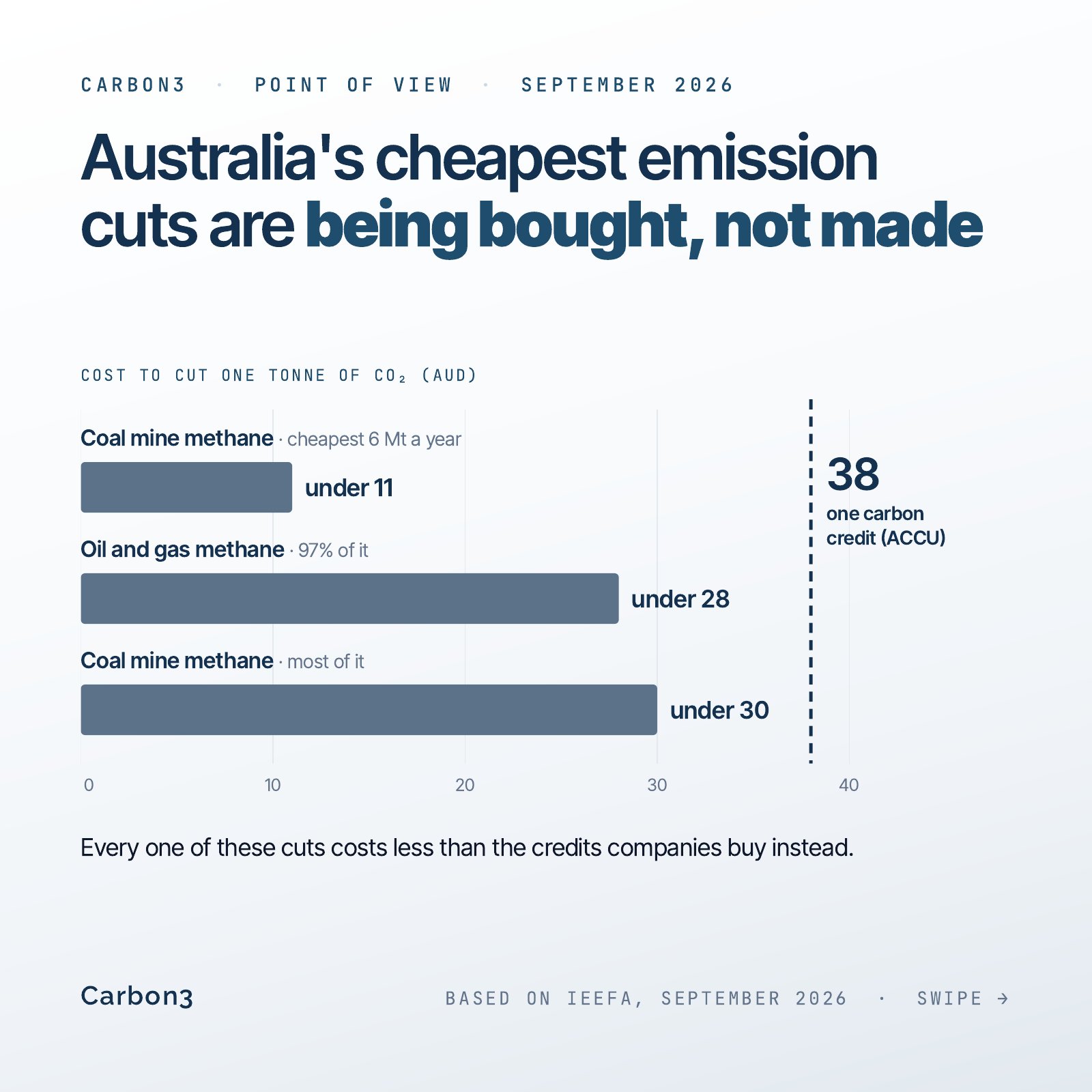
Australia's cheapest emission cuts are being bought, not made
IEEFA finds capturing methane from coal and gas would cost less than AUD 30 a tonne, well under the price of a carbon credit. Most facilities are not doing it.
Read insight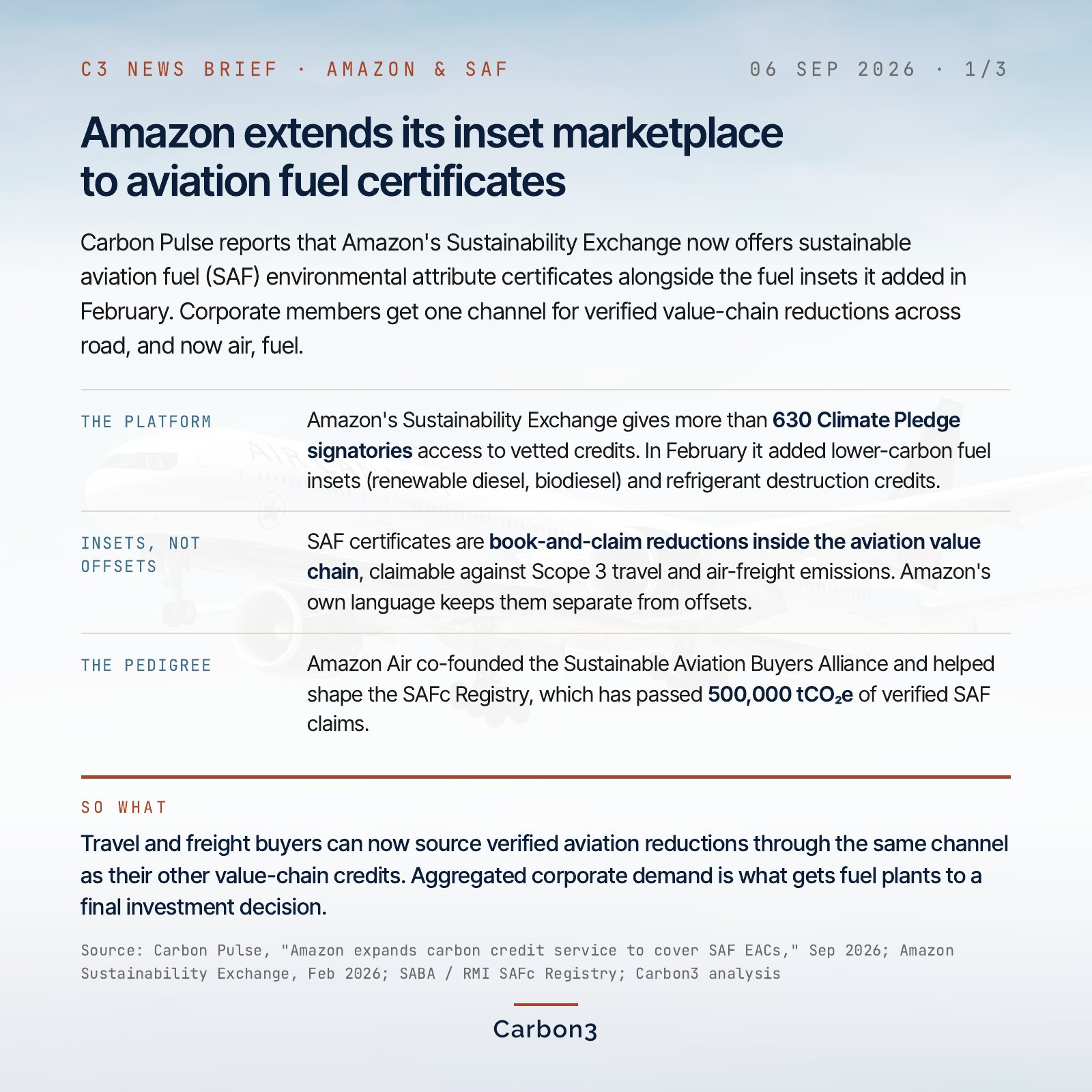
Three signals from the first week of September 2026
Amazon extends its inset marketplace to aviation fuel, a study brackets the carbon tax level that works, and Singapore signs a credit agreement with Laos.
Read insight