Delta Electronics: Scope 3 is 71 percent of the footprint
In electronics the challenge is purchased electricity, supplier alignment and downstream product impacts, not on-site combustion.
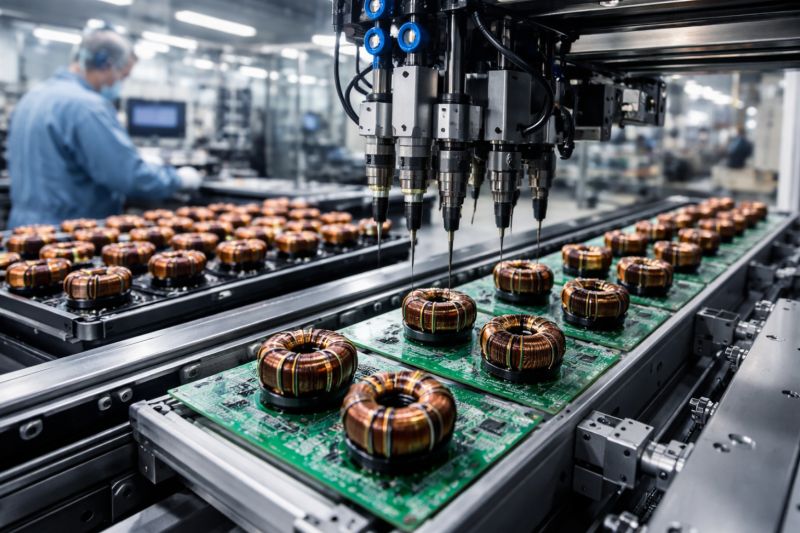
As climate disclosure expectations tighten across electronics supply chains, companies are being judged less by direct factory emissions alone and more by how they manage the much larger footprint across energy use and product life cycles.
Delta Electronics (Thailand)’s latest greenhouse gas inventory is a useful example. Its 2024 report shows roughly 49,288 tCO₂e in market-based Scope 2 emissions and 141,783 tCO₂e in Scope 3, with Scope 3 making up about 71% of the reported footprint. The report also shows a Scope 1 + 2 market-based intensity of 12.23, underscoring how procurement and energy sourcing choices increasingly shape competitiveness in electronics manufacturing.
What stands out here is not just the size of the footprint, but the composition. In electronics, the strategic challenge is often less about on-site combustion and more about purchased electricity, supplier alignment, and downstream product impacts. That has implications for cost resilience, customer requirements, and future access to lower-carbon supply chains.
For manufacturers serving global customers, this is becoming as much a commercial issue as a reporting one.
How are electronics companies structuring value-chain collaboration to reduce emissions without adding friction to cost or delivery?
Delta Electronics
Originally published on LinkedIn, 19 March 2026.
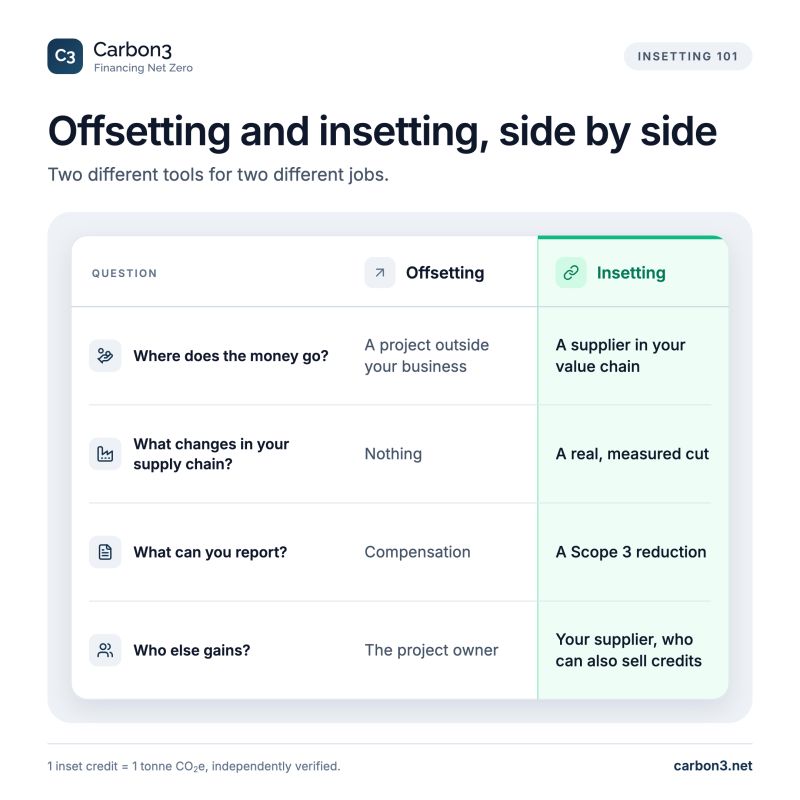
Insetting turns a sustainability expense into a supplier relationship
BASF and Boortmalt on barley emissions, Royal Canin and Soil Capital on 300,000 hectares of farmland, and ZEMBA on pooled buying power for low-emission shipping.
Read insight
DP World's Insetify: inset credits at commercial scale
Offering credits at no cost to customers is a deliberate market-building strategy. Create the buyer habit first; price discovery follows.
Read insight