Flex: 115 million tonnes of shared value-chain emissions
Manufacturers share supplier networks, materials pathways and regulatory exposure. Progress depends on coordinated supplier decarbonisation.
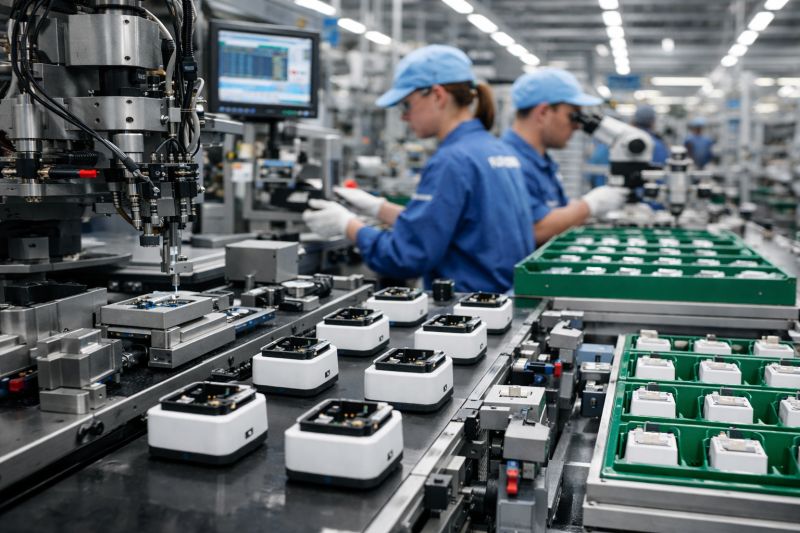
Flex’s latest climate disclosures highlight just how large manufacturing Scope 3 emissions can become in globally integrated supply chains.
According to recent CDP disclosures, Flex reports roughly 115 million tonnes of Scope 3 emissions across its value chain, far exceeding its direct operational footprint.
That pattern isn’t unique.
Across manufacturing sectors, companies like Otis and Komatsu are reporting similarly large value-chain footprints, driven largely by supplier inputs and product use downstream.
What this highlights is how much decarbonization now depends on collaboration across industrial ecosystems rather than action by any single company.
Manufacturers increasingly share:
- overlapping supplier networks
- common materials and logistics pathways
- similar regulatory exposure across markets
As climate disclosure rules expand, from EU CSRD to evolving Scope 3 expectations globally, companies are under growing pressure to demonstrate credible emissions reductions across these supply chains.
That raises an interesting question for large manufacturing platforms like Flex.
If so much of the footprint sits across shared value chains, meaningful progress may depend on coordinated approaches to supplier decarbonization rather than isolated efforts.
How are manufacturers like Flex thinking about collaboration across supply chains to accelerate Scope 3 reductions?
Flex Barjouth Aguilar Ayala
Originally published on LinkedIn, 11 March 2026.
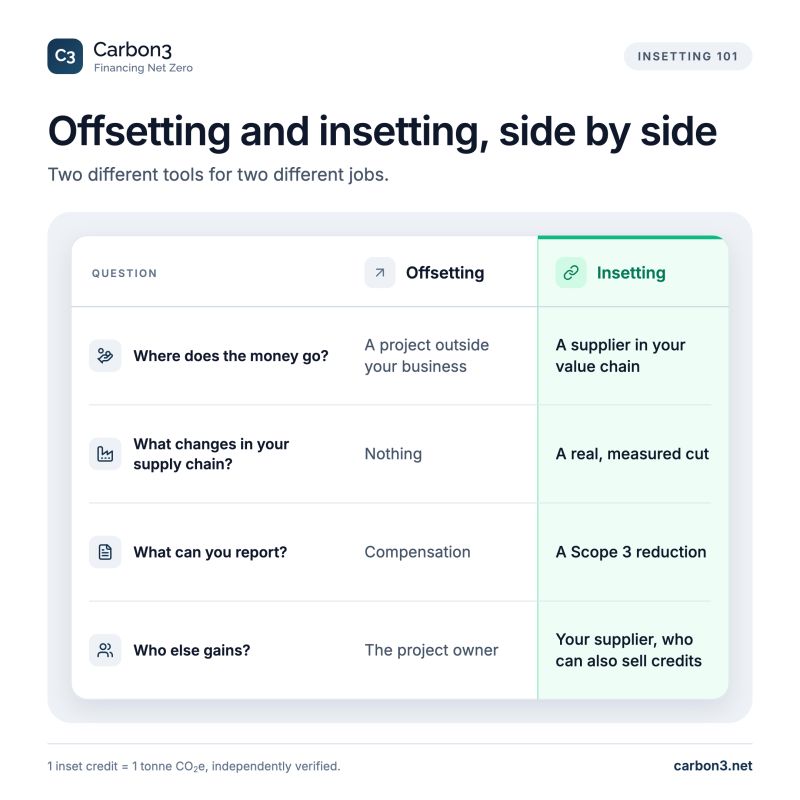
Insetting turns a sustainability expense into a supplier relationship
BASF and Boortmalt on barley emissions, Royal Canin and Soil Capital on 300,000 hectares of farmland, and ZEMBA on pooled buying power for low-emission shipping.
Read insight
DP World's Insetify: inset credits at commercial scale
Offering credits at no cost to customers is a deliberate market-building strategy. Create the buyer habit first; price discovery follows.
Read insight