LNG could add 300 bcm of export capacity by 2030 that demand may not absorb
Under the IEA's Stated Policies Scenario, renewables, nuclear and efficiency leave a potential 65 bcm overhang.
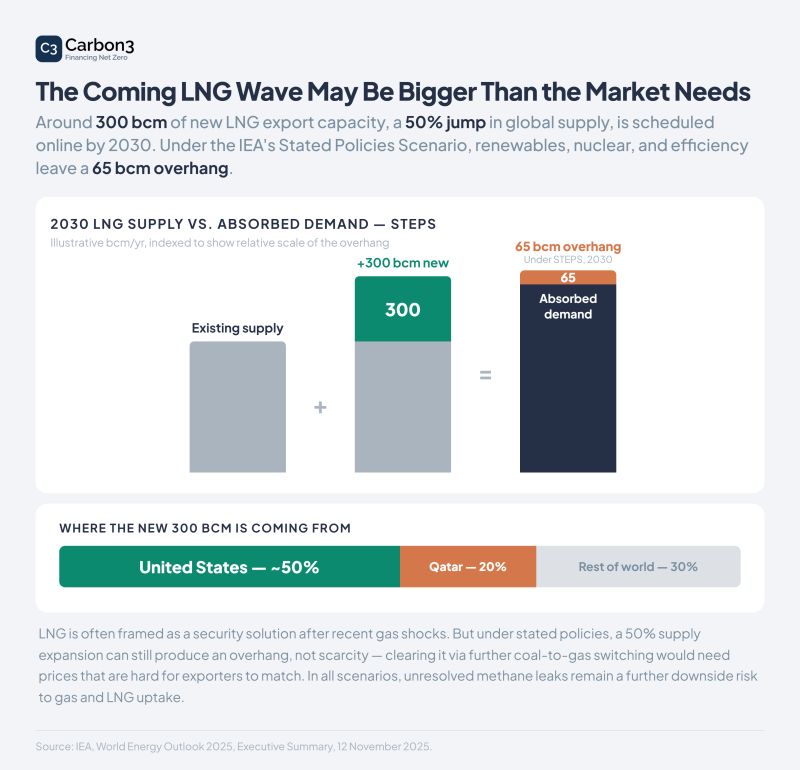
By 2030, the LNG market could add around 300 bcm of new annual export capacity, increasing available global supply by roughly 50%. But under the IEA’s Stated Policies Scenario, demand may not absorb it all, leaving a potential 65 bcm overhang as renewables, nuclear and efficiency limit gas upside in key markets.
A supply overhang of that size would have consequences beyond gas markets. It would lower the price of the fossil alternative that green fuels compete against, and it would leave investors holding assets that were financed on demand assumptions that did not materialise. Both effects widen the premium that lower-carbon fuels have to clear.
For shipping and industrial buyers, the lesson is that waiting for the green premium to disappear on its own is not a strategy. The premium has to be shared across the value chain by the parties who benefit from the reduction. That is the role of an inset credit, and it works regardless of where the gas price settles.
Originally published on LinkedIn, 13 July 2026.
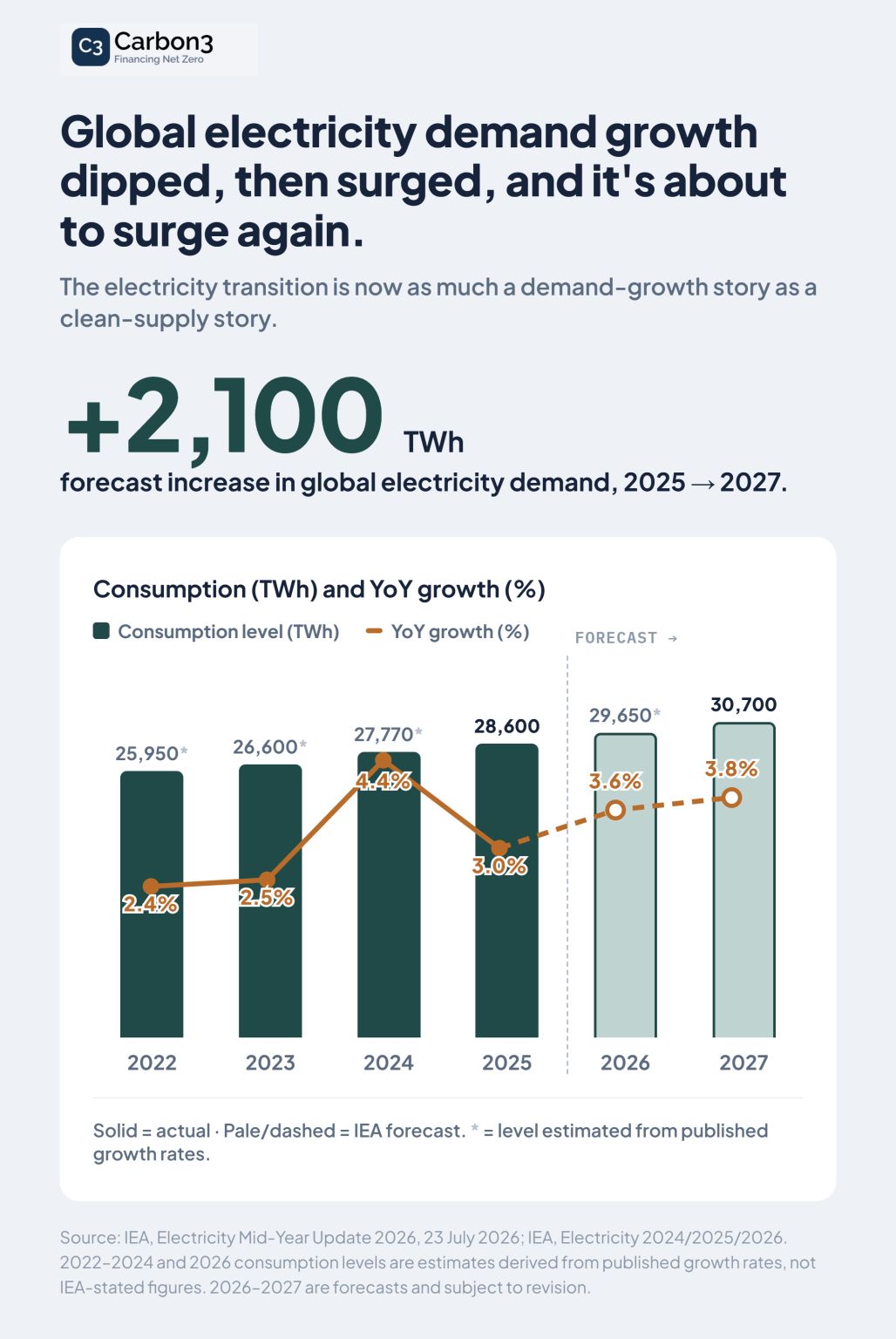
Global electricity demand growth is accelerating again
After easing in 2025, the IEA expects demand growth to climb through 2027, adding more than the annual use of many major economies in two years.
Read insight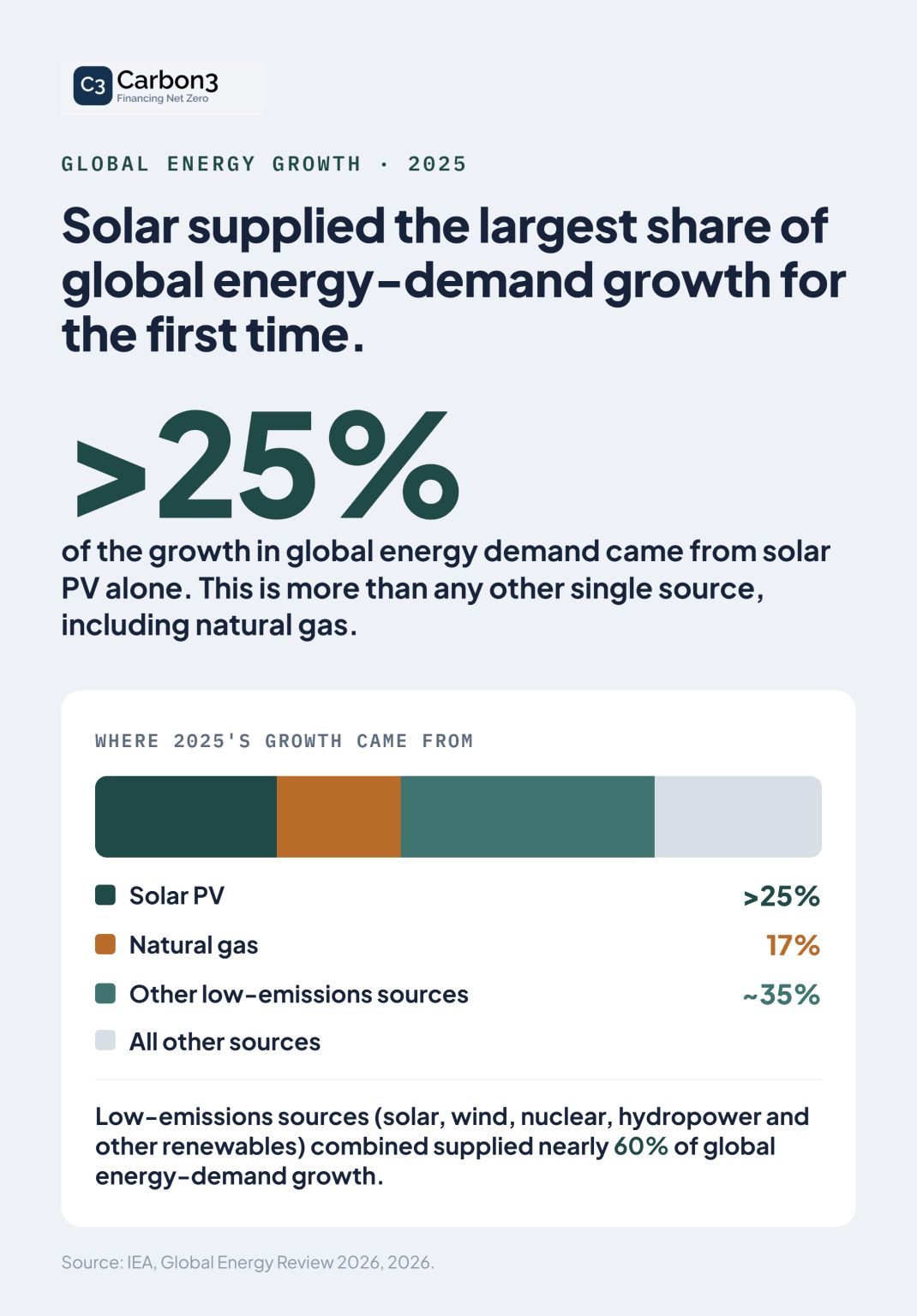
Solar is now the largest source of global energy-demand growth
For the first time solar supplied more than a quarter of the growth in global energy demand, and low-emissions sources together delivered nearly 60 percent.
Read insight