Organic waste could supply a fifth of today's natural gas demand
More than 70 percent of the potential resource sits in emerging and developing economies, which links waste management to local energy resilience.
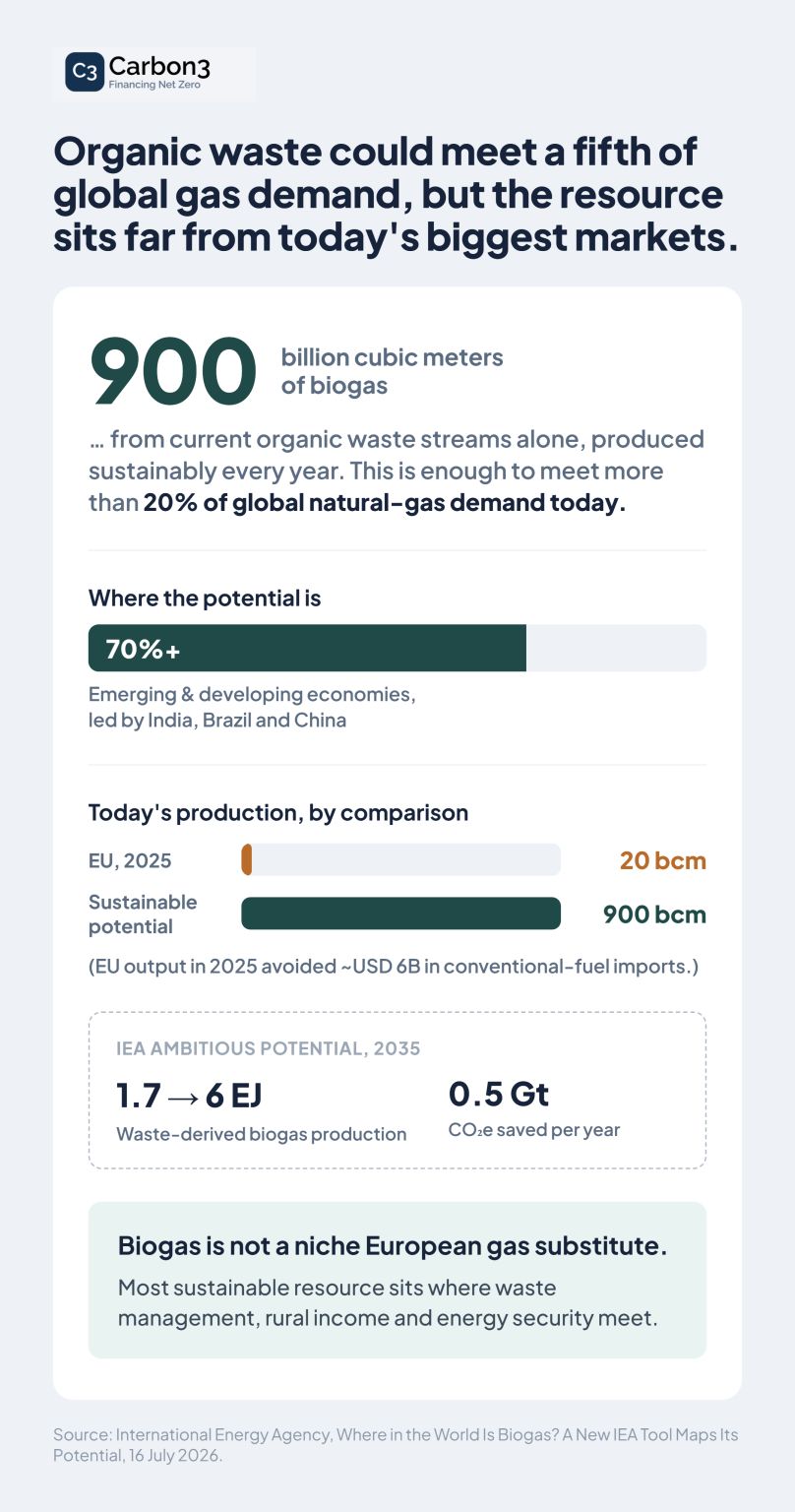
Organic waste could sustainably supply more than one-fifth of today’s global natural-gas demand. This is an energy-security opportunity hiding in farms, food systems, and cities. With more than 70% of the potential resource in emerging and developing economies, biogas can link better waste management to local energy resilience, provided methane leakage is tightly controlled.
Biogas is unusual among transition options because it turns a liability into an asset. Farms, food systems and cities already produce the feedstock, and capturing it addresses methane that would otherwise leak into the atmosphere. The condition attached in the post matters: the climate case depends on tight control of leakage across the whole chain.
That condition is also what makes biogas a good fit for insetting. Methane capture at a supplier is measurable, the reduction can be verified at the site, and the buyers of the food or fuel downstream have a direct interest in funding it and counting the result against their own Scope 3 inventory.
Originally published on LinkedIn, 10 August 2026.
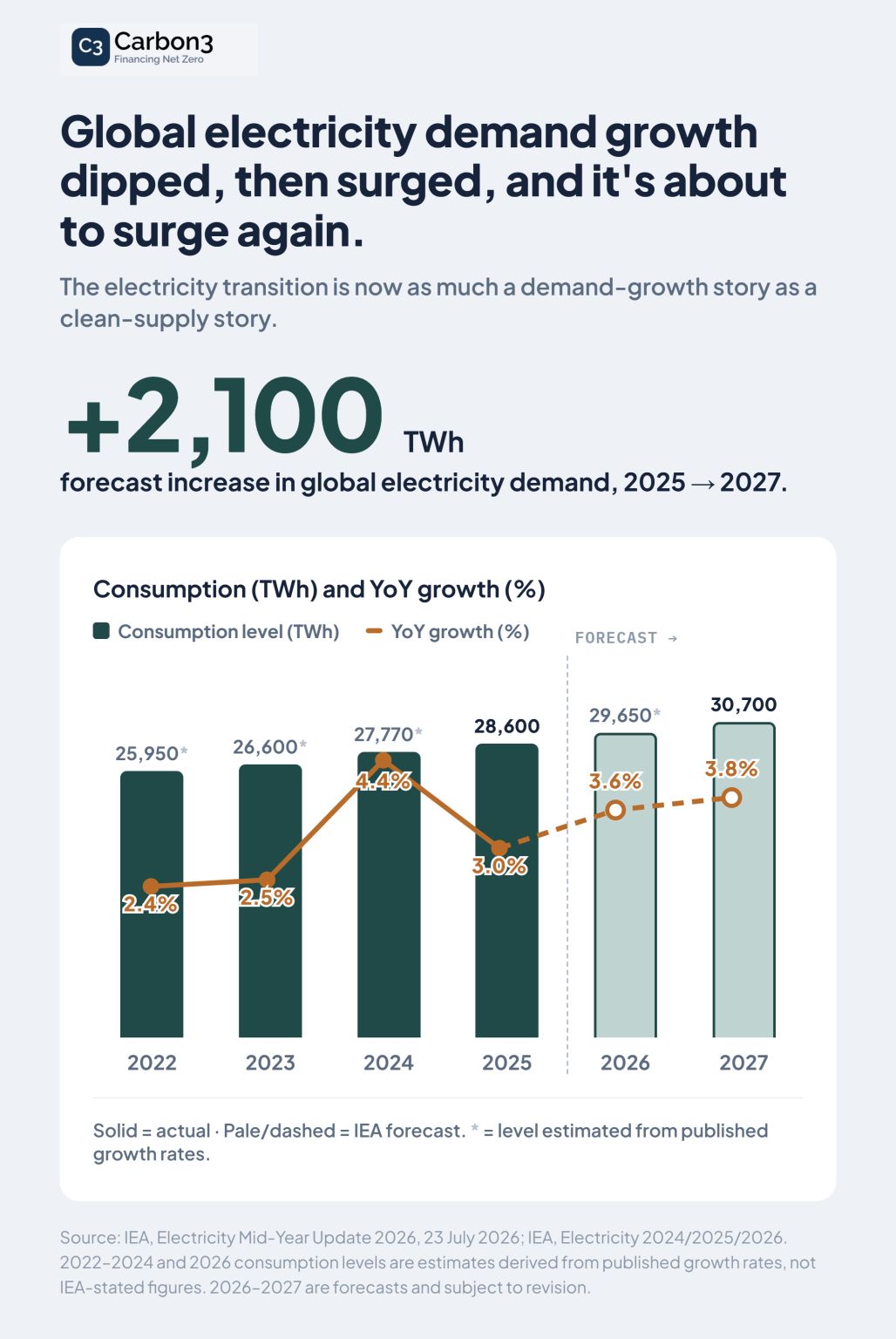
Global electricity demand growth is accelerating again
After easing in 2025, the IEA expects demand growth to climb through 2027, adding more than the annual use of many major economies in two years.
Read insight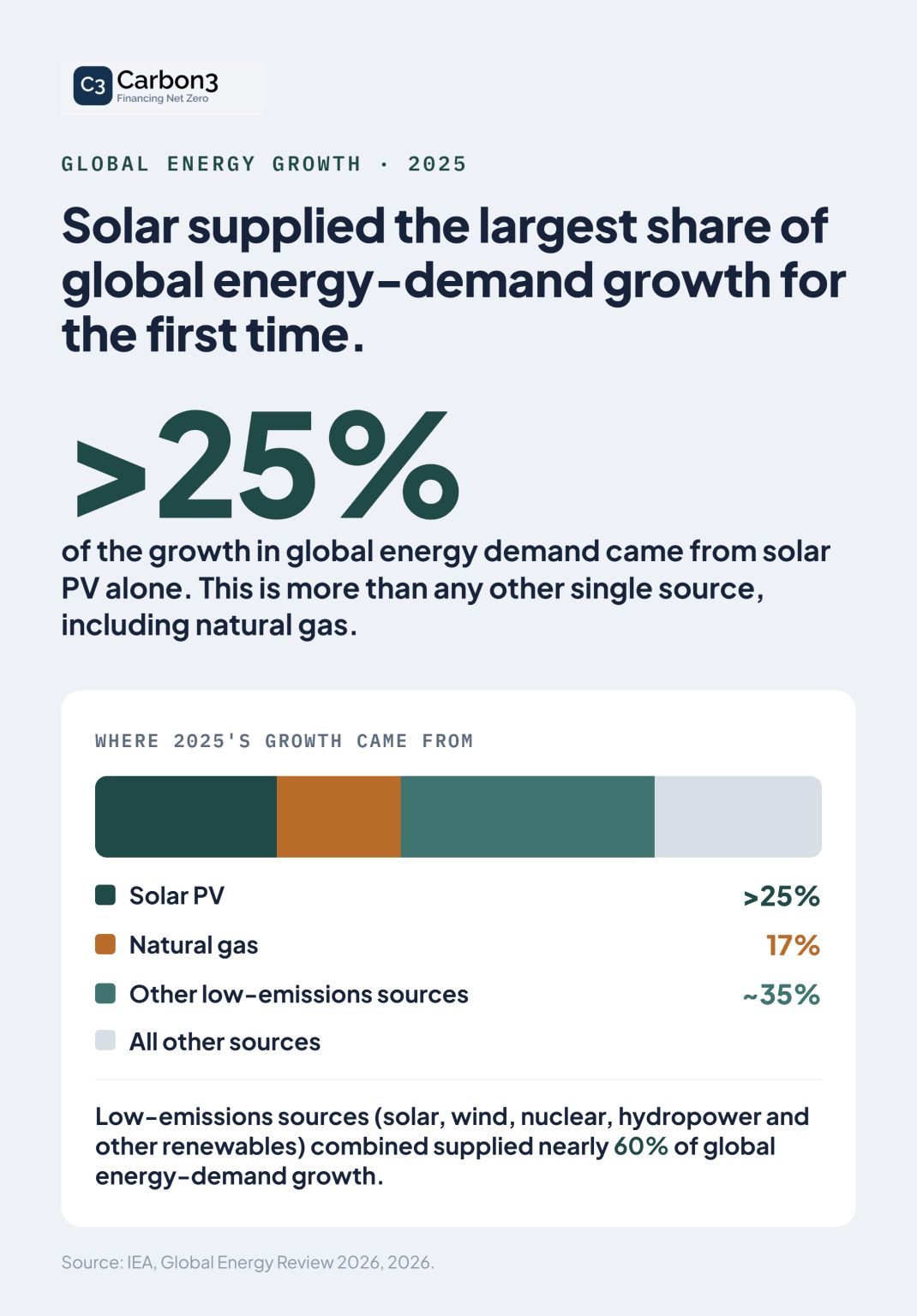
Solar is now the largest source of global energy-demand growth
For the first time solar supplied more than a quarter of the growth in global energy demand, and low-emissions sources together delivered nearly 60 percent.
Read insight