Shoals and the economics of solar deployment
Plug-and-play balance-of-system components move complexity from the field to the factory, supporting 82 GW of installations.
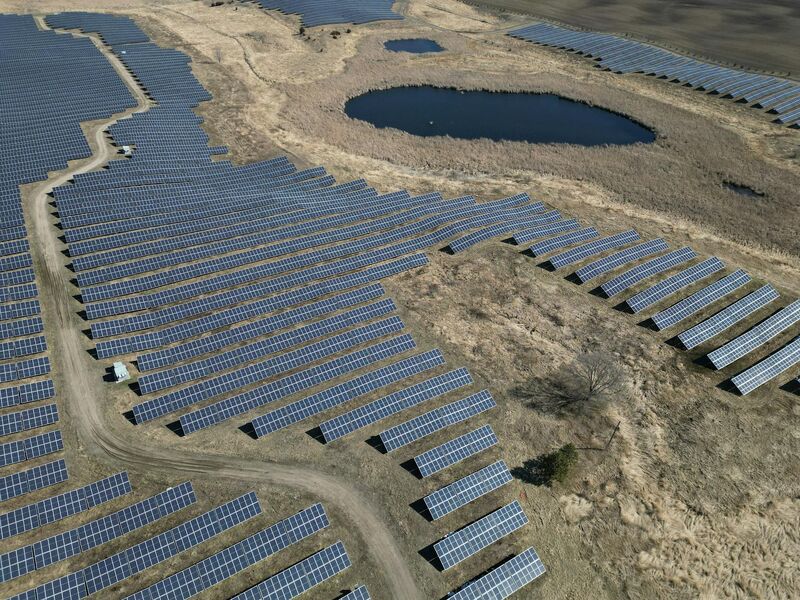
As solar deployment accelerates globally, one of the biggest challenges isn’t generation technology, it’s how quickly projects can be installed and scaled in the field.
That’s where companies like Shoals Technologies Group are quietly reshaping the economics of solar deployment.
Shoals’ plug-and-play EBOS (Electrical Balance of System) solutions are designed to simplify installation by shifting complexity away from the field and into factory-assembled components. According to the company’s ESG reporting, these systems now support over 82 GW of solar installations globally.
The approach is notable because it tackles several of the practical bottlenecks that slow renewable deployment:
- reducing installation labor requirements
- improving reliability and safety through factory assembly
- enabling faster scaling of large solar projects
At the same time, Shoals reports relatively modest operational emissions, roughly 766 tCO₂e Scope 1 and 2,356 tCO₂e Scope 2, highlighting how manufacturing design decisions can influence the carbon footprint of renewable supply chains.
As global electrification accelerates and solar demand grows alongside sectors like AI infrastructure and data centers, innovations that simplify supply-chain execution could play an increasingly important role in scaling clean energy systems.
Where are others seeing the biggest opportunities to improve deployment efficiency across renewable energy supply chains?
Shoals Technologies Group
Originally published on LinkedIn, 13 March 2026.
Insetting turns a sustainability expense into a supplier relationship
BASF and Boortmalt on barley emissions, Royal Canin and Soil Capital on 300,000 hectares of farmland, and ZEMBA on pooled buying power for low-emission shipping.
Read insight
DP World's Insetify: inset credits at commercial scale
Offering credits at no cost to customers is a deliberate market-building strategy. Create the buyer habit first; price discovery follows.
Read insight