The Agriculture & Food Outlook 2026
Nine in ten tonnes of a food company's carbon sit on farms it does not own. In 2026 that stops being optional.
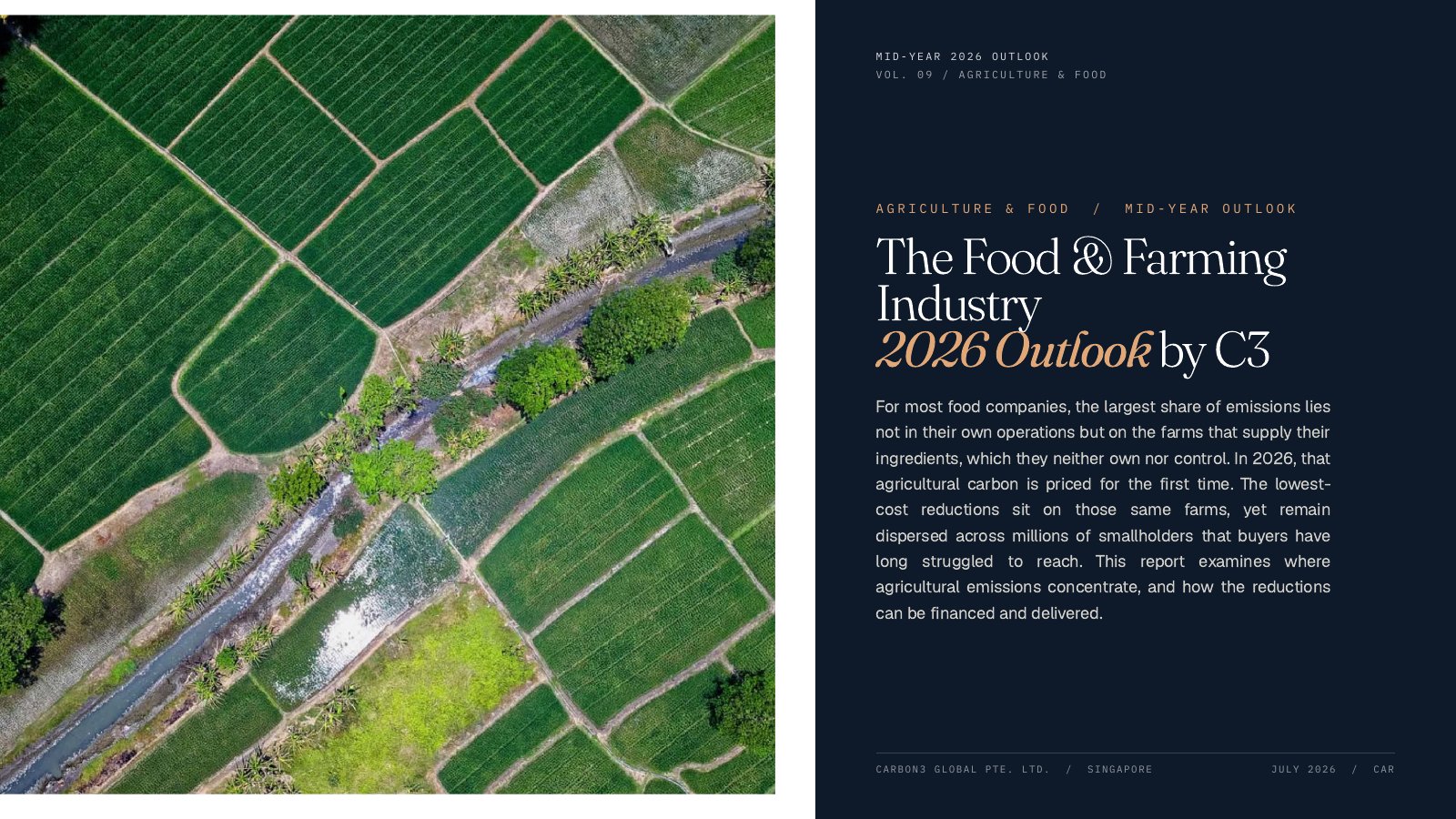 Open the document (PDF)
Our 2026 Agriculture & Food Outlook Roughly nine in every ten tonnes of a food company's carbon sit on farms it does not own. For years that has been treated as intractable. In 2026 it stops being optional:
- the EU Deforestation Regulation applies from 30 December,
- Denmark's farm-carbon tax is now law,
- and SBTi FLAG and California's LCFS set the terms.
Farm carbon is becoming a declared, priced liability that travels with the product to the buyer. The counterintuitive part is where the opportunity sits. The lowest-cost emission reductions in the entire economy are on those same farms, much of it profitable before any carbon payment:
- draining rice paddies,
- capturing methane from manure,
- feed additives that cut methane from cattle.
What holds them back is not capital. It is the difficulty of measuring, aggregating, and claiming a reduction spread across hundreds of millions of smallholders without counting it twice. That gap is what insetting closes.
This outlook report maps where food's carbon really sits, what reduces it fastest, and how the value can reach the farm.
Science Based Targets initiative Greenhouse Gas Protocol (GHG Protocol) Climate Policy Initiative UN Climate Change World Resources Institute The World Bank Group FAO
Originally published on LinkedIn, 5 July 2026.
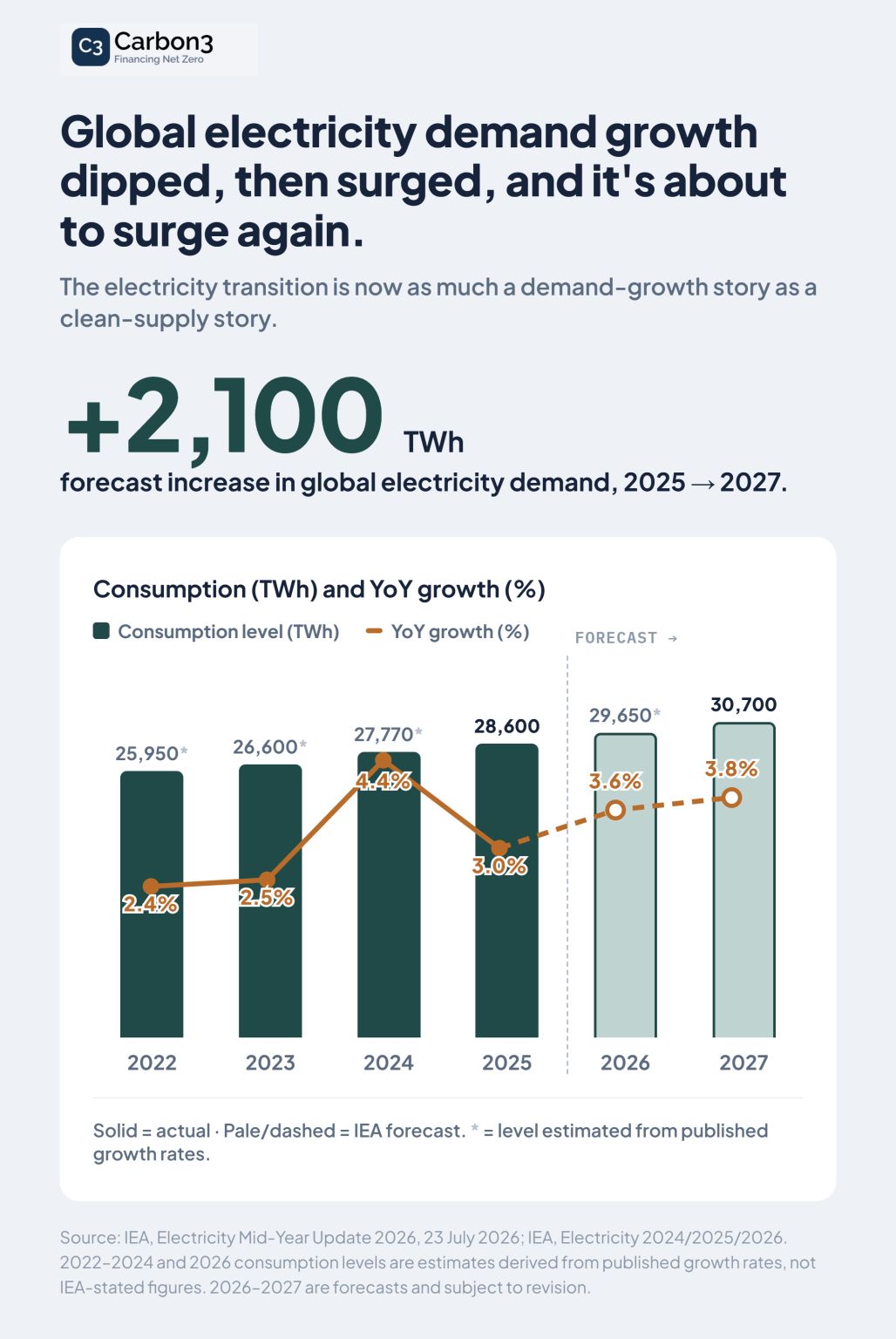
Global electricity demand growth is accelerating again
After easing in 2025, the IEA expects demand growth to climb through 2027, adding more than the annual use of many major economies in two years.
Read insight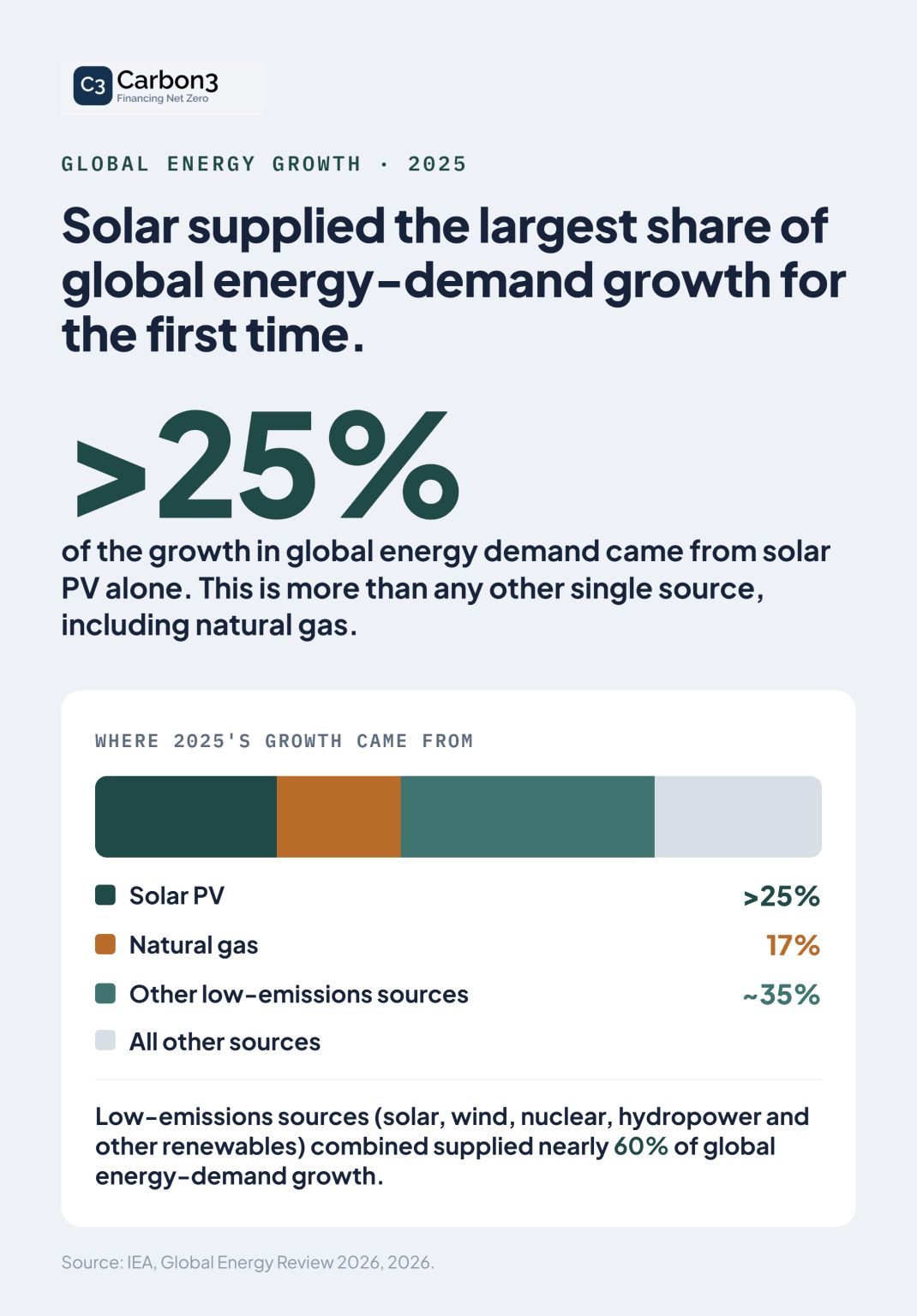
Solar is now the largest source of global energy-demand growth
For the first time solar supplied more than a quarter of the growth in global energy demand, and low-emissions sources together delivered nearly 60 percent.
Read insight