Transforming supply chain emissions into opportunities
As CBAM and CSRD mature, the inset credit market is poised for growth, mobilising billions in green investment.
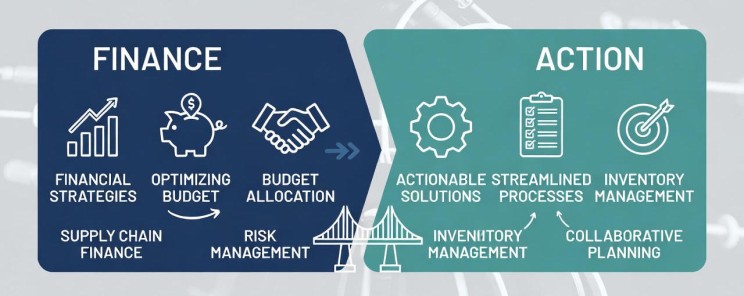
In an era defined by escalating climate imperatives, industries worldwide face mounting pressure to address their environmental footprints, particularly Scope 3 emissions. Those indirect emissions embedded within supply chains. Representing up to 90% of a company's total GHG output in many sectors, Scope 3 emissions have emerged as a critical challenge for corporate sustainability strategies.
Traditional approaches, such as offsets, often fall short in fostering genuine, verifiable reductions at the source. Enter insetting: a collaborative mechanism that incentivizes emission cuts directly within value chains, turning regulatory burdens into shared economic advantages. At the forefront of this shift is Carbon3 (C3), a platform dedicated to accelerating industrial decarbonization through an innovative financial instrument: inset credits. By enabling co-financing for supply chain partners, C3 not only helps companies claim emission reduction benefits but also allows surpluses to be traded, generating additional revenue streams.
The Strategic Imperative of Scope 3 Reduction
As global regulations tighten, companies are compelled to move beyond compliance toward proactive decarbonization. Scope 3 emissions, encompassing purchased goods, transportation, and upstream activities, demand a holistic approach that engages entire ecosystems. Insetting addresses this by channeling investments into targeted projects. Such as green infrastructure or process optimizations. Directly within a company's supply network.
Unlike offsets, which occur externally, insetting ensures additionality and traceability, aligning reductions with business operations.
The benefits are multifaceted: buyers secure verifiable credits for their Scope 3 targets, while suppliers gain capital to implement low-carbon technologies without impacting profit margins. Any excess reductions can be certified as tradable inset credits, creating a marketplace for revenue generation. This "carrot" approach is contrasting punitive sticks like carbon taxes - It fosters equitable partnerships, de-risks investments, and propels systemic change across hard-to-abate sectors like manufacturing, agriculture, and energy-intensive industries.
Bridging Finance and Action in Supply Chains
Carbon3 is redefining how industries approach decarbonization by providing a seamless platform for insetting and benefit-sharing. Founded to address the inequities in current emission frameworks, the company unlocks financing for ambitious Scope 1-to-3 reduction initiatives, treating Scope 3 as a "shared responsibility." As co-founder Ilja Nevolin notes:
"Scope 3 emissions are a shared responsibility, yet when a supplier invests in reducing its Scope 1 emissions, the whole value chain benefits for free. However, relying on free lunches is not a sustainable strategy. We founded C3 to enable companies share the costs and benefits of emission reductions with their supply chain partners."
At its core, C3's marketplace facilitates co-financing mechanisms that de-risk projects and extract value from outcomes. Key features include zero upfront fees, unlimited free credit issuance, and a modest 2% commission on traded or retired credits. Leveraging AI-driven analysis, the platform identifies emission hotspots and recommends tailored strategies, making it industry-agnostic and scalable for global value chains. For instance, in agriculture. A sector ripe for insetting due to its significant emissions footprint. C3 supports regenerative practices that yield both environmental and economic returns.
By transforming emission reductions into revenue streams, C3 empowers companies to fund decarbonization without price hikes, while suppliers access capital for innovations like electrification or efficiency upgrades. This closed-loop system not only meets Scope 3 goals but also builds resilience against volatile carbon markets, positioning participants as leaders in sustainable commerce.
Originally published on LinkedIn, 16 November 2025.
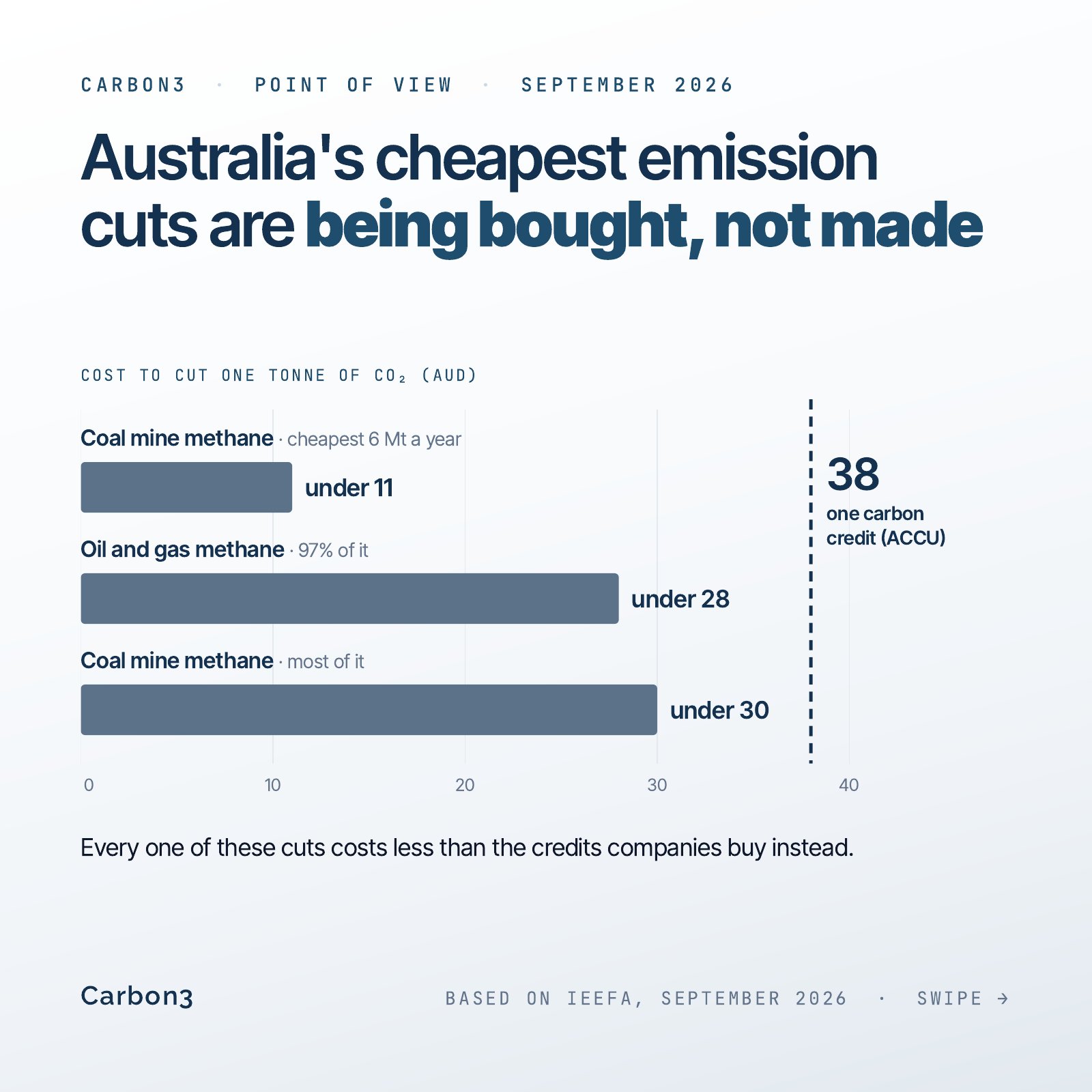
Australia's cheapest emission cuts are being bought, not made
IEEFA finds capturing methane from coal and gas would cost less than AUD 30 a tonne, well under the price of a carbon credit. Most facilities are not doing it.
Read insight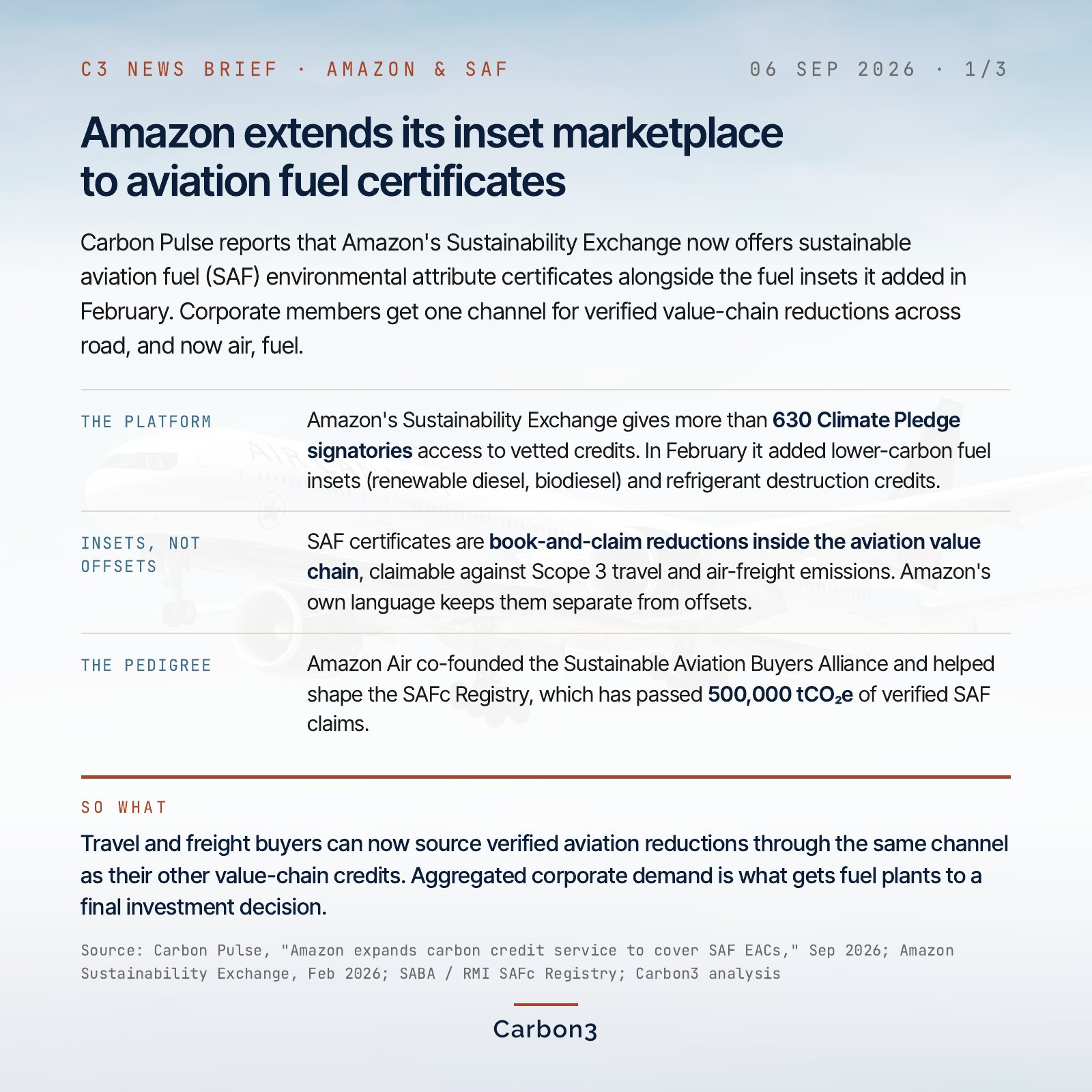
Three signals from the first week of September 2026
Amazon extends its inset marketplace to aviation fuel, a study brackets the carbon tax level that works, and Singapore signs a credit agreement with Laos.
Read insight