Blended finance moves money. Proof keeps it there.
Allianz Global Investors makes two useful points about financing the transition. Neither answers the question of what the money actually paid for.
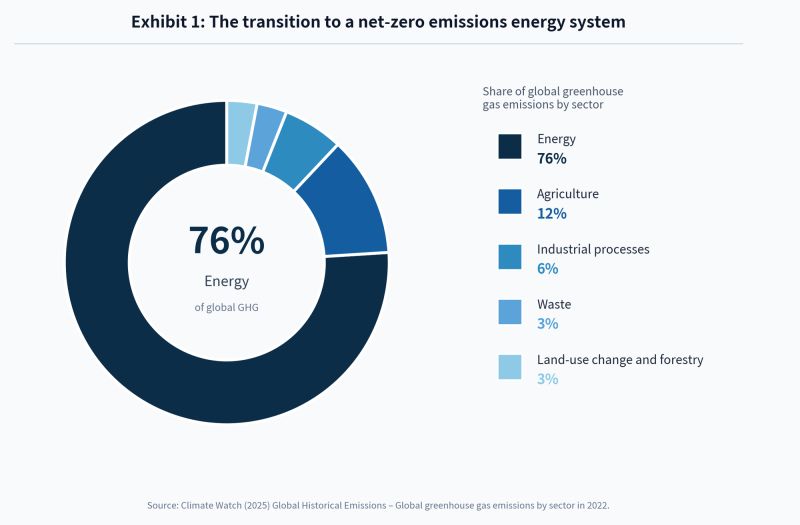
A recent Allianz Global Investors outlook by Matt Christensen makes two useful points about financing the transition.
-
Blended finance works. Public money takes on the risky part of a project, private money takes the safer part, and deals that no bank would fund on its own start getting funded.
-
The last five years of sustainable finance flows going up and down have lessons for what comes next. Christensen writes that these lessons will help determine "the style and scale of finance necessary" for the climate scenarios ahead.
The main lesson is simple. Money followed green labels, then pulled back when people stopped trusting them. Not because the climate problem changed, but because it was hard to prove what the money had actually paid for.
Blended finance decides who takes the risk. It does not prove what got cleaned up. A bank can fund a green steel plant or a cleaner ship, but someone still has to show the emissions savings are real, and the buyer still has to be able to count them in their own reporting.
That is the part Carbon3 builds. We measure the emissions saved where they are saved, keep the saving inside the supply chain, and pass it to the companies who paid the extra cost for it. Proven, countable, and paid for at the time of the deal rather than argued over a year later. Good structures move money. Proof keeps it there.
Source: allianzgi.com
Originally published on LinkedIn, 25 July 2026.
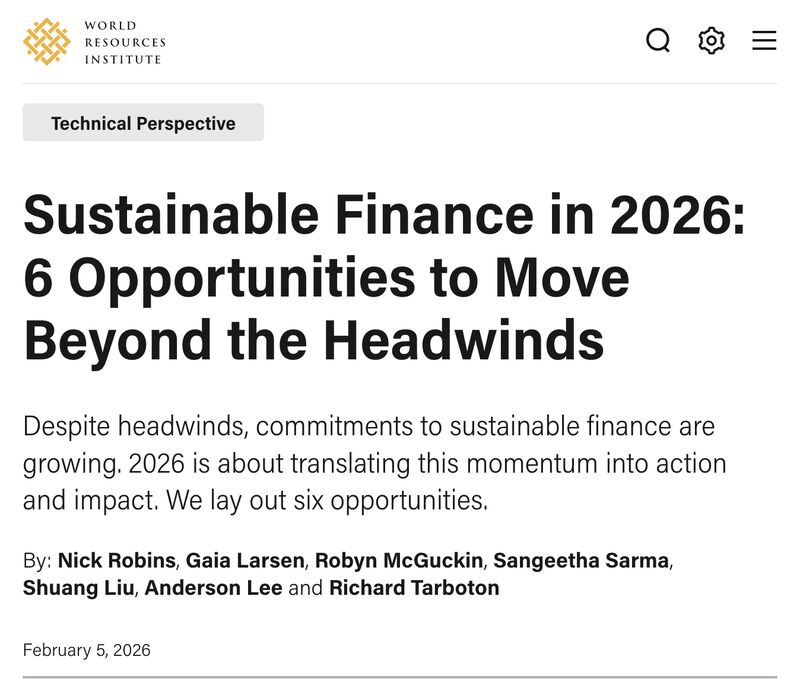
Six opportunities for sustainable finance, and the gap beneath them
WRI's 2026 list is right about the institutional constraints. Underneath them sits a market-design problem: Scope 3 reductions remain an unpriced cost.
Read insight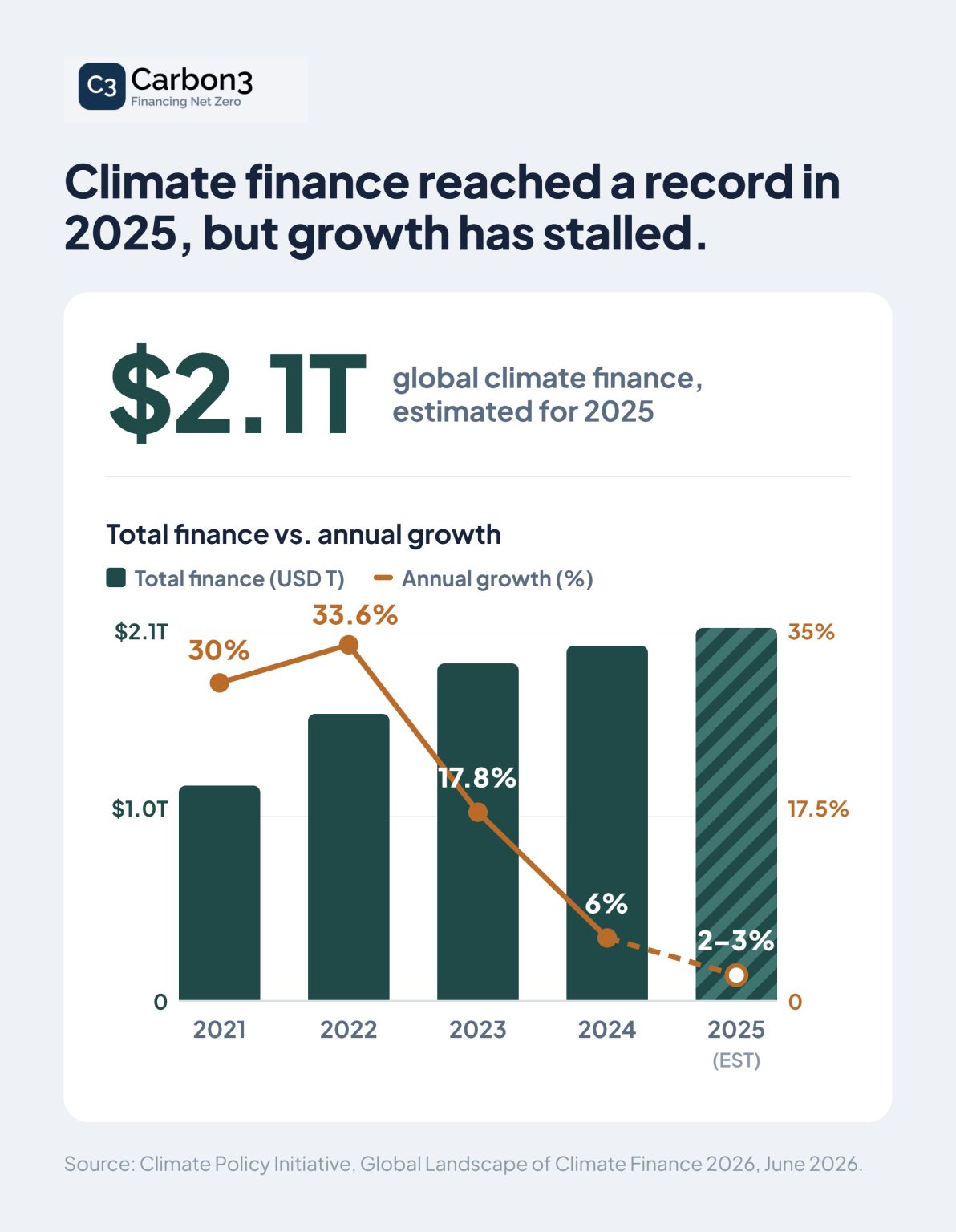
Global climate finance has crossed USD 2 trillion, but growth is slowing
Annual flows passed USD 2 trillion, while the growth rate fell from 30 percent in 2021 to an estimated 2 to 3 percent in 2025.
Read insight