When cutting beats buying: the balance-sheet case for insetting
Our 2026 white paper models four value chains to 2050 and finds cutting in-house already cheaper than buying credits in most sectors.
 Open the document (PDF)
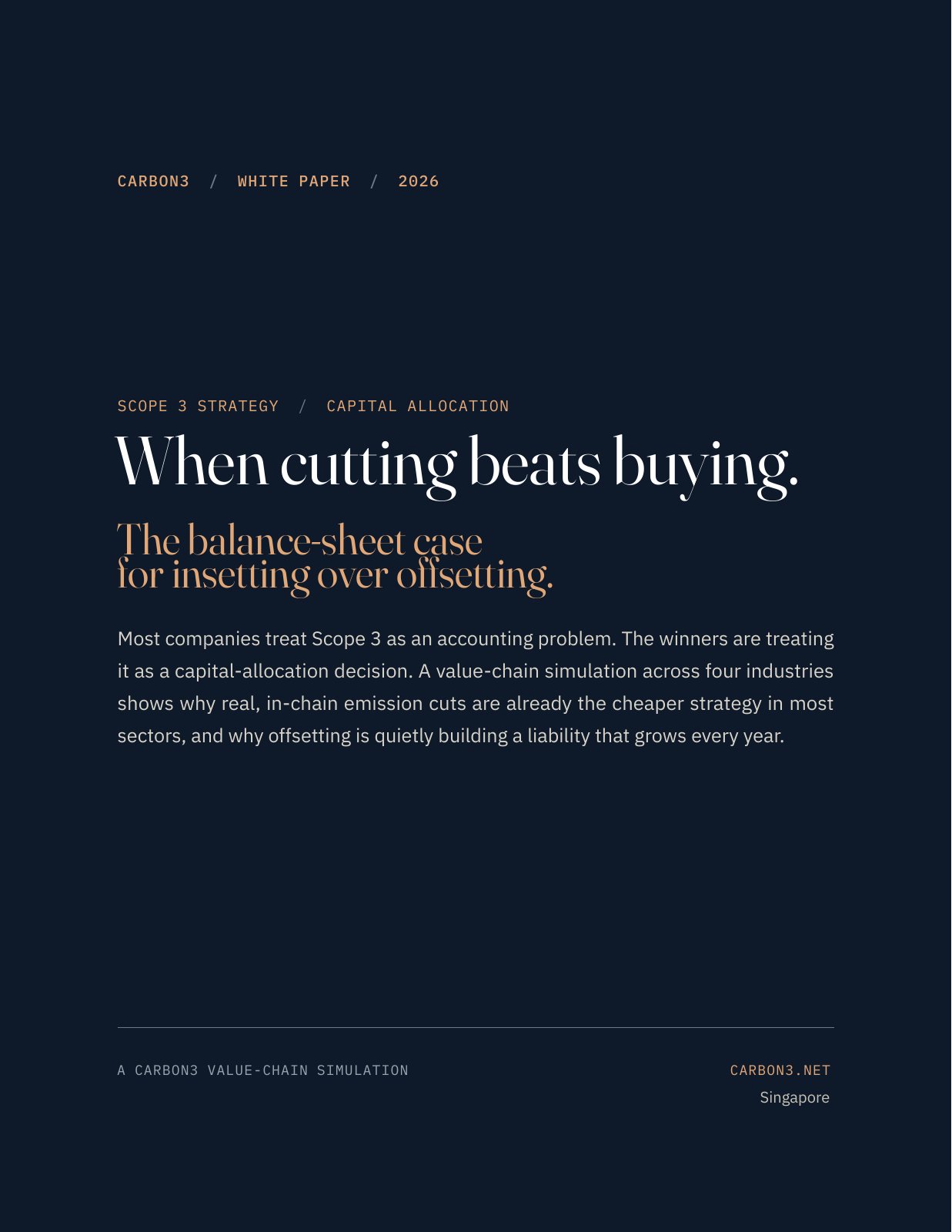
Our 2026 white paper models four value-chain archetypes from 2025 to 2050: apparel and consumer goods, energy and power, food and agriculture, and steel-intensive manufacturing. In each one it compares two ways of meeting a net-zero target. Offsetting keeps emitting and buys credits to cover the gap. Insetting pays for real cuts inside the supply chain.
The model favours insetting in most sectors today, and in all four once carbon carries a real price. The break-even credit price, above which cutting in-house is cheaper than buying credits, comes out at about USD 20 a tonne for clothing, 24 for energy, 35 for food and 72 for steel. Forward outlooks for high-quality credits already sit at or above those levels.
The paper also shows why offsetting builds a liability that grows every year, while insetting turns the same spend into an investment that pays back. It closes with a three-step pathway for leadership teams: map and prioritise, contract and finance, then verify and claim.
Originally published on LinkedIn, 14 July 2026.
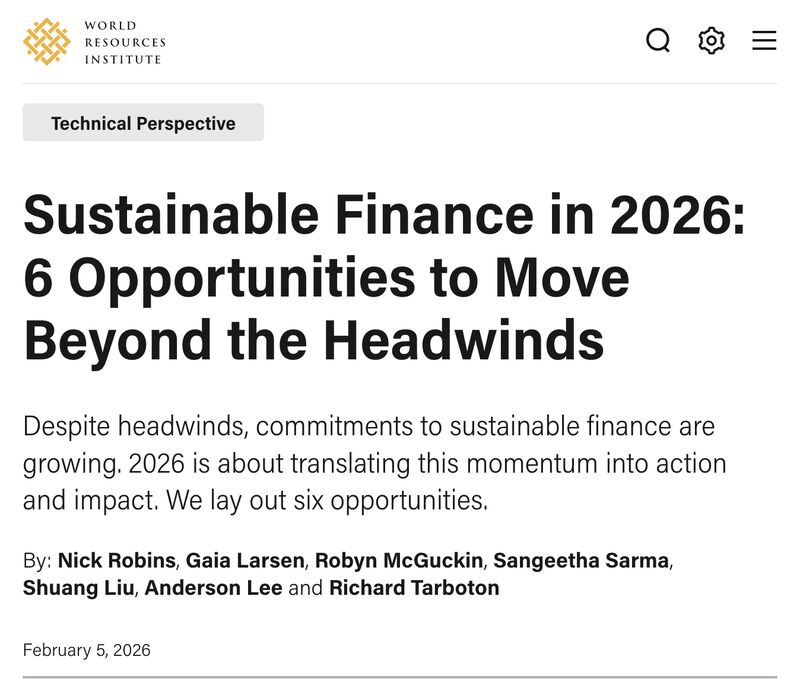
Six opportunities for sustainable finance, and the gap beneath them
WRI's 2026 list is right about the institutional constraints. Underneath them sits a market-design problem: Scope 3 reductions remain an unpriced cost.
Read insight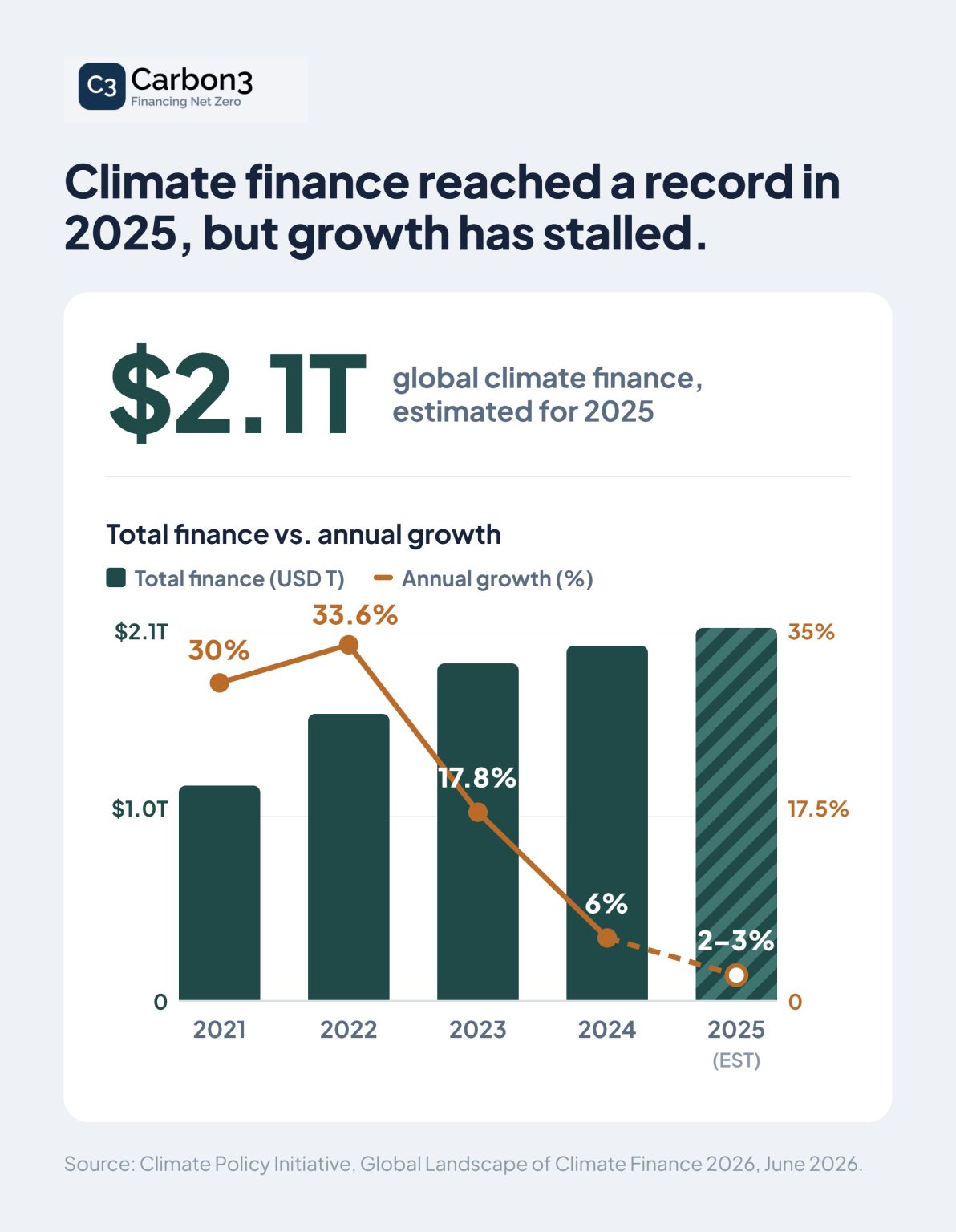
Global climate finance has crossed USD 2 trillion, but growth is slowing
Annual flows passed USD 2 trillion, while the growth rate fell from 30 percent in 2021 to an estimated 2 to 3 percent in 2025.
Read insight