Where the emissions in critical metals actually sit
Direct mining emissions are small. The full metals system is around 11 percent of global CO2, most of it downstream where ore becomes metal.
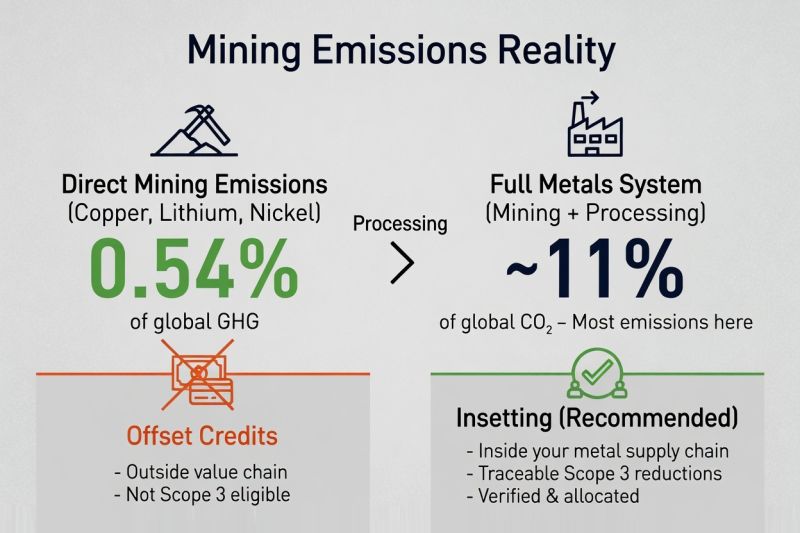
Direct emissions from mining critical metals like copper, lithium, and nickel are surprisingly small. However, the full metals system (extraction through processing) represents around 11% of global CO₂, and the majority of those emissions happen downstream, when ore becomes usable metal. This is precisely where targeted decarbonization can deliver the greatest value for industries relying on these materials.
Companies should move beyond purchasing offset credits and instead invest in insetting emissions reductions directly within their metal supply chains. Offset credits are generally not eligible for Scope 3 accounting as they sit outside a company’s value chain.
Insetting, by contrast, involves funding verified decarbonization projects at the mines and processing facilities that actually supply your business. These reductions are traceable, can be properly allocated to buyers, and retired only once, delivering credible Scope 3 progress.
With the EU Battery Passport and CBAM requirements coming into full effect in 2026, insetting is becoming essential for regulatory compliance, robust Scope 3 reporting, and building resilient supply chains.
Read more in our 2026 Sustainable Mining Industry Report linkedin.com
To explore insetting for your organisation, reach out to our team at carbon3.net
Originally published on LinkedIn, 28 June 2026.
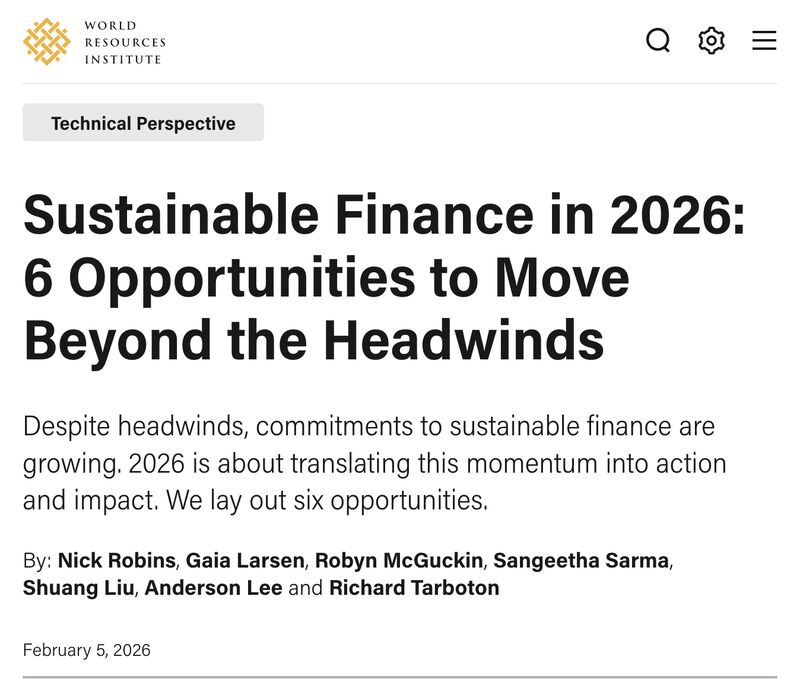
Six opportunities for sustainable finance, and the gap beneath them
WRI's 2026 list is right about the institutional constraints. Underneath them sits a market-design problem: Scope 3 reductions remain an unpriced cost.
Read insight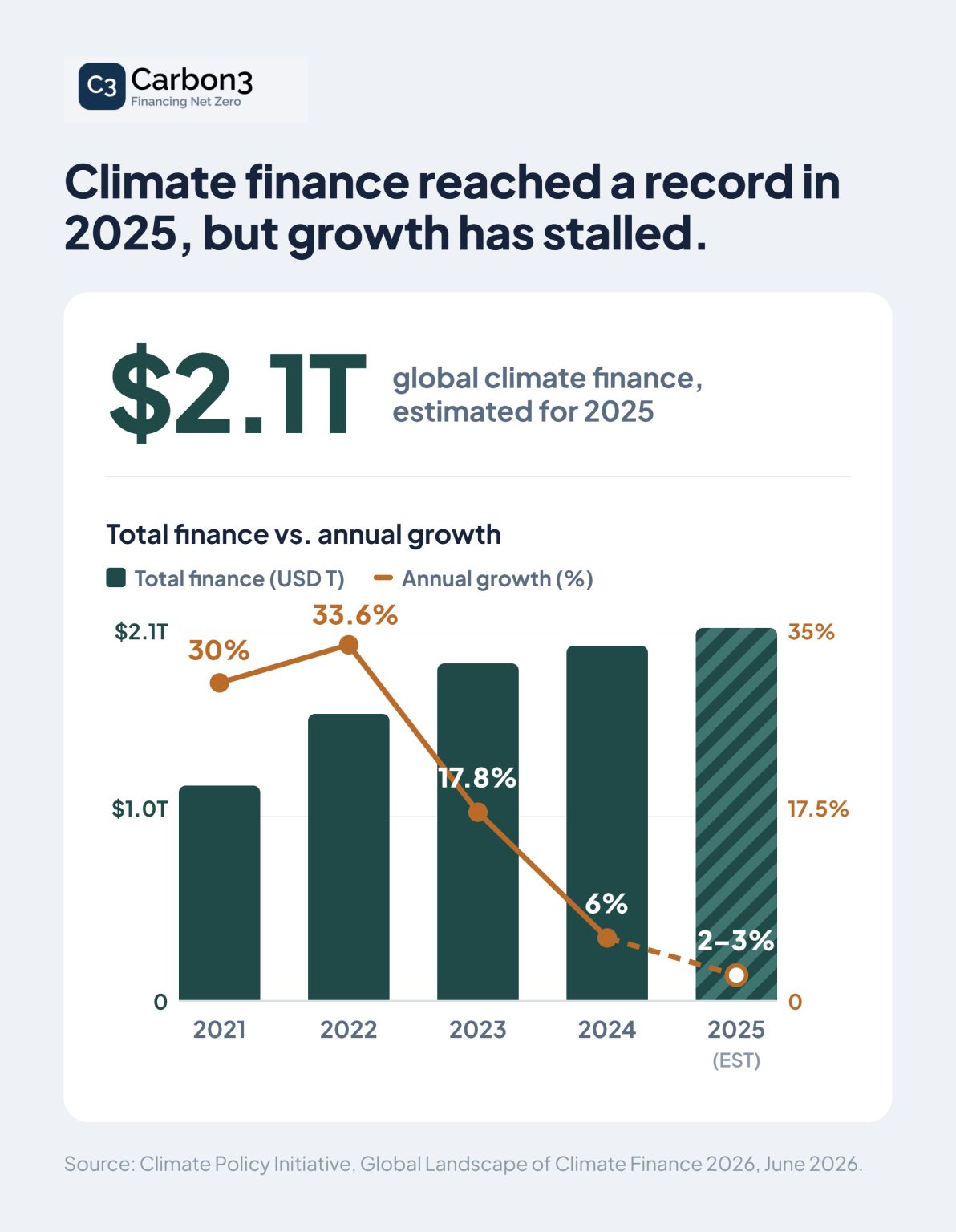
Global climate finance has crossed USD 2 trillion, but growth is slowing
Annual flows passed USD 2 trillion, while the growth rate fell from 30 percent in 2021 to an estimated 2 to 3 percent in 2025.
Read insight