Sustainable debt is a $7 trillion market with uneven growth
Green bonds held up in the first quarter of 2026. The weakness was concentrated in sustainability-linked debt, sustainability bonds and emerging-market issuance.
By Carbon3 team1 min read
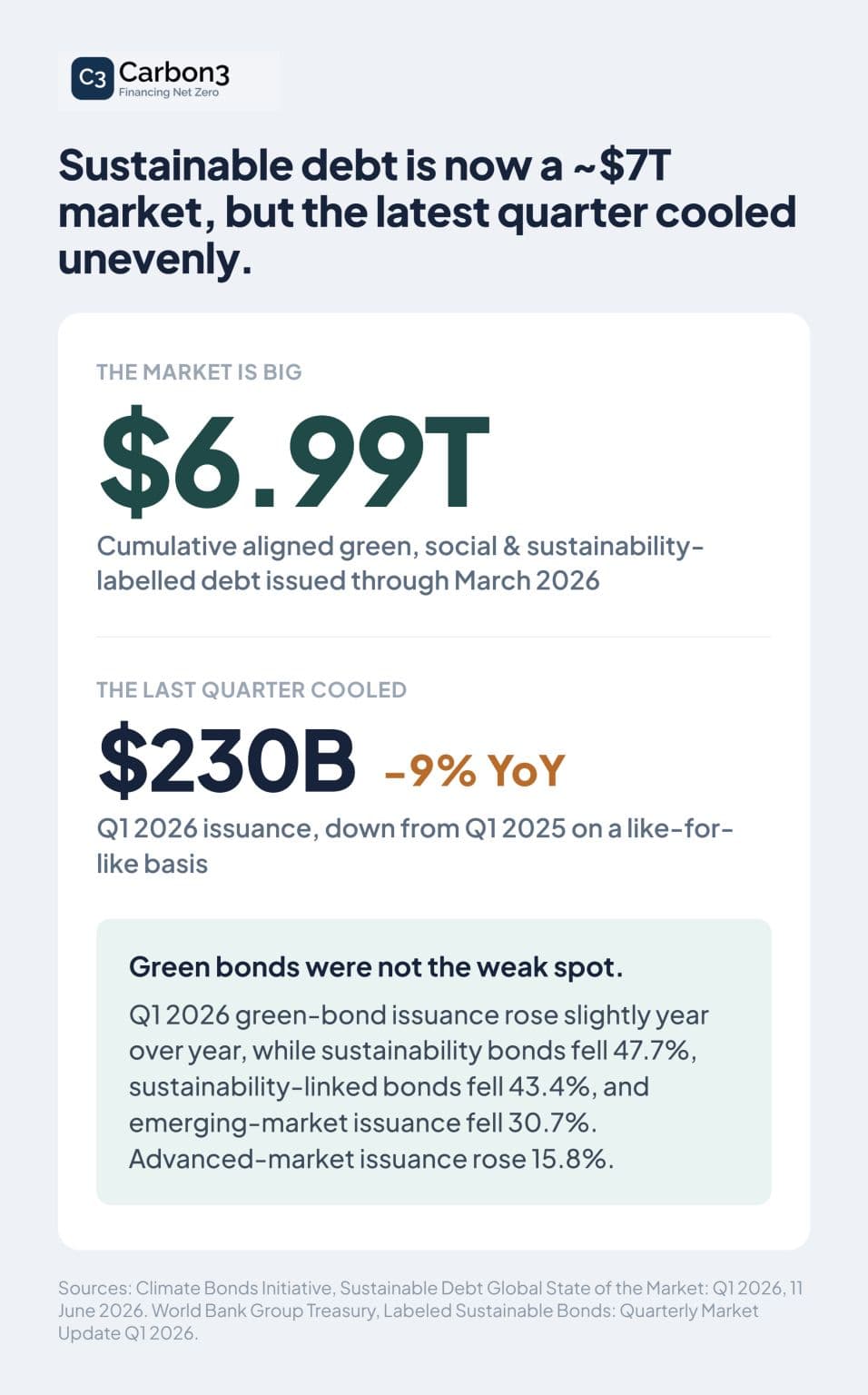
Sustainable debt is now a nearly $7 trillion market, but Q1 2026 showed that growth is becoming more uneven. Green bonds held up; the weakness was concentrated in sustainability-linked debt, sustainability bonds, and emerging-market issuance.
The divergence inside the numbers is more informative than the headline. Instruments with a clear use of proceeds continued to find buyers. Instruments whose value depends on a promise about future performance did not. Investors are asking what the money paid for, and they are rewarding structures that can answer.
That is the same test a Scope 3 claim has to pass. A supplier reduction that is measured where it happens, verified independently and allocated once to the buyers who financed it is the kind of evidence that keeps capital in place. Structures that cannot show the reduction will face the same discount the market is now applying to sustainability-linked debt.
Originally published on LinkedIn, 3 August 2026.
The Carbon3 Newsletter
Weekly analysis of industrial decarbonization and insetting across Scope 1 to 3, from the Carbon3 team.
Read more from the research team.
Transition finance
Blended finance moves money. Proof keeps it there.
Allianz Global Investors makes two useful points about financing the transition.
Read the articleTransition finance
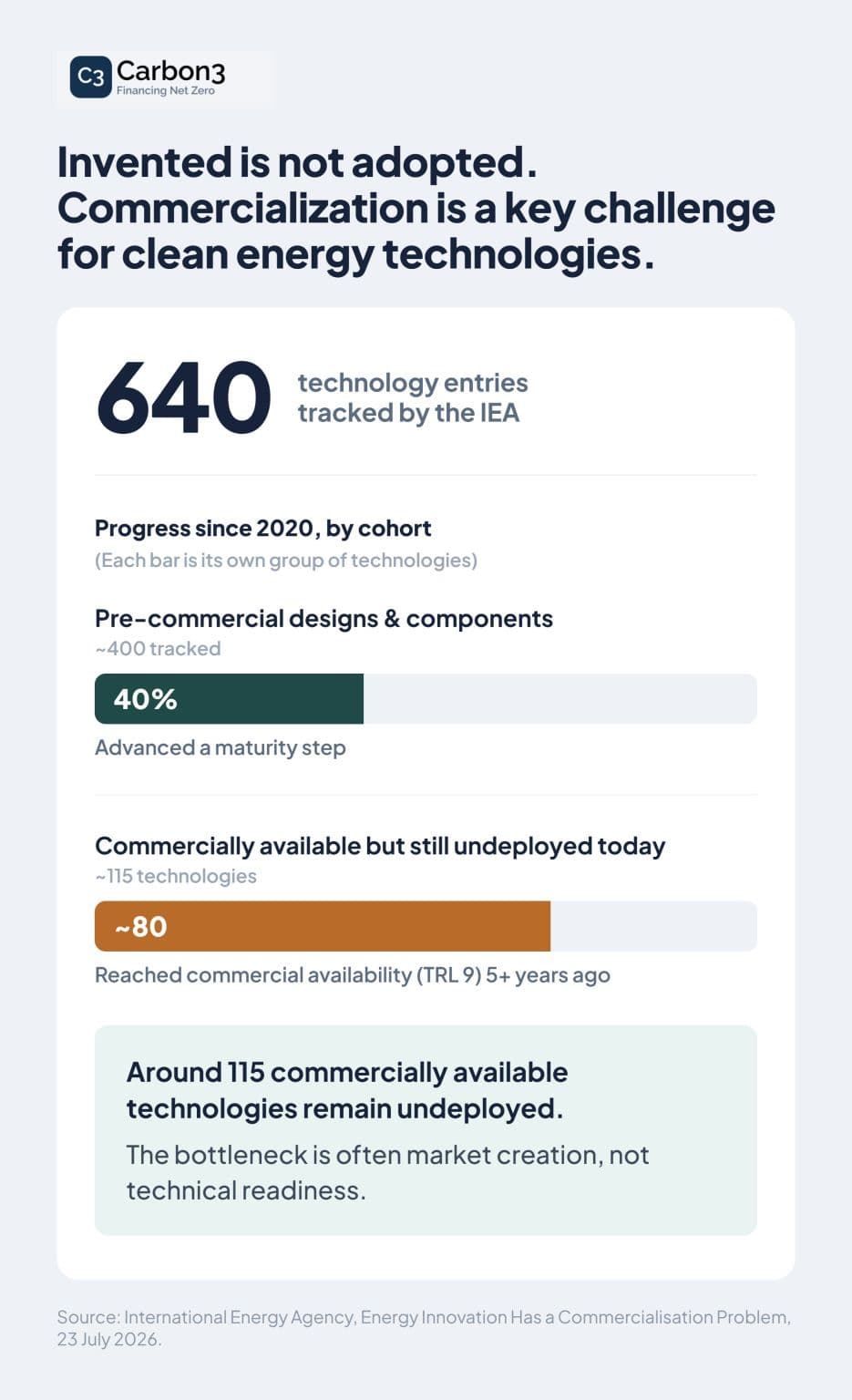
Around 115 clean-energy technologies are commercially ready and undeployed
The IEA counts nearly 80 that have been ready for more than five years.
Read the articleTransition finance
The green economy is 8.6 percent of listed equities
As of the first quarter of 2025, green-classified companies had a combined market capitalization of $7.9 trillion.
Read the article
See the companies behind these figures in the Data Hub.
Look up your suppliers’ emissions and targets, free.