Policy
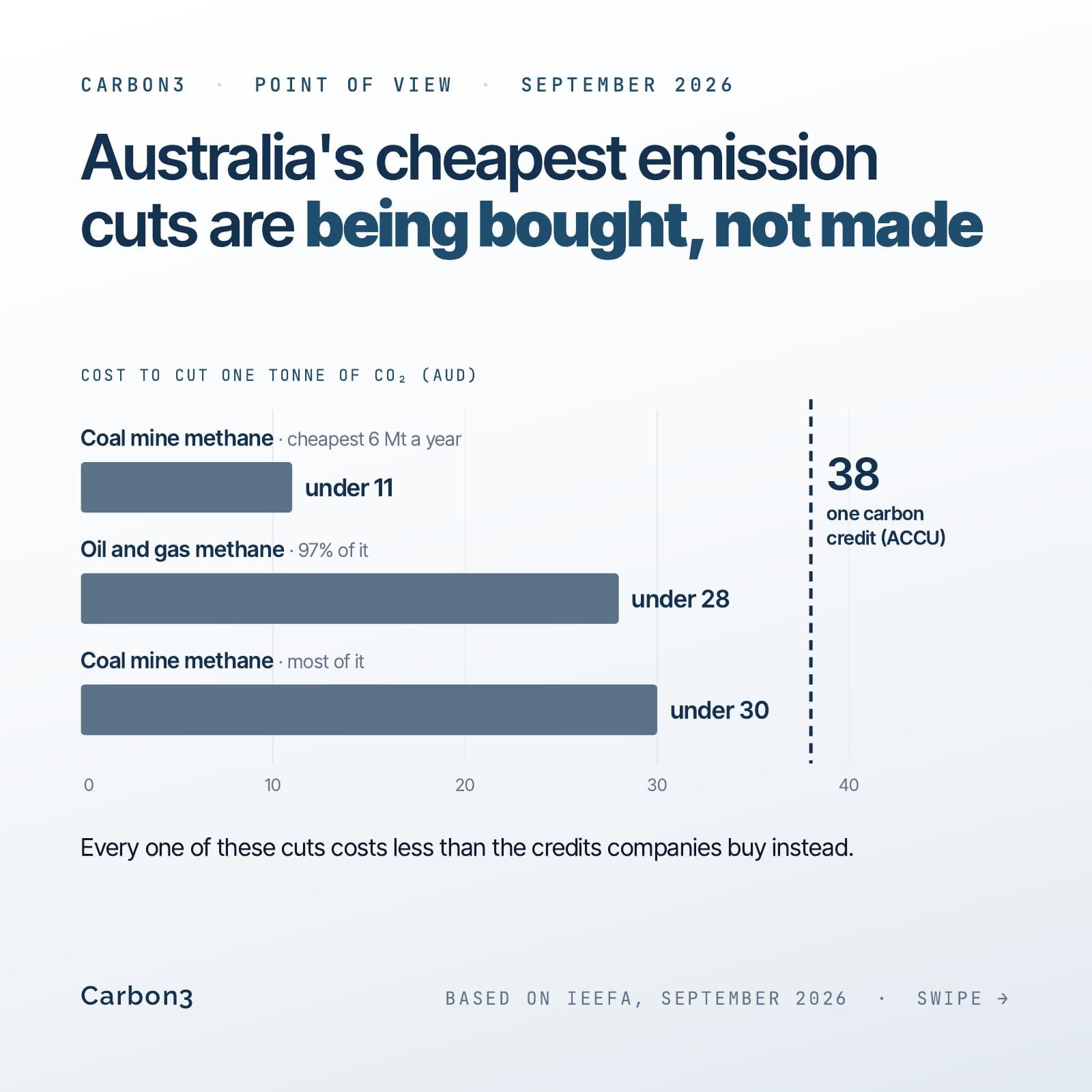
Australia's cheapest emissions reductions are being bought, not made
IEEFA finds capturing methane from coal and gas would cost less than A$30 a tonne, well under the price of a carbon credit. Most facilities are not doing it.
Every outlook links to the article it came from, so you can read the summary before you download the full document.
The full outlook PDFs are free to download once you have a free account.
Policy
IEEFA finds capturing methane from coal and gas would cost less than A$30 a tonne, well under the price of a carbon credit. Most facilities are not doing it.
Policy
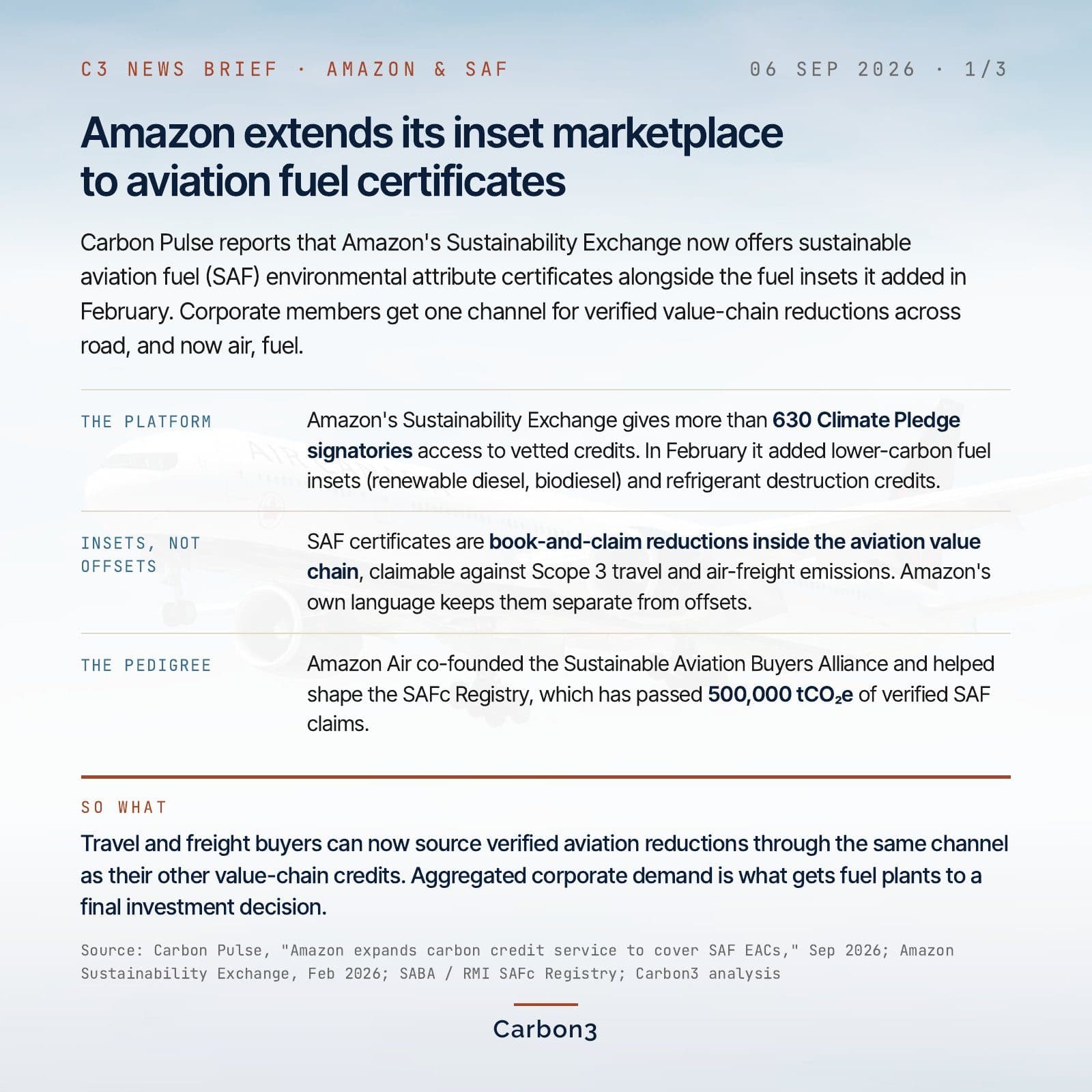
Amazon extends its inset marketplace to aviation fuel, a study brackets the carbon tax level that works, and Singapore signs a credit agreement with Laos.
Policy
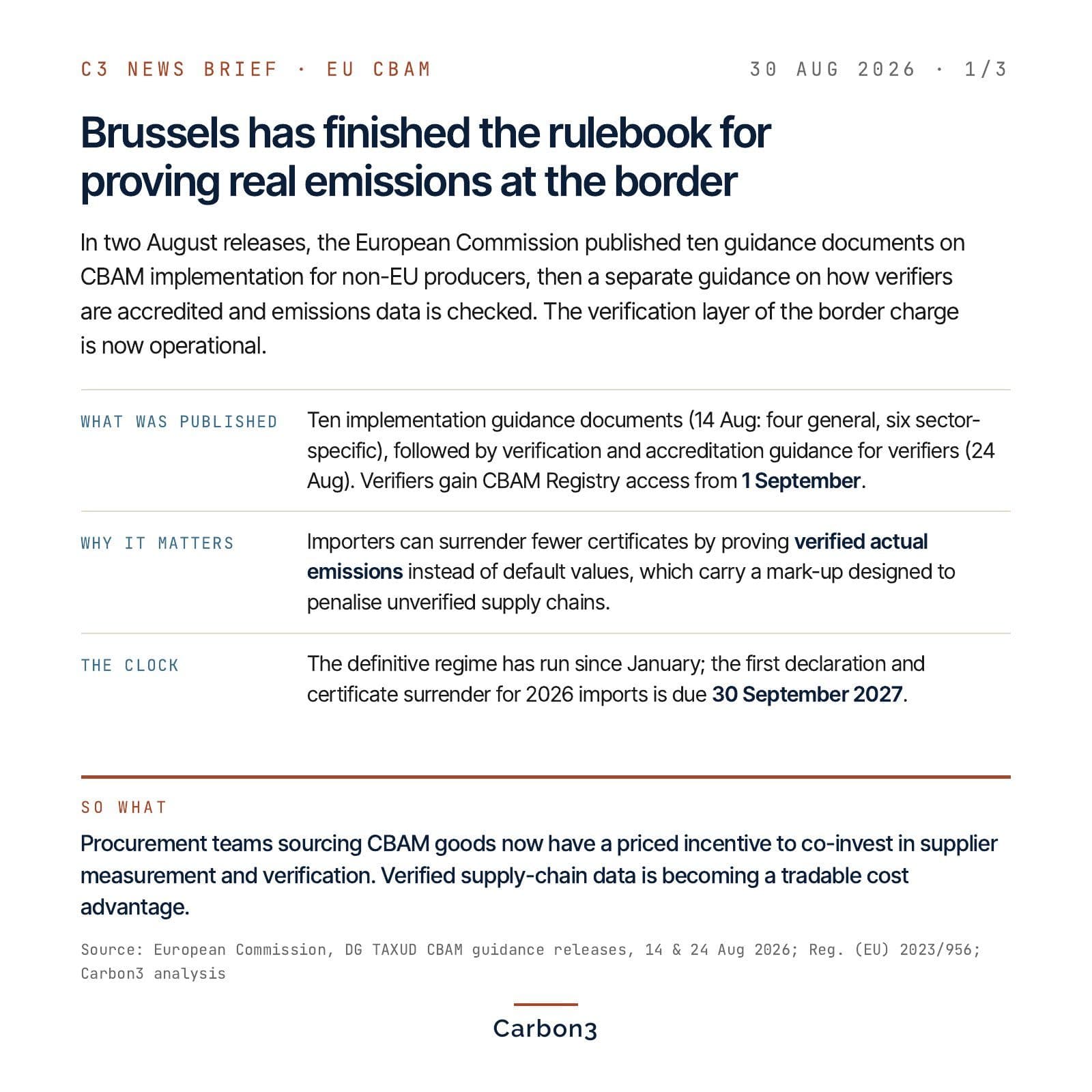
CBAM verification guidance, Japan's carbon market design and an EU ETS price above €80 all point the same way for procurement teams.
Sector: Maritime
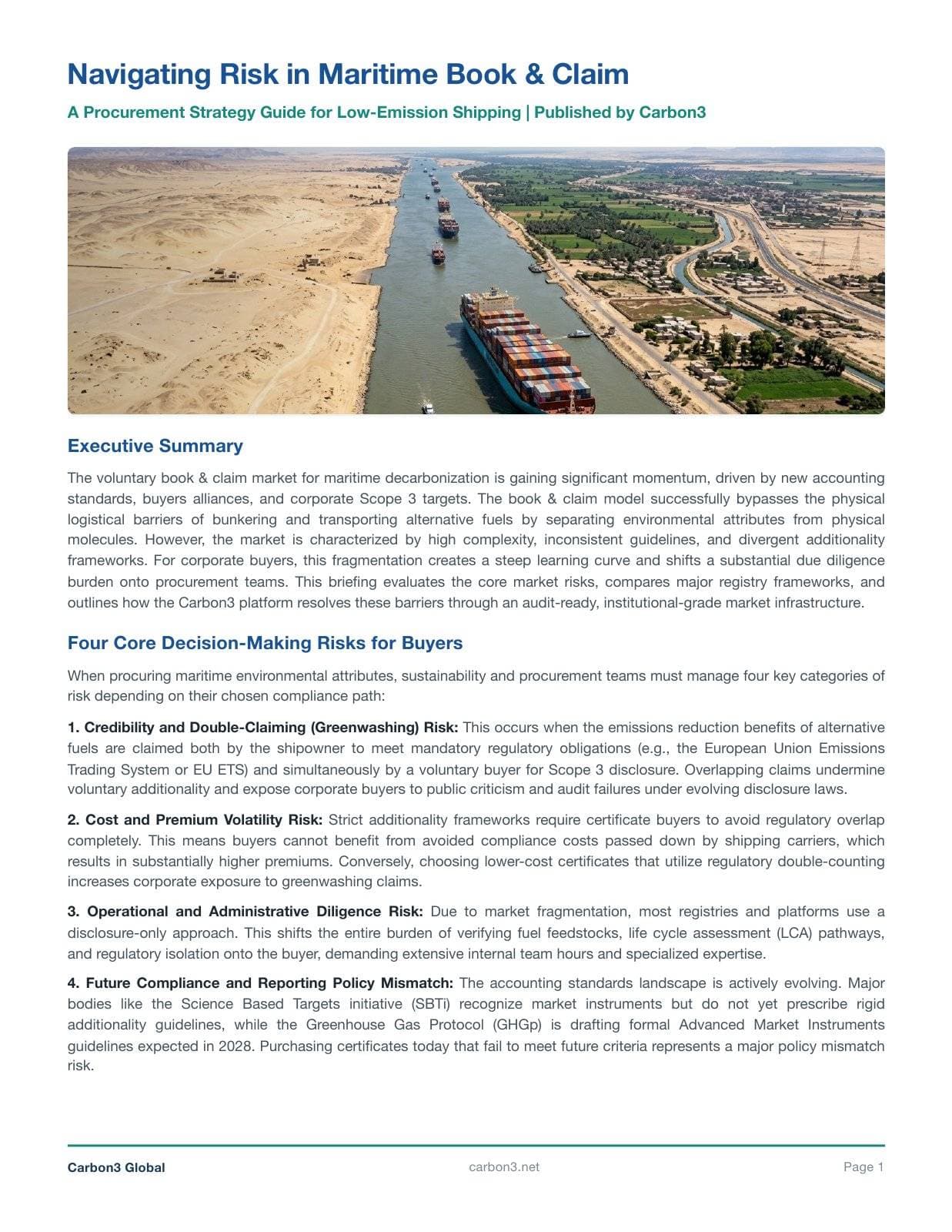
The model is gaining traction with buyers and standards bodies, but inconsistent frameworks push a heavy due-diligence burden onto procurement teams.
Outlook
Carbon costs at the EU border become a commercial reality. The challenge for supply chains is financing reductions further upstream.
Outlook
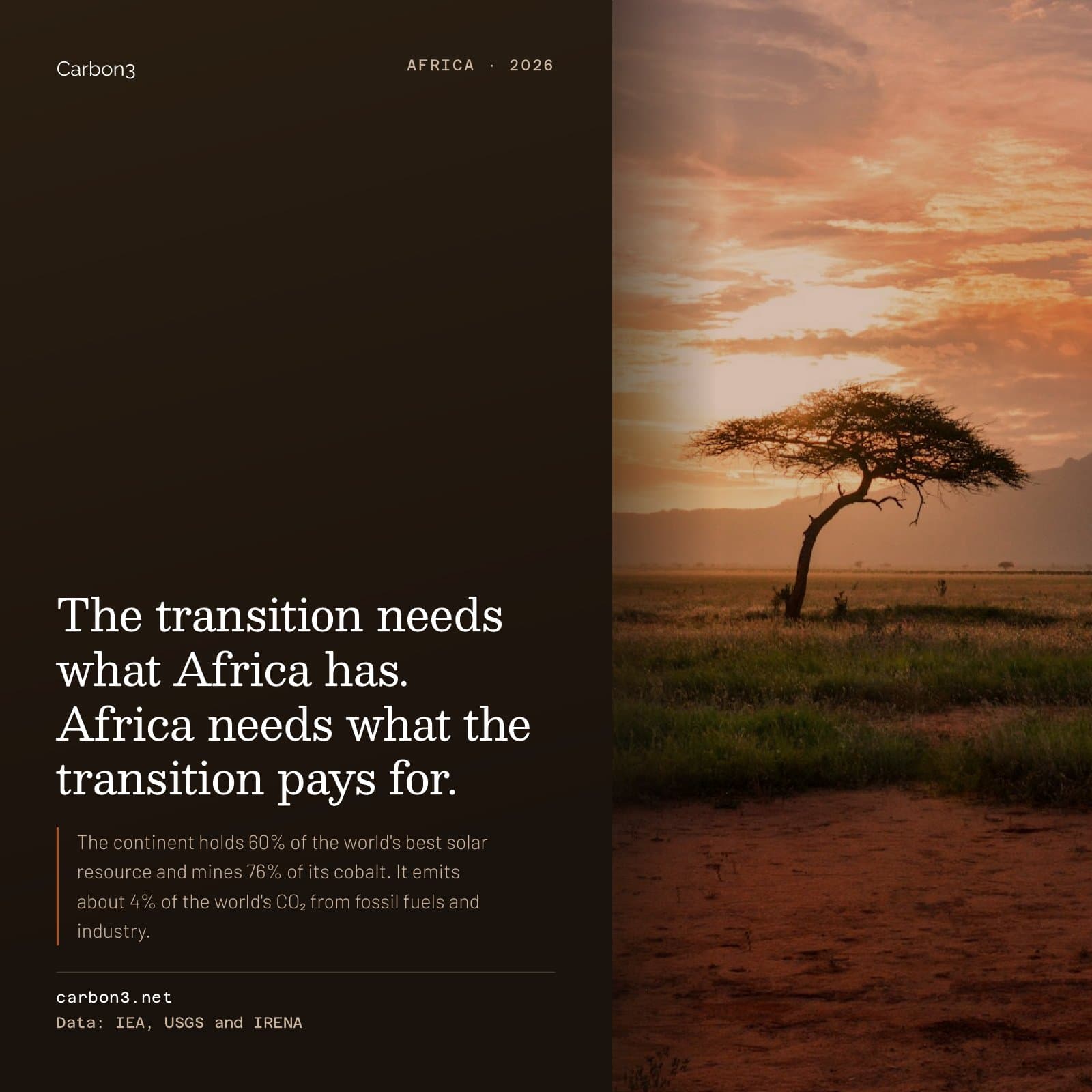
Critical minerals, exceptional solar potential and some of the lowest-cost real reductions in the world. Insetting can link them to the buyers who need them.
Outlook
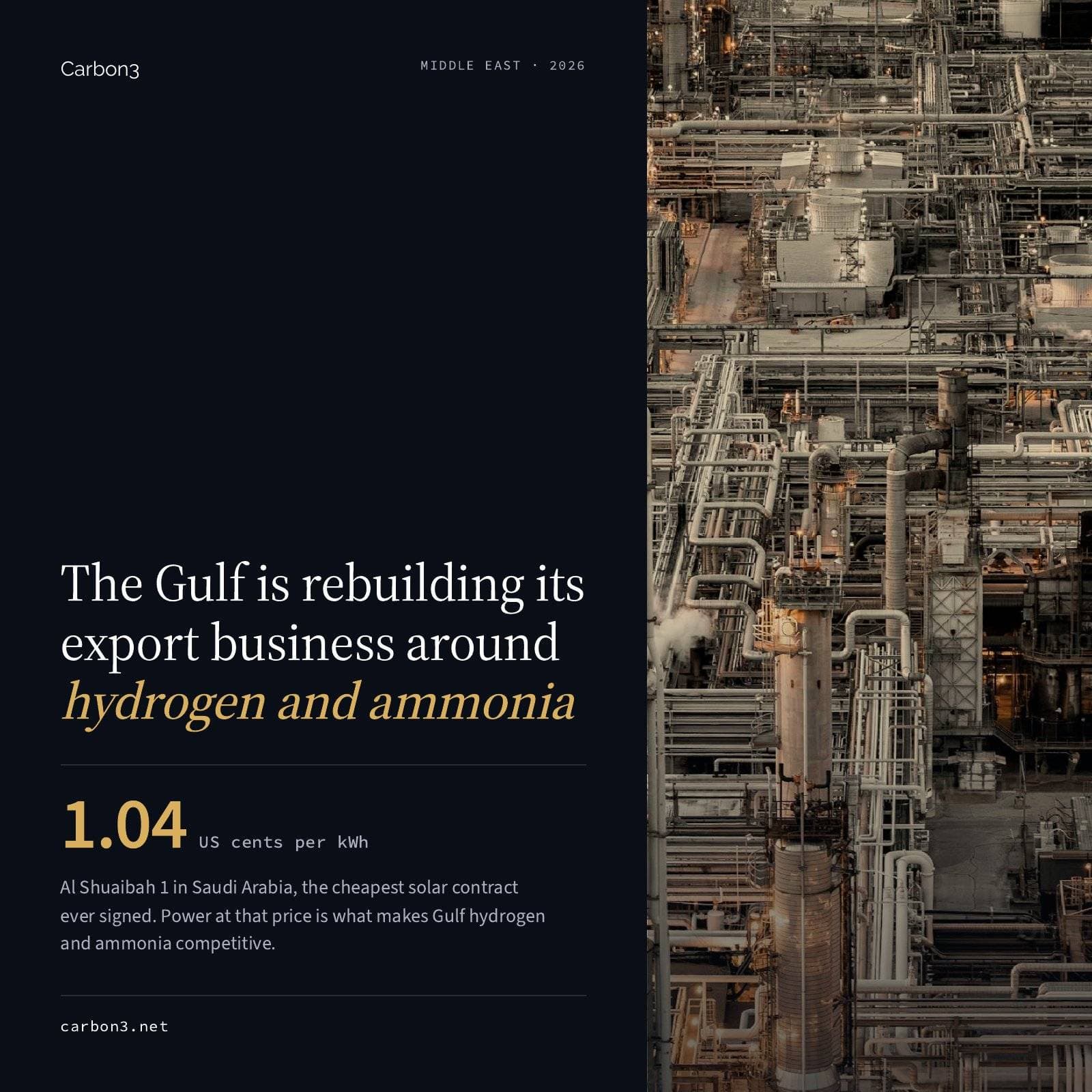
The Gulf is rebuilding part of its export model around hydrogen and ammonia. The opportunity is to connect verified reductions to cargoes that already move.
Outlook
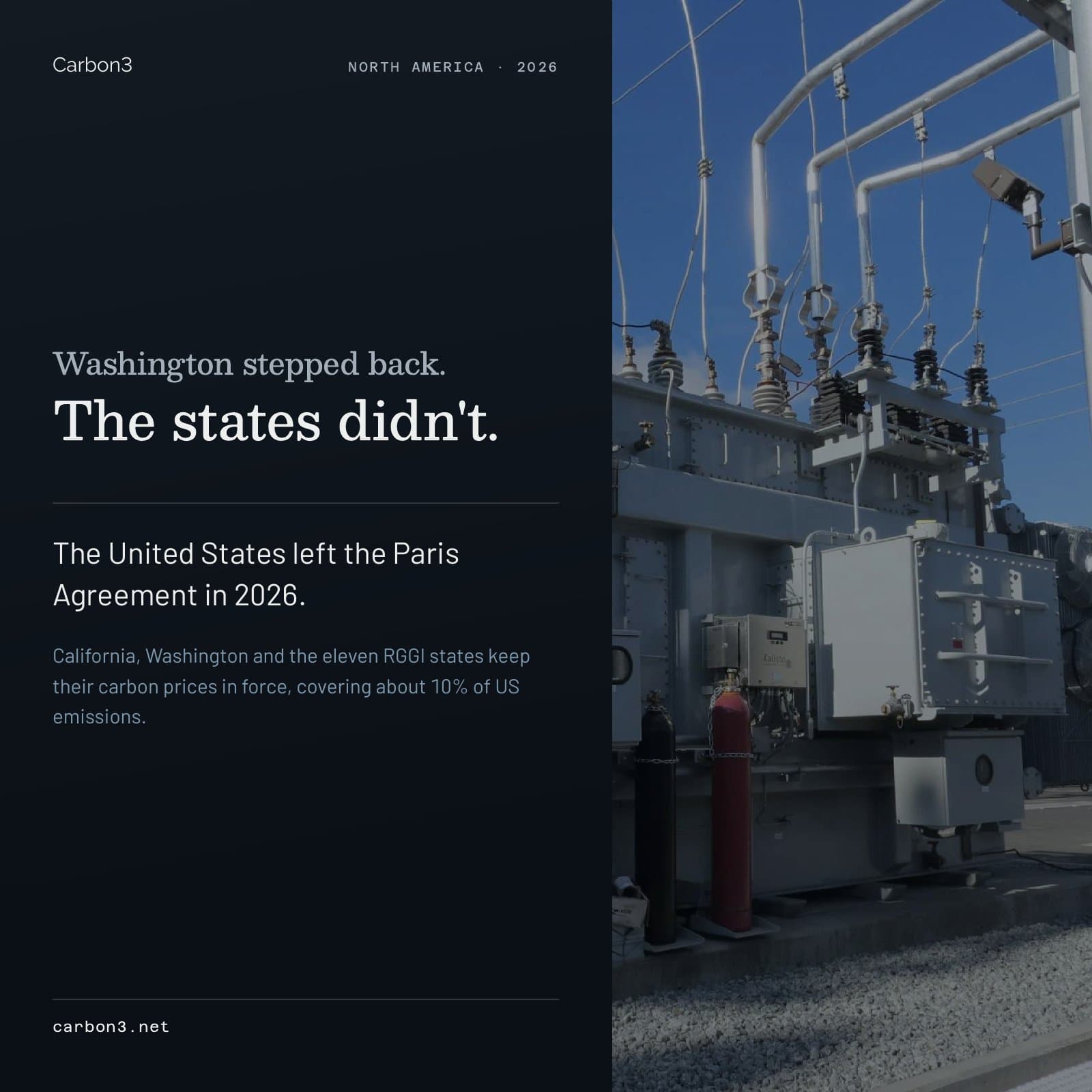
Scope 3 finance continued through federal policy shifts for structural reasons. The question is how to connect action to credible outcomes.
Outlook
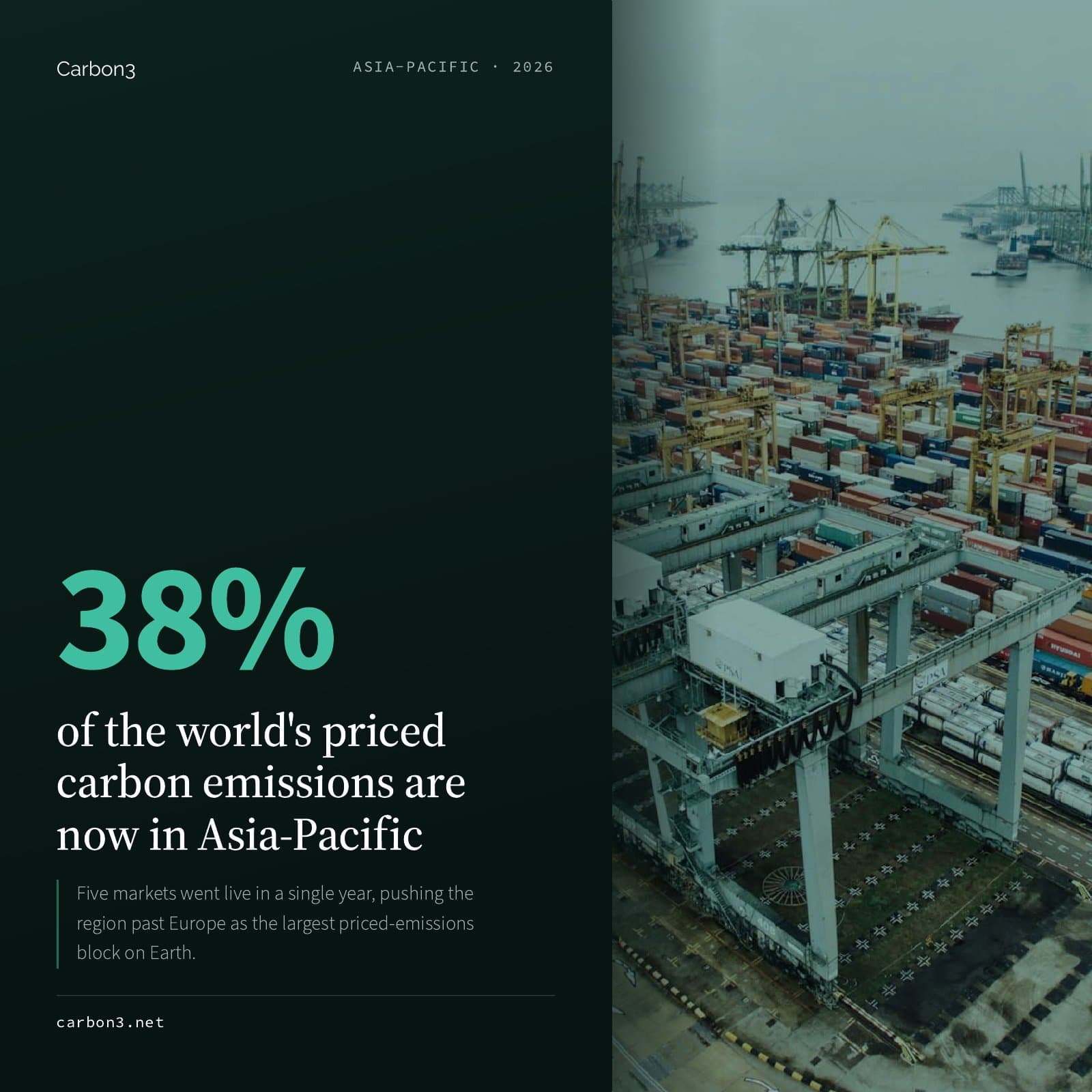
Five new compliance markets in a year, priced emissions up more than 30 percent, and border adjustments already landing.
Outlook
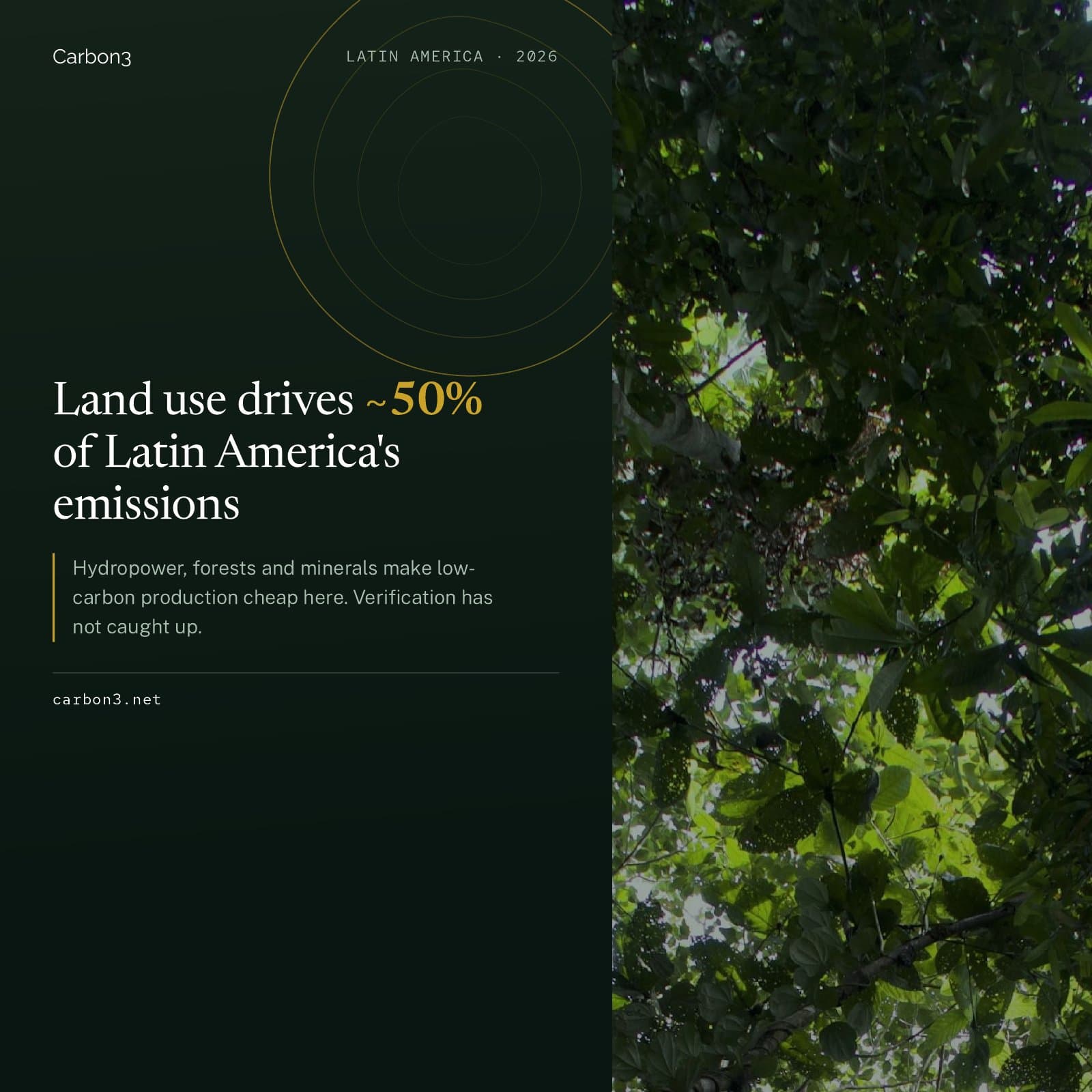
The region already has natural and systemic advantages for lower-emission aluminum, agriculture, copper and lithium. Verification is the challenge.
Sector: Steel
CBAM is pushing the carbon cost on conventional steel toward the green premium. Price convergence still does not build capacity.
Policy
The importer measures and pays, and the emissions stay. The verified data a CBAM declaration requires is the baseline an inset credit needs.
Outlook
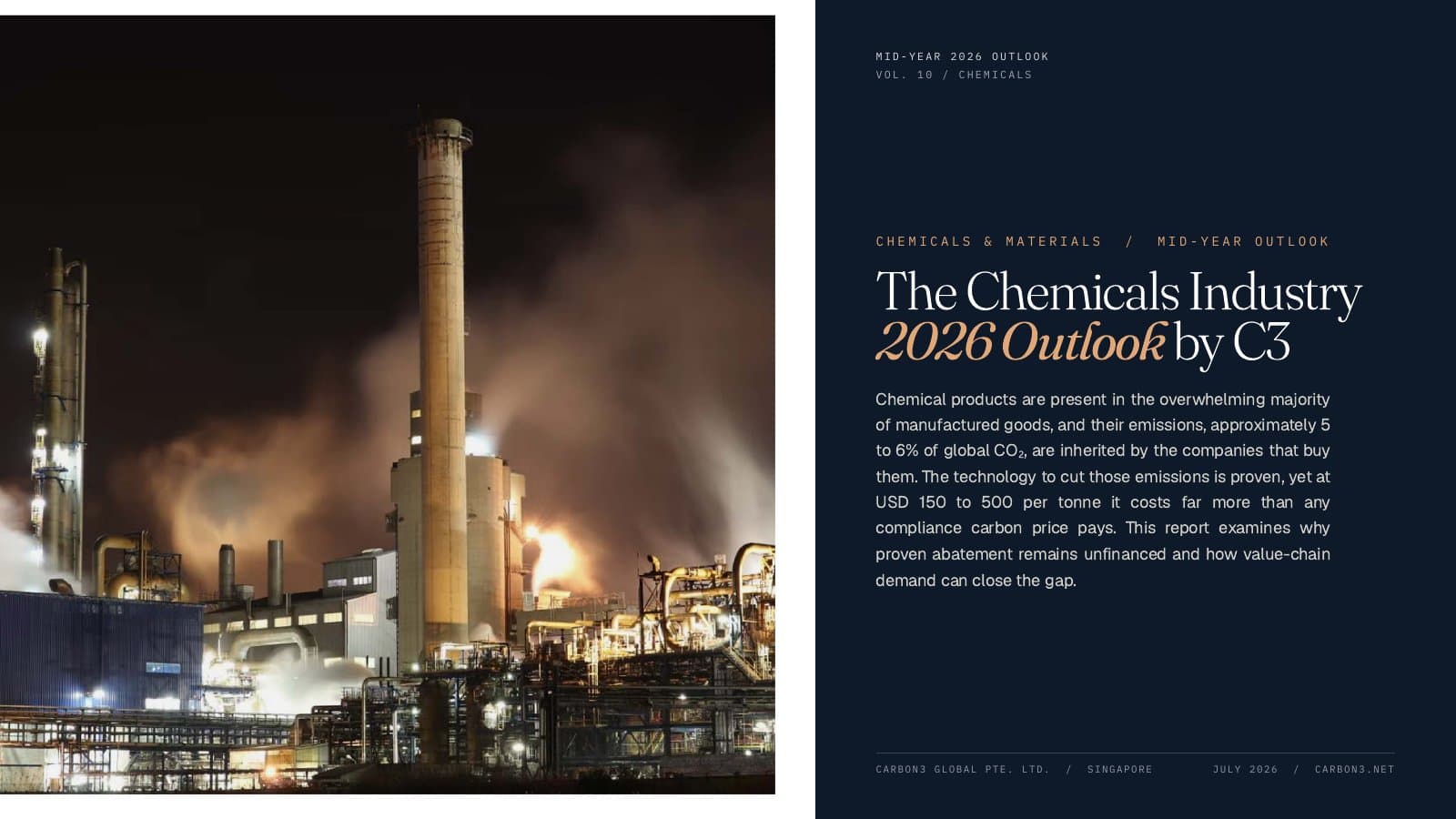
The sector accounts for 5 to 6 percent of global emissions and faces a $850 to $900 billion capital gap to 2030. Downstream demand is the missing ingredient.
Market structure
Why supply-chain decarbonization stays unfunded, and what kind of fix it actually needs.
Market structure
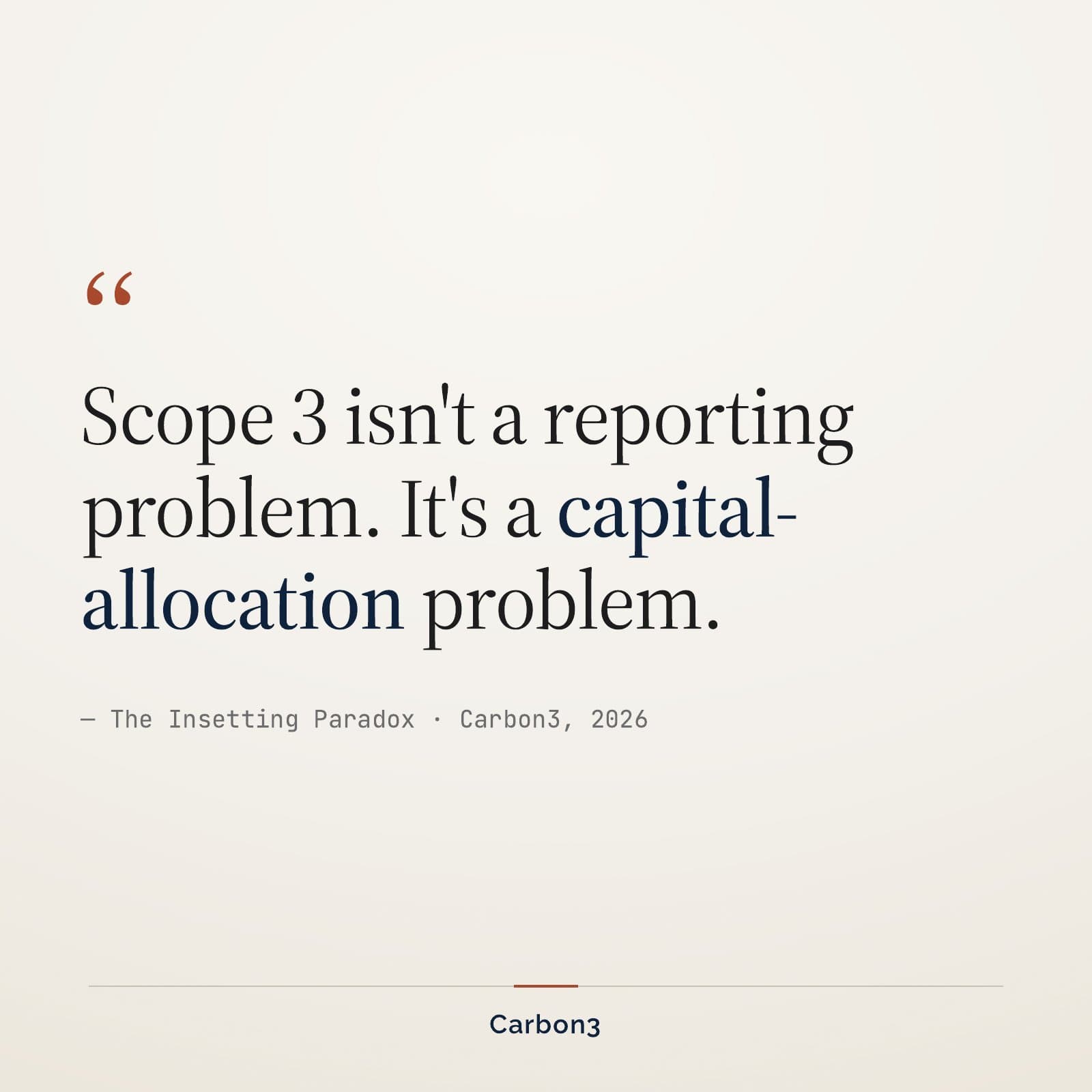
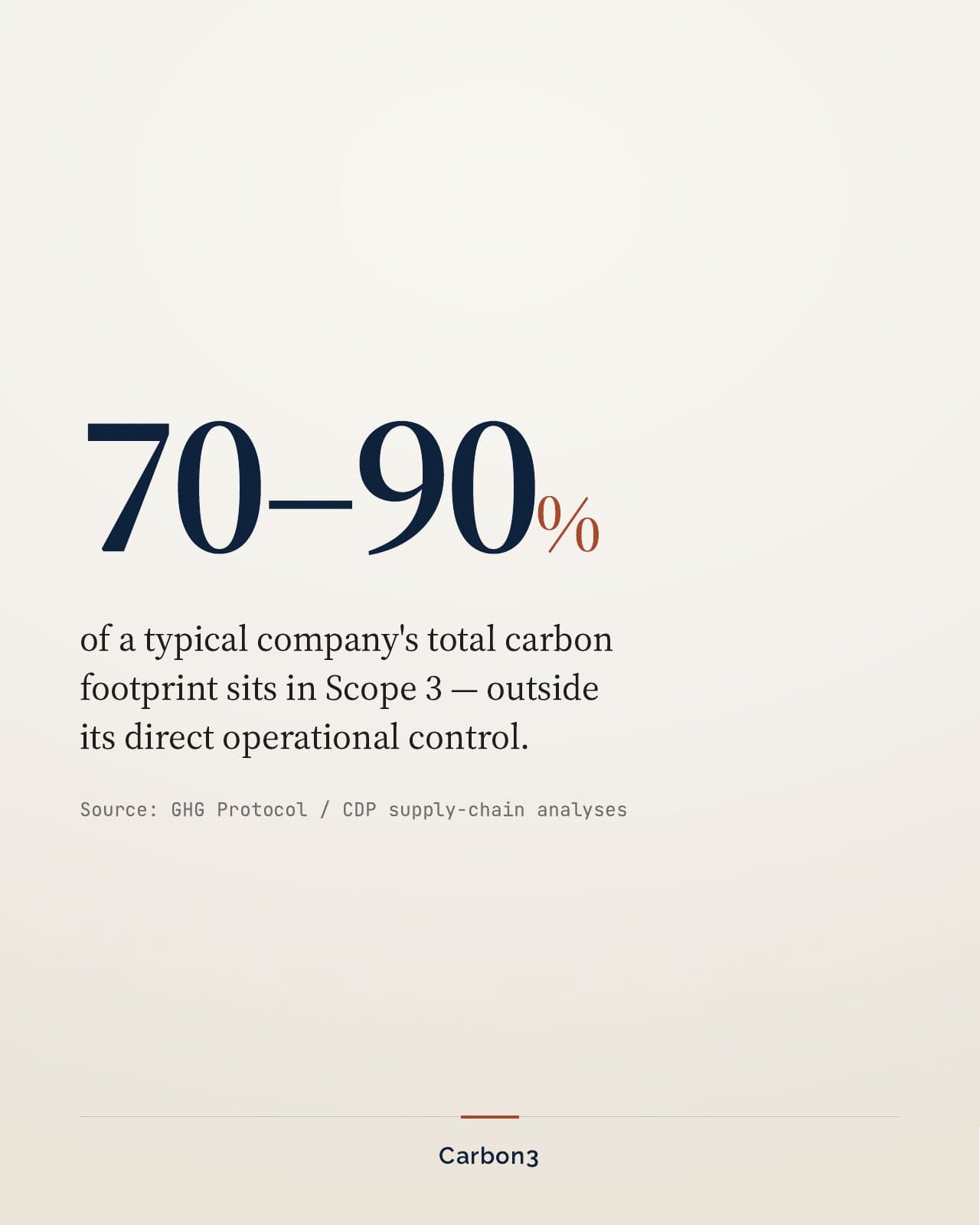
Most emissions sit in Scope 3, funding a supplier's emissions reduction recovers nothing today, and one inset credit changes that.
Transition finance
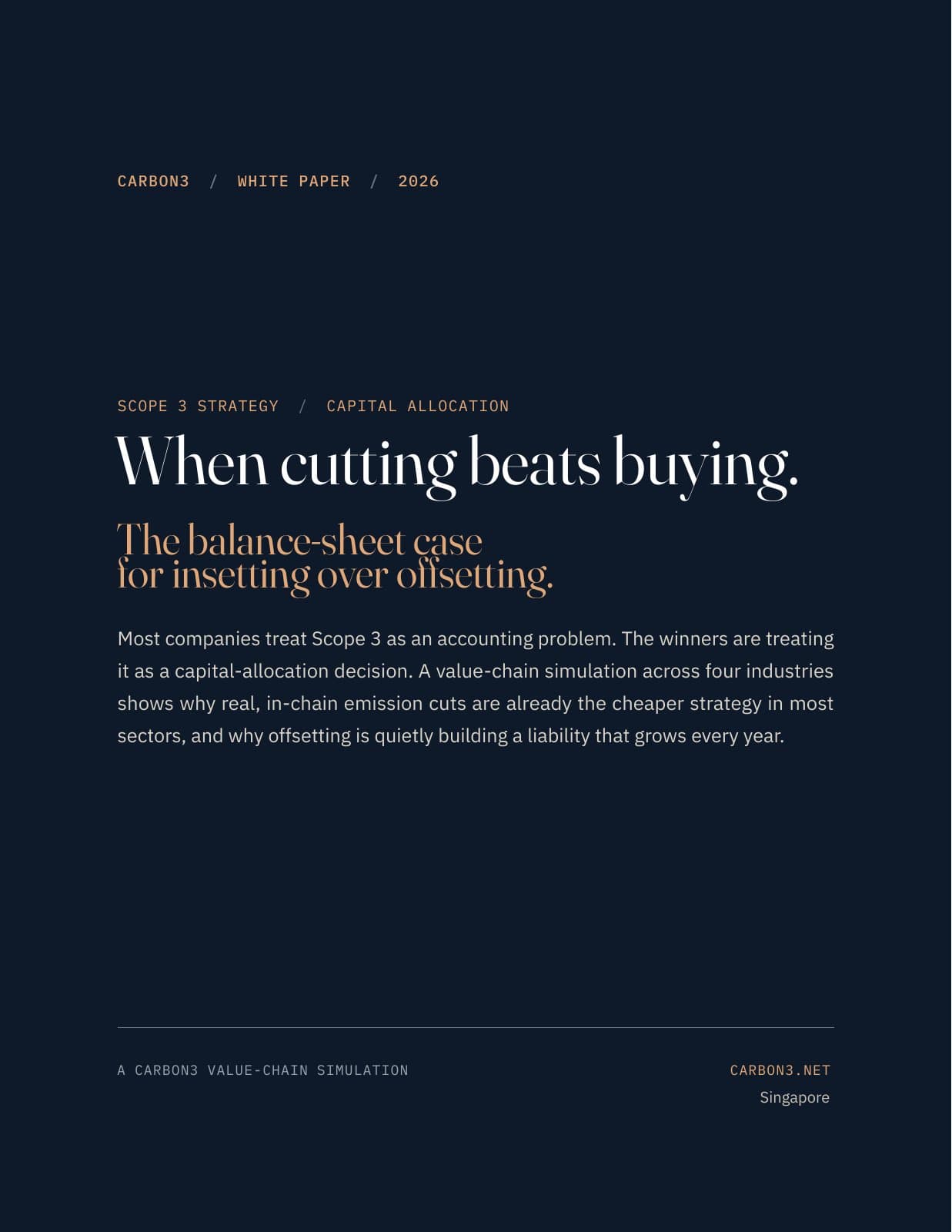
Our 2026 white paper models four value chains to 2050 and finds reducing emissions in-house already cheaper than buying credits in most sectors.
Sector: Steel
Europe's three largest steelmakers received €25.7 billion in free ETS allowances and committed €3.2 billion to decarbonization.
Sector: Agriculture
Madre Brava's UK director on why farm-level change is too slow and too small to hit near-term retail targets.
Outlook
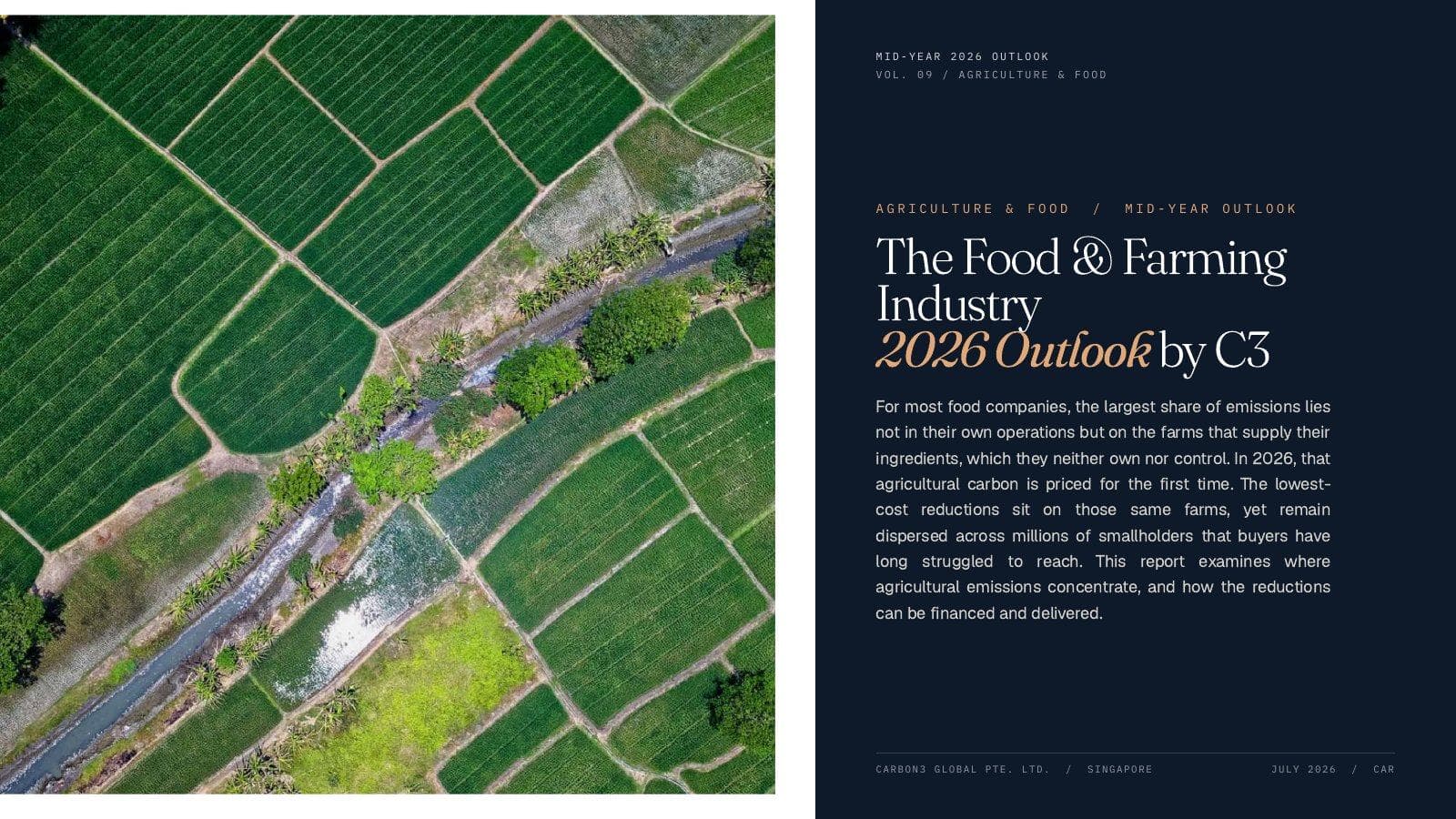
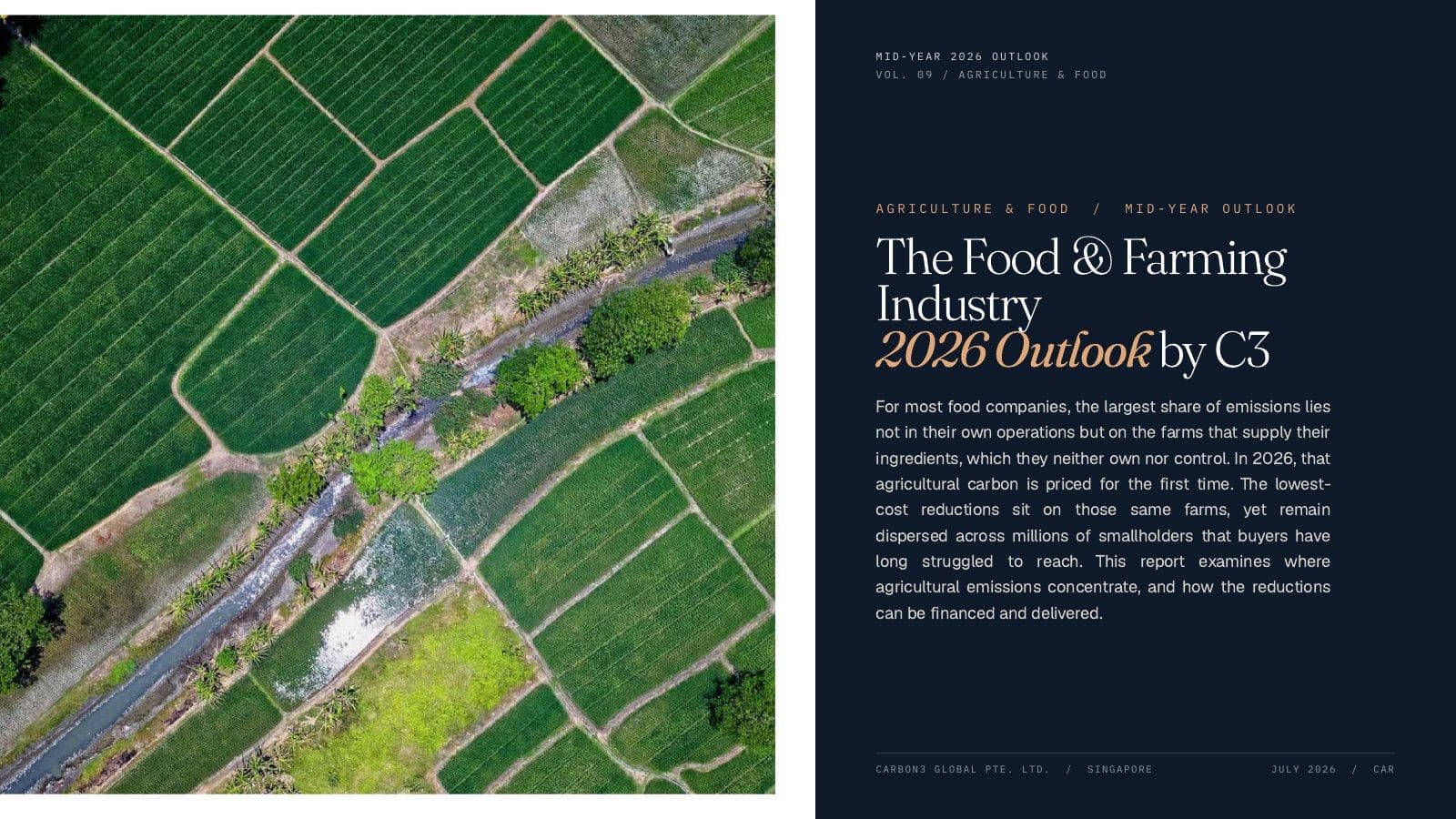
Nine in ten tonnes of a food company's carbon sit on farms it does not own. In 2026 that stops being optional.
Outlook
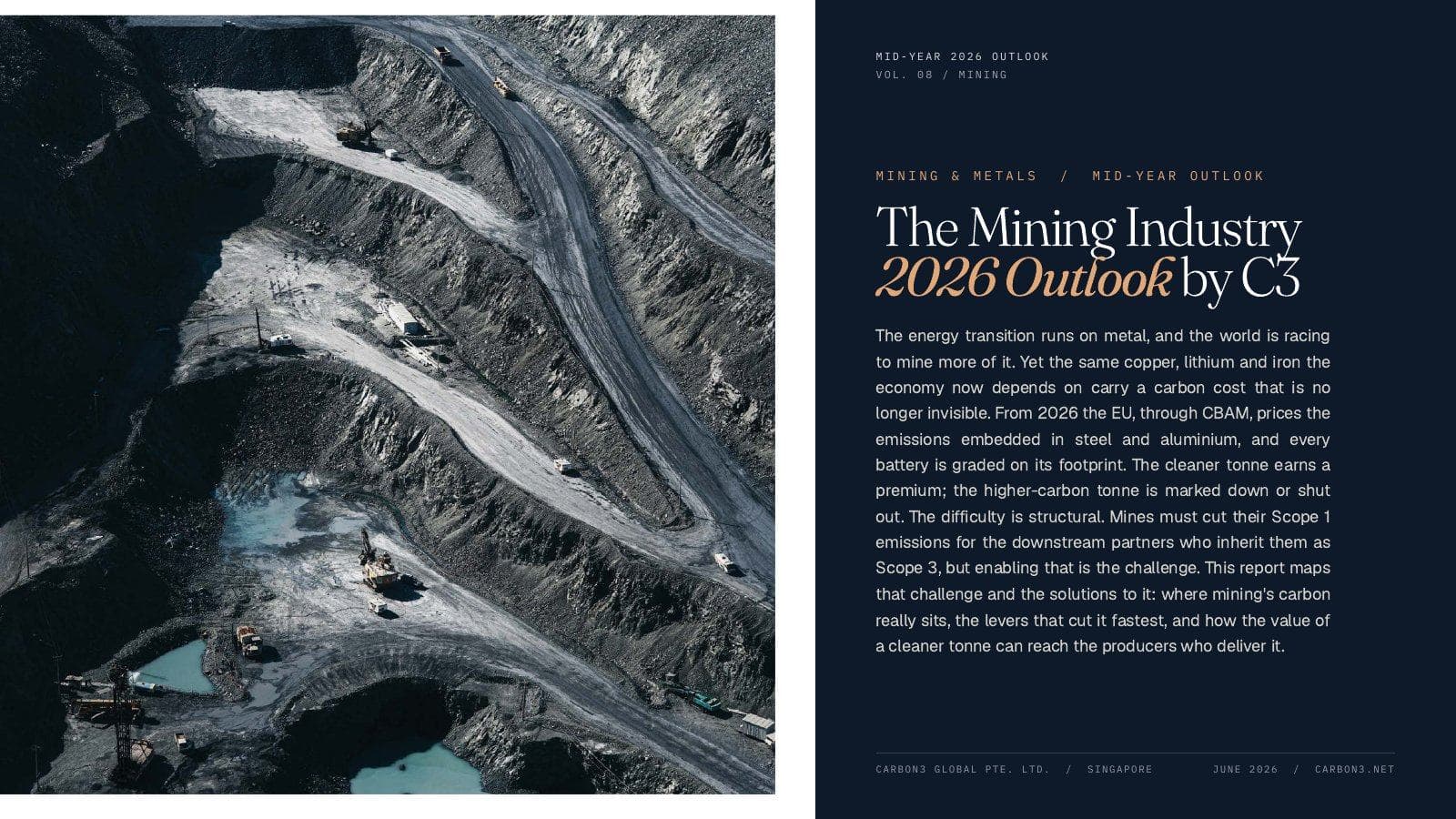
A mine's Scope 1 is its customers' Scope 3. From January 2026 CBAM prices it at the border and the Battery Passport grades every cell.
Outlook
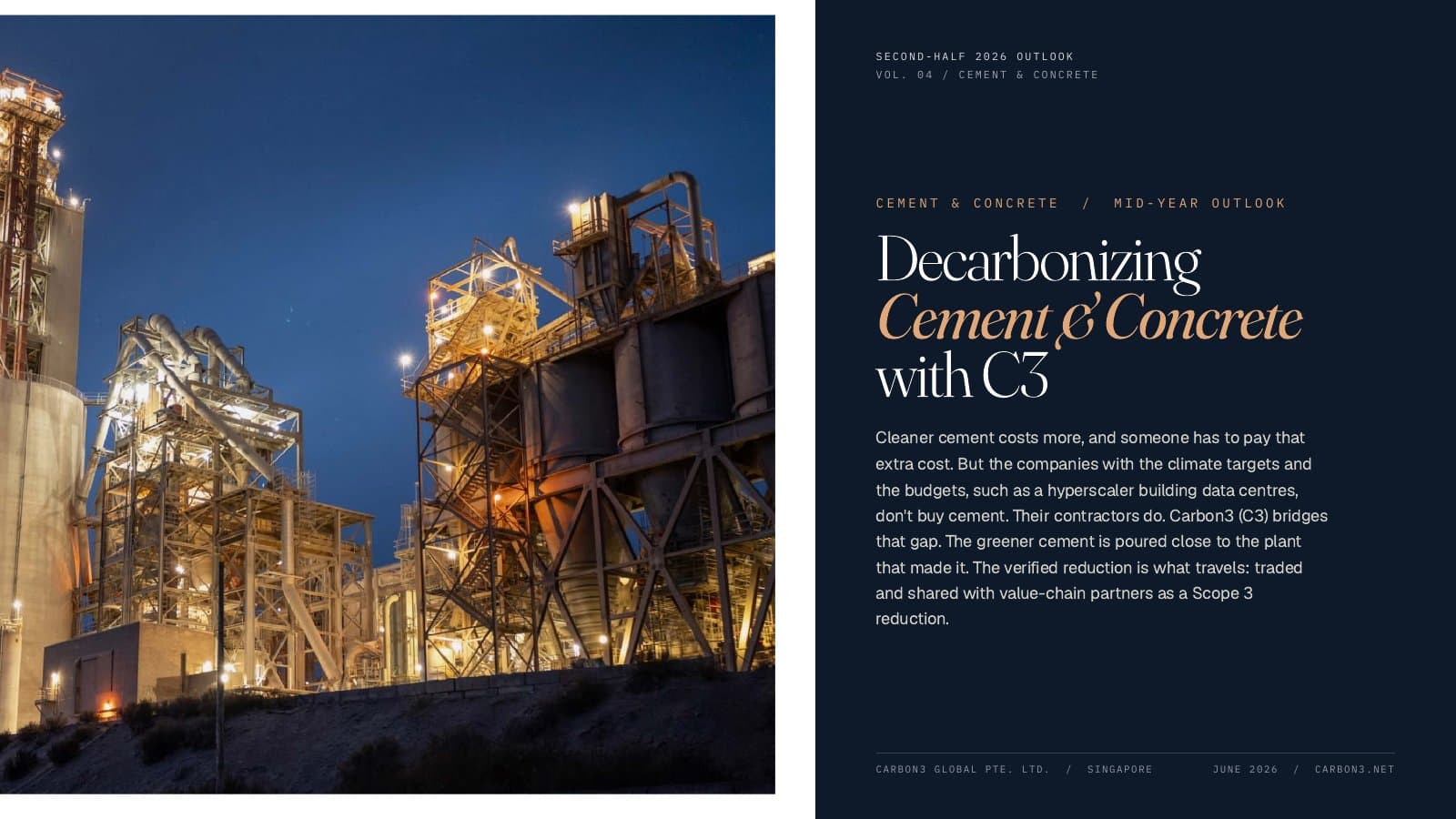
Low-carbon cement is not a technology problem. The final investment decision is missing because the green premium has no buyer.
Outlook
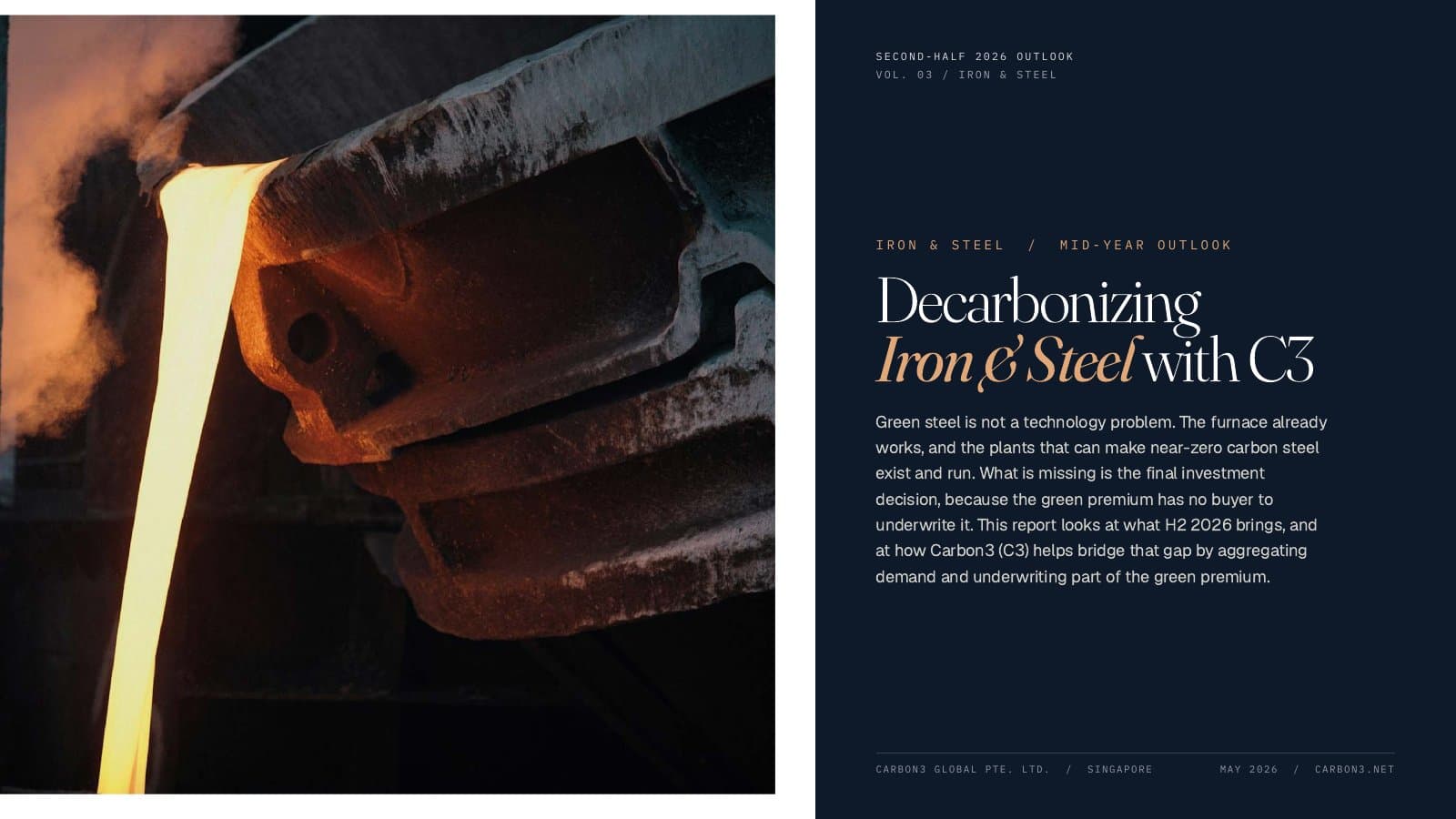
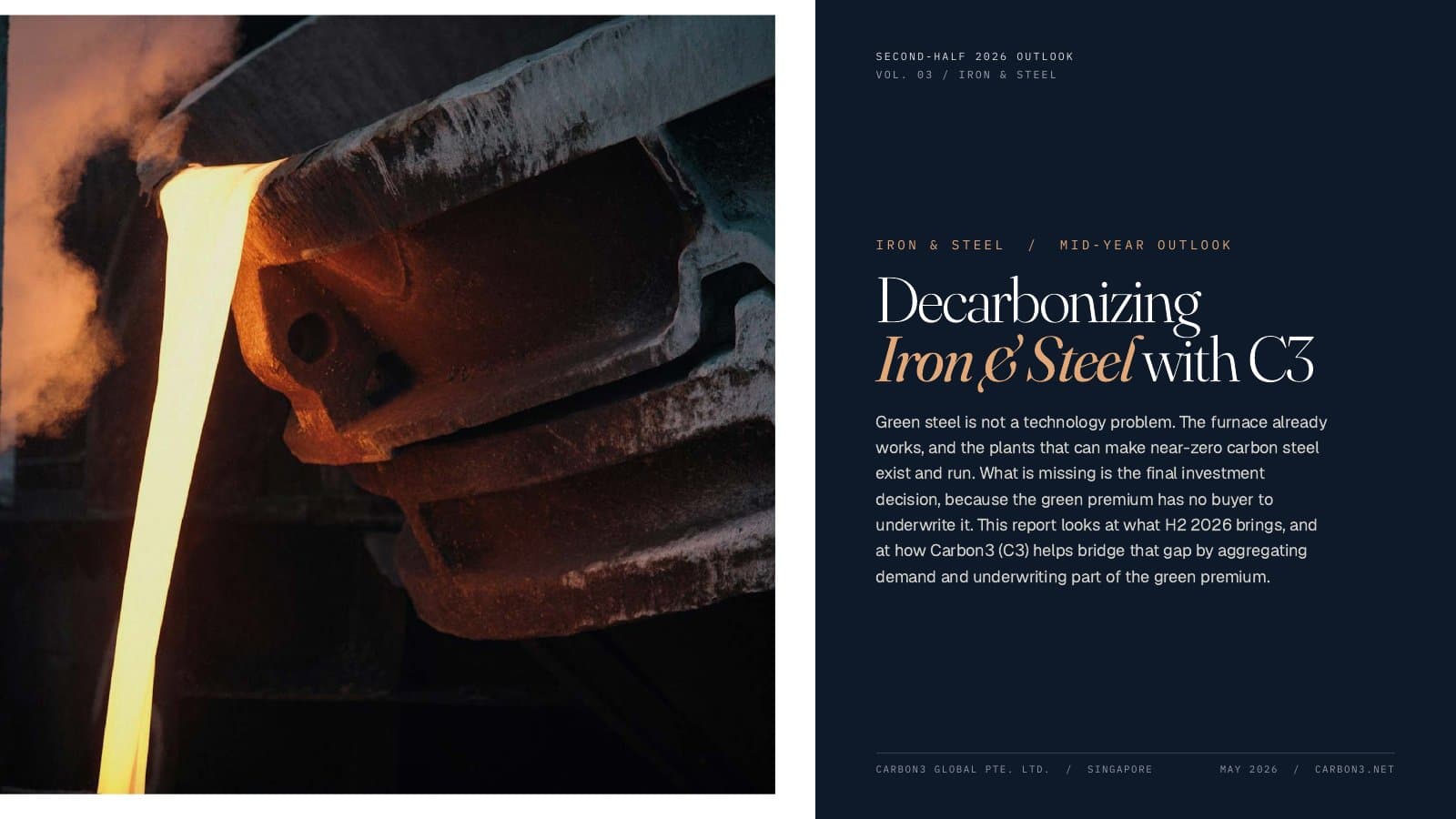
The furnace already works. What is missing is the final investment decision, because the green premium has no buyer to underwrite it.
Outlook
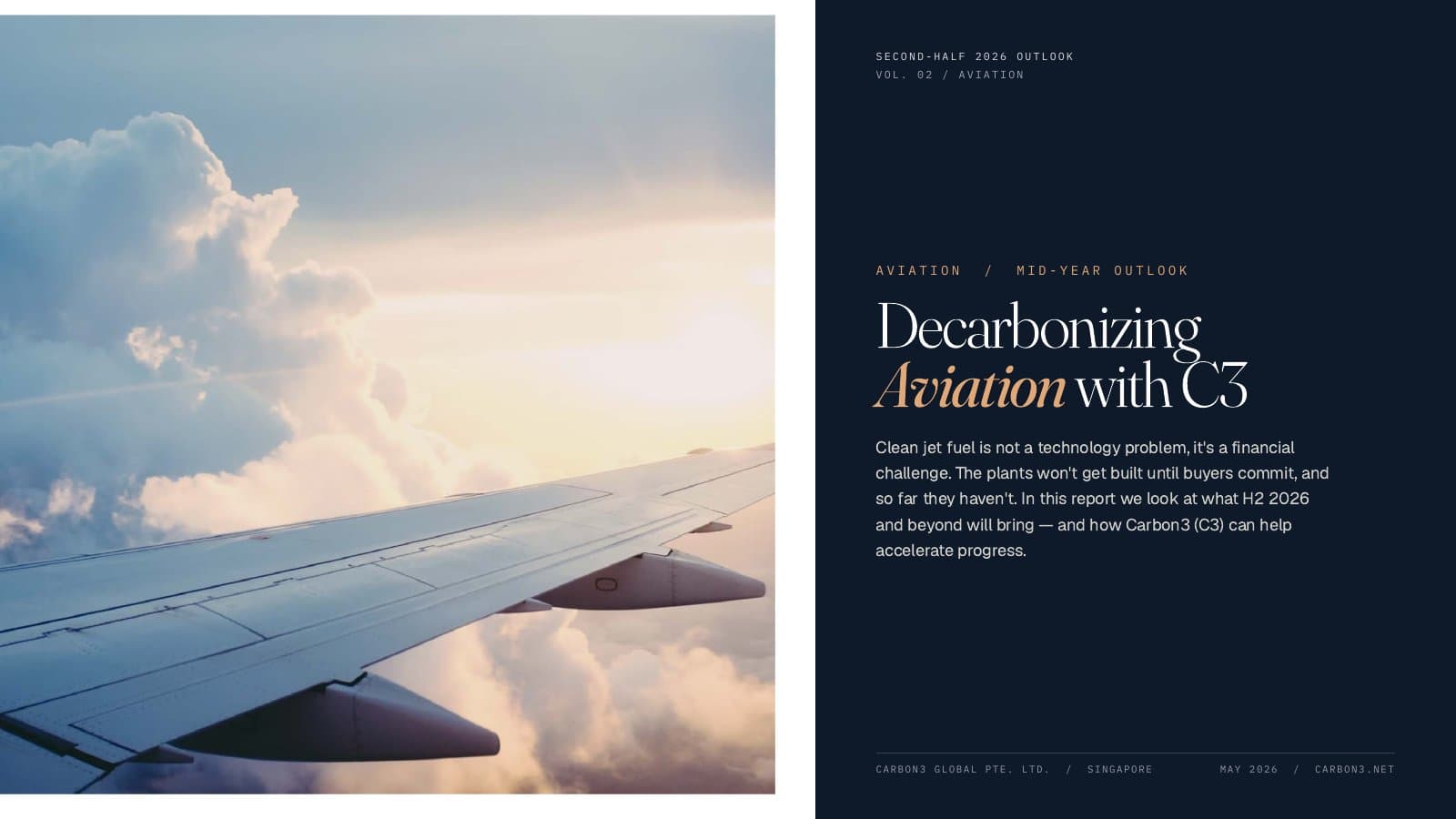
Clean jet fuel is not a technology problem. The plants will not get built until buyers commit.
Outlook
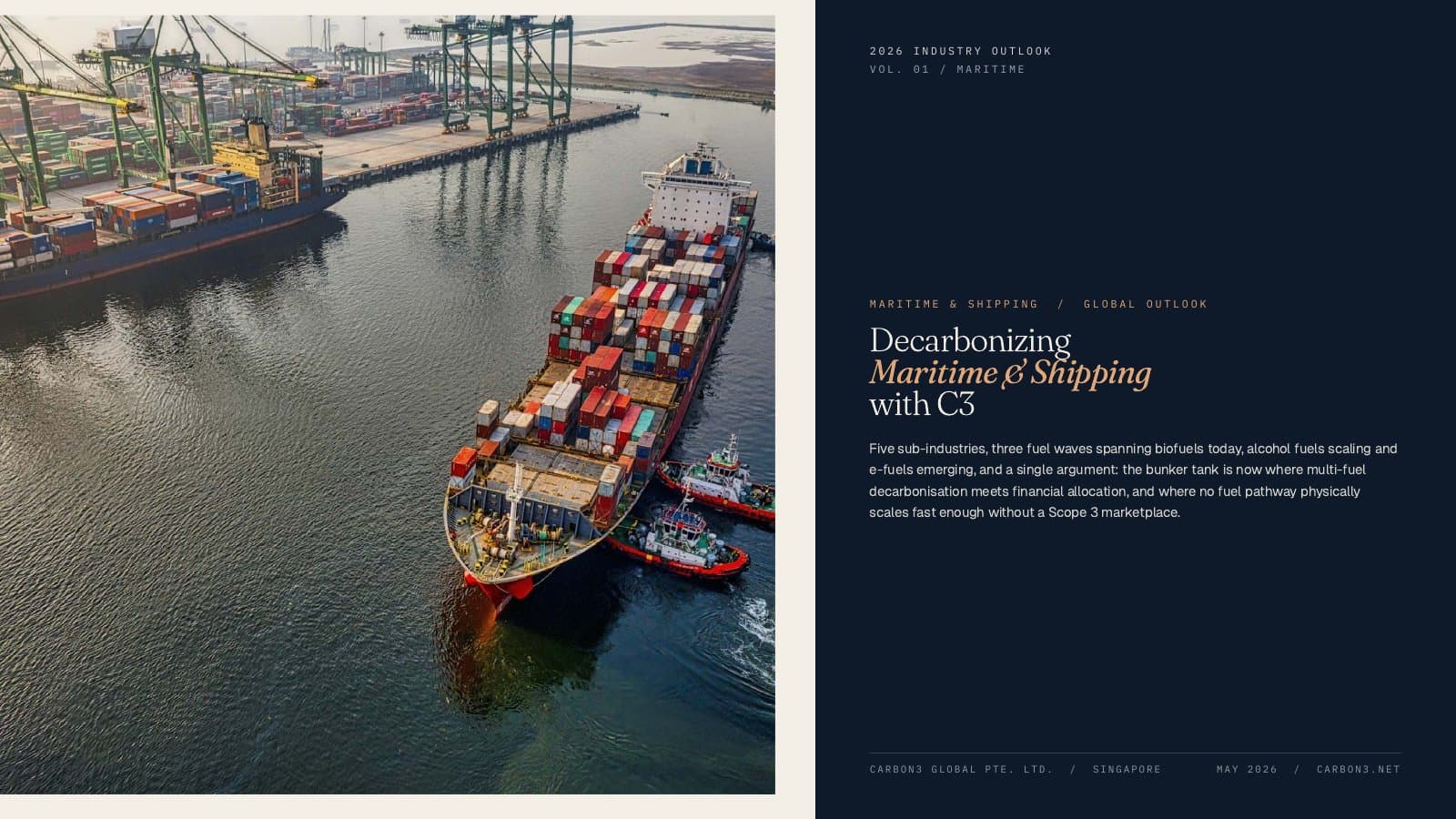
Carbon just became a P&L line. The building blocks are falling into place; the missing piece is routing cargo dollars to the bunker tank.
Sector: Maritime
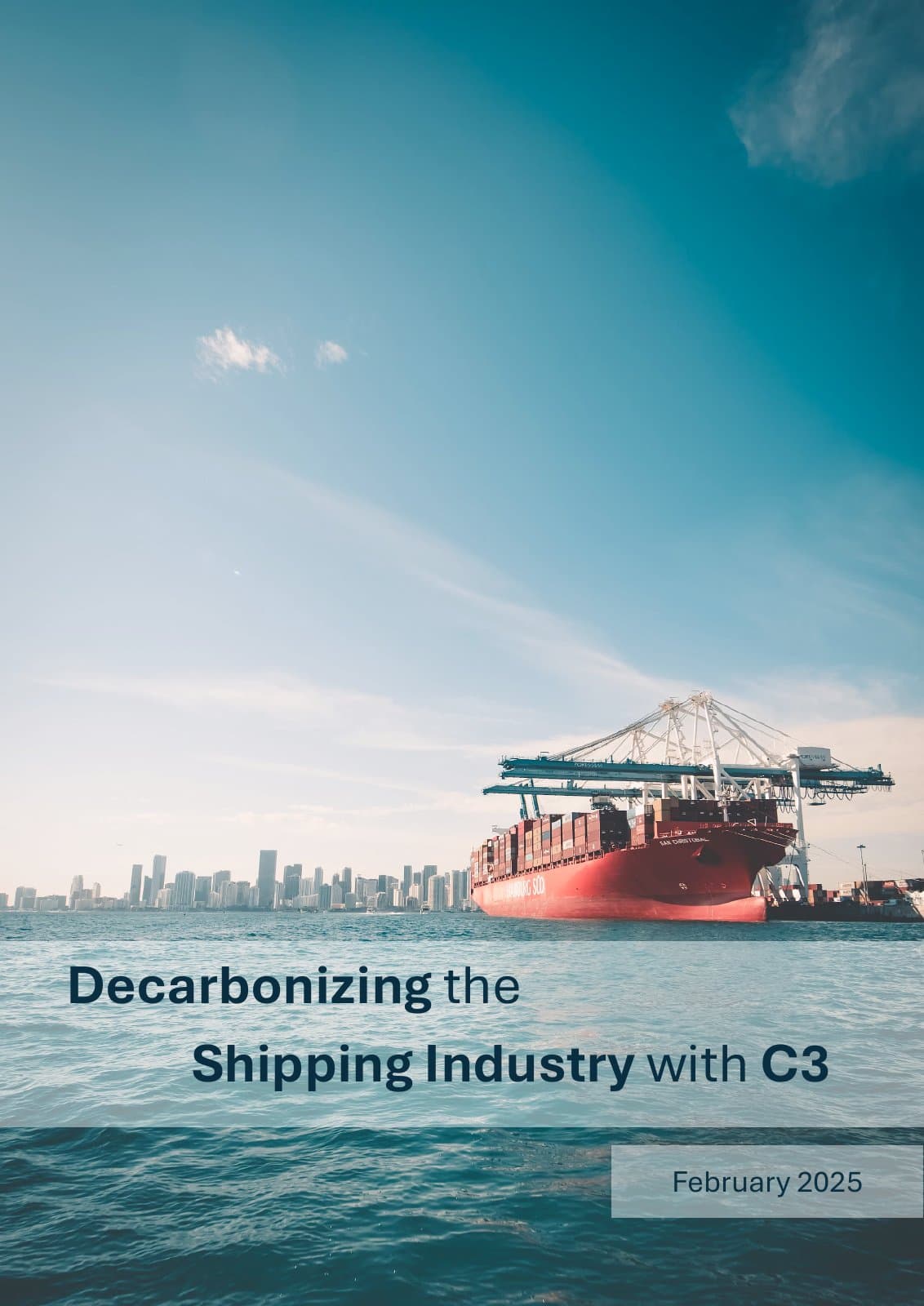
Our February 2025 brief on the cost of maritime decarbonization, and how inset credits can help fund it across the value chain.