Supermarkets are struggling with food emissions
Madre Brava's UK director on why farm-level change is too slow and too small to hit near-term retail targets.
By Carbon3 team1 min read
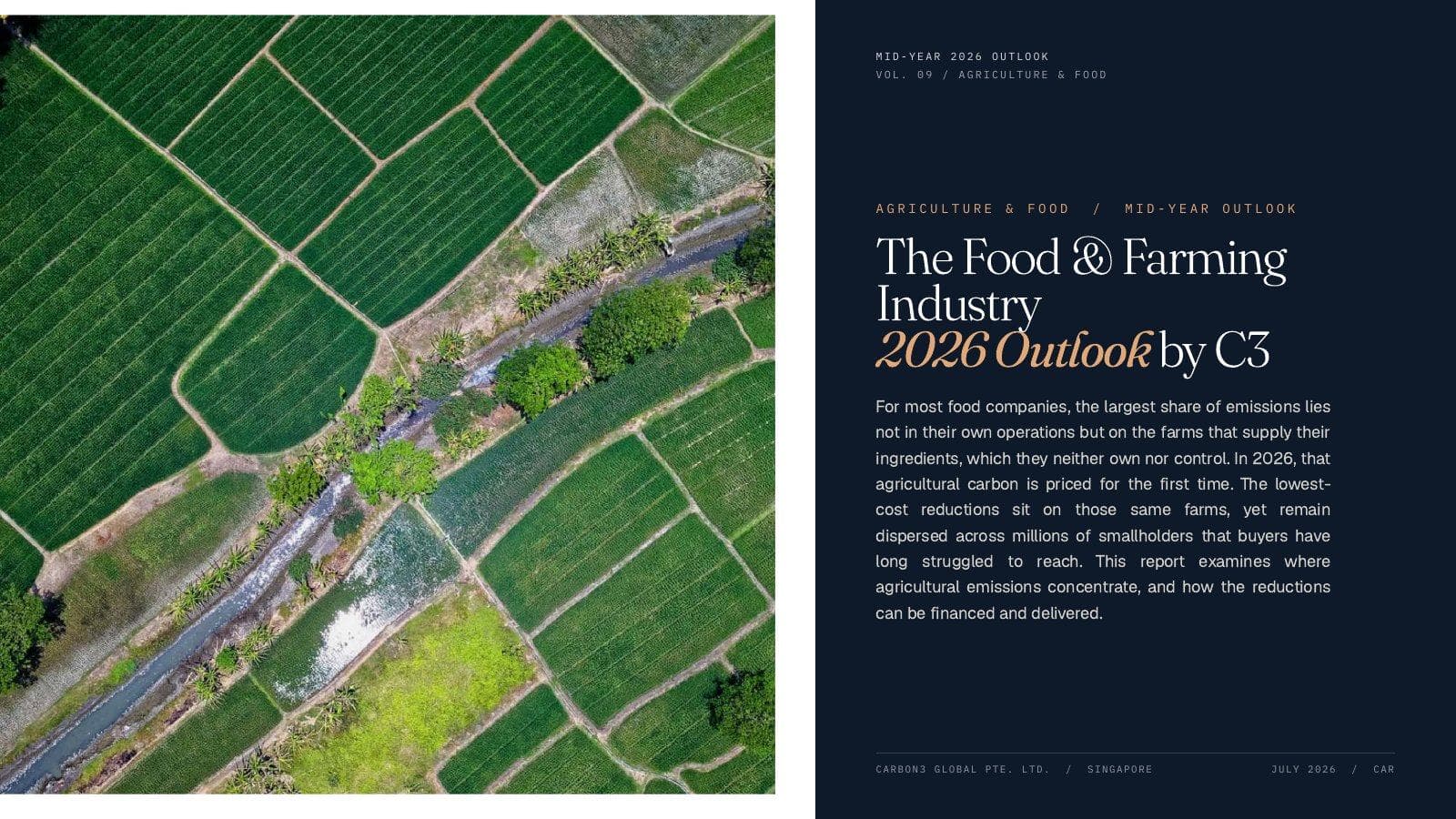
“Supermarkets have made some inroads on climate, with things like transport and electricity in stores. But when it comes to food - by far the biggest source of emissions - they’re struggling." - Sara Ayech, Madre Brava’s UK Director.
"Many supermarkets are relying on their producers to adopt greener practices, but by 2030 this is likely to deliver only a small proportion of the cuts needed and could require roughly £150 million in capital investment from retailers."
"While important for the long term, farm-level changes are too slow, too small, and too expensive to hit near-term targets compared to changing the product mix on the shelves."
These realities is exactly what Carbon3 helps solve for the entire value chain. Read more in our 2026 Agriculture & Food Outlook
Document
The full document, as a PDF
Free to download once you have a free account. No payment details are needed.
Originally published on LinkedIn, 6 July 2026.
The Carbon3 Newsletter
Weekly analysis of industrial decarbonization and insetting across Scope 1 to 3, from the Carbon3 team.
Read more from the research team.
Sector: Agriculture
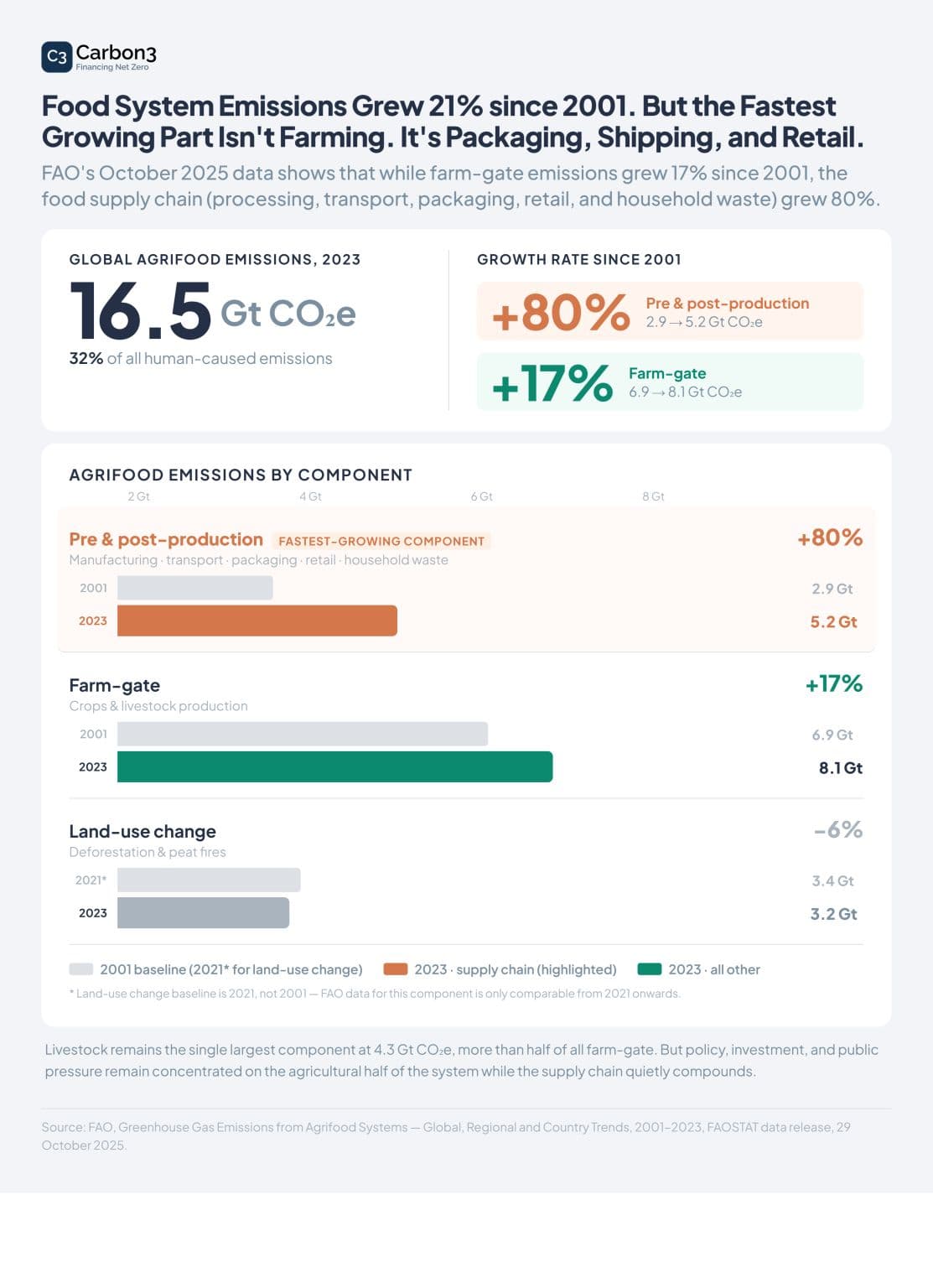
Agrifood emissions growth has shifted to packaging, shipping, waste and retail
On-farm practices remain the largest driver, but pre- and post-production services deserve closer attention for their Scope 3 impact.
Read the articleSector: Agriculture
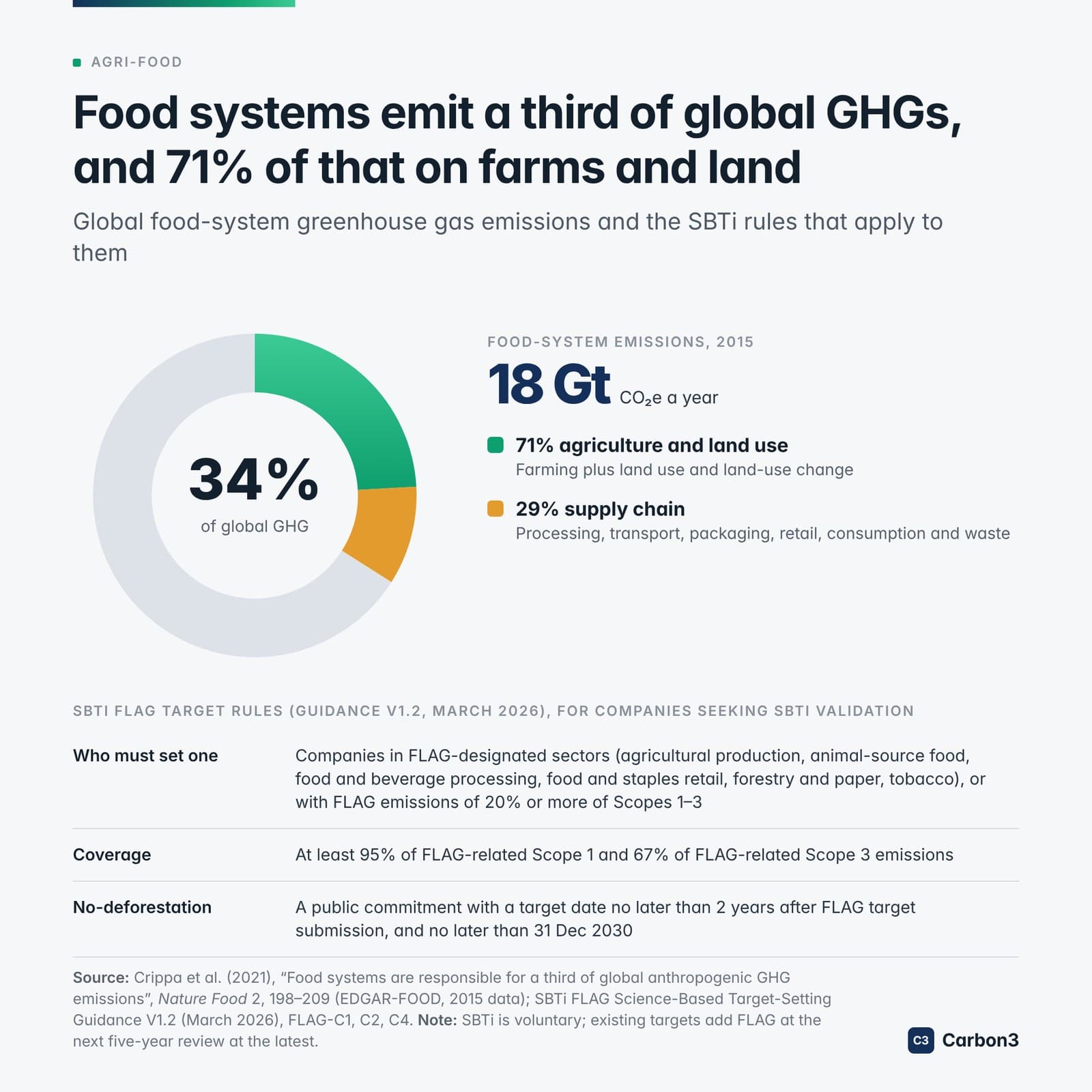
Most food-system emissions start before the factory gate
Agriculture and land use account for 71% of food-system emissions, and SBTi's FLAG guidance points food brands toward their supplier farms.
Read the articleSector: Agriculture
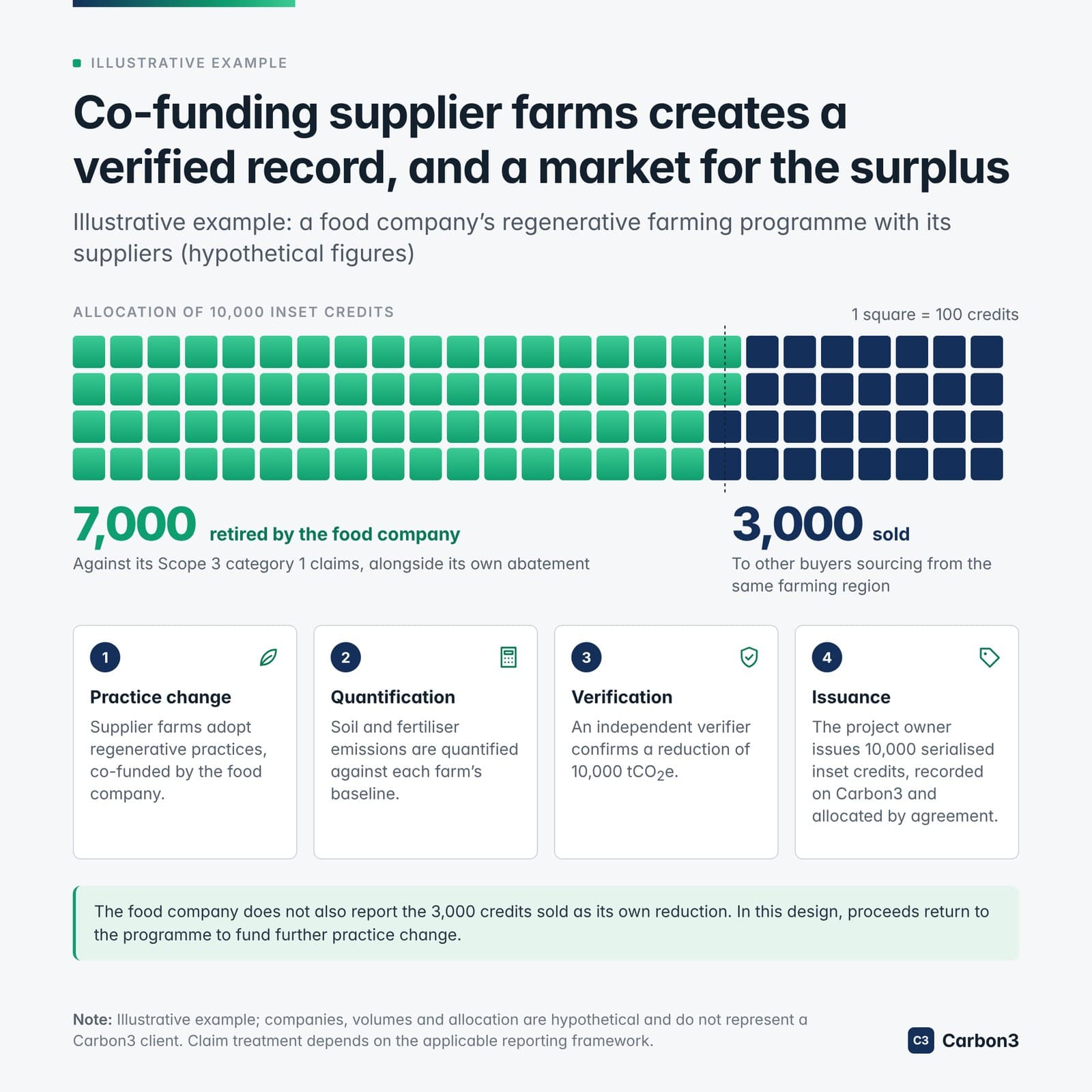
When a food company co-funds change on its own supplier farms
An illustrative example: 10,000 inset credits from regenerative practices, 7,000 retired against Scope 3 claims, 3,000 sold to regional buyers, and every tonne counted once.
Read the article
See the companies behind these figures in the Data Hub.
Look up your suppliers’ emissions and targets, free.