Book and claim for maritime decarbonization: momentum and fragmentation
The model is gaining traction with buyers and standards bodies, but inconsistent frameworks push a heavy due-diligence burden onto procurement teams.
By Carbon3 team1 min read
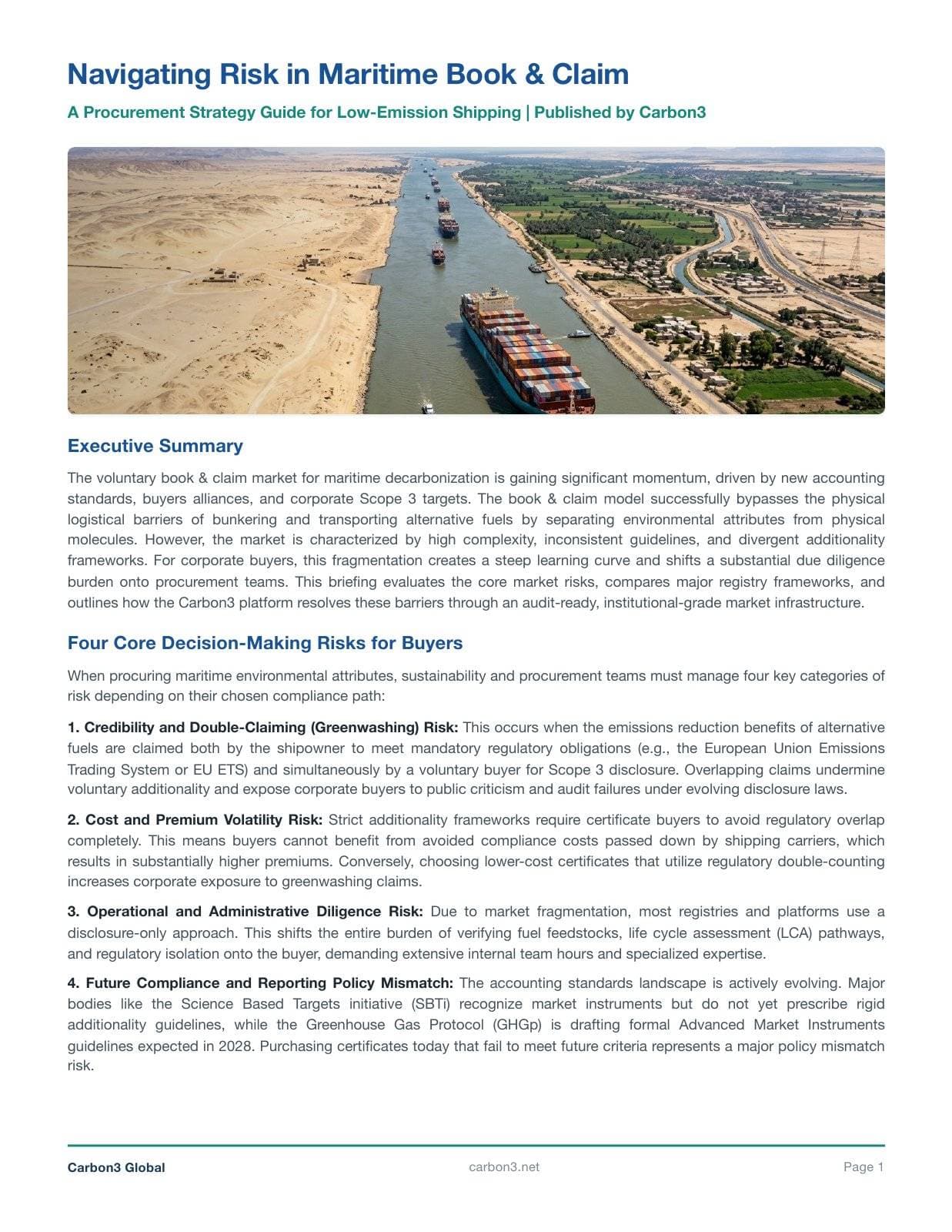
The Book & Claim model for maritime decarbonization is gaining significant momentum, driven by new accounting standards, buyers alliances, and corporate Scope 3 targets. The model successfully bypasses the physical logistical barriers of bunkering and transporting alternative fuels by separating environmental attributes from physical molecules.
However, the market is characterized by high complexity, inconsistent guidelines, and divergent additionality frameworks. For corporate buyers, this fragmentation creates a steep learning curve and shifts a substantial due diligence burden onto procurement teams.
This report evaluates the core market risks, compares major registry frameworks, and outlines how the Carbon3 platform resolves these barriers through an audit-ready, institutional-grade market infrastructure.
Document
The full document, as a PDF
Free to download once you have a free account. No payment details are needed.
Originally published on LinkedIn, 23 August 2026.
The Carbon3 Newsletter
Weekly analysis of industrial decarbonization and insetting across Scope 1 to 3, from the Carbon3 team.
Read more from the research team.
Sector: Maritime
The IMO has a decision date. Waiting still has a cost.
MEPC resumes on 4 December 2026.
Read the articleSector: Maritime
The cost of delayed action in maritime shipping
Green fuel supply through 2030 is effectively spoken for by early movers.
Read the articleSector: Maritime
Maritime book and claim has earned trust. It has not yet earned fit.
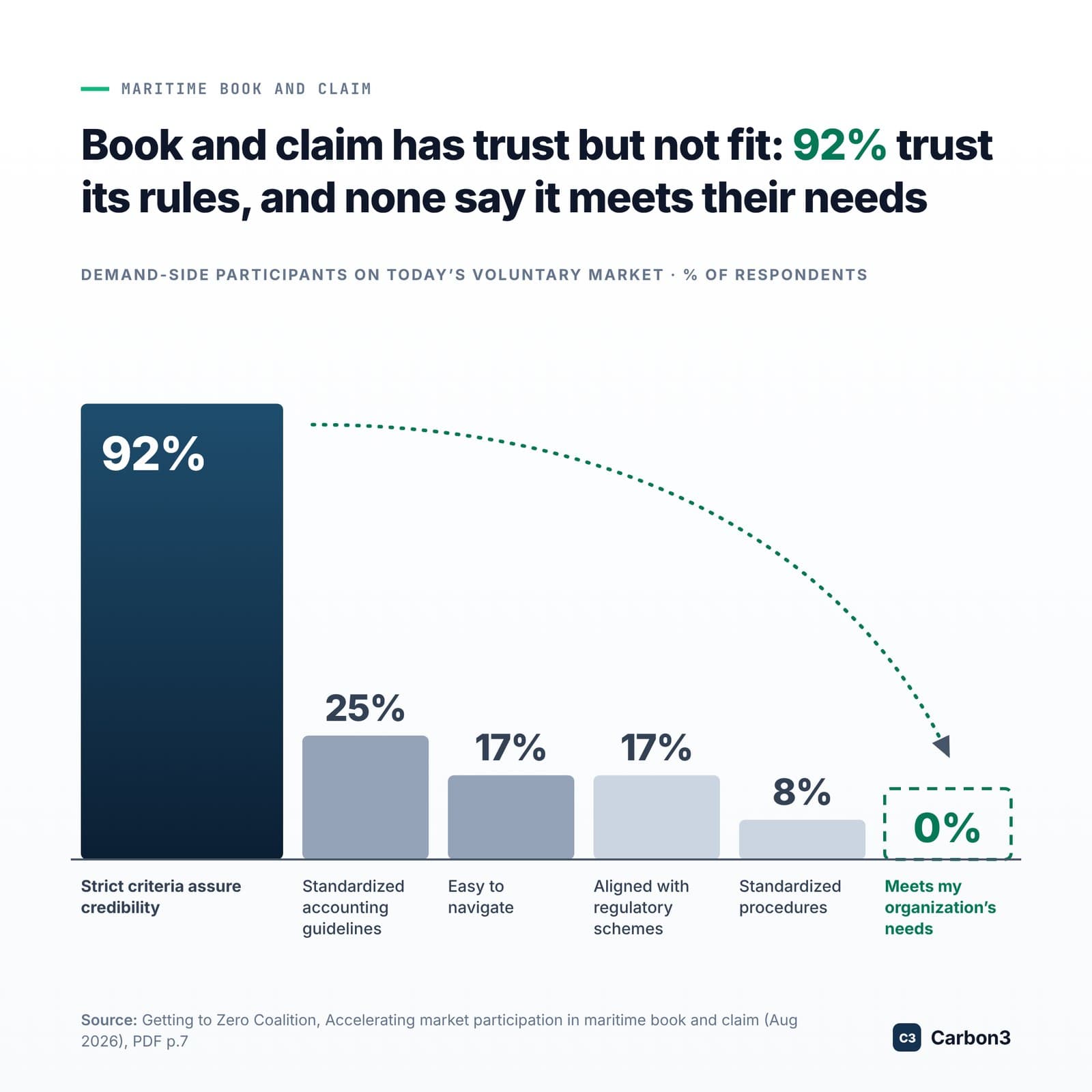
In a Getting to Zero Coalition survey, 92% of buyers trusted book-and-claim criteria, yet not one said the market meets their organization's needs.
Read the article
See the companies behind these figures in the Data Hub.
Look up your suppliers’ emissions and targets, free.