The cost case against green steel is eroding
CBAM is pushing the carbon cost on conventional steel toward the green premium. Price convergence still does not build capacity.
By Carbon3 team1 min read
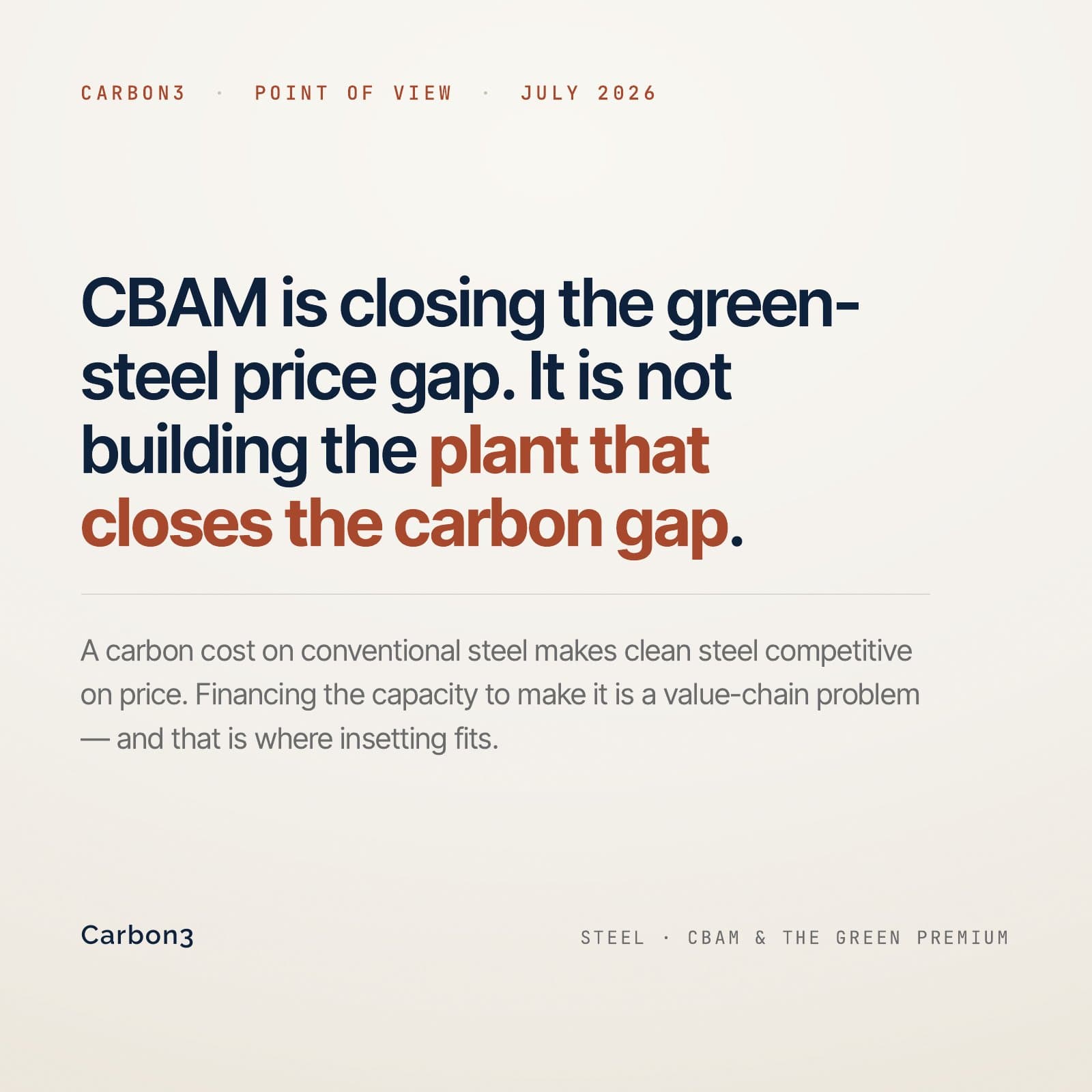
The cost case against green steel is eroding, and carbon border pricing is doing the work. As CBAM phases out free allocation through 2034, the carbon cost on conventional steel is climbing toward $100 to $200 a tonne, converging on the $150 to $300 green premium.
Price convergence, however, does not build capacity. Producers need firm offtake before they will invest, and buyers need a claimable reduction before they will pay more. Neither side moves first.
Insetting resolves the standoff: buyers co-fund verified green capacity and take an allocated share of the reduction as a Scope 3 claim, giving producers the forward demand to build.
Document
The full document, as a PDF
Free to download once you have a free account. No payment details are needed.
Originally published on LinkedIn, 23 July 2026.
The Carbon3 Newsletter
Weekly analysis of industrial decarbonization and insetting across Scope 1 to 3, from the Carbon3 team.
Read more from the research team.
Sector: Steel
€8 in free permits for every €1 reinvested
Europe's three largest steelmakers received €25.7 billion in free ETS allowances and committed €3.2 billion to decarbonization.
Read the articleSector: Steel
CBAM is an investment signal for Korean steel's customers
$7.7bn of Korean exports will sit under CBAM from 2028.
Read the articleSector: Steel
Green steel looks expensive at the mill and cheap in the showroom
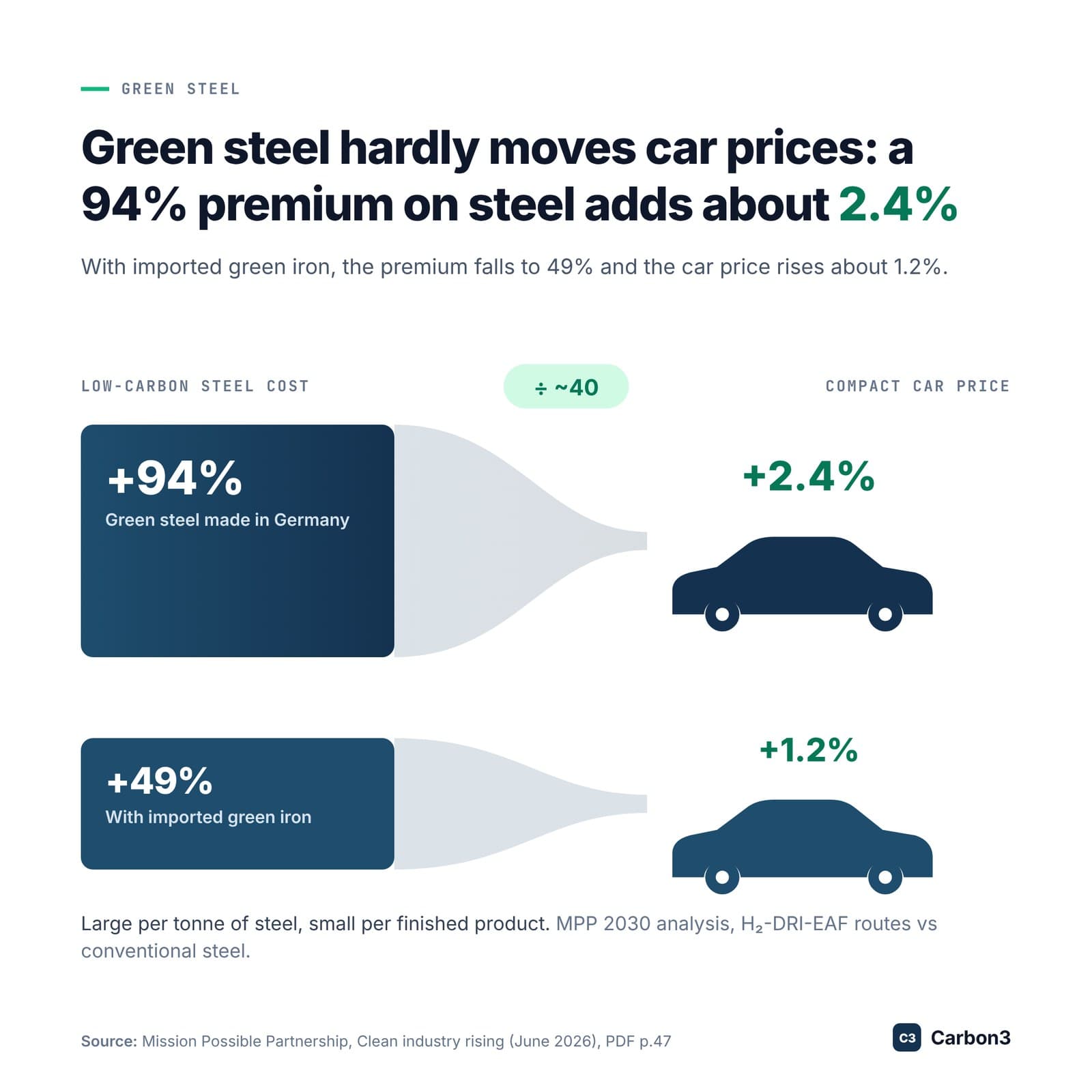
Mission Possible Partnership finds a 94% premium on hydrogen-based steel adds only about 2.4% to the cost of a compact car in 2030, which gives buyers a cheap way to act on purchased-goods emissions.
Read the article
See the companies behind these figures in the Data Hub.
Look up your suppliers’ emissions and targets, free.