Three signals from the first week of September 2026
Amazon extends its inset marketplace to aviation fuel, a study brackets the carbon tax level that works, and Singapore signs a credit agreement with Laos.
By Carbon3 team1 min read
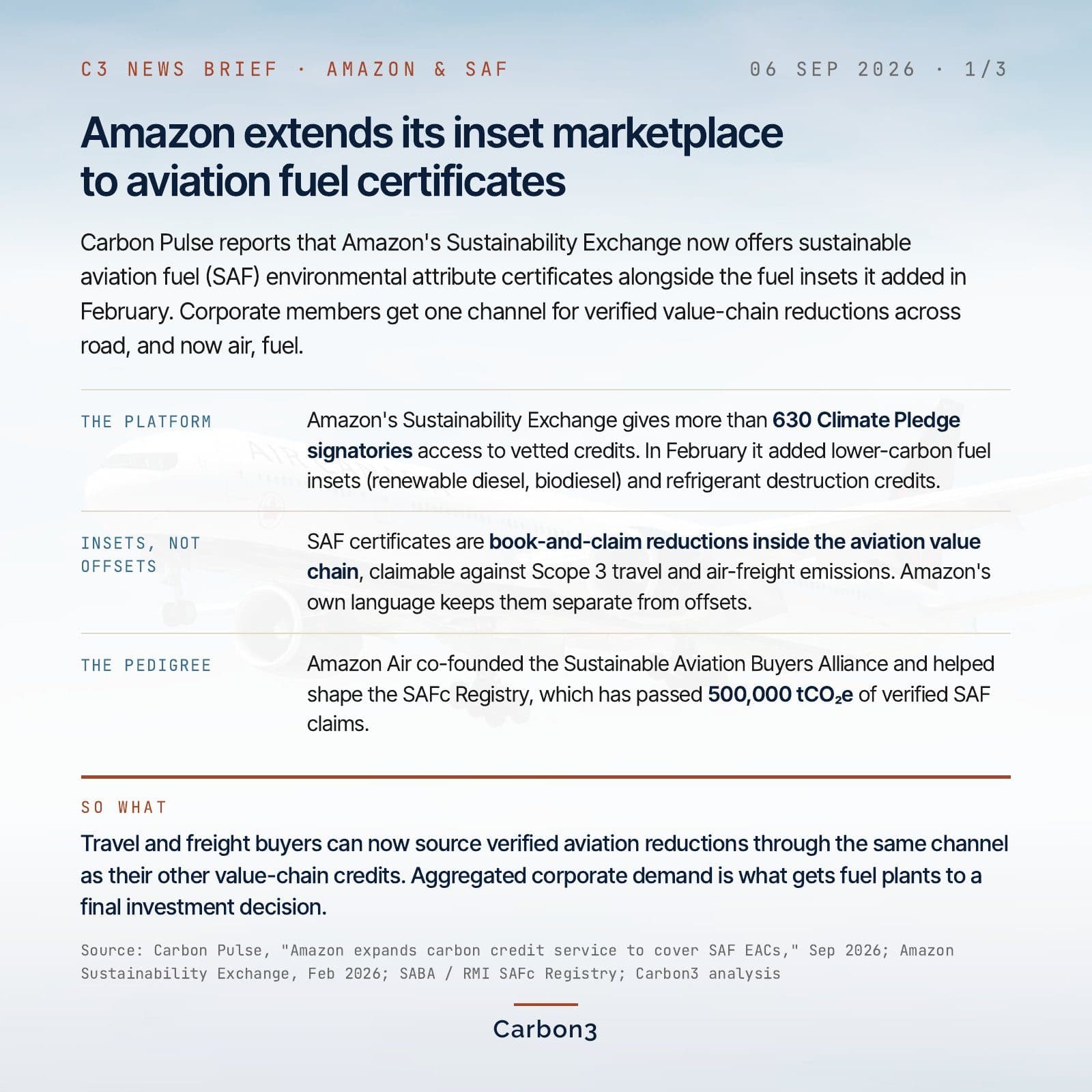
Amazon extends its inset marketplace to aviation fuel certificates: Travel and freight buyers can now source verified aviation reductions through the same channel as their other value-chain credits. Aggregated corporate demand is what gets fuel plants to a final investment decision.
A new study brackets the carbon tax level that actually works: CFOs gain a defensible band for internal carbon prices. Most jurisdictions still price below it, which is why voluntary insetting demand, not tax, is doing the marginal work in supply chains today.
Singapore and Laos sign a carbon credit implementation agreement: Buyers in Singapore gain a second ASEAN source of correspondingly adjusted credits. Developers in Laos gain a compliance-grade buyer, provided project quality clears the eligibility bar.
Document
The full document, as a PDF
Free to download once you have a free account. No payment details are needed.
Originally published on LinkedIn, 6 September 2026.
The Carbon3 Newsletter
Weekly analysis of industrial decarbonization and insetting across Scope 1 to 3, from the Carbon3 team.
Read more from the research team.
Policy
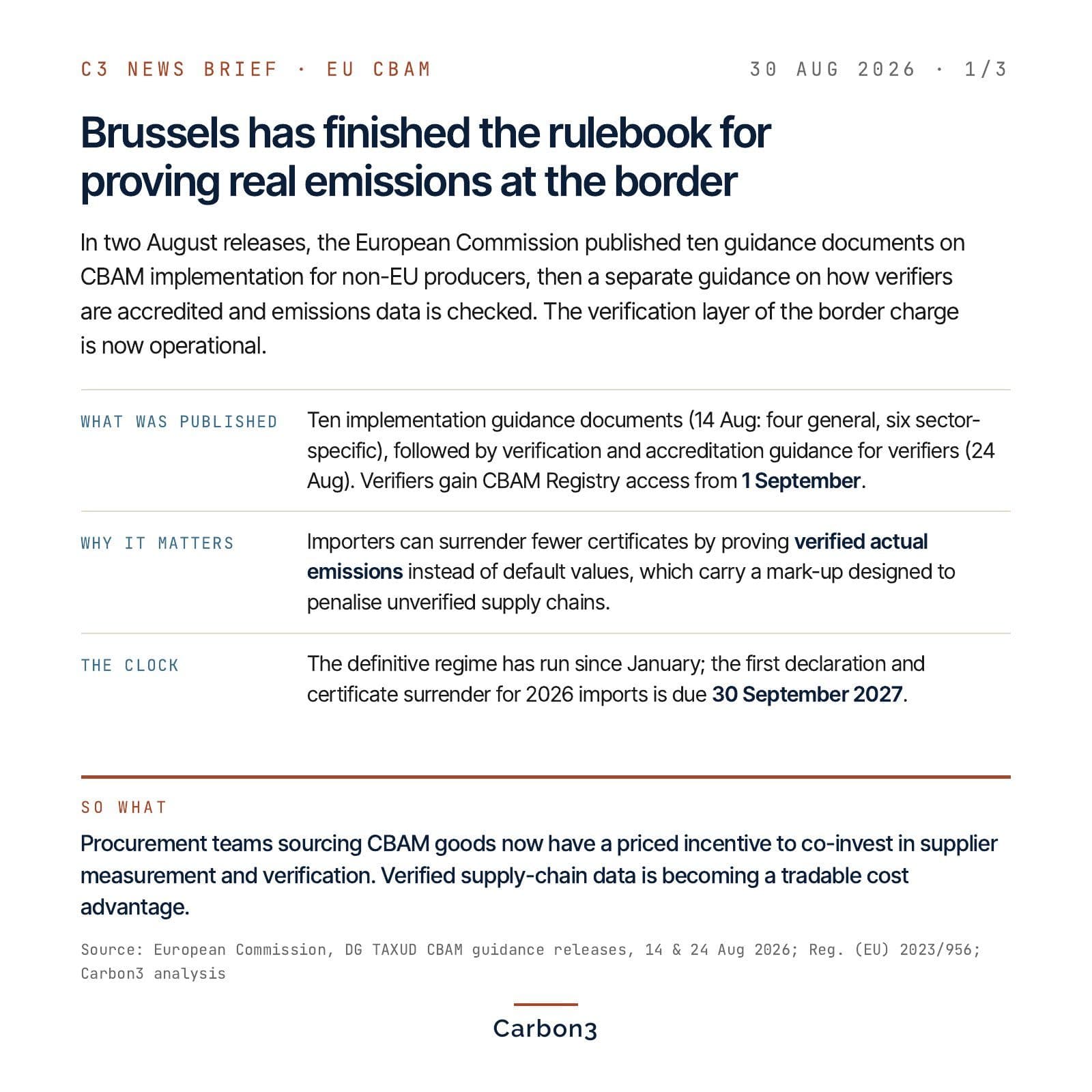
Three signals from the last week of August 2026
CBAM verification guidance, Japan's carbon market design and an EU ETS price above €80 all point the same way for procurement teams.
Read the articlePolicy
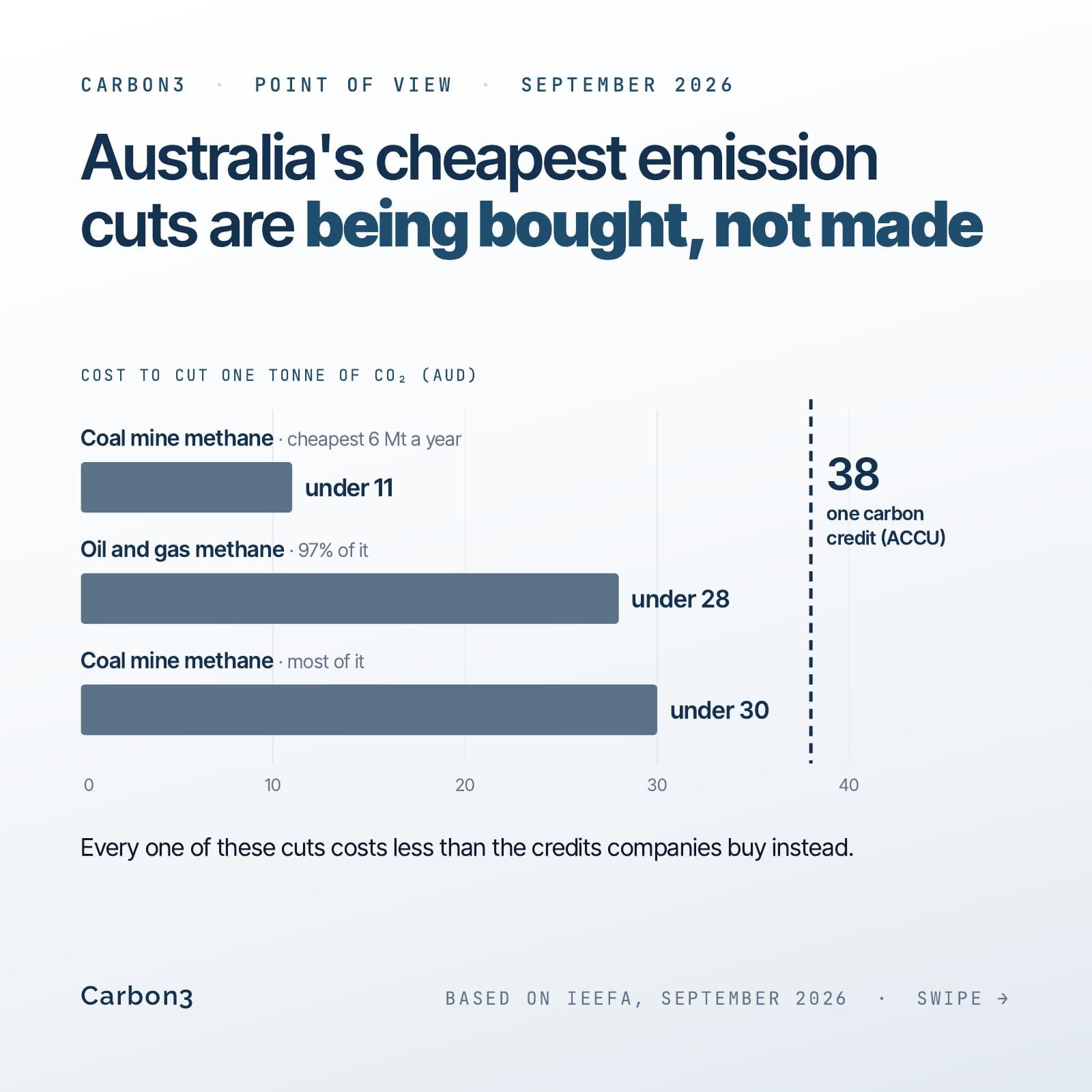
Australia's cheapest emissions reductions are being bought, not made
IEEFA finds capturing methane from coal and gas would cost less than A$30 a tonne, well under the price of a carbon credit.
Read the articleSector: Aviation
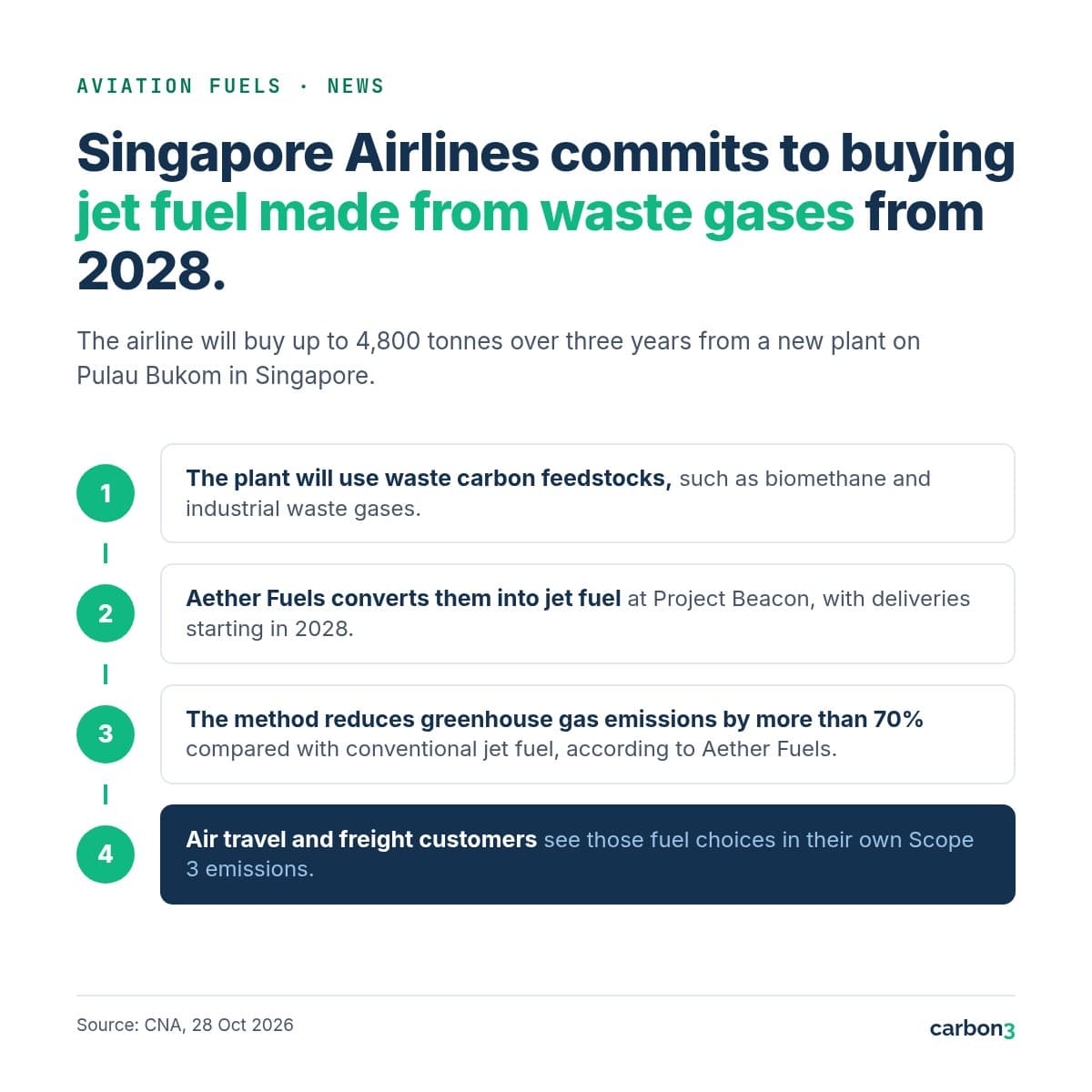
Singapore Airlines signs up for jet fuel made from waste gases
Singapore Airlines will buy up to 4,800 tonnes of sustainable aviation fuel from Aether Fuels' Project Beacon over three years, with deliveries starting in 2028.
Read the article
See the companies behind these figures in the Data Hub.
Look up your suppliers’ emissions and targets, free.