Singapore Airlines signs up for jet fuel made from waste gases
Singapore Airlines will buy up to 4,800 tonnes of sustainable aviation fuel from Aether Fuels' Project Beacon over three years, with deliveries starting in 2028.
By Carbon3 team2 min read
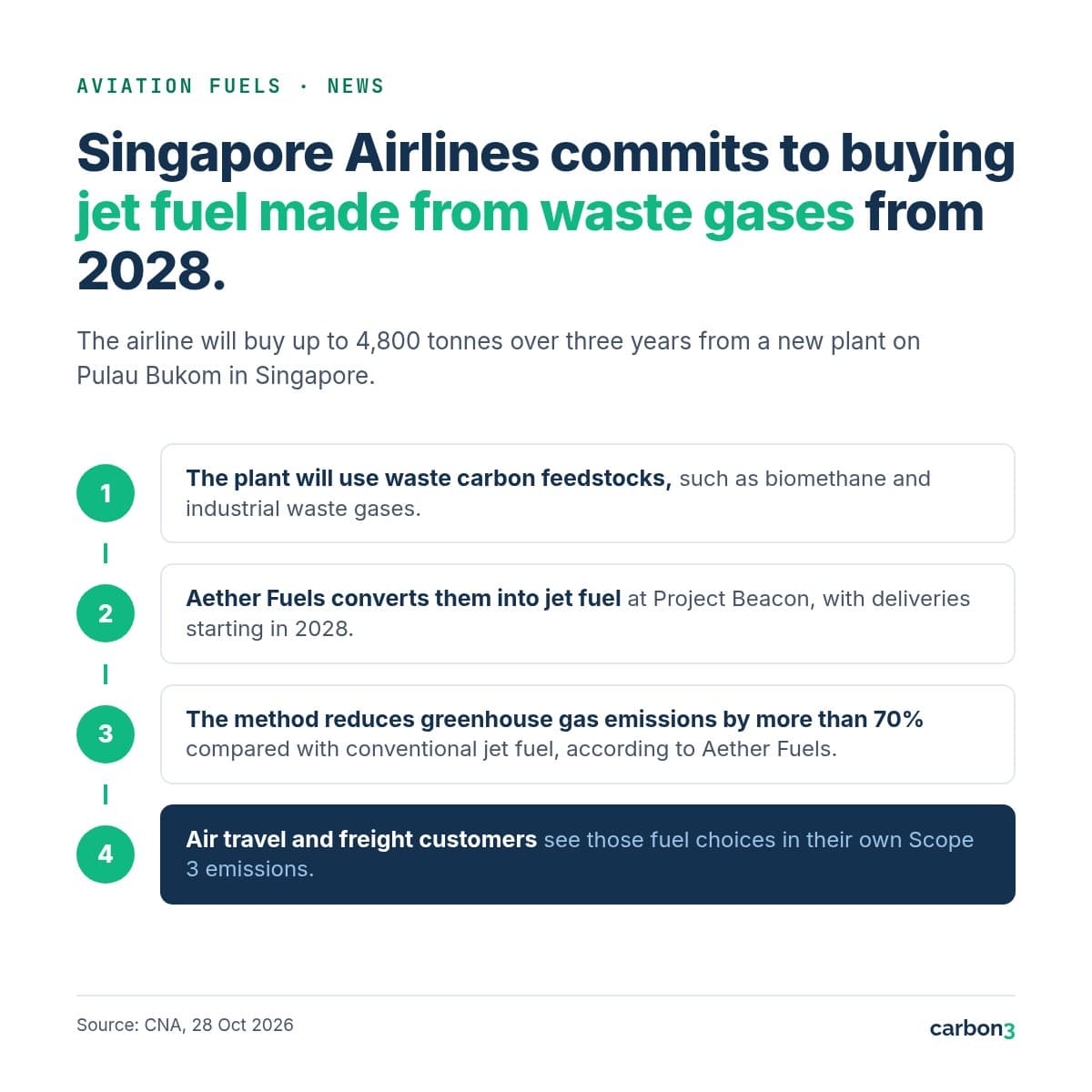
Singapore Airlines (SIA) announced on 28 October that it has signed an agreement to buy up to 4,800 tonnes of sustainable aviation fuel (SAF) from Aether Fuels. The deal runs over three years, with deliveries starting in 2028.
A new plant in Singapore
The fuel will come from Project Beacon, a plant that Aether Fuels is developing on Pulau Bukom, an island off Singapore. SIA is the first airline to agree to buy fuel from the plant.
Aether makes its fuel from waste carbon feedstocks, such as biomethane and industrial waste gases. The two companies say this offers an alternative to SAF made from lipid-based feedstocks, which are in more limited supply. Aether Fuels has said its method reduces greenhouse gas emissions by more than 70% compared with conventional jet fuel.
Why binding agreements matter
According to Aether's chief executive, binding purchase agreements like this one create the commercial conditions needed to bring new fuel pathways to scale. Developers of new fuel plants need buyers who commit in advance before they can build larger facilities.
Aether intends to start a first large-scale plant by 2031, with at least 10 times the capacity of Beacon. SIA and its airline Scoot are targeting SAF for 5% of their total fuel needs by 2030, subject to global availability.
What it means for airline customers
For companies that fly staff or ship goods by air, an airline's fuel choices show up in their own Scope 3 emissions, the indirect emissions in a company's value chain.
In Carbon3's view, those customers could share the cost of commitments like SIA's through insetting. Insetting finances emissions reductions inside a company's own value chain, rather than in unrelated projects elsewhere, which is what sets it apart from offsetting. Each verified reduction is claimed only once, so the airline and its customers can see who holds each claim.
As new fuel pathways such as Aether's move from first plants to larger ones, corporate customers that share the cost could help strengthen the demand that developers say they need.
Claim treatment depends on the applicable reporting framework.
Source: CNA, 28 October 2026.
Originally published on LinkedIn, 28 October 2026.
The Carbon3 Newsletter
Weekly analysis of industrial decarbonization and insetting across Scope 1 to 3, from the Carbon3 team.
Read more from the research team.
Sector: Aviation
Not every liter of sustainable aviation fuel does the same climate work
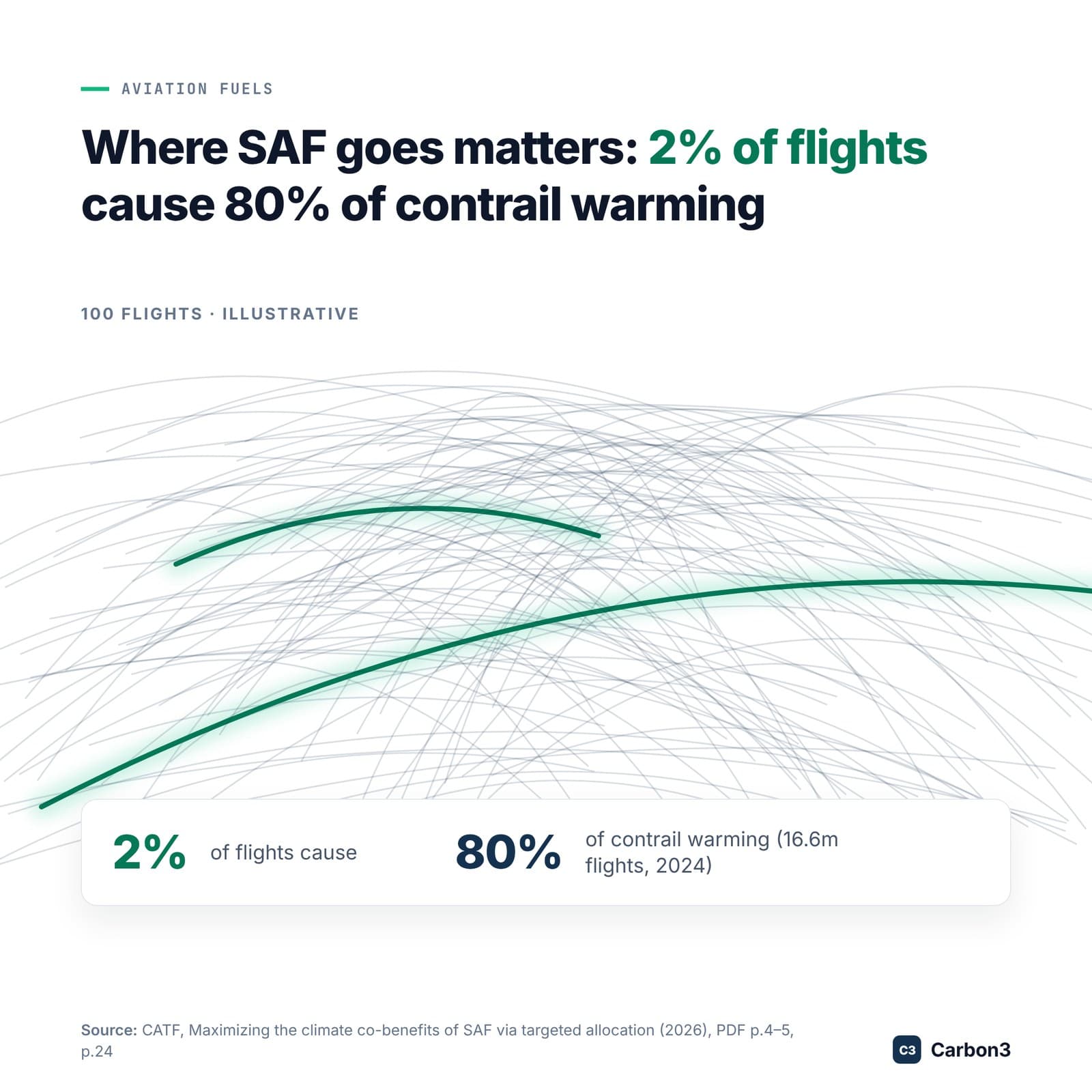
Clean Air Task Force finds about 2% of flights cause 80% of contrail-related warming, which makes where scarce SAF is burned, and how it is traced, matter for Scope 3 buyers.
Read the articleSector: Aviation
Boeing's 40,000 tonne removal deal and aviation's next phase
Supply-chain emissions are where most of aviation's footprint sits.
Read the articlePolicy
Three signals from the first week of September 2026
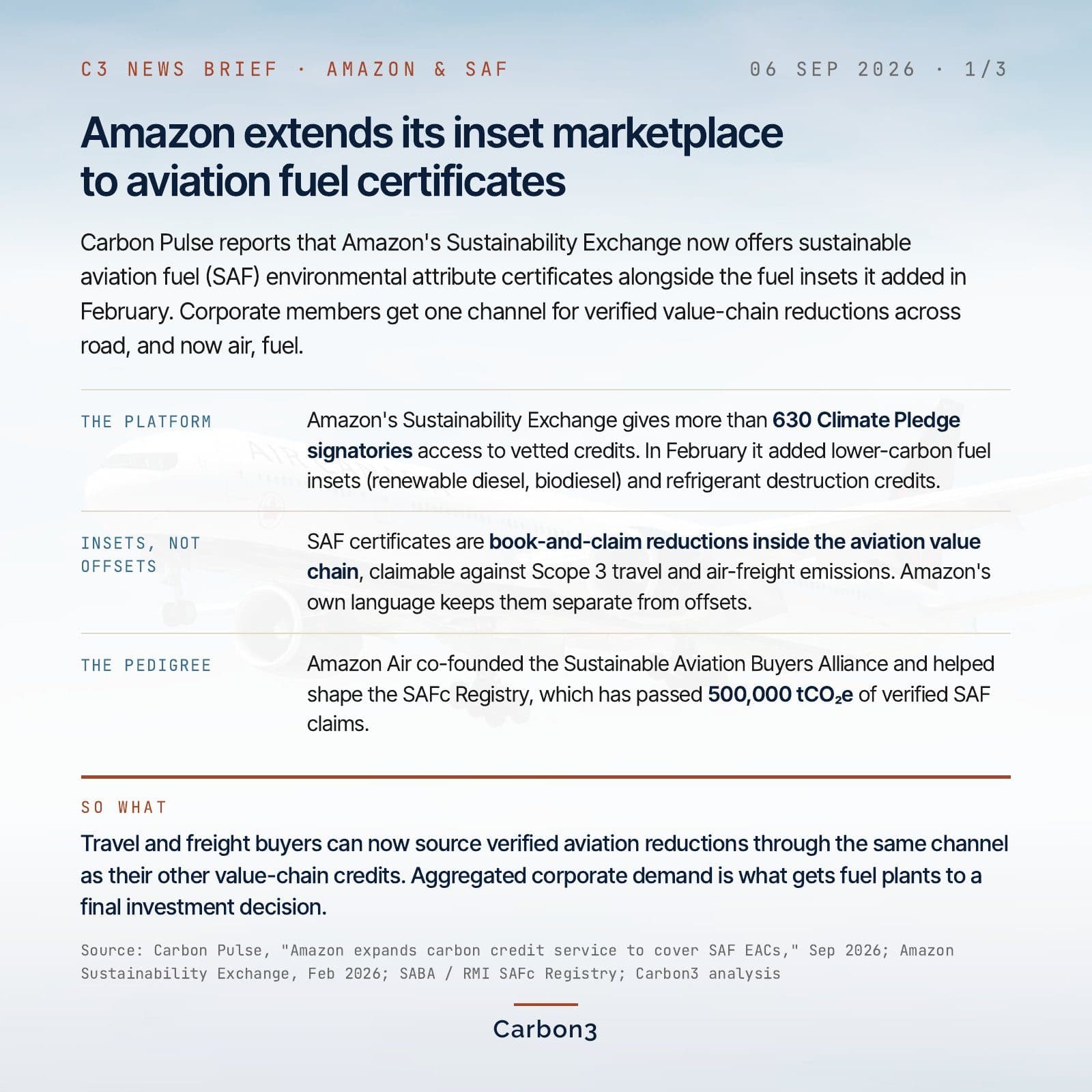
Amazon extends its inset marketplace to aviation fuel, a study brackets the carbon tax level that works, and Singapore signs a credit agreement with Laos.
Read the article
See the companies behind these figures in the Data Hub.
Look up your suppliers’ emissions and targets, free.