Not every liter of sustainable aviation fuel does the same climate work
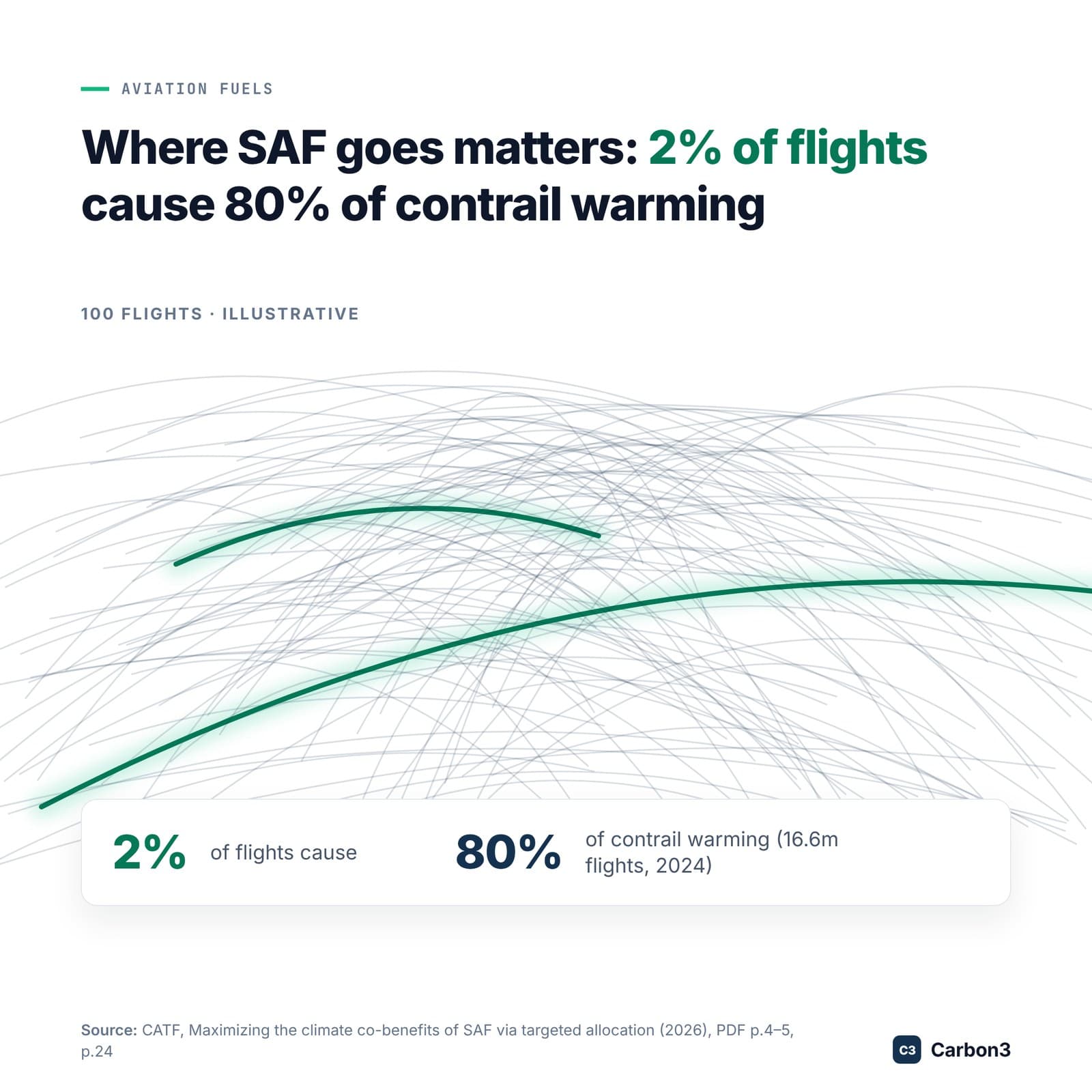
Clean Air Task Force finds about 2% of flights cause 80% of contrail-related warming, which makes where scarce SAF is burned, and how it is traced, matter for Scope 3 buyers.
By Carbon3 team2 min read
Sustainable aviation fuel is scarce, and new analysis suggests that where it is burned can matter almost as much as how much of it is produced.
What Clean Air Task Force found
Clean Air Task Force (CATF) analyzed 16.6 million flights at major US and European airports in 2024. About 2% of those flights generated 80% of contrail-related warming. Contrails are the line-shaped clouds that form behind aircraft, and they can add about 33% extra warming on top of aviation's greenhouse gas emissions.
Neat sustainable aviation fuel (SAF), meaning SAF used unblended, can reduce lifecycle CO2 emissions by 26-94% depending on the pathway. It also reduces soot, and soot particles play a part in forming contrails. That gives SAF a climate benefit beyond the CO2 it displaces, and the size of that benefit depends on the flight.
Why allocation matters
CATF's argument is simple. SAF supply is limited and will stay limited for some years, so each liter should go where it delivers the most climate benefit. A liter burned on a flight with a high chance of forming warming contrails can do more climate work than the same liter burned on a flight that would have formed none.
That turns SAF from a single commodity into something closer to a targeted intervention. The question is no longer only how much fuel a buyer funds, but where and how it is used.
What this means for Scope 3
Many companies carry air travel and air freight in their Scope 3 emissions. When they fund SAF, they want a claim they can defend to auditors, customers and investors. CATF's analysis adds another reason to care about the details: the place the fuel is burned affects the climate result.
That makes traceability more important. A buyer needs to know which fuel was supplied, where it was used and who holds the claim to it. Verified SAF use recorded once as an inset credit keeps that chain visible and avoids the same liter being claimed twice. Credits are issued to the project developer after independent verification, and Carbon3 records them in its registry.
Insetting keeps the action inside a company's own value chain, in this case the flights and freight it already pays for. As SAF supply grows, buyers that can show where their fuel went will be better placed to explain the real effect of their spending.
Claim treatment depends on the applicable reporting framework.
Source: Clean Air Task Force, Maximizing the Climate Co-Benefits of SAF via Targeted Allocation (2026).
Originally published on LinkedIn, 27 October 2026.
The Carbon3 Newsletter
Weekly analysis of industrial decarbonization and insetting across Scope 1 to 3, from the Carbon3 team.
Read more from the research team.
Sector: Aviation
140 SAF projects announced, almost all stalled
The problem is not technology but financial structuring.
Read the articleSector: Aviation
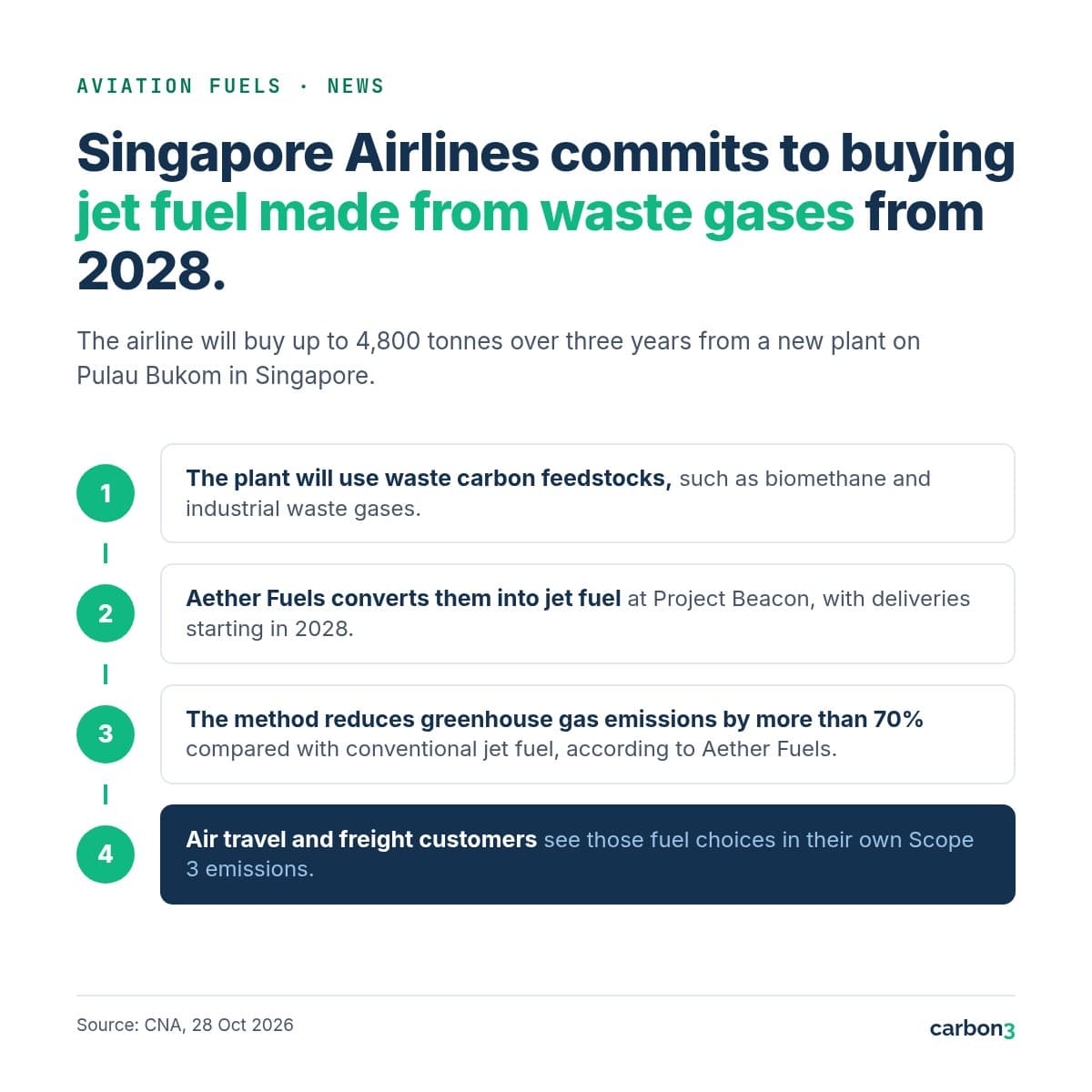
Singapore Airlines signs up for jet fuel made from waste gases
Singapore Airlines will buy up to 4,800 tonnes of sustainable aviation fuel from Aether Fuels' Project Beacon over three years, with deliveries starting in 2028.
Read the articleOutlook
The Aviation Outlook 2026
Clean jet fuel is not a technology problem.
Read the article
See the companies behind these figures in the Data Hub.
Look up your suppliers’ emissions and targets, free.