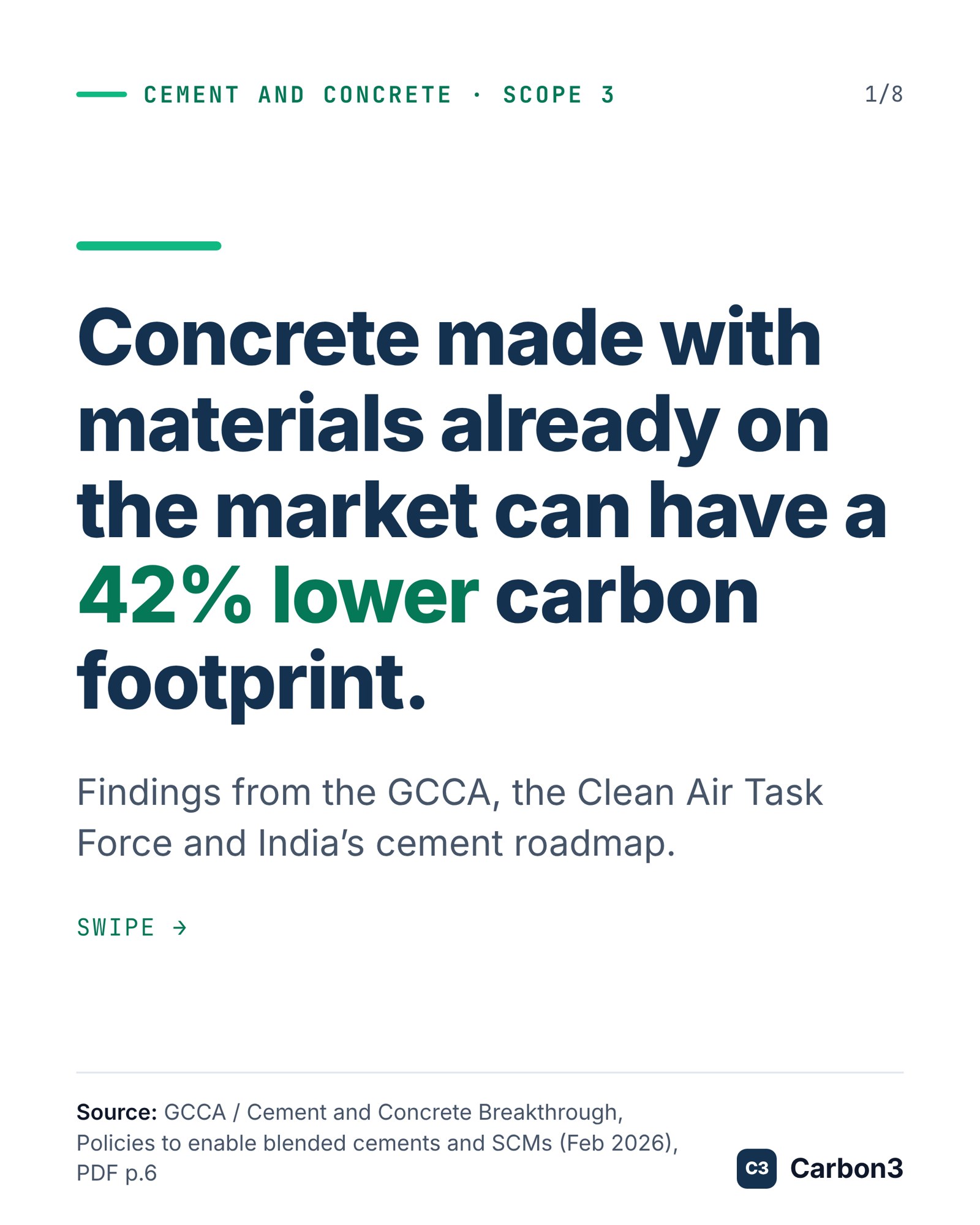
Concrete made with materials already on the market can have a 42% lower carbon footprint
Work by the GCCA, the Clean Air Task Force and India's cement roadmap points to one lever for concrete: using less clinker, with materials that already exist.
By Carbon3 team3 min read
Three recent studies of cement and concrete point to the same practical lever. Work by the Global Cement and Concrete Association (GCCA) and the Cement and Concrete Breakthrough, the Clean Air Task Force (CATF) and India's cement decarbonization roadmap all show that using less clinker lowers the footprint of concrete with materials that already exist.
Why clinker matters
Clinker is the part of cement made by heating limestone in a kiln. Supplementary cementitious materials, such as fly ash, ground granulated blast furnace slag and calcined clay, can replace part of that clinker. According to the GCCA's February 2026 paper on policies to enable blended cements, these materials typically make up 30% to 50% of the mix and more than 70% in some applications.
The same paper compares concretes against a reference mix with no supplementary materials. Concrete made with 50% blast furnace slag has a 42% lower carbon footprint, concrete with 30% fly ash has a 27% lower footprint, and limestone calcined clay cement (LC3) gives a 40% lower footprint. The GCCA also notes that fly ash and slag are expected to become less available in many places in the coming years.
Lower clinker and carbon capture work together
CATF's August 2026 study of California's cement sector compares several pathways to deep reductions. The pathways that combine LC3 with carbon capture have the lowest lifetime abatement cost, at around $100 per tonne of CO₂. Carbon capture on its own costs about $182 per tonne in the same study. LC3 uses 44% less clinker per tonne of cement than ordinary Portland cement, so a plant has less CO₂ to capture in the first place.
A large share of India's pathway
India's cement output is projected to grow from 334 million tonnes in 2019-20 to 1,546 million tonnes in 2070. The roadmap from GCCA India and TERI credits using cement more efficiently with about 30% of the reductions needed to reach net zero by 2070, ahead of carbon capture at about 25%. For a sector that is still expanding, the materials and mix designs used in each new project shape a large part of its future emissions.
What this means for buyers
Builders, developers and their customers can ask for low-clinker concrete in specifications today, because the materials are already on the market. When a buyer funds such a change inside its own value chain, the verified reduction can be recorded once as an inset credit on Carbon3, so the same tonne is never claimed twice. Claim treatment depends on the applicable reporting framework.
Readers can find more on the sector in Carbon3's Cement and Concrete Outlook 2026.
If the materials exist, what keeps low-clinker concrete out of more building specifications?
Learn more
How insetting works in steel and cement
Originally published on LinkedIn, 12 November 2026.
Read more from the research team.
Market structure
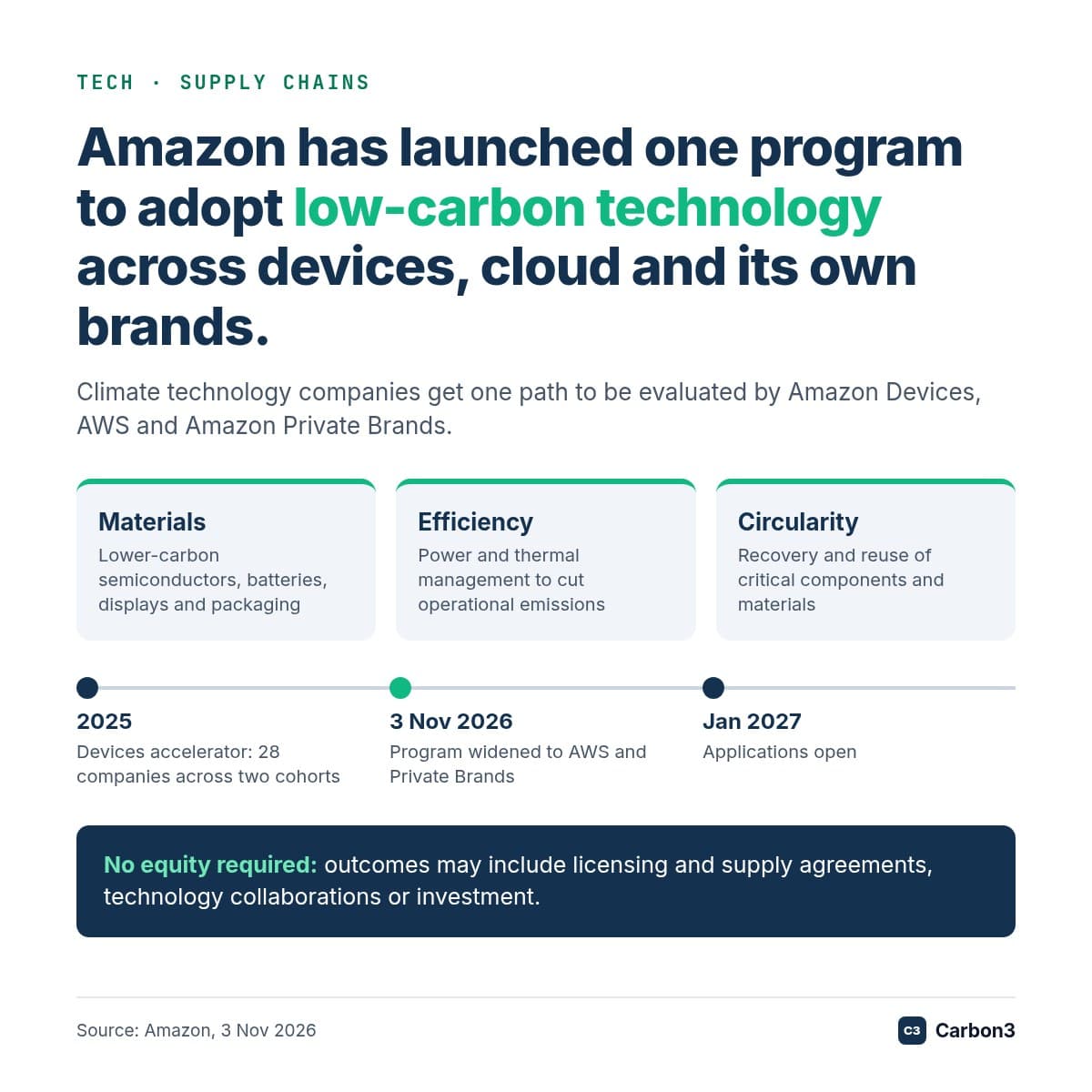
Amazon opens one path for climate technology across devices, cloud and its own brands
The new Amazon Sustainability Deep Tech Accelerator lets climate technology companies be evaluated for adoption by Amazon Devices, AWS and Amazon Private Brands, with no equity required to join.
Read the articleMarket structure
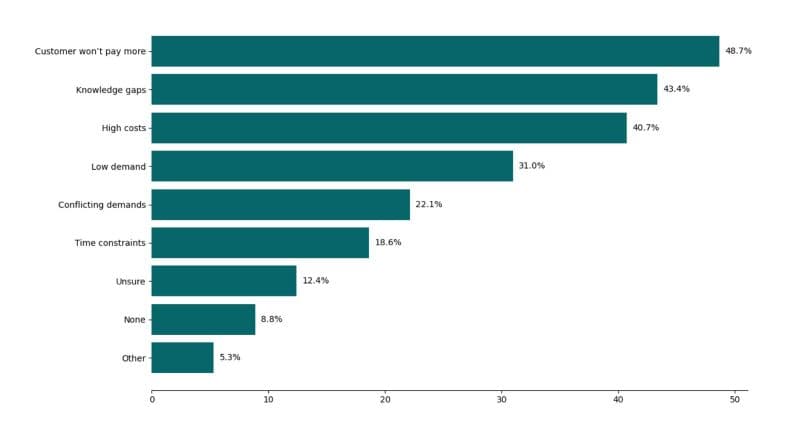
The three barriers to Scope 3 reductions, and an instrument for each
Customers' unwillingness to pay, knowledge gaps and high costs, from MIT's Sustainability Still Matters report.
Read the articleSector: Aviation
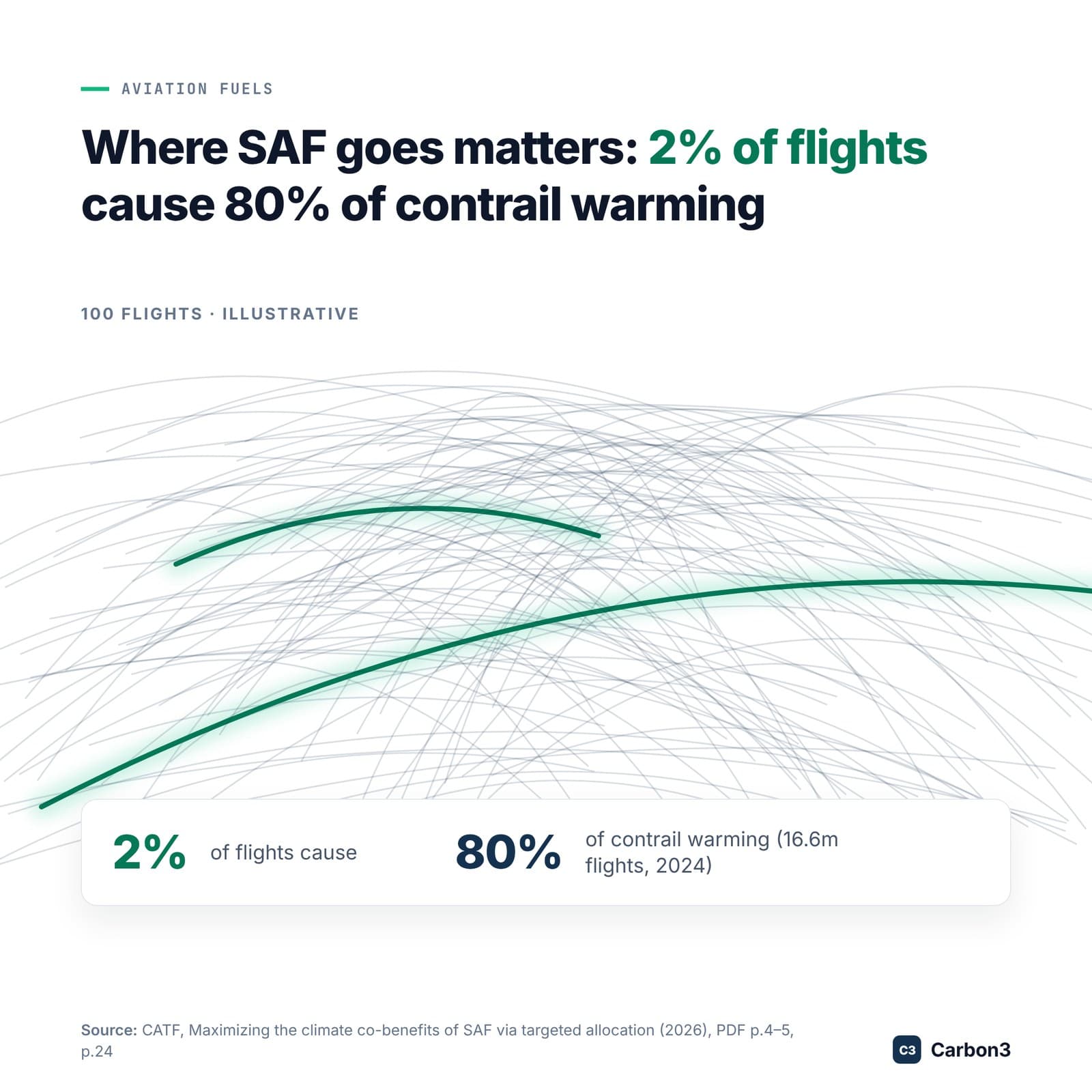
Not every liter of sustainable aviation fuel does the same climate work
Clean Air Task Force finds about 2% of flights cause 80% of contrail-related warming, which makes where scarce SAF is burned, and how it is traced, matter for Scope 3 buyers.
Read the article
See the companies behind these figures in the Data Hub.
Look up your suppliers’ emissions and targets, free.