The three barriers to Scope 3 reductions, and an instrument for each
Customers' unwillingness to pay, knowledge gaps and high costs, from MIT's Sustainability Still Matters report.
By Carbon3 team2 min read
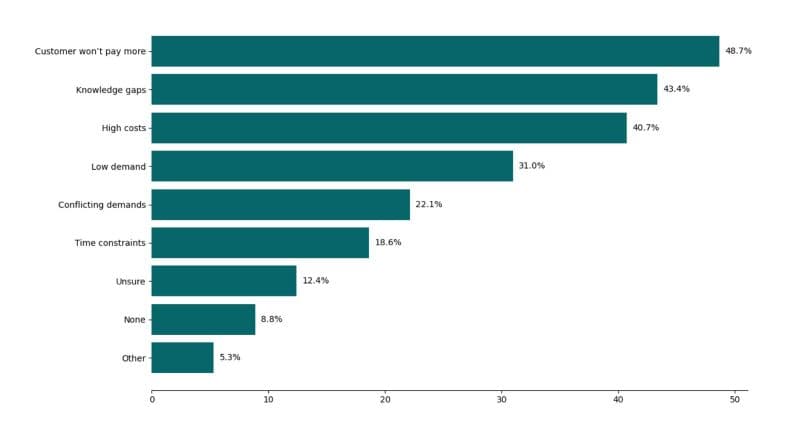
The top 3 barriers to reducing [Scope 3] emissions are:
- Customers' unwillingness to pay more,
- Knowledge gaps,
- and High costs. Carbon3 provides the instruments and framework to tackle these:
-
Green premium costs can be distributed among many value chain stakeholders to minimize (or eliminate) the cost increase for end-consumers. Since supply chain stakeholders share the common goal of reducing Scope 3 emissions, the price for achieving that is to bare a fraction of the green premium. Carbon3's inset credits enable cost-sharing and co-financing to spread the costs and sustainability claims from the resulting Scope 3 reductions.
-
Not knowing how to decarbonize and tackle Scope 1, 2 and 3 emissions mainly stem from a lack of insetting projects. The same reason many organizations default to offsetting, which comes with questionable impact and greenwashing claims. Carbon3 facilitates project listings, matchmaking, and an insetting framework that guarantees impactful and verifiable supply chain emission reductions.
-
Decarbonization initiatives can have very high costs, especially for organizations that operate in silos instead of collaborating and co-financing. Carbon3's inset credits enable co-financing and capital pooling to de-risk ambitious green initiatives (e.g.: e-fuel production infrastructure) which require multilateral collaboration, and share the GHG reduction benefits among stakeholders and shareholders; creating much needed supply & demand signals.
To learn more visit https://www.carbon3.net/
Data and Image source: Sustainability Still Matters report by MIT - sustainable.mit.edu
Massachusetts Institute of Technology International Energy Agency (IEA) International Air Transport Association (IATA) International Maritime Organization International Chamber of Shipping Maritime and Port Authority of Singapore (MPA)
Originally published on LinkedIn, 23 October 2025.
The Carbon3 Newsletter
Weekly analysis of industrial decarbonization and insetting across Scope 1 to 3, from the Carbon3 team.
Read more from the research team.
Market structure
In Australia, cutting methane can cost less than buying credits
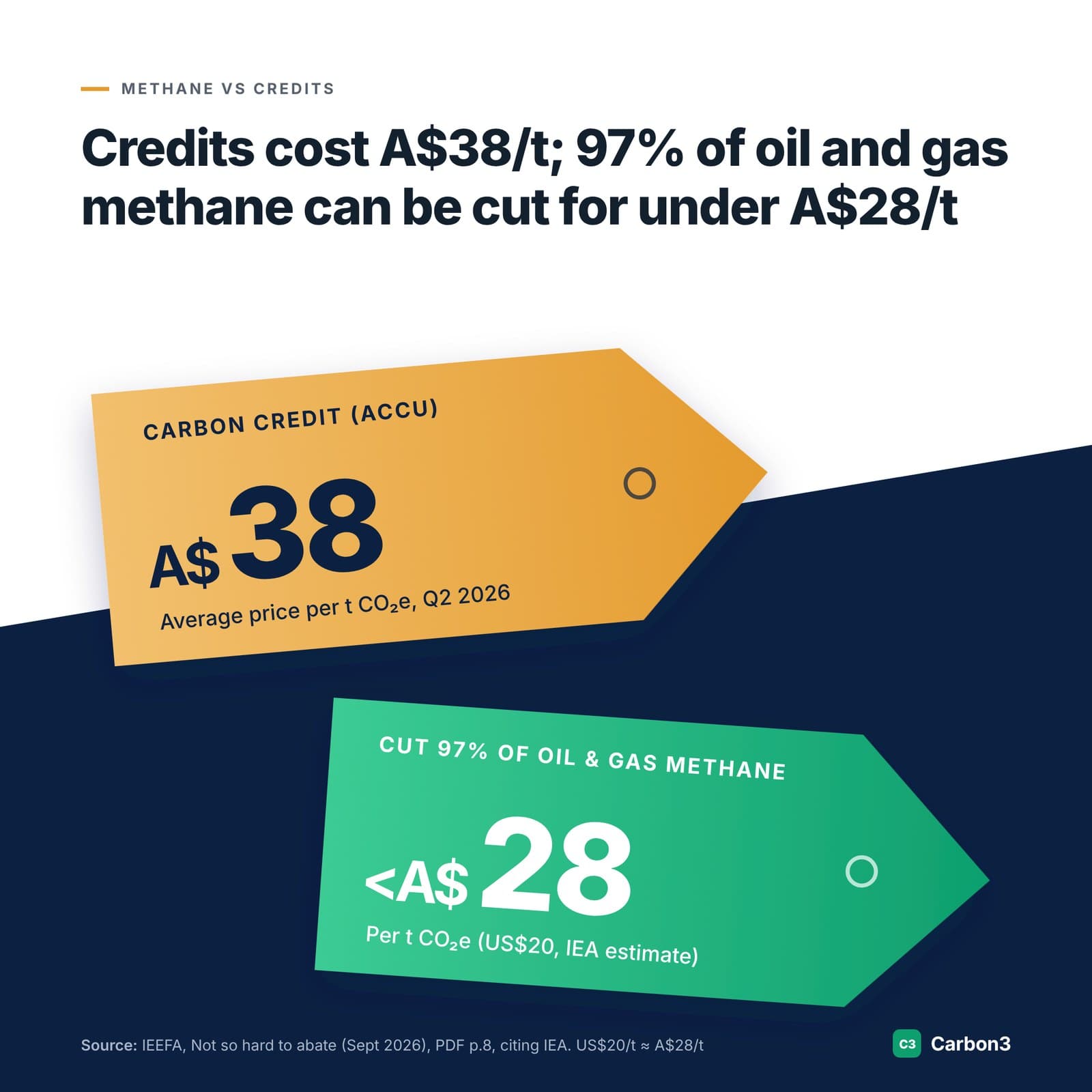
IEEFA, citing the IEA, notes 97% of oil and gas methane could be abated for under US$20 a tonne, about A$28, while ACCUs averaged A$38 a tonne in Q2 2026.
Read the articleMarket structure
73 percent of businesses kept their sustainability commitments through 2025's policy shifts
MIT finds that pressure in Europe comes from regulation, while in the United States it comes from investors and competitors.
Read the articlePolicy
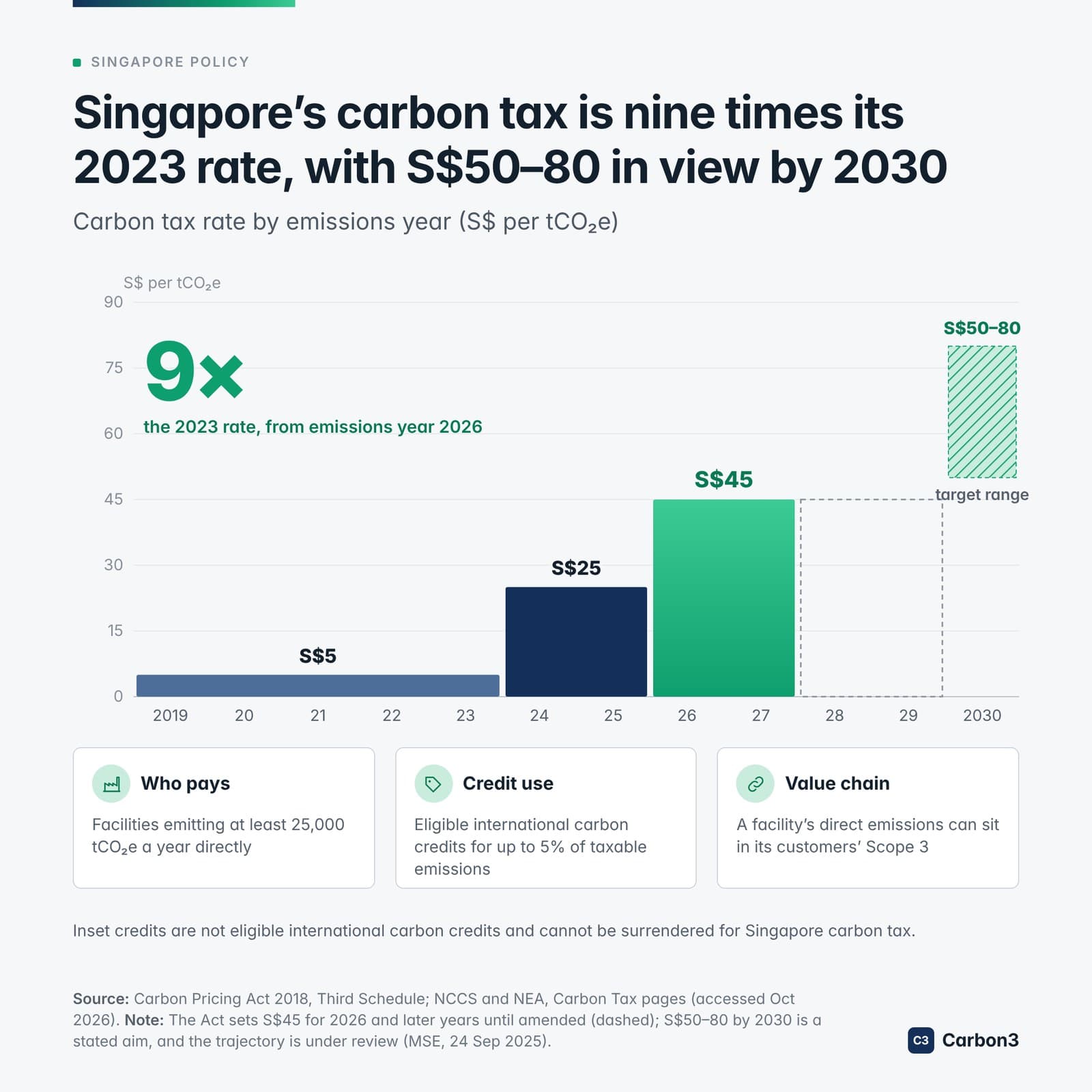
Singapore's carbon tax rose from S$5 to S$45 per tonne in three years
A large emitter's direct emissions can sit in its customers' Scope 3, which gives buyers and suppliers a shared reason to co-fund verified emissions reductions.
Read the article
See the companies behind these figures in the Data Hub.
Look up your suppliers’ emissions and targets, free.