When cutting beats buying: the balance-sheet case for insetting
Our 2026 white paper models four value chains to 2050 and finds reducing emissions in-house already cheaper than buying credits in most sectors.
By Carbon3 team1 min read
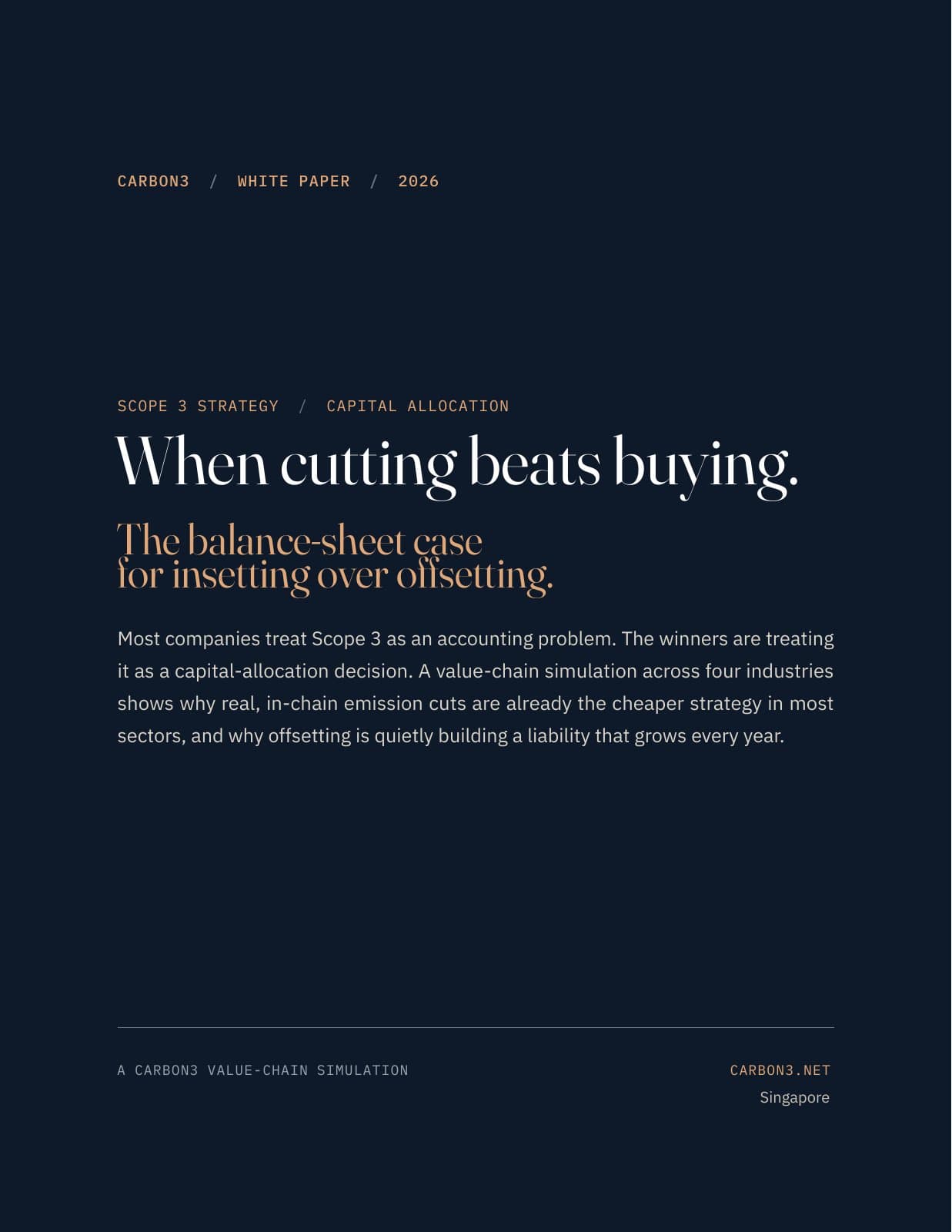
Our 2026 white paper models four value-chain archetypes from 2025 to 2050: apparel and consumer goods, energy and power, food and agriculture, and steel-intensive manufacturing. In each one it compares two ways of meeting a net-zero target. Offsetting keeps emitting and buys credits to cover the gap. Insetting pays for real emissions reductions inside the supply chain.
The model favors insetting in most sectors today, and in all four once carbon carries a real price. The break-even credit price, above which reducing emissions in-house is cheaper than buying credits, comes out at about $20 a tonne for clothing, 24 for energy, 35 for food and 72 for steel. Forward outlooks for high-quality credits already sit at or above those levels.
The paper also shows why offsetting builds a liability that grows every year, while insetting turns the same spend into an investment that pays back. It closes with a three-step pathway for leadership teams: map and prioritize, contract and finance, then verify and claim.
Document
The full document, as a PDF
Free to download once you have a free account. No payment details are needed.
Originally published on LinkedIn, 14 July 2026.
The Carbon3 Newsletter
Weekly analysis of industrial decarbonization and insetting across Scope 1 to 3, from the Carbon3 team.
Read more from the research team.
Transition finance
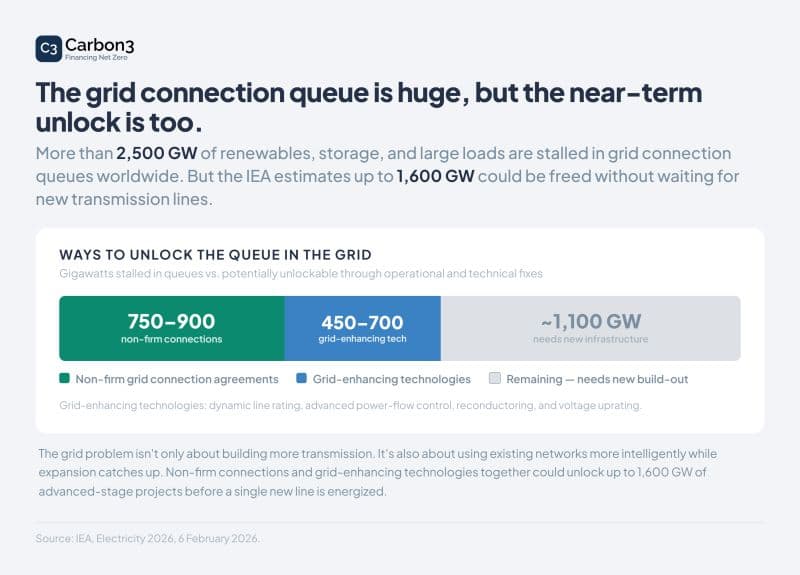
Smarter grid connection rules could unlock half the projects waiting in queues
The IEA estimates that connection reform and grid-enhancing technologies could clear a large share of advanced-stage projects without new lines.
Read the articleTransition finance
The US clean energy pipeline needs buyers, not more intent
Announced clean generation is outpacing cancellations.
Read the articleMarket structure
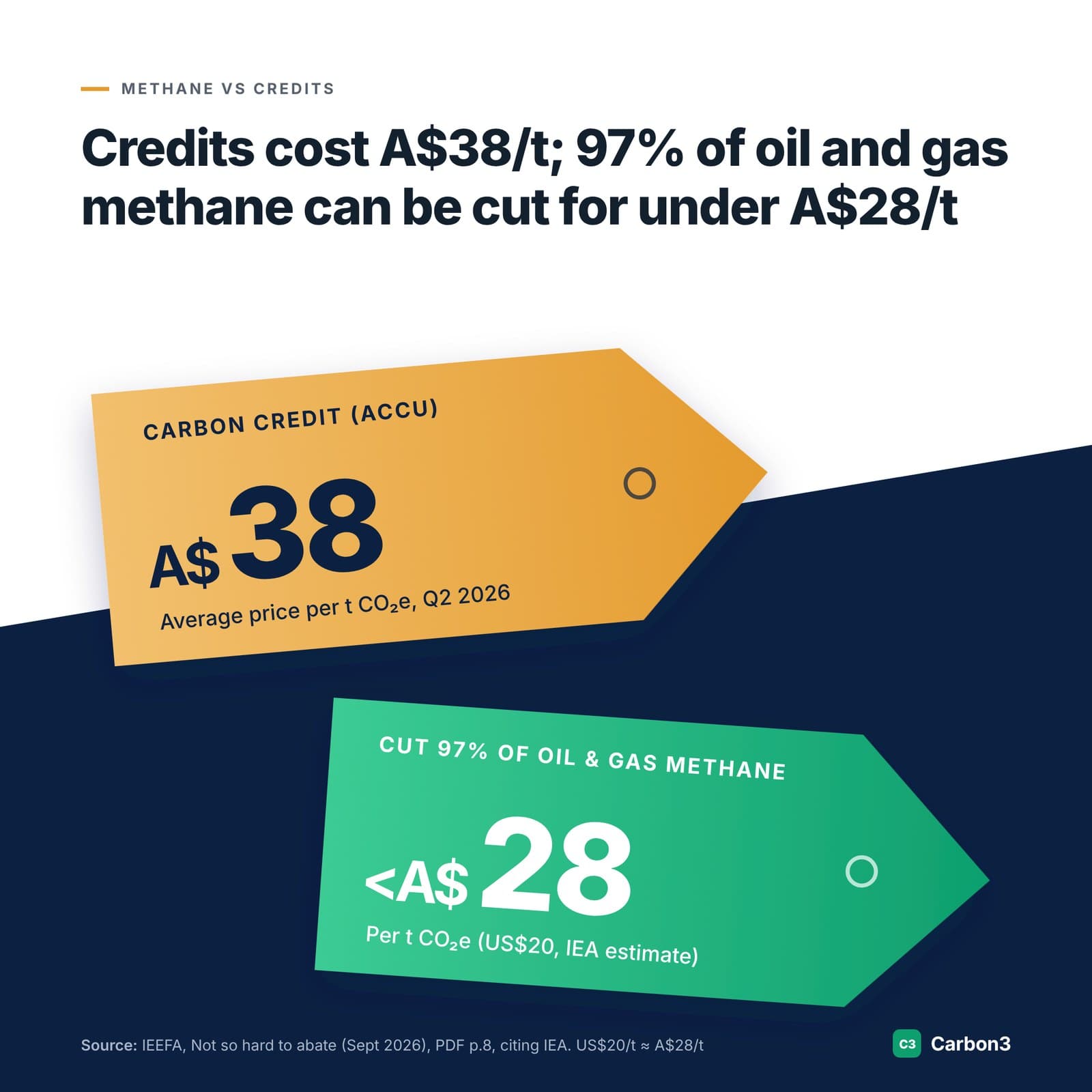
In Australia, cutting methane can cost less than buying credits
IEEFA, citing the IEA, notes 97% of oil and gas methane could be abated for under US$20 a tonne, about A$28, while ACCUs averaged A$38 a tonne in Q2 2026.
Read the article
See the companies behind these figures in the Data Hub.
Look up your suppliers’ emissions and targets, free.