Smarter grid connection rules could unlock half the projects waiting in queues
The IEA estimates that connection reform and grid-enhancing technologies could clear a large share of advanced-stage projects without new lines.
By Carbon3 team1 min read
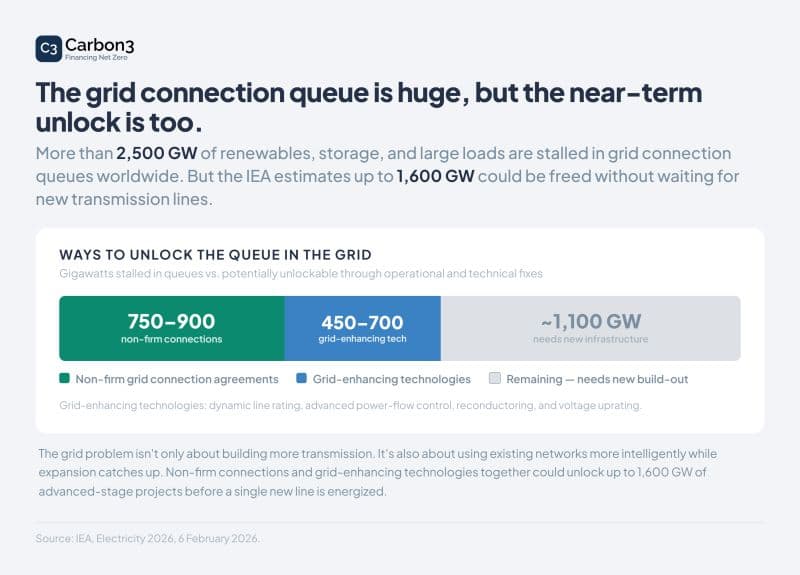
The grid bottleneck is real, but it is not only a construction problem. IEA estimates that smarter connection rules and grid-enhancing technologies could unlock enough capacity to connect roughly half of the advanced-stage projects now waiting in queues.
The grid bottleneck is usually described as a construction problem with a decade-long timeline. The IEA's finding reframes part of it as a rules-and-software problem with a much shorter one. Projects that are already permitted and financed could connect sooner if the queue were managed differently and if the existing network were operated closer to its real capacity.
For corporate buyers, that changes the timing of supplier decarbonization. Renewable supply at supplier sites may become available earlier than long-run grid plans suggest, and the buyers who have already agreed to fund and claim those reductions will be first in line when it does.
Originally published on LinkedIn, 6 July 2026.
The Carbon3 Newsletter
Weekly analysis of industrial decarbonization and insetting across Scope 1 to 3, from the Carbon3 team.
Read more from the research team.
Transition finance
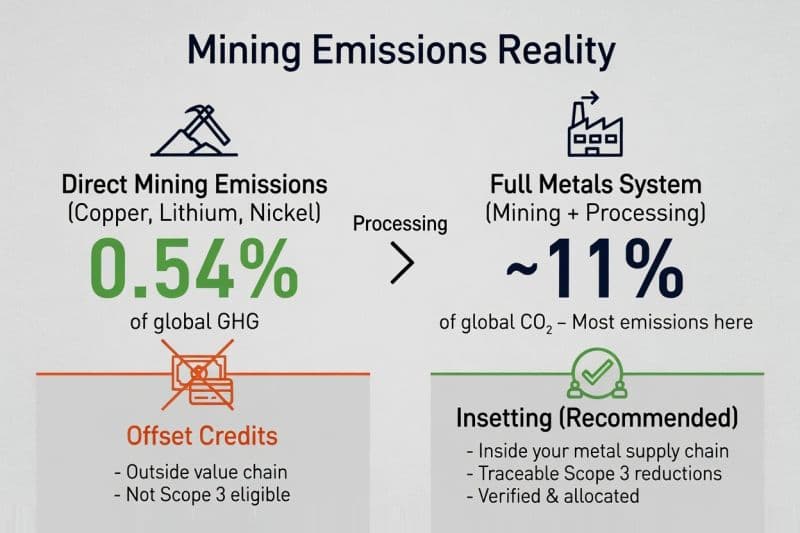
Where the emissions in critical metals actually sit
Direct mining emissions are small.
Read the articleTransition finance
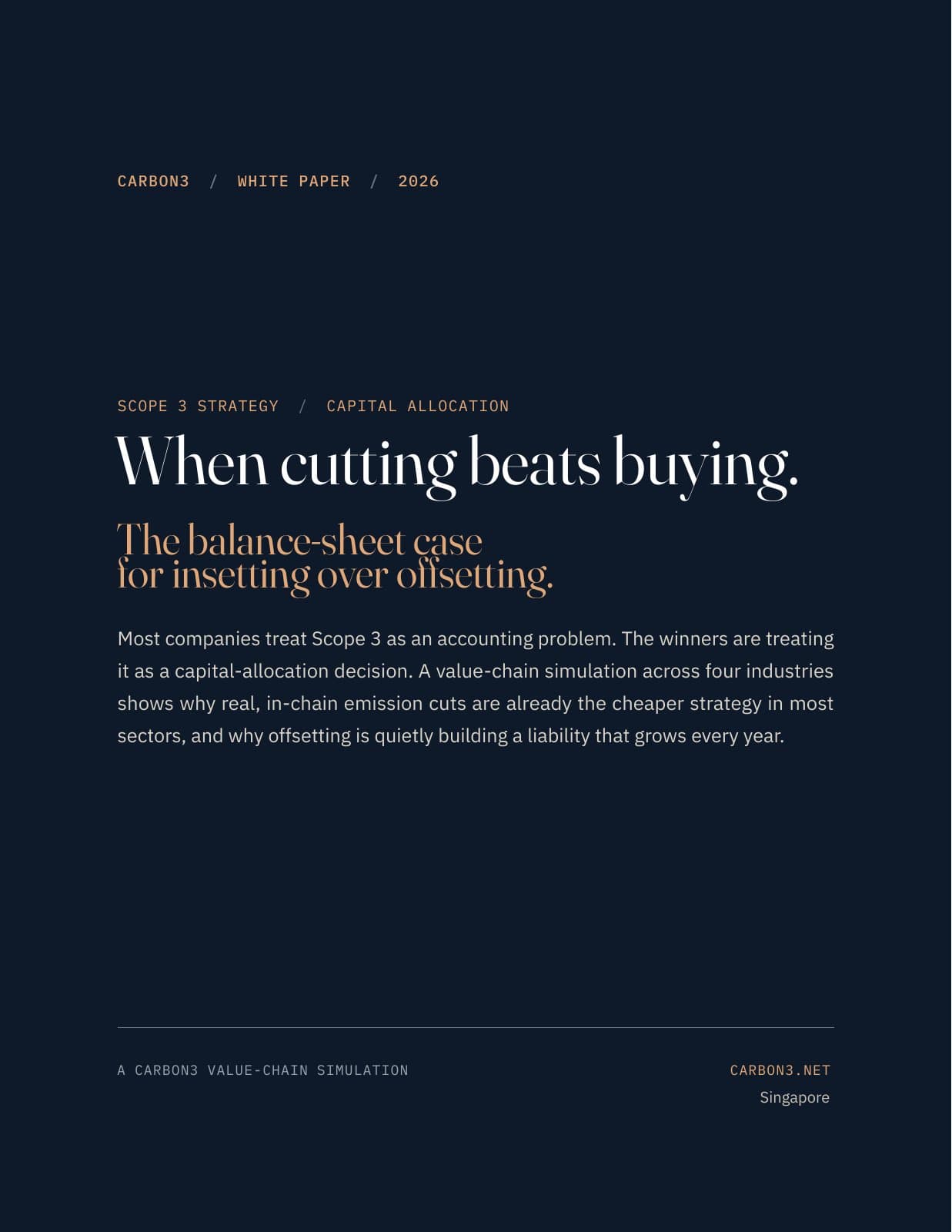
When cutting beats buying: the balance-sheet case for insetting
Our 2026 white paper models four value chains to 2050 and finds reducing emissions in-house already cheaper than buying credits in most sectors.
Read the articleClaims & reporting
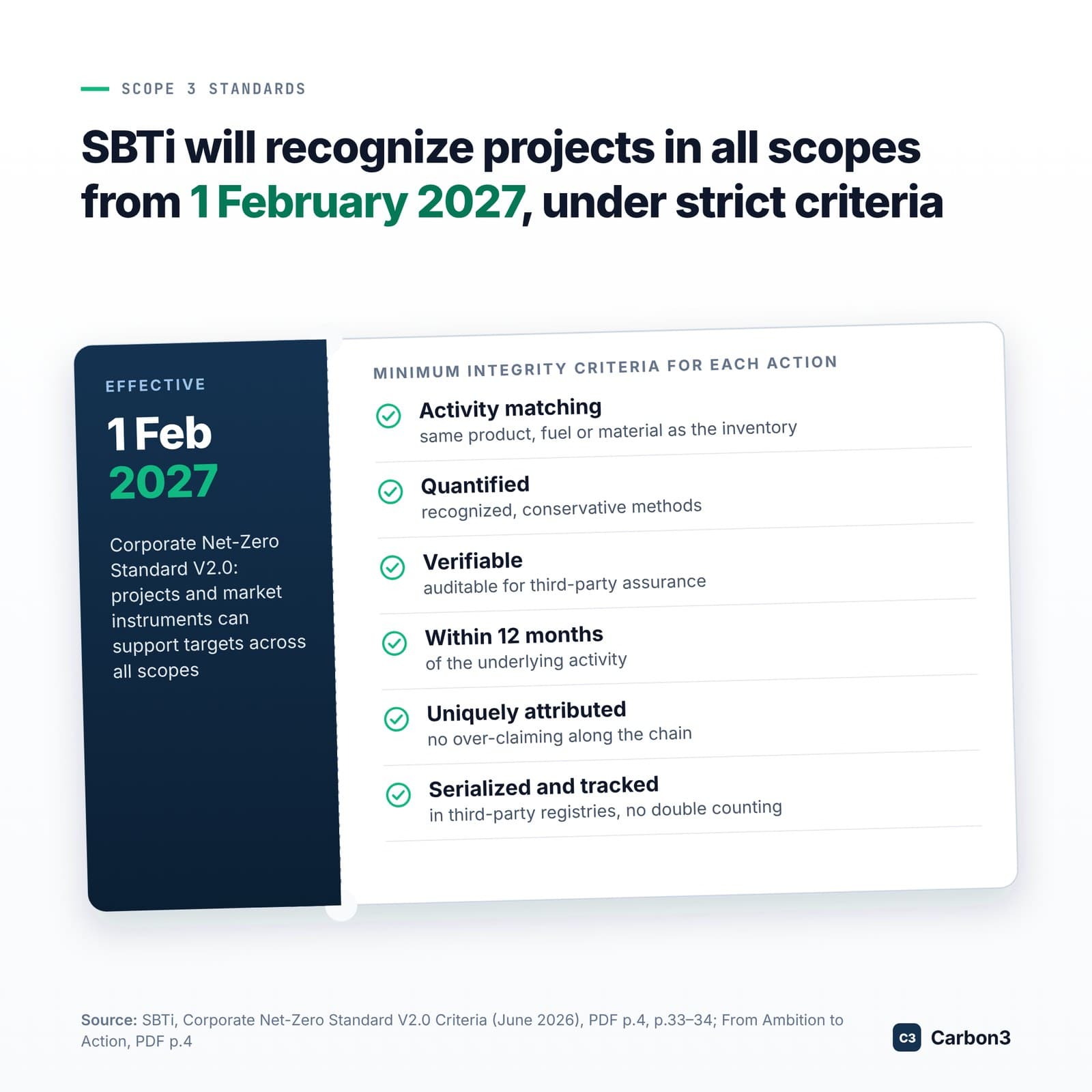
The SBTi has set the rules for using value-chain projects toward targets
The Corporate Net-Zero Standard V2.0 opens for validations on 1 February 2027, becomes mandatory for new targets on 1 February 2028, and lets projects support targets across all scopes, provided each action is verifiable, timely, uniquely attributed and serialized.
Read the article
See the companies behind these figures in the Data Hub.
Look up your suppliers’ emissions and targets, free.