Carbon markets do not have a supply problem, they have a capital problem
Companies have set Scope 3 targets and suppliers have emissions reduction projects waiting for funding. What is missing is the infrastructure that decides who pays, on what terms and with what proof.
By Carbon3 team2 min read
Carbon markets are often described as short of supply, but the bottleneck sits elsewhere. Carbon markets do not have a supply problem; they have a capital problem.
Both sides already exist
Thousands of companies have set Scope 3 targets, which cover the emissions in their supply chains and in the use of their products. On the other side, thousands of suppliers have real emissions reduction projects that are ready to go but are waiting for funding. The demand for reductions and the projects that could deliver them are both in place.
What is missing is the infrastructure that connects them. A buyer needs to know who pays, on what terms and with what proof. A supplier needs a committed source of capital before it can invest. Without that connecting layer, targets stay on paper and projects stay unfunded.
The connecting layer
Carbon3 provides that layer. It is built around insetting, which means financing emissions reductions inside a company's own value chain, and it works through three functions:
- Demand matches companies with targets to projects in their own value chains.
- Co-financing lets several buyers share the cost of one project, so no single company has to carry it alone.
- De-risking ties every claim to a verification report and records each reduction once, so it cannot be claimed twice.
The roles stay separate. Verifiers verify, and the project developer issues credits on the Carbon3 registry. Carbon3 records allocation, transfer and retirement against the verified result.
From compliance cost to investment case
The shift matters for how companies see climate policy. When a target can only be met through reporting and penalties, it reads as a compliance cost. When the money flows to projects in a company's own supply chain, the same target becomes an investment case, with a verified emissions reduction at the end of it.
That is why the capital question deserves more attention than the supply question. The projects exist and the targets exist. Infrastructure that settles who pays, on what terms and with what proof is what turns one into the other.
Learn more
How investors fund inset projects
Originally published on LinkedIn, 15 November 2026.
Read more from the research team.
Transition finance
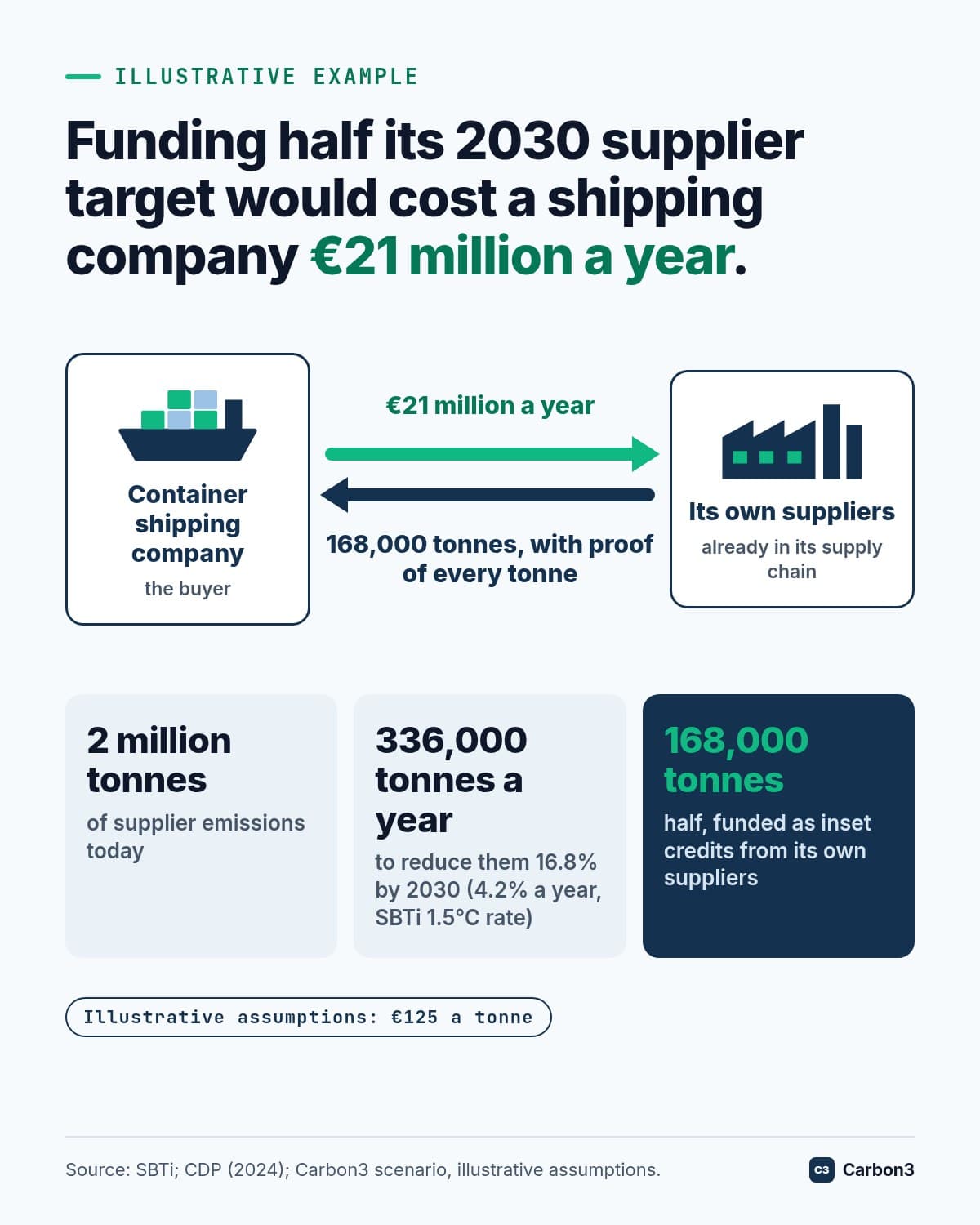
Funding half a shipping company's 2030 supplier target would cost €21 million a year
An illustrative Carbon3 example: a container shipping company with 2 million tonnes of supplier emissions funds half of its required reductions at suppliers it already buys from, with proof of every tonne.
Read the articleTransition finance
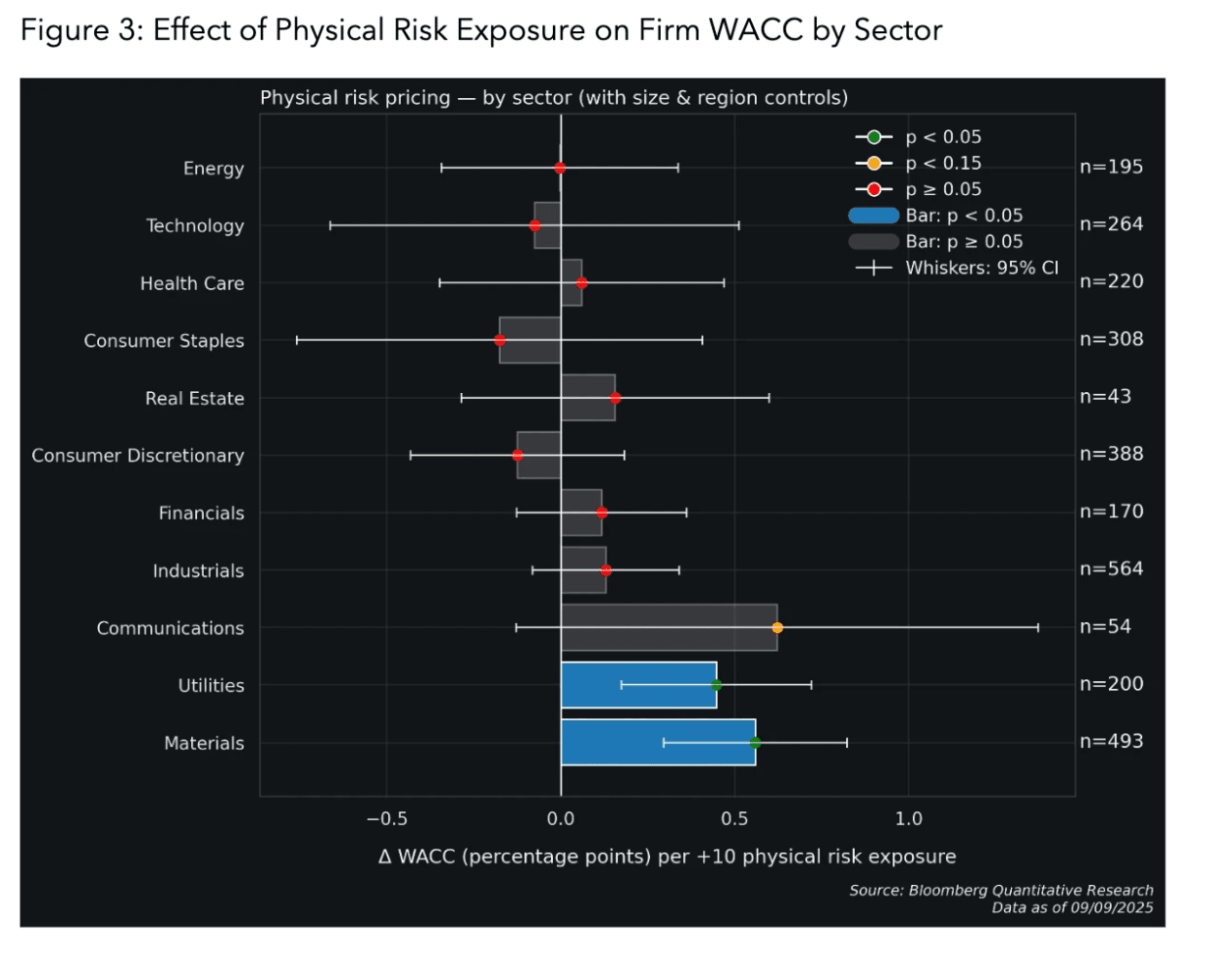
Climate risk now carries a cost. Supply chain resilience can lower it.
Bloomberg finds companies with higher physical climate exposure face a 22 bps increase in WACC.
Read the articleField notes
Low-carbon supply is a procurement problem
In the Scope 3 Peer Group's survey of 180+ suppliers, 43% say low-carbon options cost more, yet contracts are still awarded on unit price.
Read the article
See the companies behind these figures in the Data Hub.
Look up your suppliers’ emissions and targets, free.