Funding half a shipping company's 2030 supplier target would cost €21 million a year
An illustrative Carbon3 example: a container shipping company with 2 million tonnes of supplier emissions funds half of its required reductions at suppliers it already buys from, with proof of every tonne.
By Carbon3 team2 min read
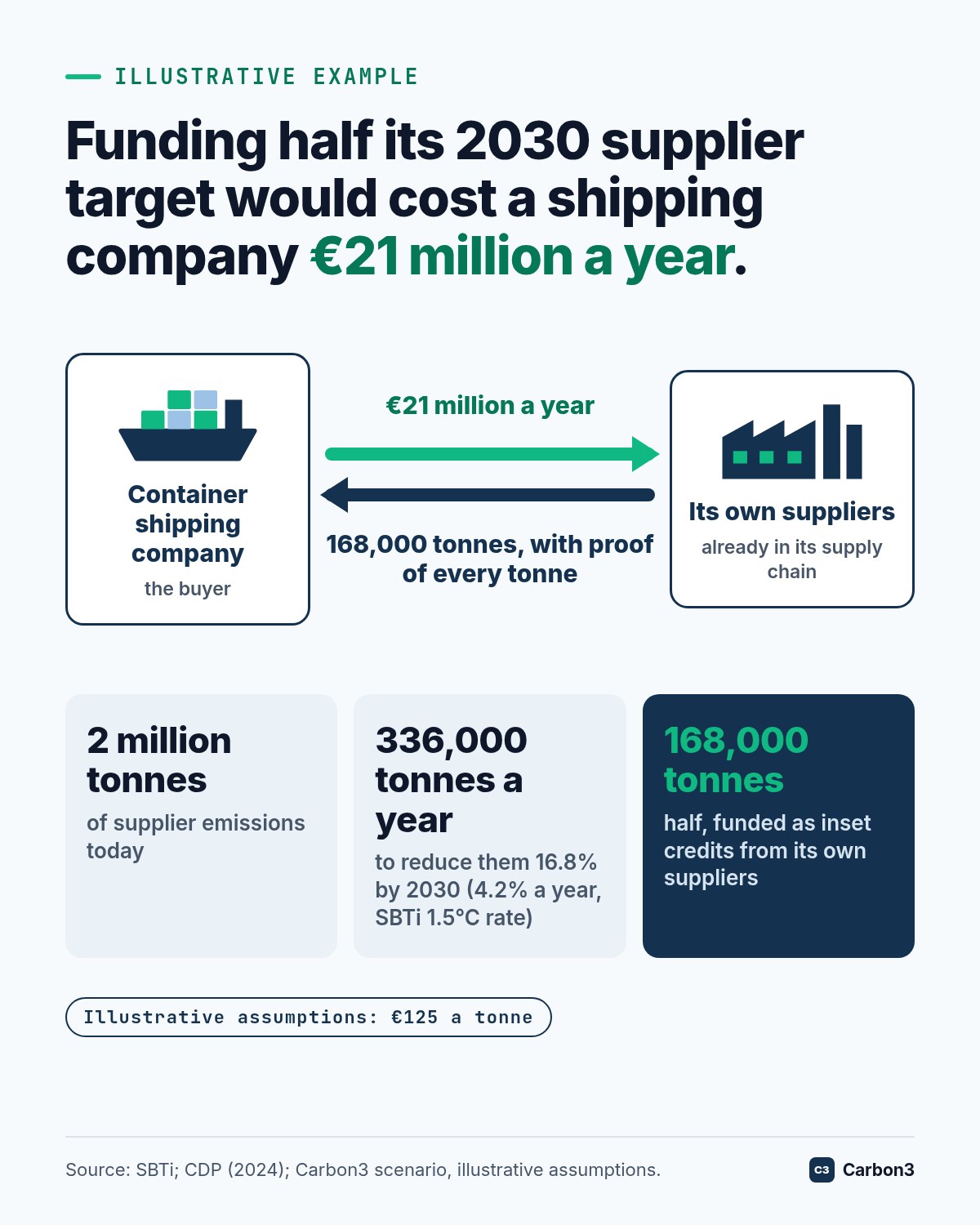
A container shipping company that funds emissions reductions at its own suppliers can turn a supplier target into a budget line with a clear price. Carbon3's illustrative example puts that price at €21 million a year for half of the reductions the company needs by 2030.
What the target asks for
The example company has 2 million tonnes of supplier emissions. To reduce them 16.8% by 2030 at 4.2% a year, the rate the Science Based Targets initiative (SBTi) uses for a 1.5°C pathway, it needs reductions of 336,000 tonnes a year.
Supplier emissions are where most of the work sits for most companies. CDP finds that supply chain emissions average 26 times a company's own, so a target that stops at the company's own operations leaves most of the footprint untouched.
Funding reductions at suppliers it already buys from
In the example, half of the required reductions come as inset credits from the company's own suppliers. Insetting means financing emissions reductions inside a company's own value chain, which is different from buying offsets from projects elsewhere. That half comes to 168,000 tonnes a year, and at an illustrative €125 a tonne it costs €21 million a year.
The money goes to suppliers already in the company's supply chain, so the reductions show up in the same Scope 3 footprint the target covers. The project developer issues credits on the Carbon3 registry once a verification report is on file, so the buyer keeps proof of every tonne it paid for and each reduction is claimed only once.
The question for the board
The figures are illustrative assumptions, not a quote or a forecast, but they show the shape of the decision. A shipping board is not asked to back a vague ambition. It is asked to approve a known annual amount in exchange for a known number of tonnes, each one traceable to the supplier that delivered it and the company that paid for it.
Claim treatment depends on the applicable reporting framework.
Would a shipping board approve €21 million a year if every tonne came with proof of who paid for it?
Sources: SBTi; CDP (2024); Carbon3 scenario, illustrative assumptions.
Learn more
How insetting works in shipping
Originally published on LinkedIn, 4 November 2026.
Read more from the research team.
Transition finance
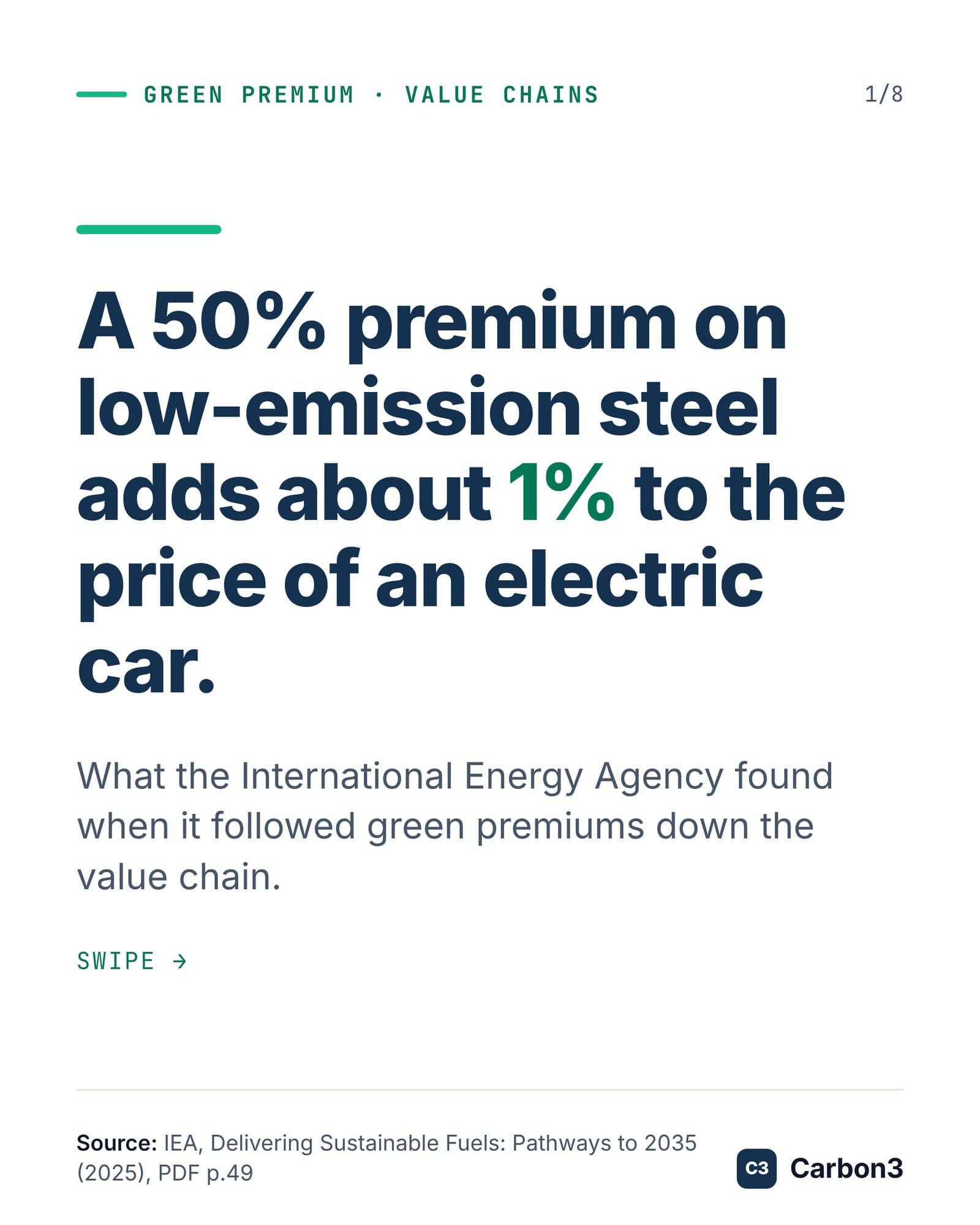
A 50% premium on low-emission steel adds about 1% to the price of an electric car
The International Energy Agency followed green premiums from steel to electric cars and from ship fuel to smartphones.
Read the articleTransition finance
Carbon markets do not have a supply problem, they have a capital problem
Companies have set Scope 3 targets and suppliers have emissions reduction projects waiting for funding.
Read the articleSector: Agriculture
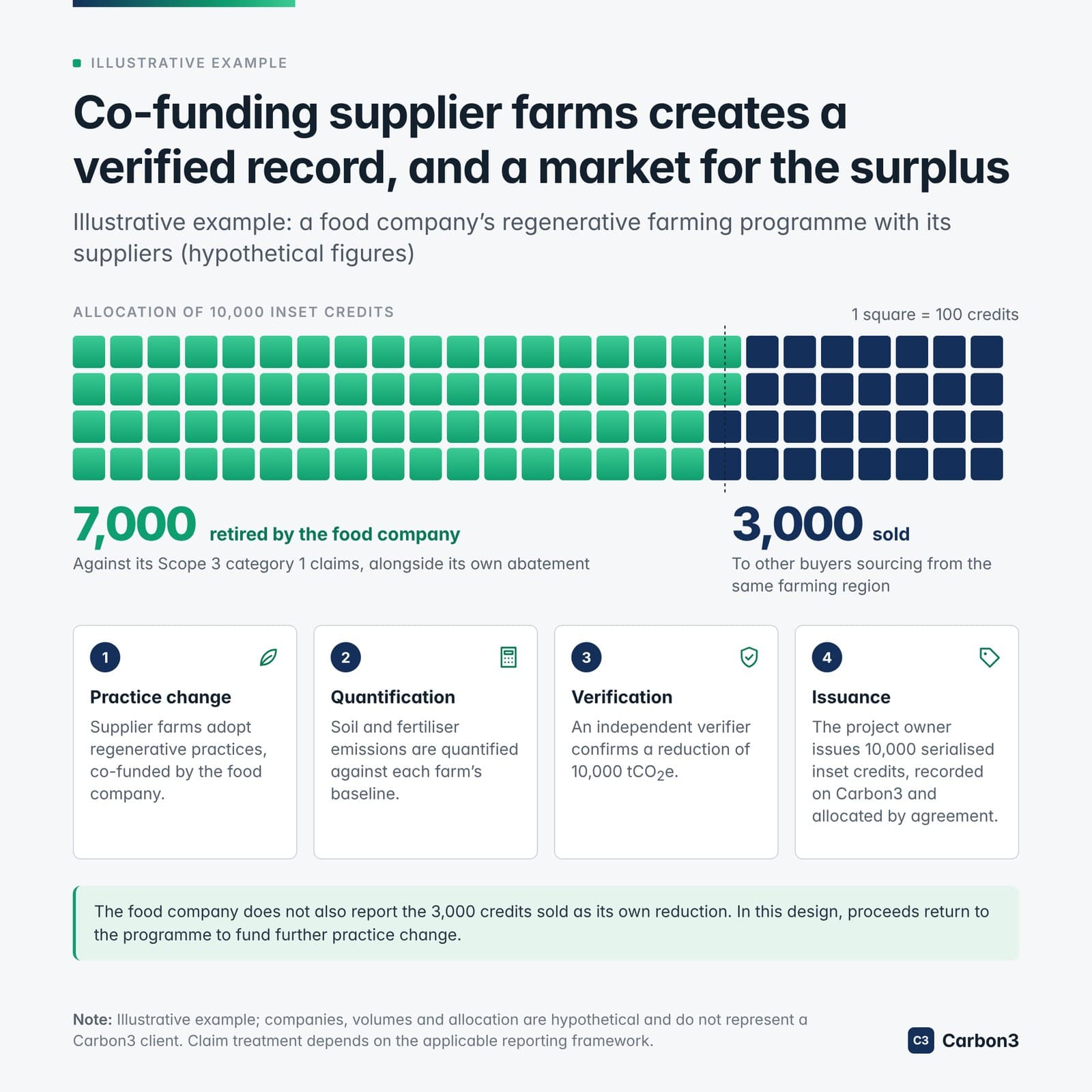
When a food company co-funds change on its own supplier farms
An illustrative example: 10,000 inset credits from regenerative practices, 7,000 retired against Scope 3 claims, 3,000 sold to regional buyers, and every tonne counted once.
Read the article
See the companies behind these figures in the Data Hub.
Look up your suppliers’ emissions and targets, free.