A 50% premium on low-emission steel adds about 1% to the price of an electric car
The International Energy Agency followed green premiums from steel to electric cars and from ship fuel to smartphones. A premium that stalls a project upstream nearly vanishes at the end buyer.
By Carbon3 team3 min read
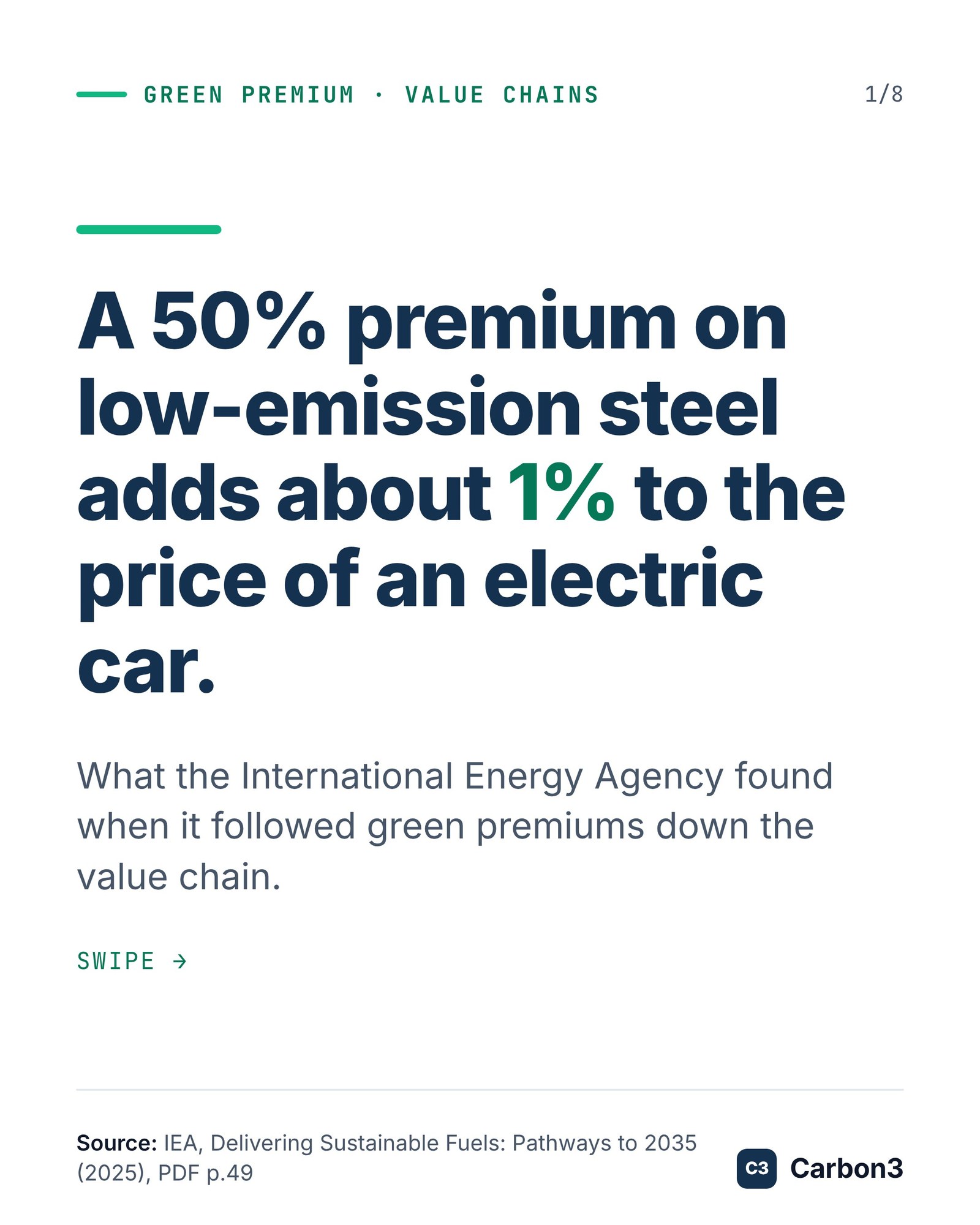
The International Energy Agency followed green premiums down the value chain, from steel to electric cars and from ship fuel to smartphones. Its finding, in Delivering Sustainable Fuels: Pathways to 2035 (2025), is that a premium large enough to stall a project upstream nearly vanishes by the time it reaches the end buyer.
Large at the mill, small in the showroom
Low-emission steel made with electrolytic hydrogen and the direct reduction of iron ore costs around 50% more than traditional steel, according to the IEA (p.49). Passed on to the final price of an electric vehicle, that premium drops to around 1%, before profit margins are included.
Shipping shows the same pattern. In the IEA's example, ammonia fuel at about 325% more than conventional fuel adds about 170% at the container ship stage of the chain, yet adds less than 0.1% to the price of a smartphone carried on board (p.49).
Why the premium still stalls projects
The problem is where the cost lands. The IEA notes that upstream producers "may be too far from end consumers to be able to benefit from their willingness to pay more" (p.50). A steelmaker or fuel producer carries the full premium on its own balance sheet, while the brands and consumers for whom the extra cost is small sit several steps away.
Some buyers are already closing that distance. According to RMI and the China Automotive Carbon Digital Technology Center (December 2025, p.29), Stegra presold over 40% of the capacity of its hydrogen-based steel plant during construction, to buyers including BMW, Mercedes-Benz, Volvo Cars and IKEA, at a projected 20% premium.
Connecting the buyer to the reduction
Insetting, which means financing emissions reductions in a company's own value chain, gives end buyers a way to fund the premium where it is incurred. Once a reduction has been checked against a verification report, the project developer issues inset credits on the Carbon3 registry, so each reduction is claimed only once. This is insetting, not offsetting, and the difference is explained at carbon3.net/insets-vs-offsets.
Claim treatment depends on the applicable reporting framework.
If green steel adds about 1% to the price of a car, the question is why so few brands are paying for it.
Sources: IEA, Delivering Sustainable Fuels: Pathways to 2035 (2025), pp.49-50; RMI and China Automotive Carbon Digital Technology Center, Demand-Side Drivers of Steel Decarbonization: Automotive Procurement Practices (December 2025), p.29.
Learn more
How insetting works in shipping
Originally published on LinkedIn, 3 November 2026.
Read more from the research team.
Transition finance
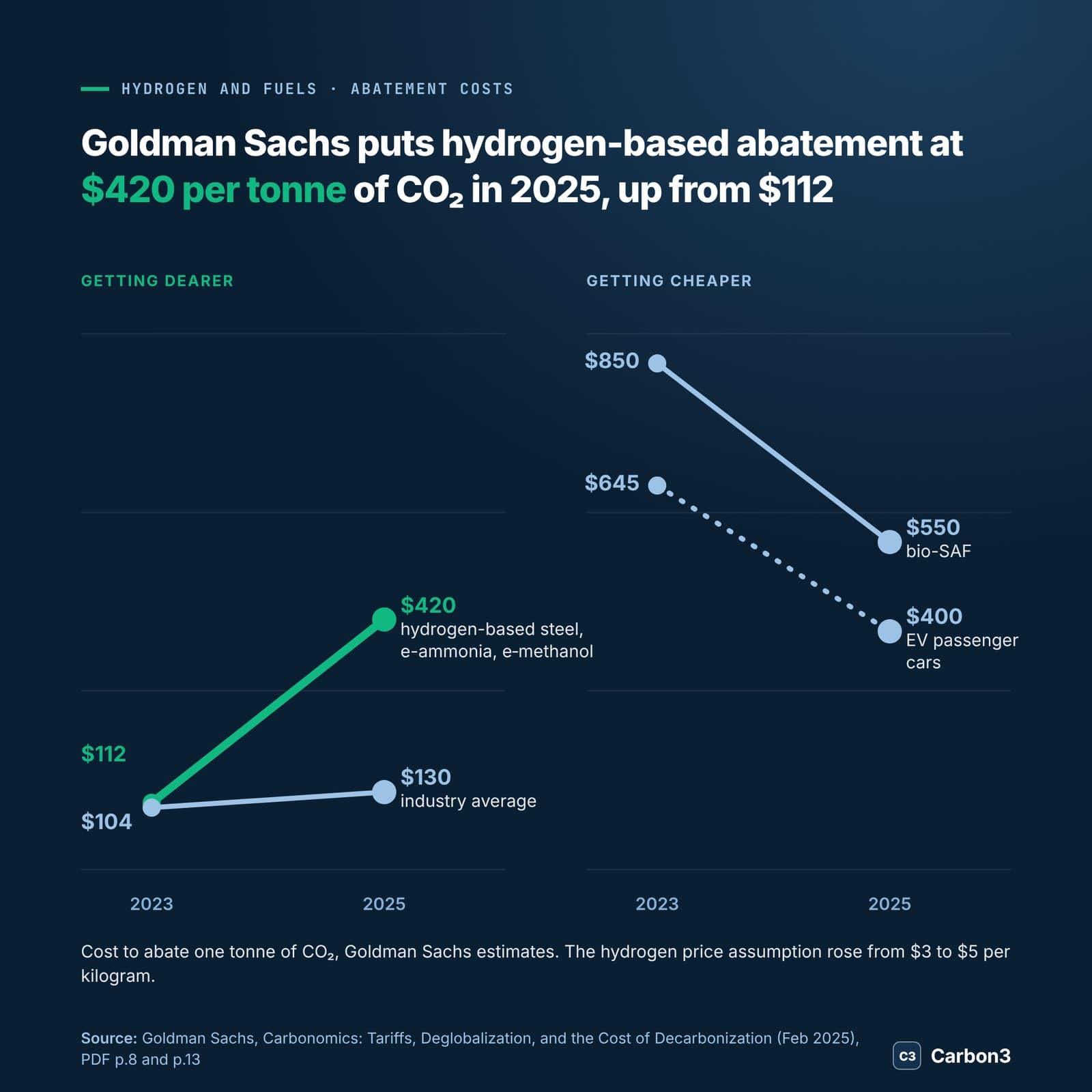
Hydrogen got more expensive on paper while biofuels and batteries got cheaper
Goldman Sachs puts hydrogen-based abatement at $420 per tonne of CO2 in 2025, up from $112 in 2023, while the cost for bio-SAF and electric cars fell.
Read the articleTransition finance
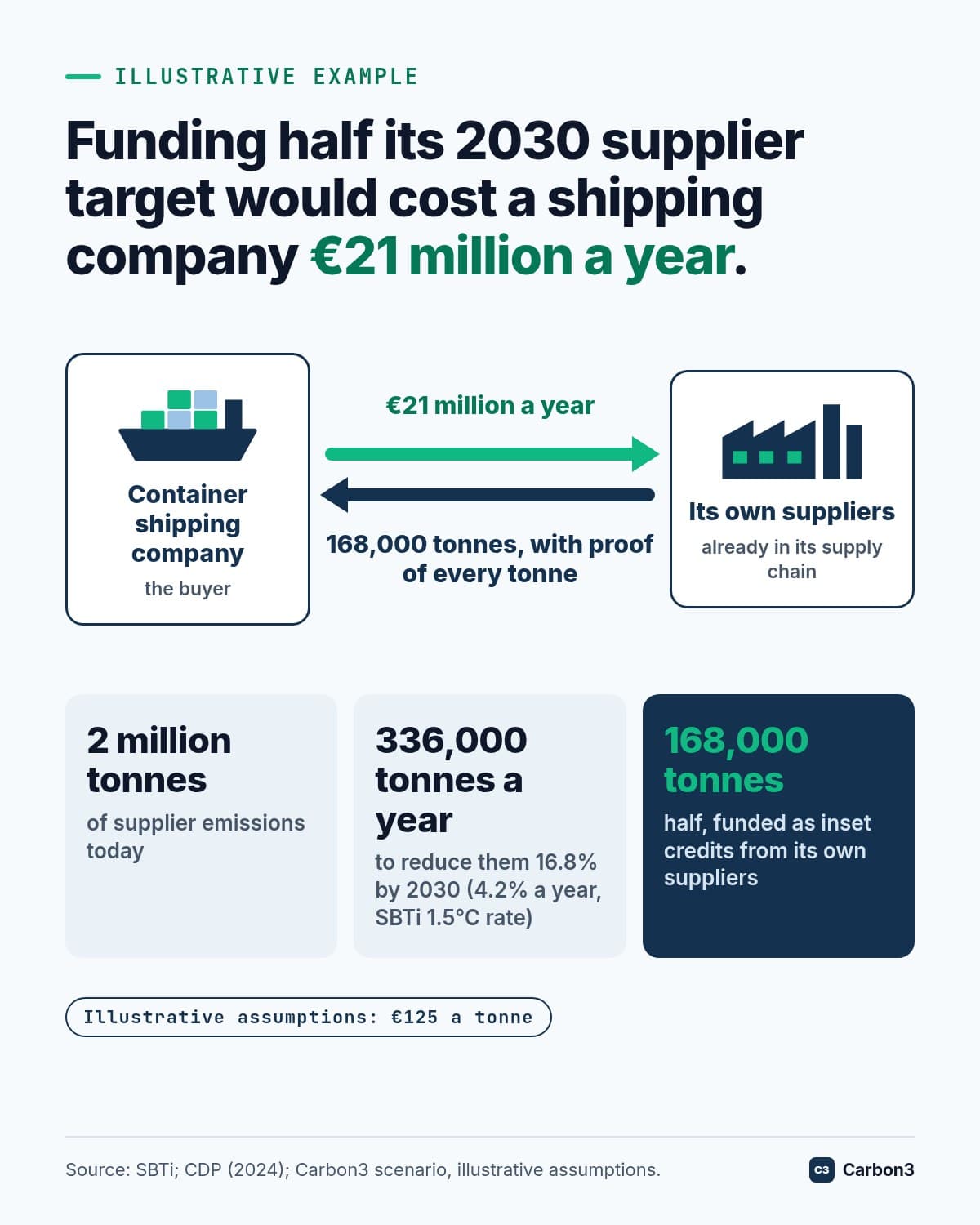
Funding half a shipping company's 2030 supplier target would cost €21 million a year
An illustrative Carbon3 example: a container shipping company with 2 million tonnes of supplier emissions funds half of its required reductions at suppliers it already buys from, with proof of every tonne.
Read the articleSector: Maritime
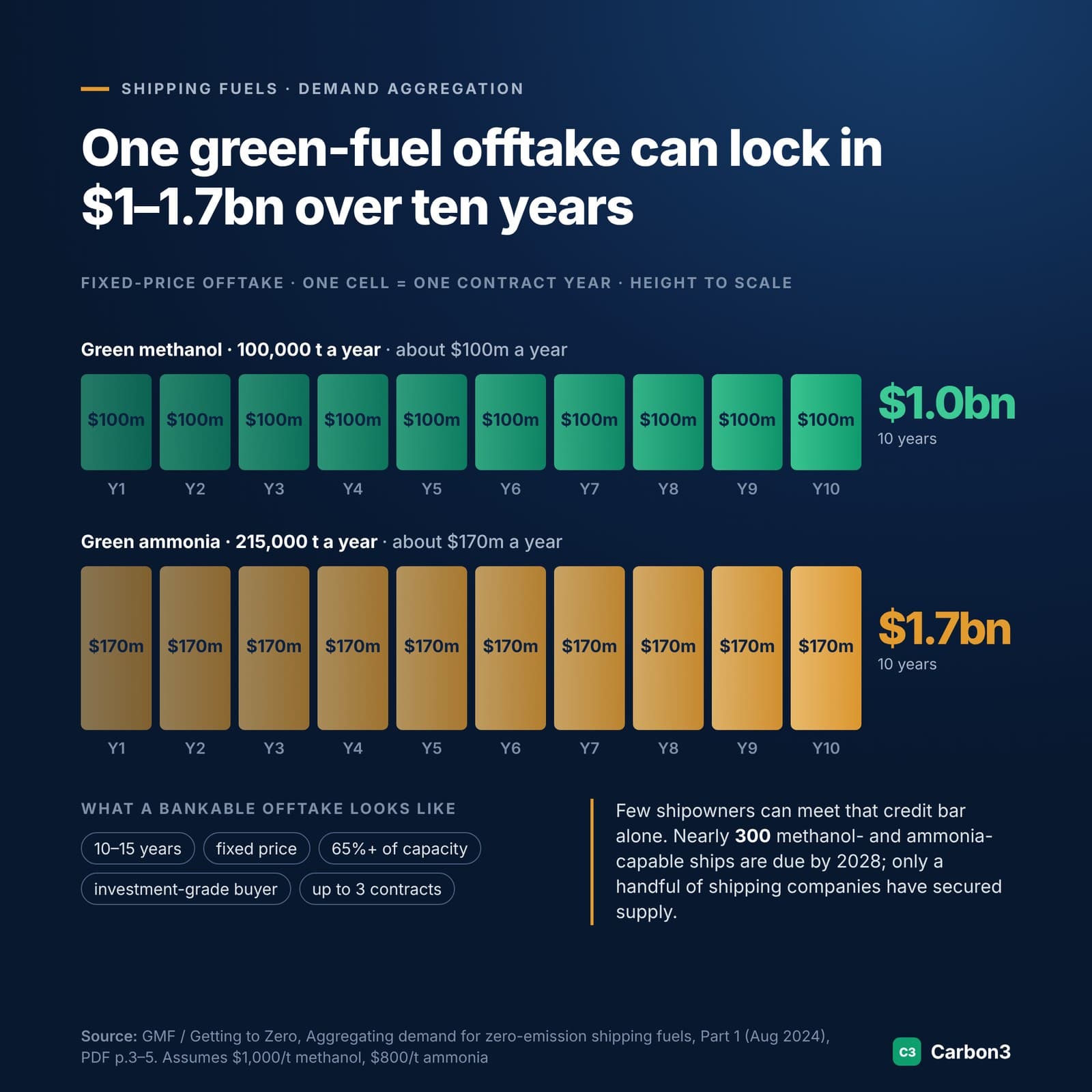
One green shipping fuel contract can commit a buyer to $1 billion or more
The Global Maritime Forum and the Getting to Zero Coalition price a 10-year green methanol or ammonia offtake at $1 billion to $1.7 billion, while nearly 300 capable ships are due by 2028.
Read the article
See the companies behind these figures in the Data Hub.
Look up your suppliers’ emissions and targets, free.