One green shipping fuel contract can commit a buyer to $1 billion or more
The Global Maritime Forum and the Getting to Zero Coalition price a 10-year green methanol or ammonia offtake at $1 billion to $1.7 billion, while nearly 300 capable ships are due by 2028.
By Carbon3 team2 min read
Green shipping fuel is not bought on the spot market. A ship that runs on green methanol or ammonia needs a supply that is contracted years ahead, and the plants that make that fuel need buyers who will commit for a decade before they can be financed.
What a single offtake commits a buyer to
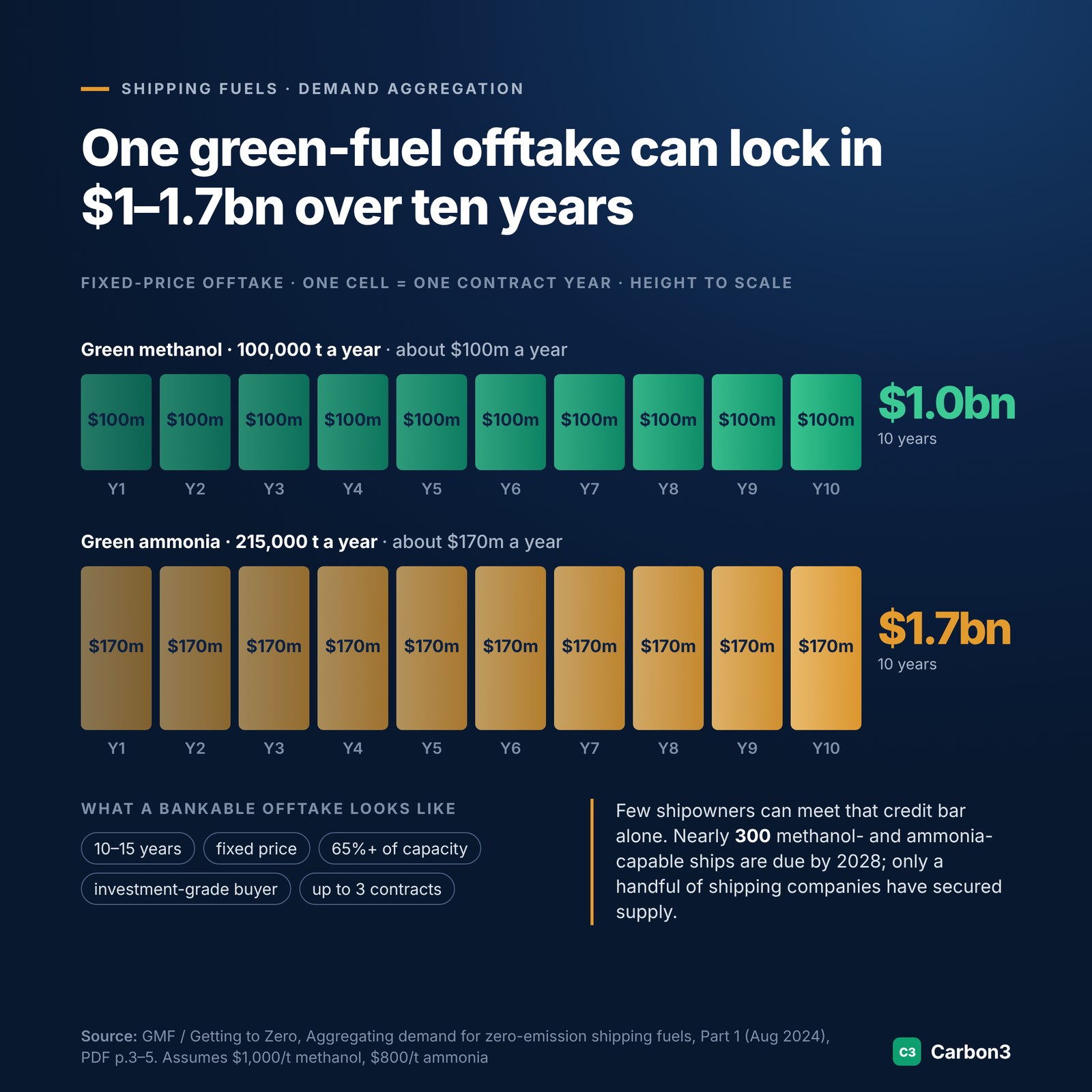
The Global Maritime Forum and the Getting to Zero Coalition have put numbers on that commitment in their report on aggregating demand for zero-emission shipping fuels. A 100,000-tonne green methanol offtake may cost around $100 million a year, and a 215,000-tonne ammonia offtake around $170 million a year. Over a 10-year contract, that is a commitment of $1 billion to $1.7 billion. The report's estimates assume prices of $1,000 a tonne for methanol and $800 a tonne for ammonia.
Fuel developers want 10- to 15-year, fixed-price deals that cover 65% or more of a plant's capacity, generally with investment-grade buyers. Few single companies in shipping can sign on those terms alone.
Ships are arriving faster than supply
The demand side is already moving. Nearly 300 methanol- and ammonia-capable ships are due by 2028, yet only a handful of shipping companies have secured green fuel supply for them. Without long-term offtakes, many of those vessels will run on conventional fuel, and the plants that could supply them will wait for a final investment decision.
Sharing the commitment across the value chain
For cargo owners, the emissions from the fuel burned on their voyages sit in their Scope 3, or value-chain, emissions. That gives them a reason to share the long-term commitment with carriers and fuel producers rather than leave it to the carrier alone. Aggregating demand from several buyers is one route to the contract sizes that developers need.
Sharing a contract raises a practical question: who owns which part of the resulting reduction. The project developer issues credits on the Carbon3 registry once a verification report is on file. Each buyer's share then has a single owner and a single claim. This is insetting, financing emissions reductions inside a company's own value chain, not offsetting, and the difference is explained at carbon3.net/insets-vs-offsets.
Claim treatment depends on the applicable reporting framework.
The open question is which cargo owners will step forward to share that decade-long commitment with their carriers.
Correction, 30 October 2026: An earlier version of this article said the reductions behind Carbon3 credits are independently verified. Credits are issued once a verification report is on file. Carbon3 asks for a verifier that is independent of the project, but the registry does not yet check who wrote the report.
Source: Global Maritime Forum / Getting to Zero Coalition, Aggregating demand for zero-emission shipping fuels (Part 1, August 2024).
Learn more
How insetting works in shipping
Originally published on LinkedIn, 30 October 2026.
Read more from the research team.
Sector: Maritime
The EU wants to pay most of shipping’s clean fuel premium, and cargo owners would fund the rest
A proposed reserve of 110 million carbon allowances would narrow the price gap for green marine fuels, which makes the question of who claims the reduction more pressing.
Read the articleSector: Maritime
Ethanol blends cut the ship fuel bill, but biomethanol carries the compliance value
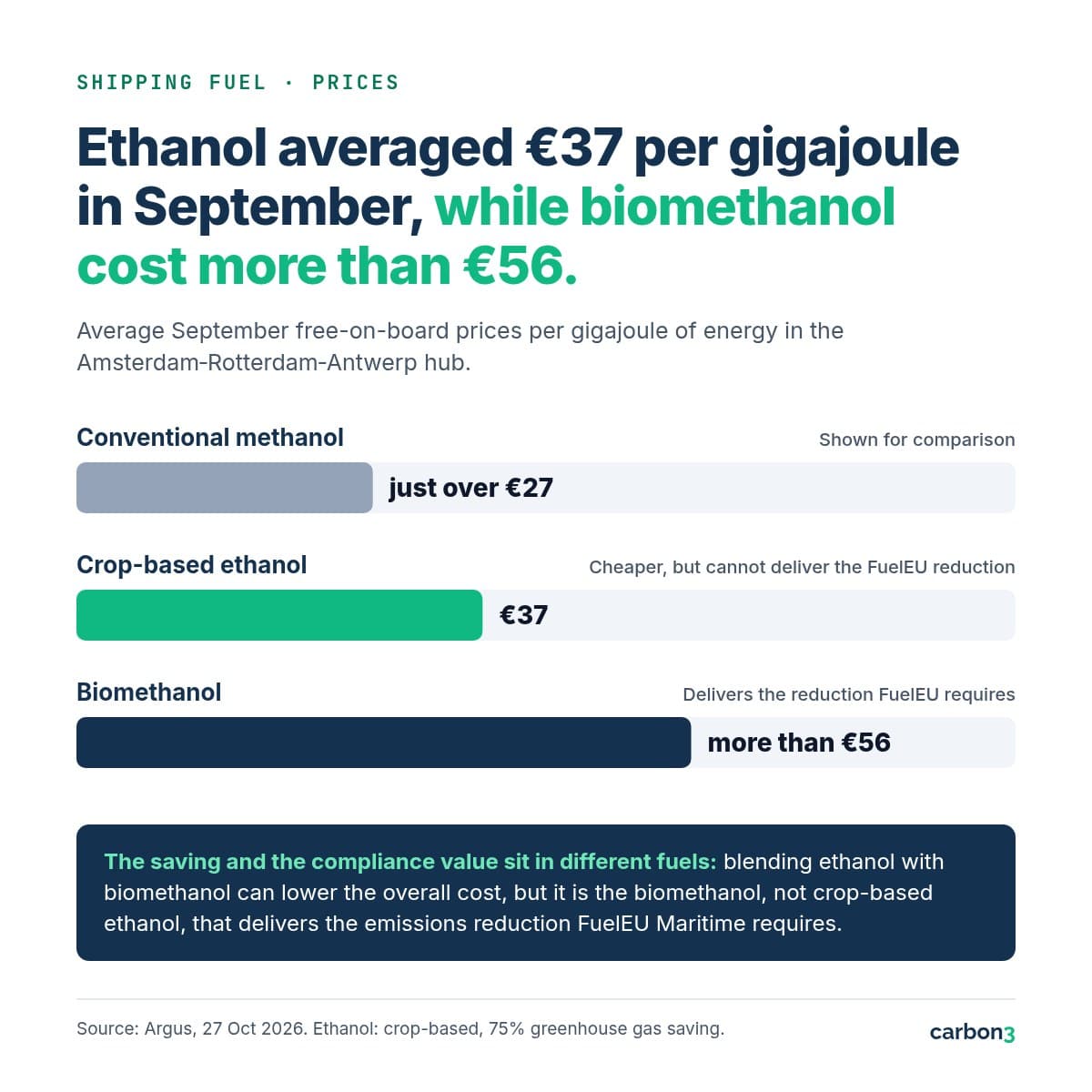
Argus reports that ethanol-methanol blends are gaining ground as a cheaper ship fuel in Europe, yet only the biomethanol in the blend delivers the reduction FuelEU Maritime requires.
Read the articleSector: Maritime
Shipping's 2030 fuel goal is about 150 ships short, with four years left
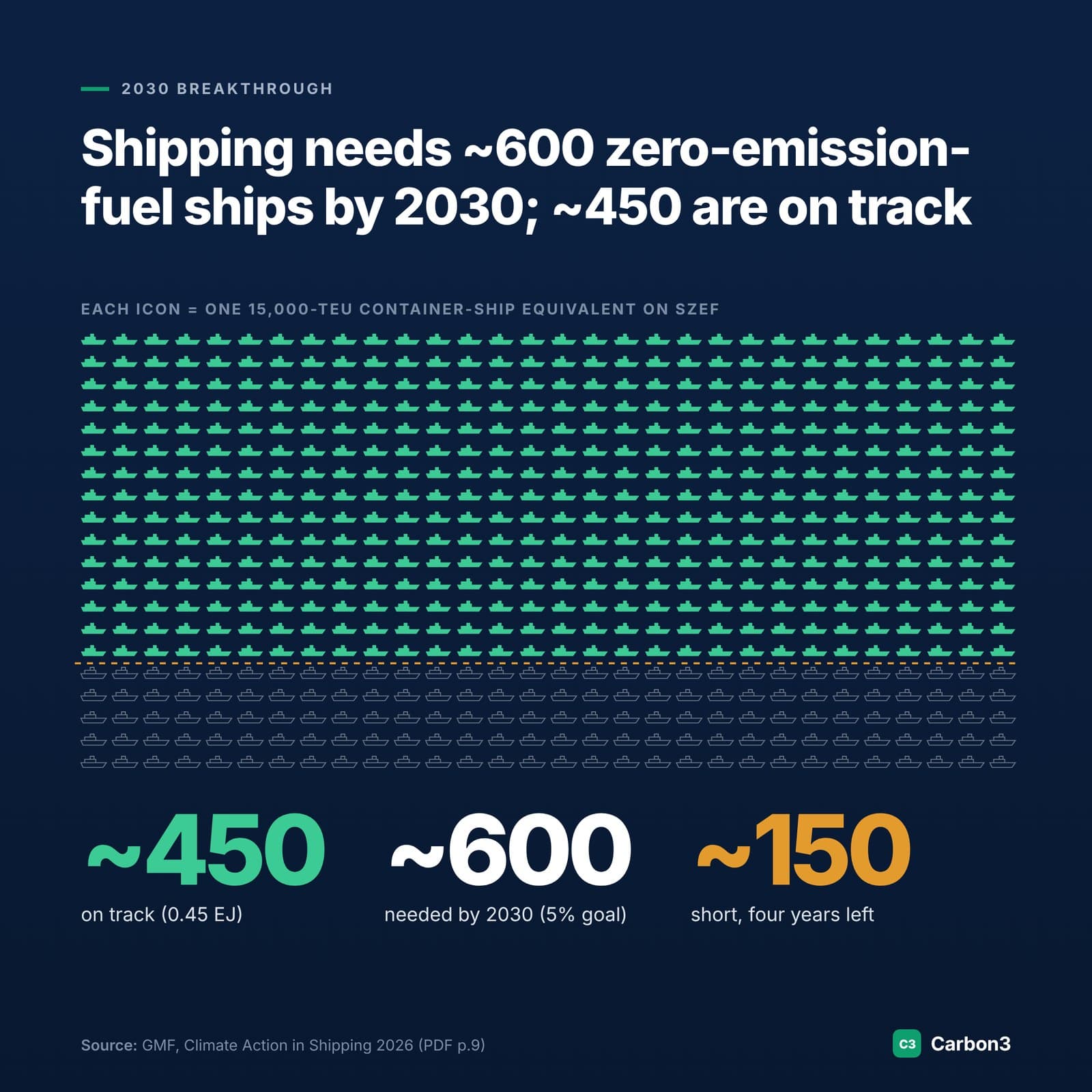
The Global Maritime Forum estimates the 5% breakthrough goal needs about 600 large container ship equivalents on scalable zero-emission fuels by 2030.
Read the article
See the companies behind these figures in the Data Hub.
Look up your suppliers’ emissions and targets, free.