Ethanol blends cut the ship fuel bill, but biomethanol carries the compliance value
Argus reports that ethanol-methanol blends are gaining ground as a cheaper ship fuel in Europe, yet only the biomethanol in the blend delivers the reduction FuelEU Maritime requires.
By Carbon3 team2 min read
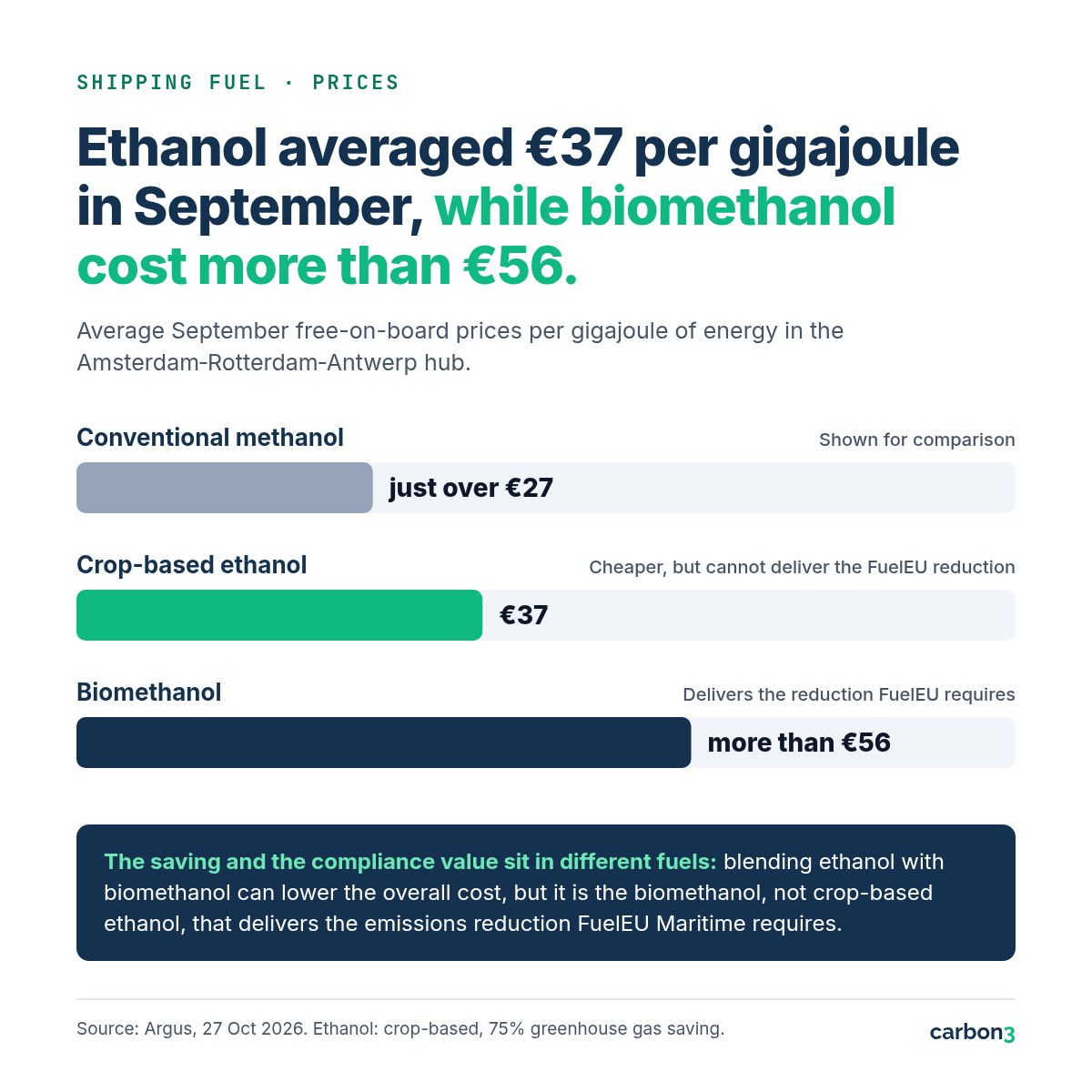
Ethanol is gaining ground as a ship fuel in Europe, because blends of ethanol and methanol can cost less than biomethanol on its own. Argus reports that methanol-fueled ships seeking to meet EU rules are turning to these blends as a lower-cost alternative to pure biomethanol.
The price gap
The numbers explain the interest. In September, crop-based ethanol in the Amsterdam-Rotterdam-Antwerp hub averaged €37 per gigajoule, against more than €56 per gigajoule for biomethanol. Conventional methanol, shown for comparison, averaged just over €27 per gigajoule.
Argus also notes that blending ethanol with biomethanol can lower the overall cost and increase energy density. Ethanol runs in methanol engines with little or no modification, so shipowners do not need new equipment to use it.
The compliance value sits in one fuel
The cheaper fuel does not carry the compliance value. Biomethanol delivers the greenhouse gas reduction that FuelEU Maritime requires, while first-generation ethanol, produced from sugar, wheat or corn, cannot. In a blend, the saving and the compliance value come from different fuels.
That split matters because the pressure is rising. FuelEU Maritime requires a 2% reduction today, rising to 6% in 2030. DNV counts 161 methanol-fueled ships in operation and expects the number to reach 448 by 2030, so the market for these fuels is growing quickly.
Who keeps the saving
When a blend lowers the fuel bill, the shipowner and the cargo owner both have a claim on the result. The shipowner pays for the fuel and carries the compliance obligation, while a cargo owner that wants lower Scope 3, or value-chain, emissions needs to know which part of the fuel actually delivered the reduction.
Insetting, which means financing emissions reductions in a company's own value chain, depends on that kind of clear record. Once a verification report is on file, the project developer issues inset credits on the Carbon3 registry, so each reduction is claimed only once. This is insetting, not offsetting, and the difference is explained at carbon3.net/insets-vs-offsets.
Claim treatment depends on the applicable reporting framework.
The open question is who should keep the saving when a blend lowers the fuel bill: the shipowner or the cargo owner.
Source: Argus, "Ethanol gaining favour as European bunker fuel" (27 October 2026), republished by the World Ports Organization.
Learn more
How insetting works in shipping
Originally published on LinkedIn, 30 October 2026.
Read more from the research team.
Sector: Maritime
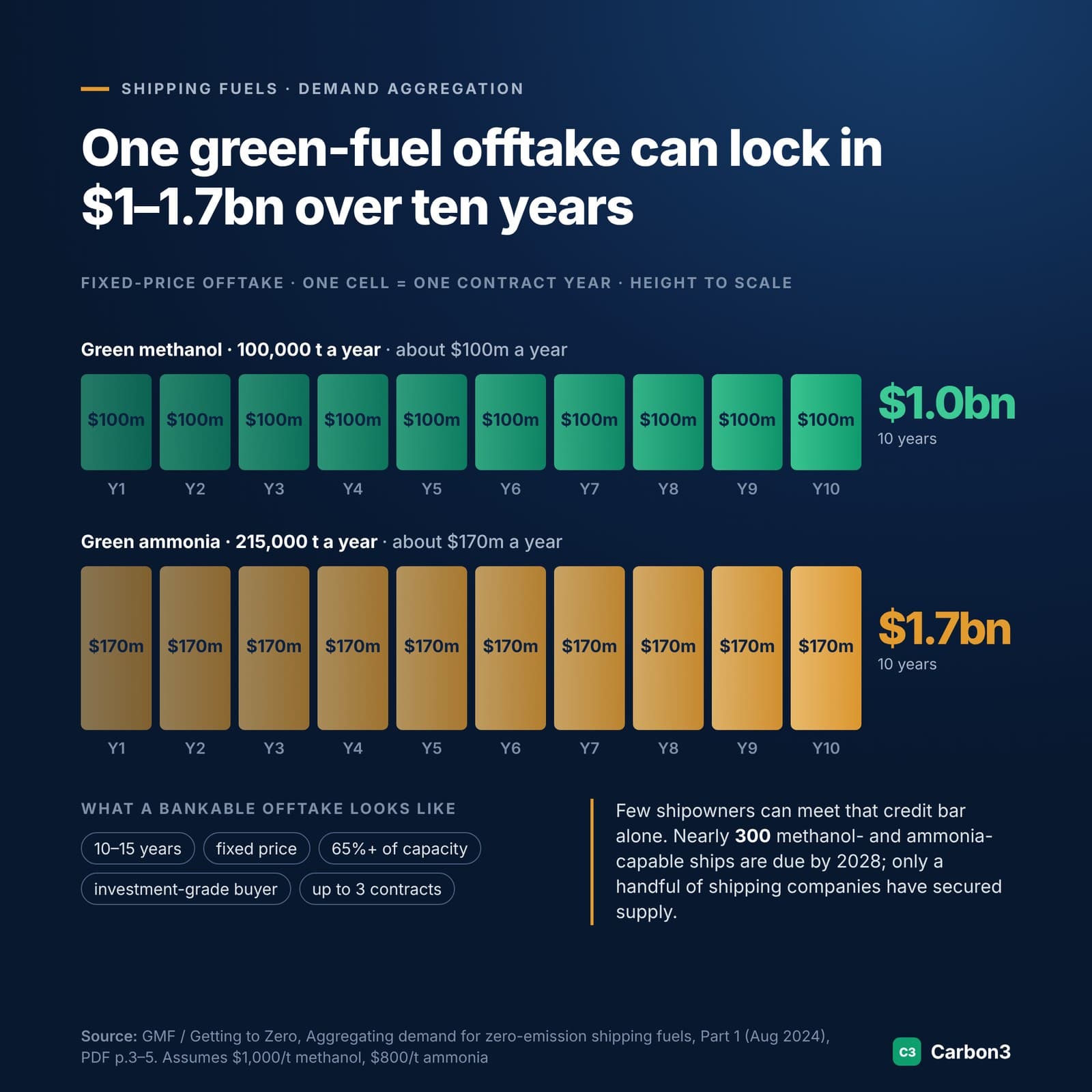
One green shipping fuel contract can commit a buyer to $1 billion or more
The Global Maritime Forum and the Getting to Zero Coalition price a 10-year green methanol or ammonia offtake at $1 billion to $1.7 billion, while nearly 300 capable ships are due by 2028.
Read the articleSector: Maritime
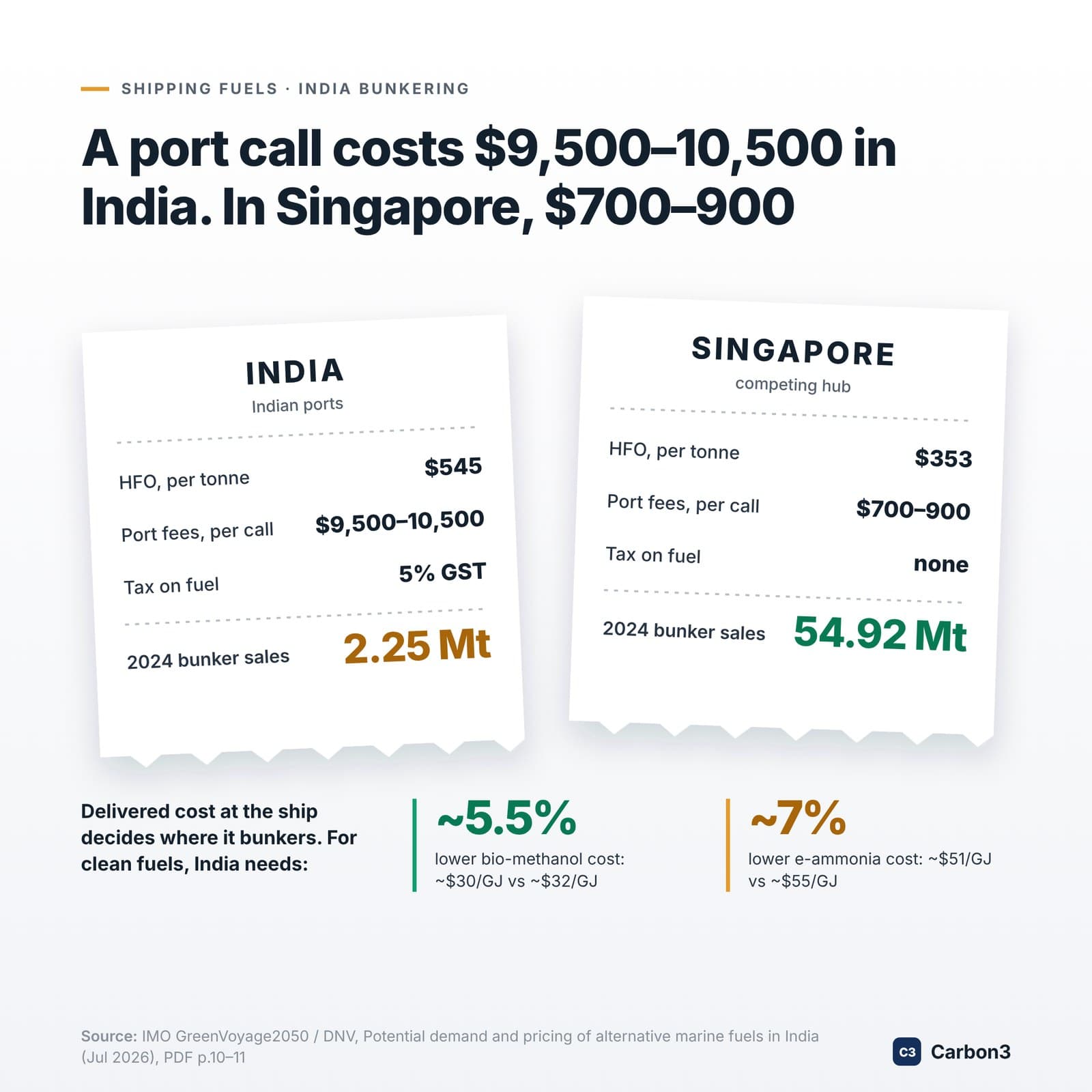
Bunkering in India costs far more than in Singapore, and not only for the fuel
A DNV study for IMO GreenVoyage2050 finds higher fuel prices and port fees in India, and says clean fuels there would need to be 5.5% to 7% cheaper than at the competing hub.
Read the articleSector: Maritime
FuelEU Maritime only works if someone can pay the green premium
FuelEU Maritime asks ships calling at EU ports to cut the greenhouse gas intensity of their fuel 2% from 2025, rising to 80% by 2050.
Read the article
See the companies behind these figures in the Data Hub.
Look up your suppliers’ emissions and targets, free.