Bunkering in India costs far more than in Singapore, and not only for the fuel
A DNV study for IMO GreenVoyage2050 finds higher fuel prices and port fees in India, and says clean fuels there would need to be 5.5% to 7% cheaper than at the competing hub.
By Carbon3 team2 min read
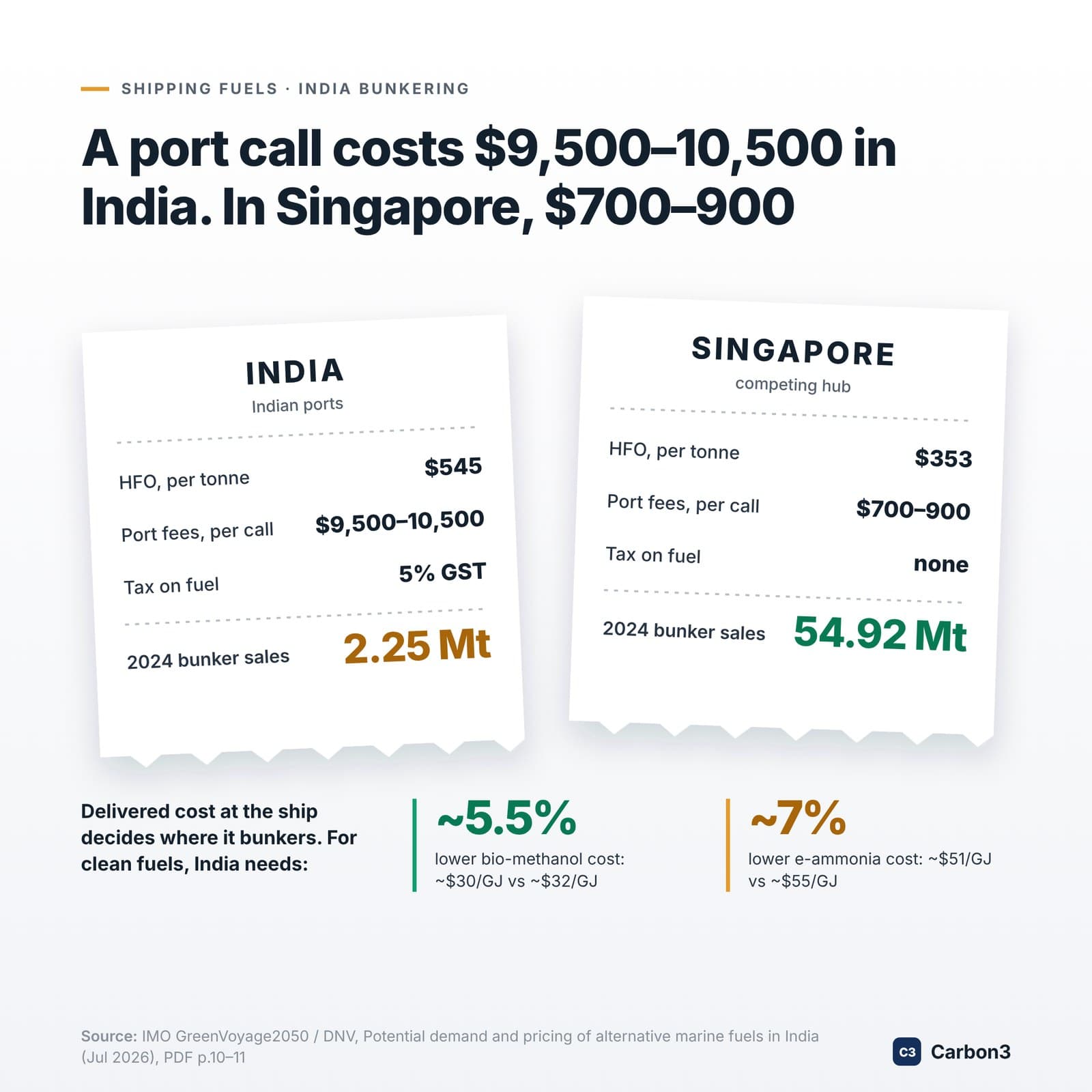
For a ship choosing where to bunker, the fuel price is only part of the bill. A study by DNV for the IMO GreenVoyage2050 program compared what it costs to refuel at Indian ports and in Singapore, and the gap goes well beyond the price per tonne.
Two ports, two very different bills
According to the study, heavy fuel oil (HFO) runs at around $545 a tonne at Indian ports against $353 in Singapore. Port fees add a second gap: around $9,500 to $10,500 per call in India against $700 to $900 in Singapore. India also applies a 5% goods and services tax.
The volumes show the result. Singapore sold 54.92 million tonnes of bunker fuel in 2024, while India sold about 2.25 million tonnes.
What clean fuels would need to compete
The same logic applies to the alternative fuels that India hopes to produce. The study finds that India would need bio-methanol about 5.5% cheaper than the competing hub, at $30 per gigajoule against $32, and e-ammonia about 7% cheaper, at $51 per gigajoule against $55.
For fuel developers, this is the number that decides demand. A ship does not compare production costs. It compares the delivered cost at the vessel, including fuel, fees and taxes, and it bunkers where that total is lowest.
Why it matters beyond India
The finding is a reminder that clean fuel projects are judged on the full delivered price, not only on what it costs to make the fuel. Port charges, taxes and the scale of an existing bunkering hub can outweigh a production advantage.
For cargo owners, the emissions from the fuel burned on their voyages sit in their Scope 3, or value-chain, emissions. When verified lower-emission fuel is supplied, credits are issued to the project developer after independent verification, and Carbon3 records them once in its registry as inset credits. That gives cargo owners a traceable claim to the reduction, whichever port the fuel was delivered in. This is insetting, not offsetting, and the difference is explained at carbon3.net/insets-vs-offsets.
Claim treatment depends on the applicable reporting framework.
The open question is what it would take for an Indian port to win clean fuel business from an established hub.
Source: IMO GreenVoyage2050 / DNV, Study on potential demand and pricing of alternative marine fuels in India (Rev.03, July 2026).
Originally published on LinkedIn, 30 October 2026.
The Carbon3 Newsletter
Weekly analysis of industrial decarbonization and insetting across Scope 1 to 3, from the Carbon3 team.
Read more from the research team.
Sector: Maritime
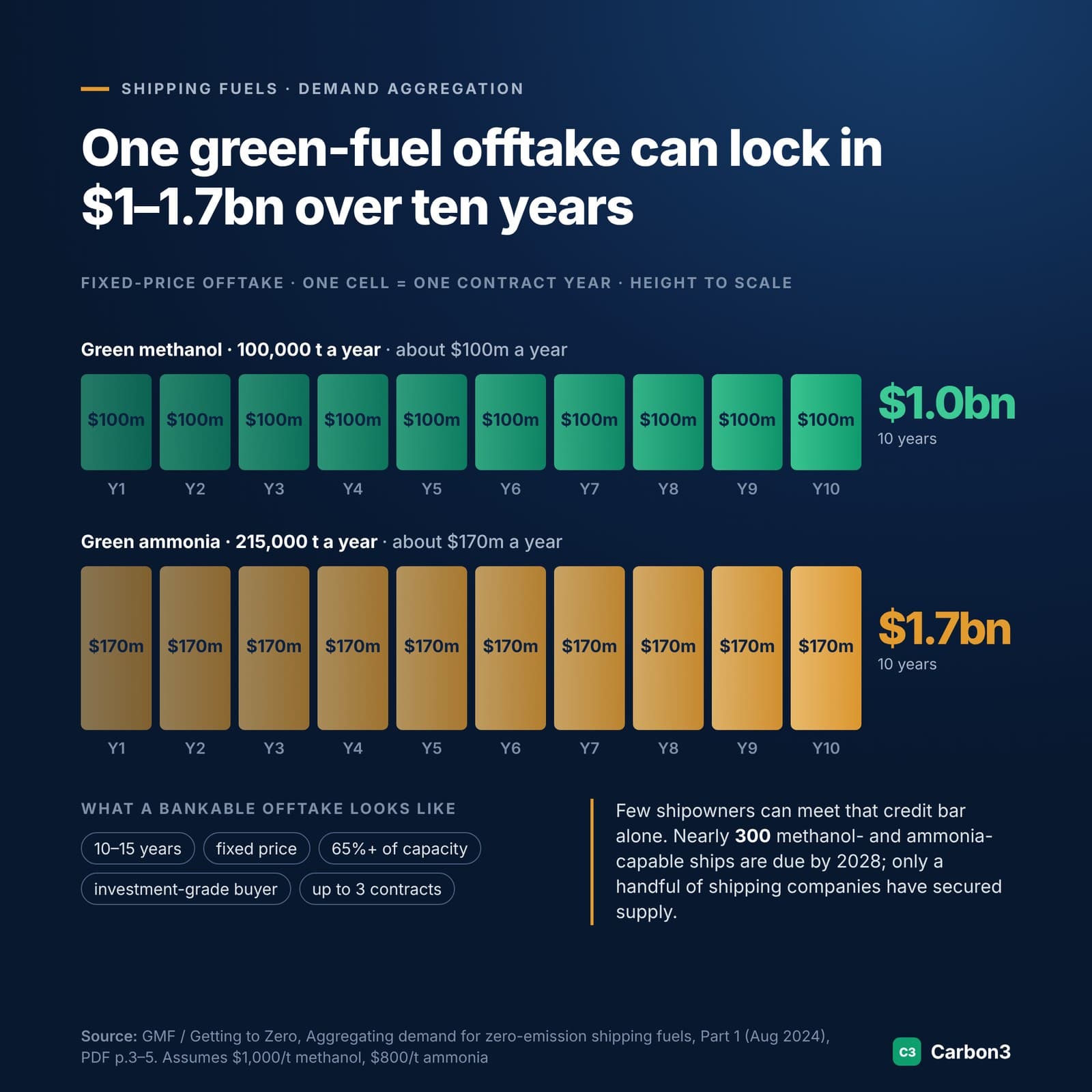
One green shipping fuel contract can commit a buyer to $1 billion or more
The Global Maritime Forum and the Getting to Zero Coalition price a 10-year green methanol or ammonia offtake at $1 billion to $1.7 billion, while nearly 300 capable ships are due by 2028.
Read the articleSector: Maritime
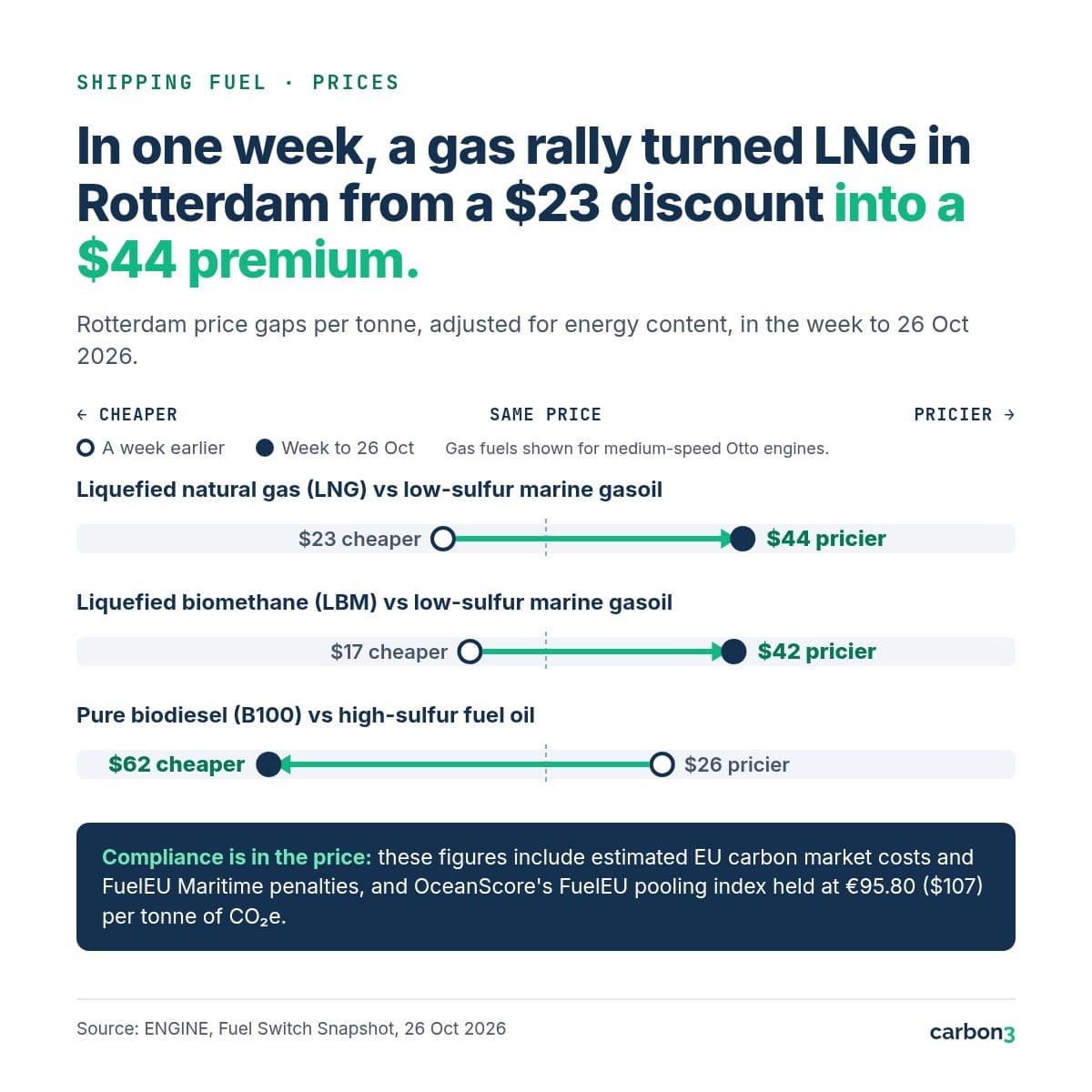
A gas rally turned LNG in Rotterdam from a discount into a premium in one week
ENGINE reports that LNG and liquefied biomethane swung from discounts to premiums over marine gasoil, while pure biodiesel moved the other way, showing how fast the green premium moves.
Read the articleSector: Maritime
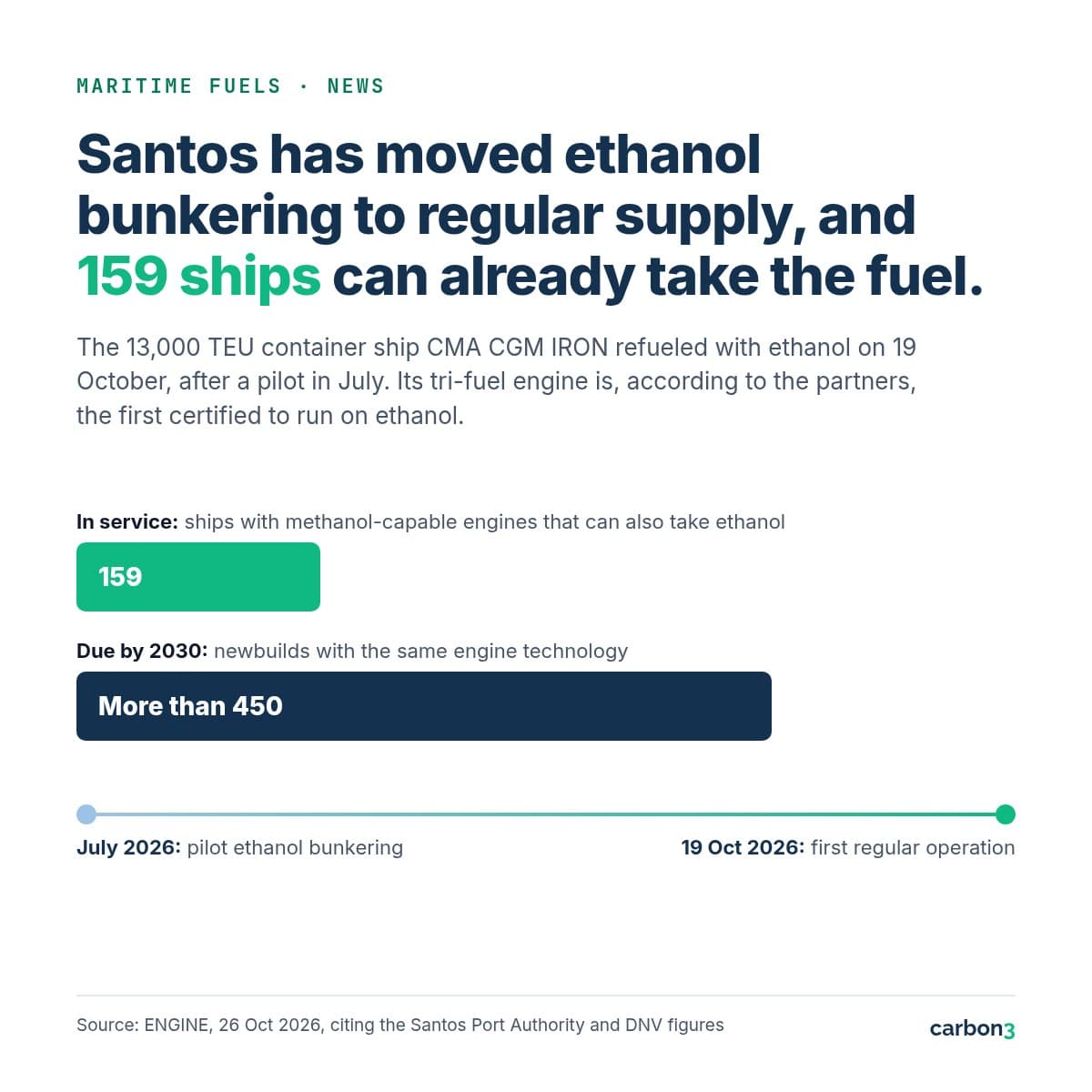
Port of Santos moves ethanol bunkering from trial to regular supply
Brazil's Port of Santos now offers ethanol as a regular marine fuel, and the port authority, citing DNV, says 159 ships already have engines that can take it.
Read the article
See the companies behind these figures in the Data Hub.
Look up your suppliers’ emissions and targets, free.