A gas rally turned LNG in Rotterdam from a discount into a premium in one week
ENGINE reports that LNG and liquefied biomethane swung from discounts to premiums over marine gasoil, while pure biodiesel moved the other way, showing how fast the green premium moves.
By Carbon3 team2 min read
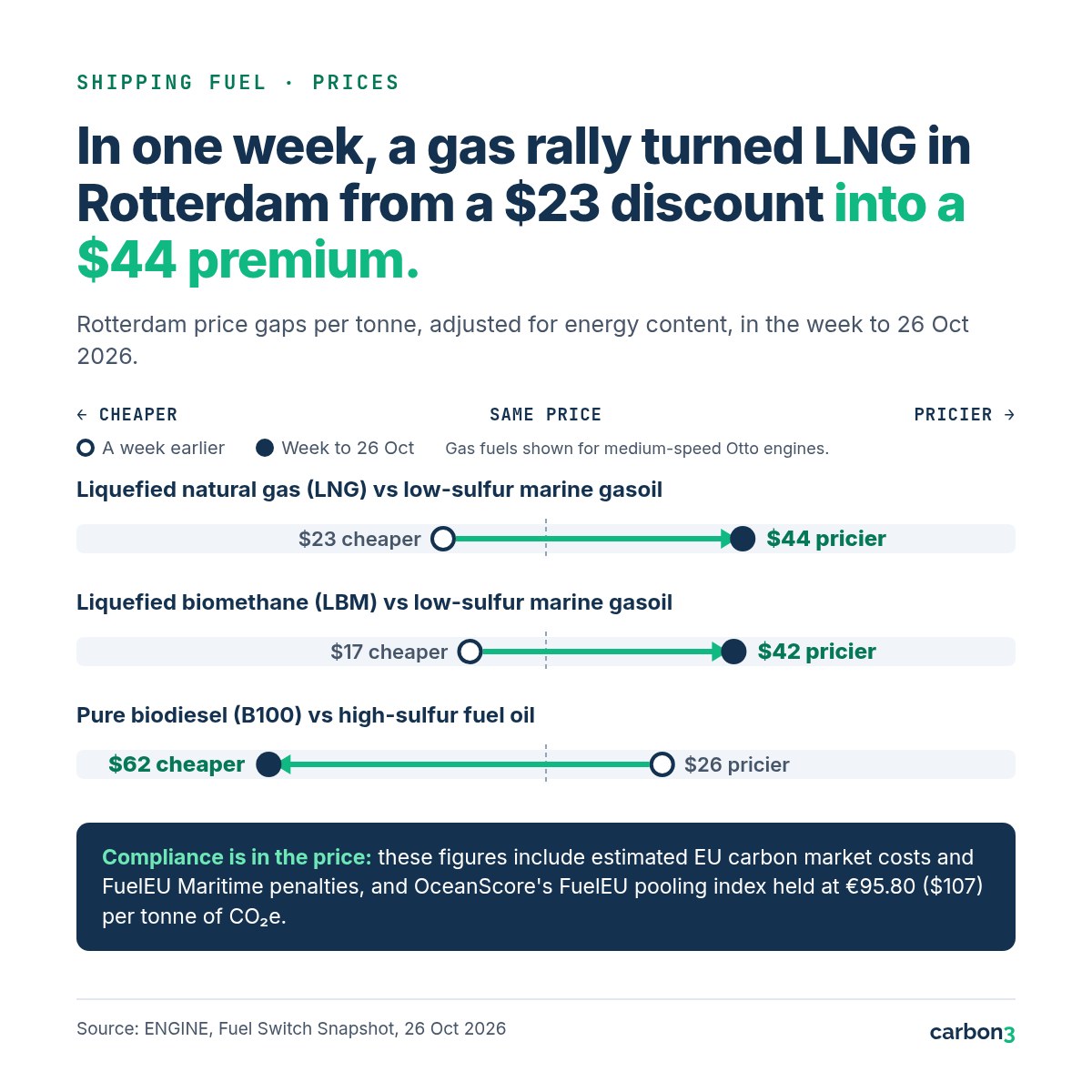
In Rotterdam, the cheaper ship fuel changed in a single week. ENGINE's Fuel Switch Snapshot reports that liquefied natural gas (LNG) burned in Otto medium-speed engines went from a $23 a tonne discount to low-sulfur marine gasoil to a $44 premium over it, as gas prices rallied.
How the prices moved
LNG is priced on the TTF gas contract, and the rally in that contract carried LNG with it. Liquefied biomethane (LBM), the renewable version of LNG, swung the same way, from $17 a tonne below low-sulfur marine gasoil to $42 above it.
Pure biodiesel (B100) went in the opposite direction. It moved from a $26 a tonne premium over high-sulfur fuel oil to a $62 discount.
These are not raw fuel prices. ENGINE adjusts them for energy content and includes estimated compliance costs for voyages within the EU, covering the EU Emissions Trading System and FuelEU Maritime penalties. Compliance is already part of the price a ship pays.
A moving green premium
For cargo owners and carriers, the lesson is that the green premium, the extra cost of a lower-emission fuel, is not a fixed number. It can change sign within a week, depending on gas prices, carbon prices and the fuel being compared.
That makes it harder to agree who pays for what. A carrier that commits to a lower-emission fuel takes on price risk, and a cargo owner that wants the reduction counted in its Scope 3, or value-chain, emissions needs a clear record of what it paid for.
One record for both sides
The project developer issues credits on the Carbon3 registry once a verification report is on file, and Carbon3 records each verified reduction once in its registry as inset credits. Carrier and cargo owner then work from the same figure, whatever the fuel cost that week. This is insetting, not offsetting, and the difference is explained at carbon3.net/insets-vs-offsets.
Claim treatment depends on the applicable reporting framework.
If the cheaper fuel can change every week, the open question is who should carry the green premium: the carrier or the cargo owner.
Correction, 30 October 2026: An earlier version of this article said the reductions behind Carbon3 credits are independently verified. Credits are issued once a verification report is on file. Carbon3 asks for a verifier that is independent of the project, but the registry does not yet check who wrote the report.
Source: ENGINE, "Fuel Switch Snapshot: Gas rally lifts LNG and LBM above LSMGO for Otto MS" (26 October 2026).
Learn more
How insetting works in shipping
Originally published on LinkedIn, 30 October 2026.
Read more from the research team.
Sector: Maritime
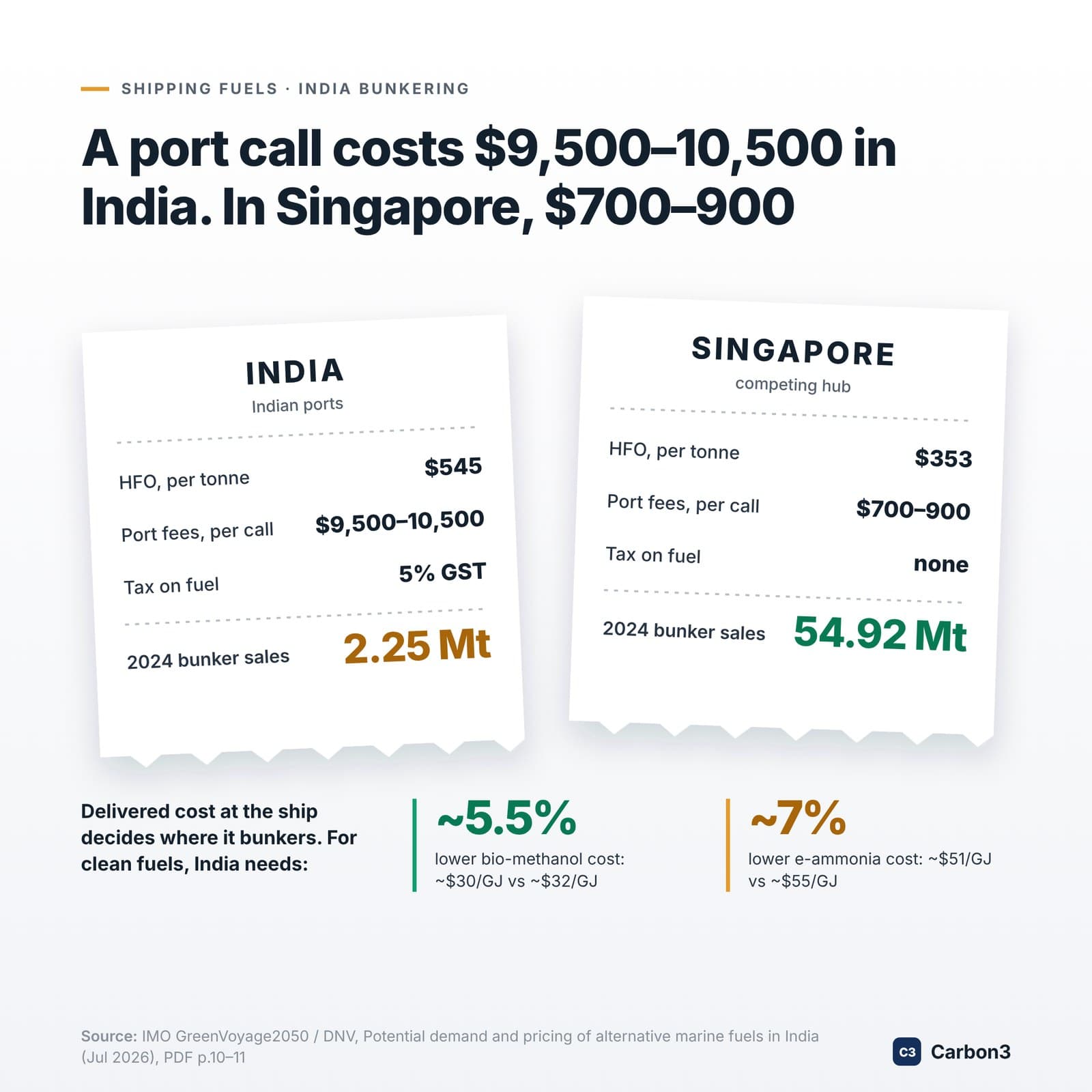
Bunkering in India costs far more than in Singapore, and not only for the fuel
A DNV study for IMO GreenVoyage2050 finds higher fuel prices and port fees in India, and says clean fuels there would need to be 5.5% to 7% cheaper than at the competing hub.
Read the articleSector: Maritime
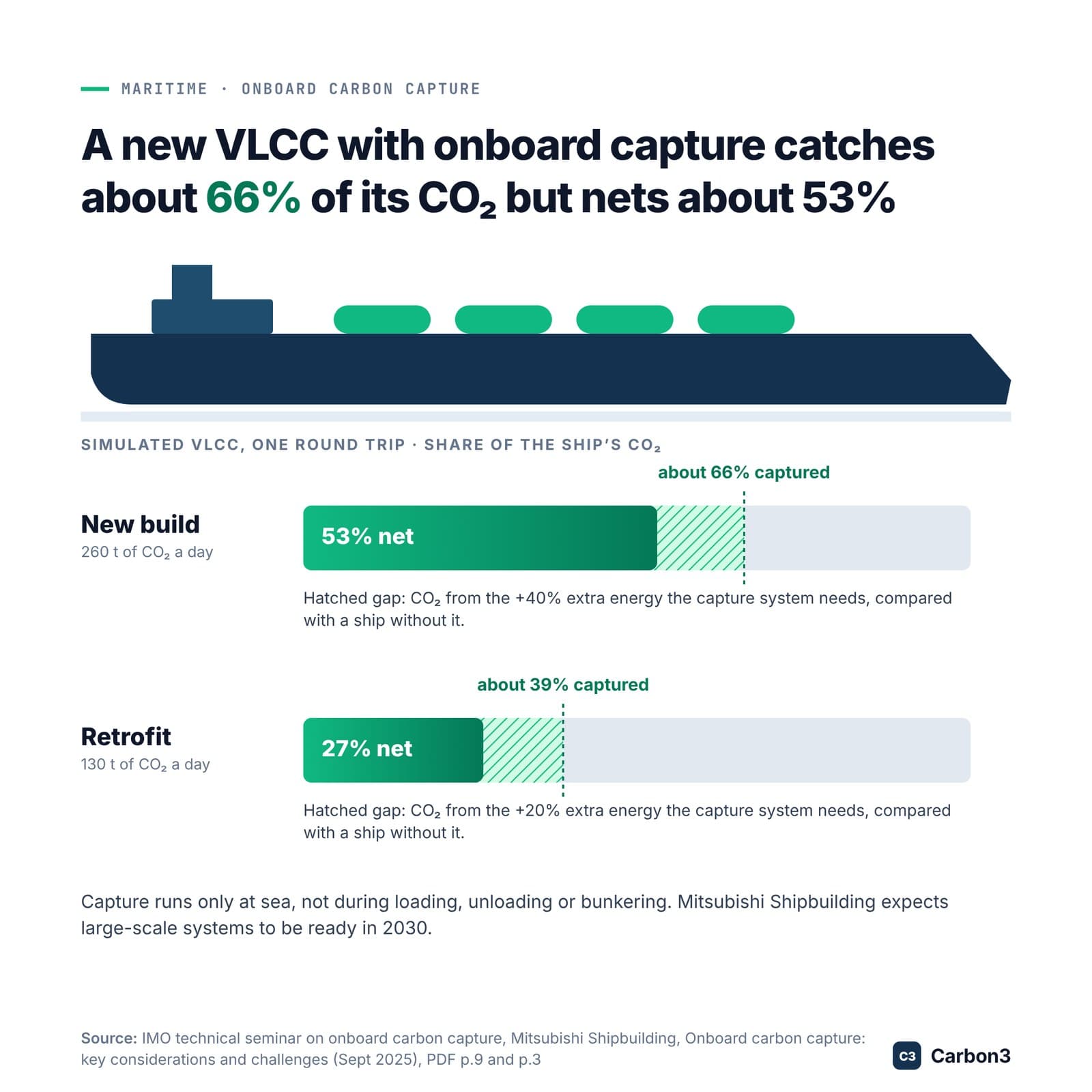
Onboard carbon capture on a tanker catches 66% of CO2 but nets about 53%
A Mitsubishi Shipbuilding case study shows how the extra energy a capture system needs shrinks its real emissions reduction, which is the figure buyers should ask for.
Read the articleTransition finance
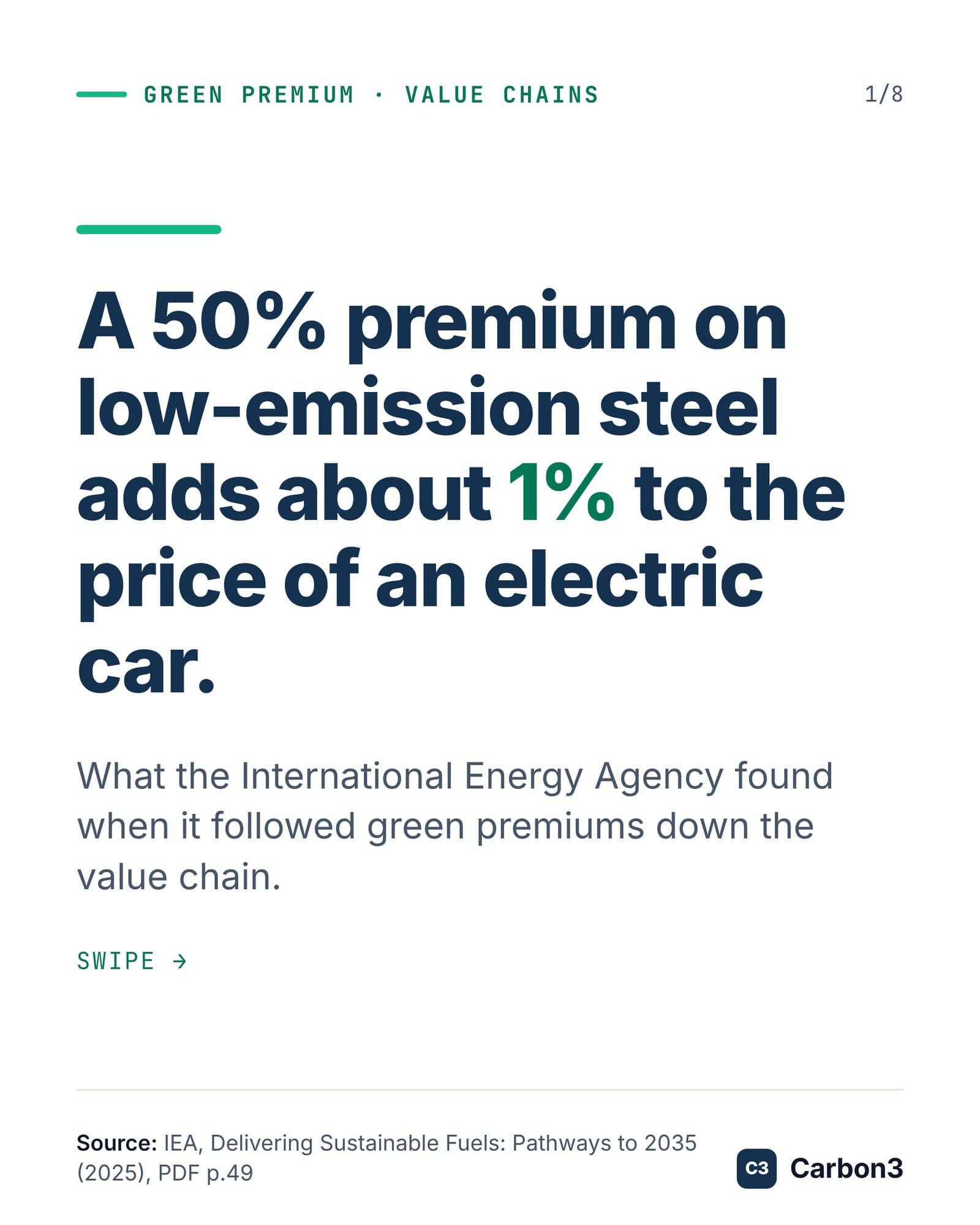
A 50% premium on low-emission steel adds about 1% to the price of an electric car
The International Energy Agency followed green premiums from steel to electric cars and from ship fuel to smartphones.
Read the article
See the companies behind these figures in the Data Hub.
Look up your suppliers’ emissions and targets, free.