Onboard carbon capture on a tanker catches 66% of CO2 but nets about 53%
A Mitsubishi Shipbuilding case study shows how the extra energy a capture system needs shrinks its real emissions reduction, which is the figure buyers should ask for.
By Carbon3 team2 min read
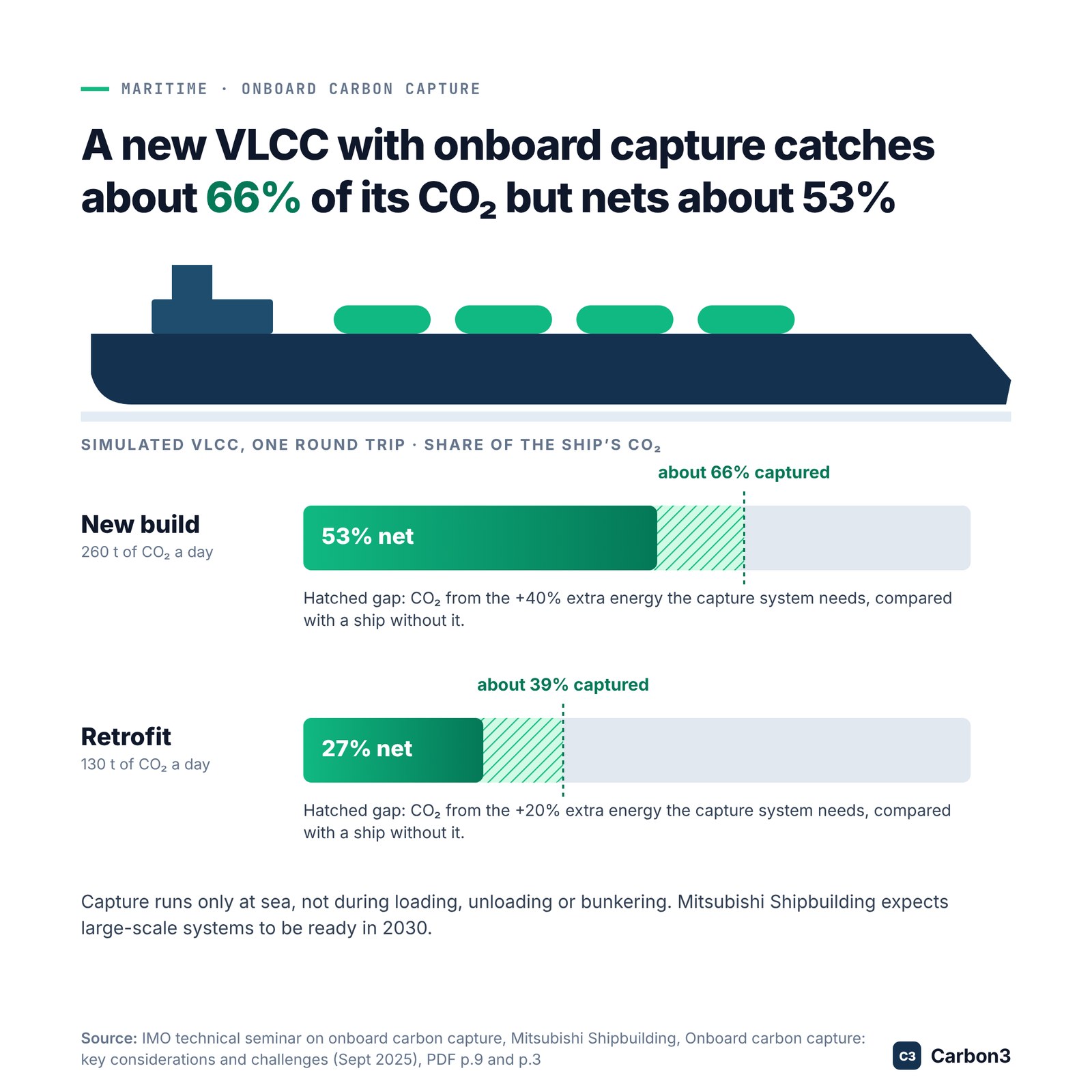
Onboard carbon capture works, but the energy it needs eats into the gain. In a Mitsubishi Shipbuilding case study presented at an International Maritime Organization (IMO) technical seminar, a new very large crude carrier (VLCC) fitted with an onboard capture system catches about 66% of its CO₂ on a round trip.
Capture rate is not the same as net reduction
The capture system needs power to run, and that power comes from burning more fuel on board. In the Mitsubishi Shipbuilding case study, the system requires about 40% extra energy. Once the CO₂ from that extra fuel is counted, the net emissions reduction falls to about 53%.
That difference matters for anyone buying the result. A capture rate describes what the equipment catches, while the net figure describes what the atmosphere actually avoids. Buyers, charterers and cargo owners need the net figure to compare onboard capture with other options.
Retrofits narrow the gain further
The case study also looks at a half-capacity retrofit. That configuration captures about 39% of the ship's CO₂ and delivers a net reduction of about 27%. A retrofit is easier to fit on an existing ship, but the gap between capture and net reduction remains.
The pattern is the same in both cases: the headline capture rate overstates the benefit unless the energy penalty is subtracted. Comparing technologies on capture rates alone would favor the wrong number.
Counting what is actually reduced
Net reductions are also the figure that matters for credits. Once a verification report is on file, the project developer can issue verified net reductions on a shipping route as inset credits on the Carbon3 registry. Each reduction is recorded once, so the shipowner and the cargo owner work from the same net figure rather than the gross capture rate. This is insetting, which means financing emissions reductions in a company's own value chain, not offsetting; the difference is explained at carbon3.net/insets-vs-offsets.
Claim treatment depends on the applicable reporting framework.
The question for the market is whether capture vendors should quote net reductions instead of capture rates.
Source: Mitsubishi Shipbuilding, Onboard carbon capture: key considerations and challenges, p. 9.
Learn more
How insetting works in shipping
Originally published on LinkedIn, 31 October 2026.
Read more from the research team.
Sector: Maritime
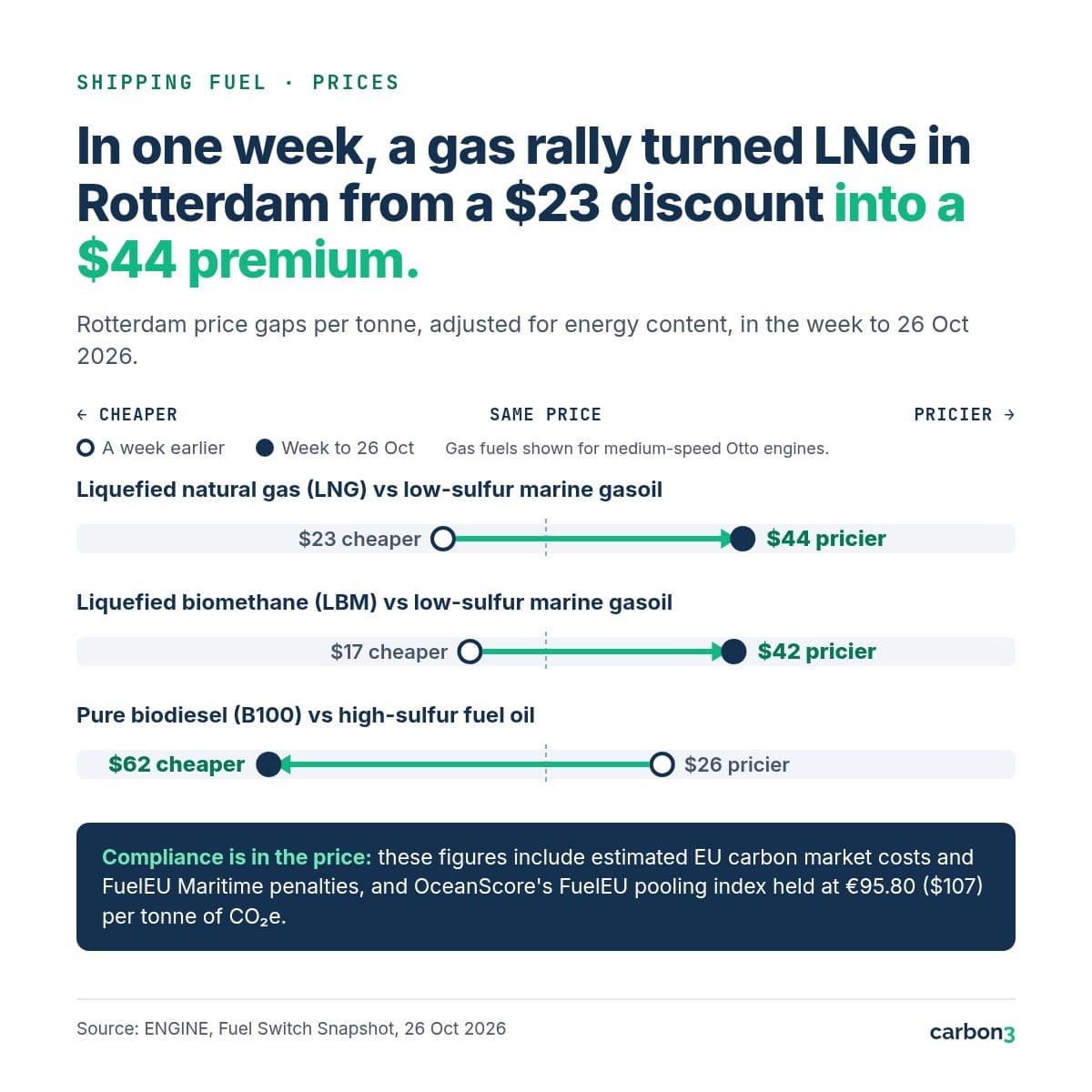
A gas rally turned LNG in Rotterdam from a discount into a premium in one week
ENGINE reports that LNG and liquefied biomethane swung from discounts to premiums over marine gasoil, while pure biodiesel moved the other way, showing how fast the green premium moves.
Read the articleSector: Maritime
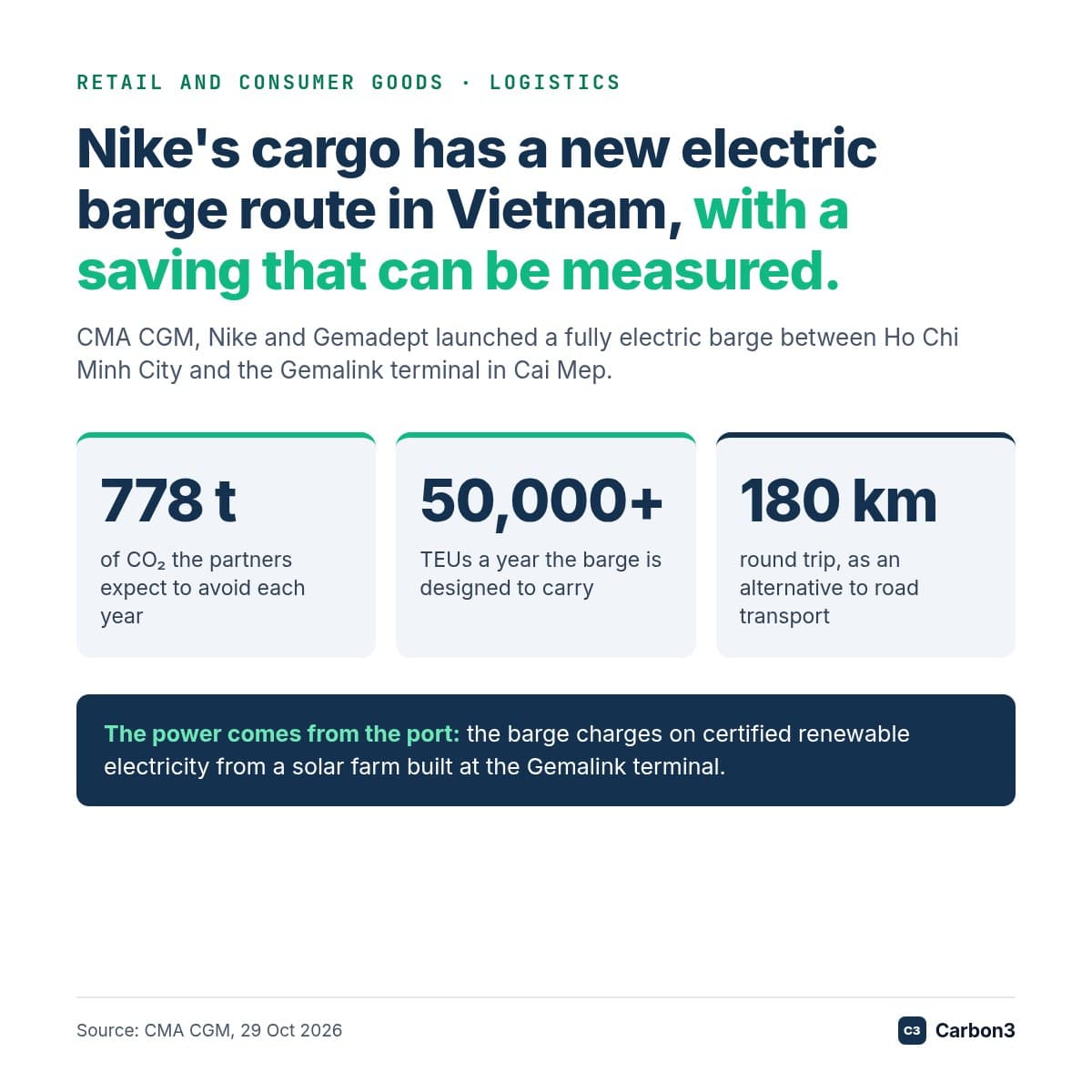
An electric barge in Vietnam gives Nike's cargo a saving that can be measured
CMA CGM, Nike and Gemadept have launched a fully electric barge between Ho Chi Minh City and the Gemalink terminal in Cai Mep, expected to avoid about 778 tonnes of CO₂ a year.
Read the articleTransition finance
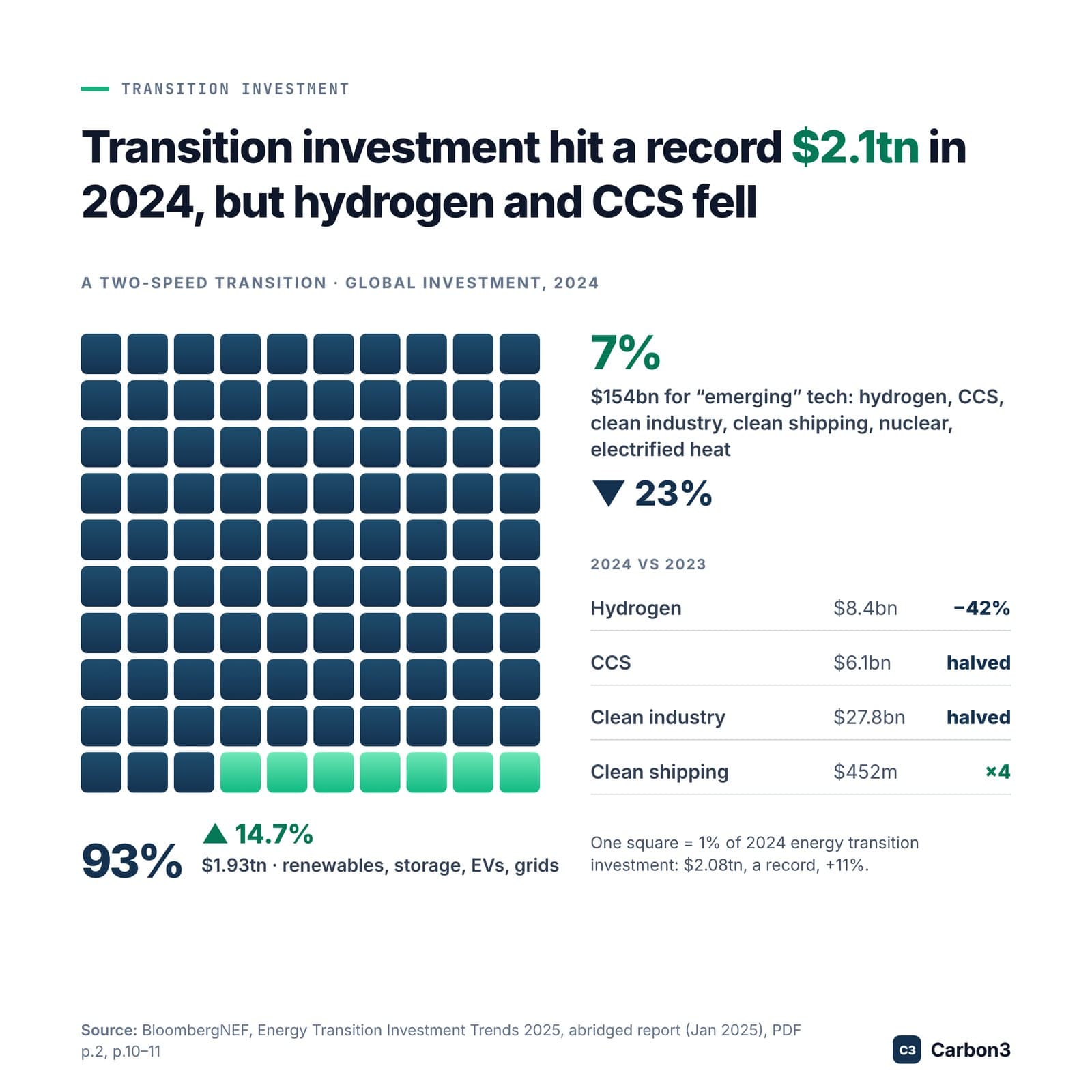
Transition investment hit a record, but not where heavy industry needs it
BloombergNEF counts a record $2.08 trillion in energy transition investment in 2024, yet hydrogen fell 42% and carbon capture and clean industry each roughly halved.
Read the article
See the companies behind these figures in the Data Hub.
Look up your suppliers’ emissions and targets, free.