An electric barge in Vietnam gives Nike's cargo a saving that can be measured
CMA CGM, Nike and Gemadept have launched a fully electric barge between Ho Chi Minh City and the Gemalink terminal in Cai Mep, expected to avoid about 778 tonnes of CO₂ a year.
By Carbon3 team2 min read
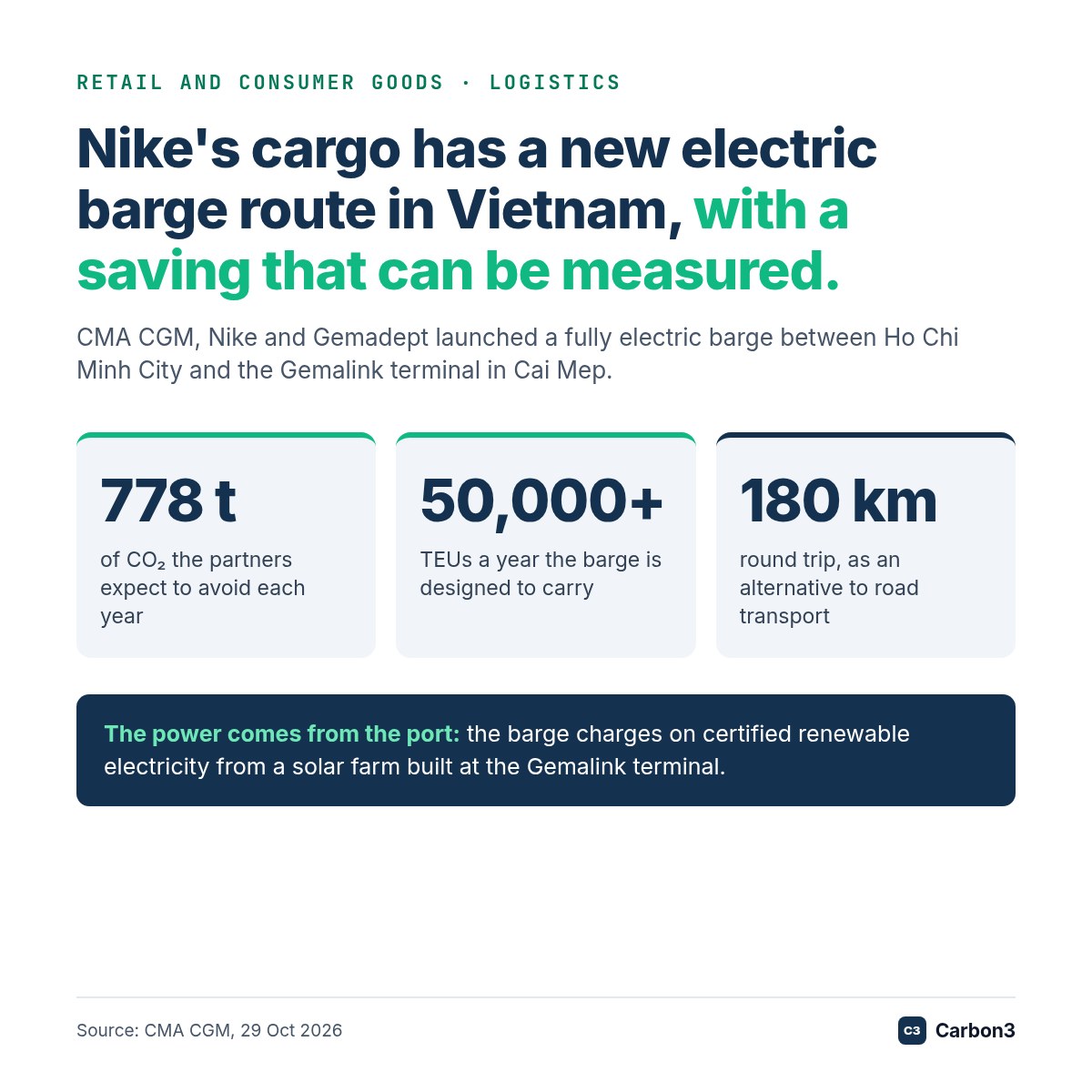
CMA CGM, Nike and Gemadept Corporation have launched a fully electric barge in Vietnam. It links Nike's inland drop-off point in Ho Chi Minh City with Gemalink, Gemadept's deep-sea terminal in Cai Mep, over a 180-kilometer round trip.
Targets move through named projects
Supply chain climate targets are met through projects like this one: a named customer, a named route and a saving that can be measured. A corporate pledge sets the direction, but the emissions only fall when a specific shipment moves in a different way.
The barge is designed to carry more than 50,000 TEUs a year that would otherwise travel by road. The partners expect it to avoid about 778 tonnes of CO₂ each year.
The power comes from the port
According to CMA CGM, the barge runs on battery technology from CATL and recharges in about four hours. It charges on certified renewable electricity, and the charging infrastructure at Gemalink is supplied by a solar farm built at the terminal. That matters for the saving: an electric vessel is only as clean as the electricity that charges it, and here the source is named and sits at the end of the route.
Short, fixed runs between an inland depot and a port are well suited to this kind of switch. The distance fits within a battery's range, the vessel returns to the same charger, and the cargo flows are predictable enough to plan around.
Counting the saving once
The 778 tonnes count for Nike only if they are measured per shipment and claimed once. Several parties have a hand in the result, including the cargo owner, the carrier and the terminal operator, so it needs to be clear who claims which share.
Insetting, which means financing emissions reductions in a company's own value chain, depends on that kind of single record. Once a reduction has been checked against a verification report, the project developer issues inset credits on the Carbon3 registry, so each reduction is claimed only once. This is insetting, not offsetting, and the difference is explained at carbon3.net/insets-vs-offsets.
Claim treatment depends on the applicable reporting framework.
The open question is which other short port runs are ready for the same switch.
Source: CMA CGM, "CMA CGM, Nike and Gemadept launch a zero-direct-emission electric barge in Vietnam, powered by renewable energy" (29 October 2026).
Learn more
How insetting works in shipping
Originally published on LinkedIn, 31 October 2026.
Read more from the research team.
Sector: Maritime
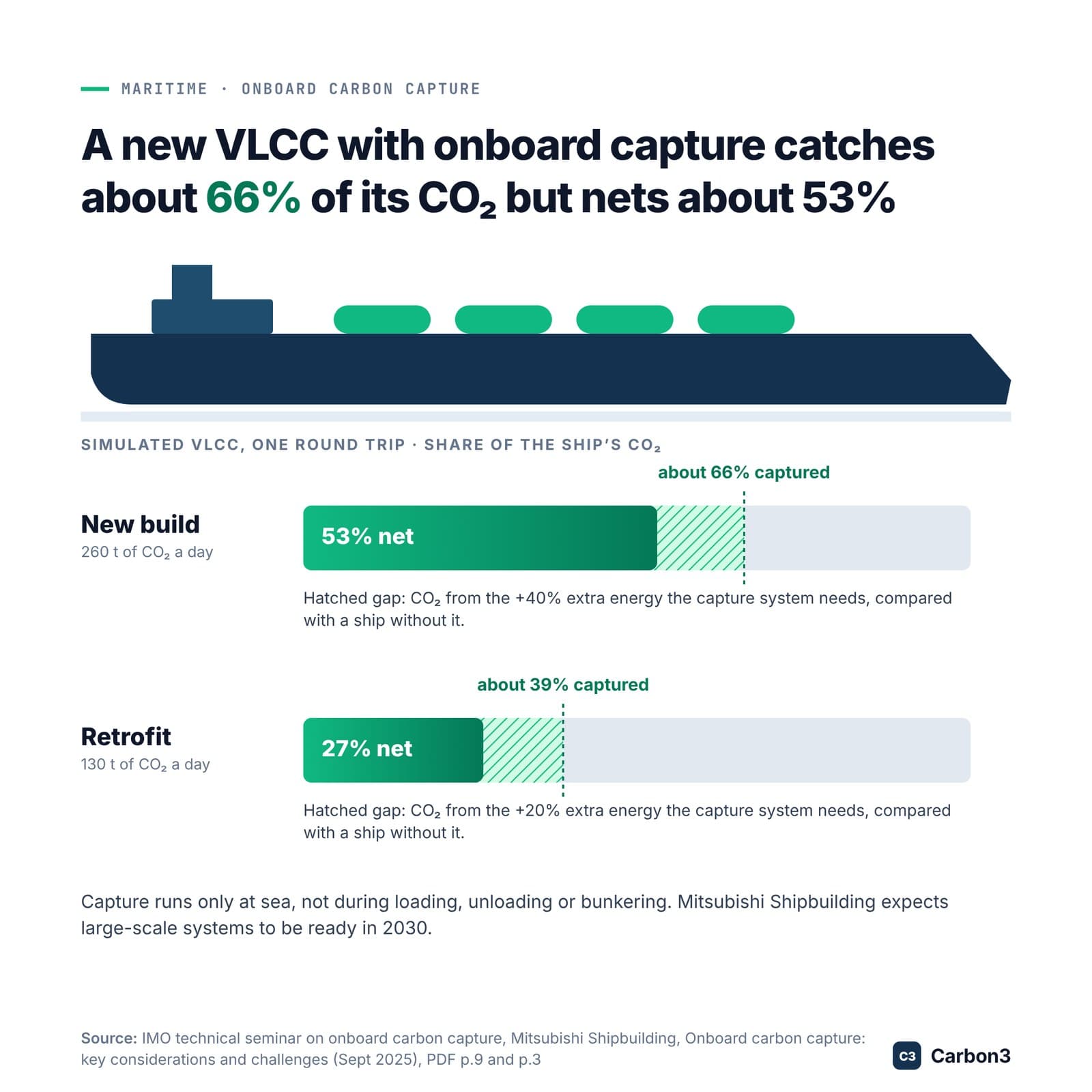
Onboard carbon capture on a tanker catches 66% of CO2 but nets about 53%
A Mitsubishi Shipbuilding case study shows how the extra energy a capture system needs shrinks its real emissions reduction, which is the figure buyers should ask for.
Read the articleSector: Maritime
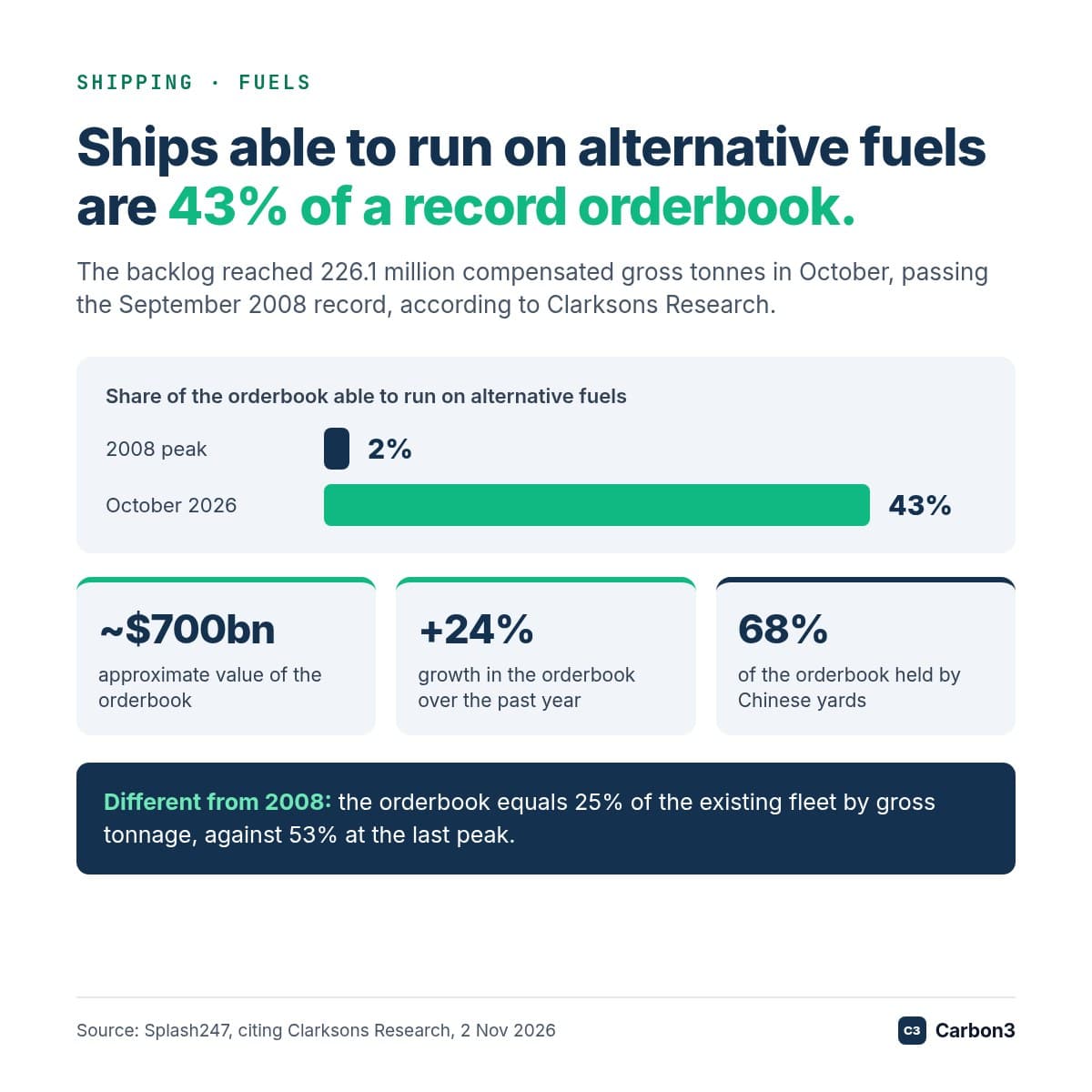
Ships able to run on alternative fuels are 43% of a record orderbook
The global shipbuilding backlog reached 226.1 million compensated gross tonnes in October, passing its 2008 record, according to Clarksons Research.
Read the articleTransition finance
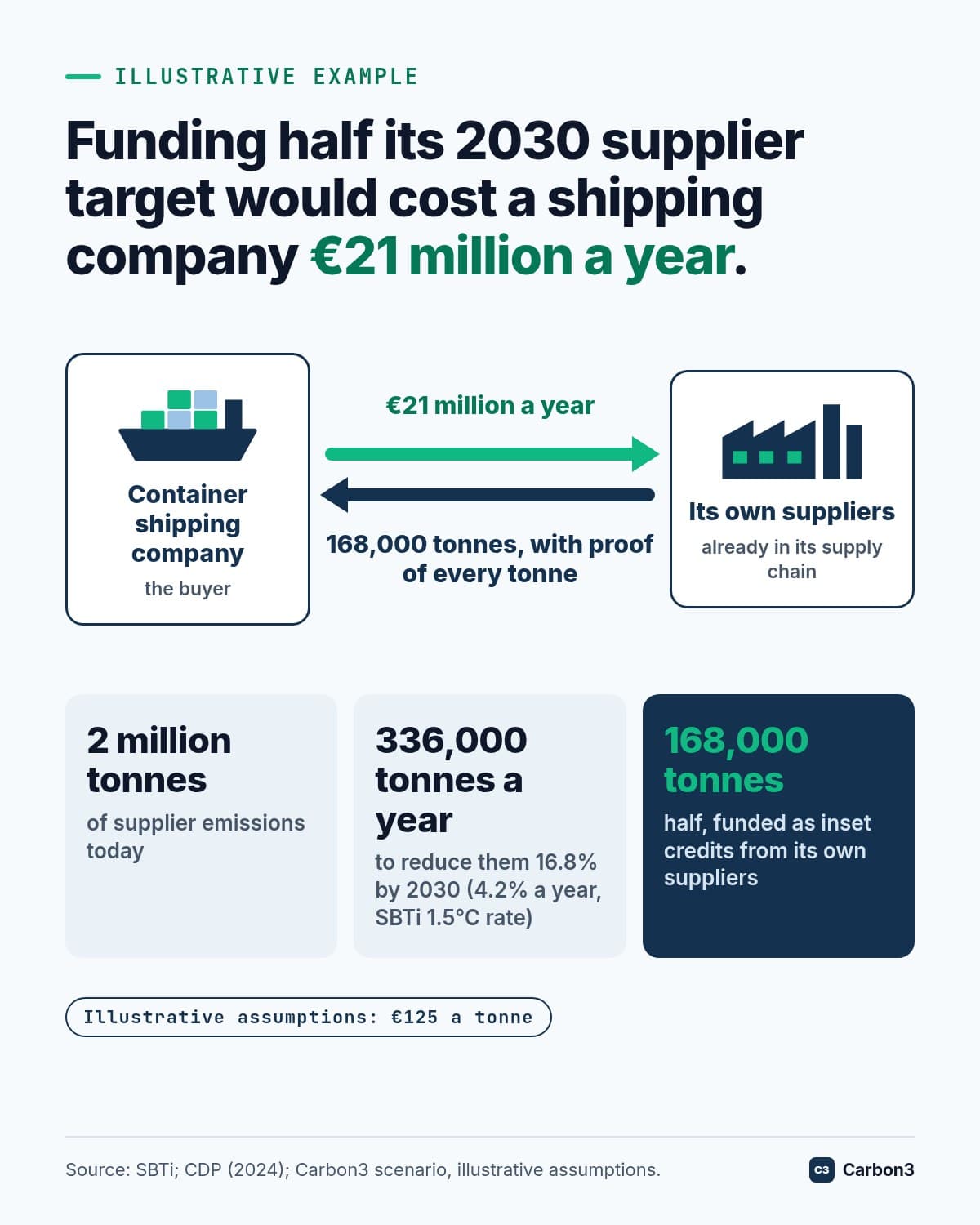
Funding half a shipping company's 2030 supplier target would cost €21 million a year
An illustrative Carbon3 example: a container shipping company with 2 million tonnes of supplier emissions funds half of its required reductions at suppliers it already buys from, with proof of every tonne.
Read the article
See the companies behind these figures in the Data Hub.
Look up your suppliers’ emissions and targets, free.