Ships able to run on alternative fuels are 43% of a record orderbook
The global shipbuilding backlog reached 226.1 million compensated gross tonnes in October, passing its 2008 record, according to Clarksons Research. Whether the new ships reduce emissions depends on who pays for the fuel.
By Carbon3 team2 min read
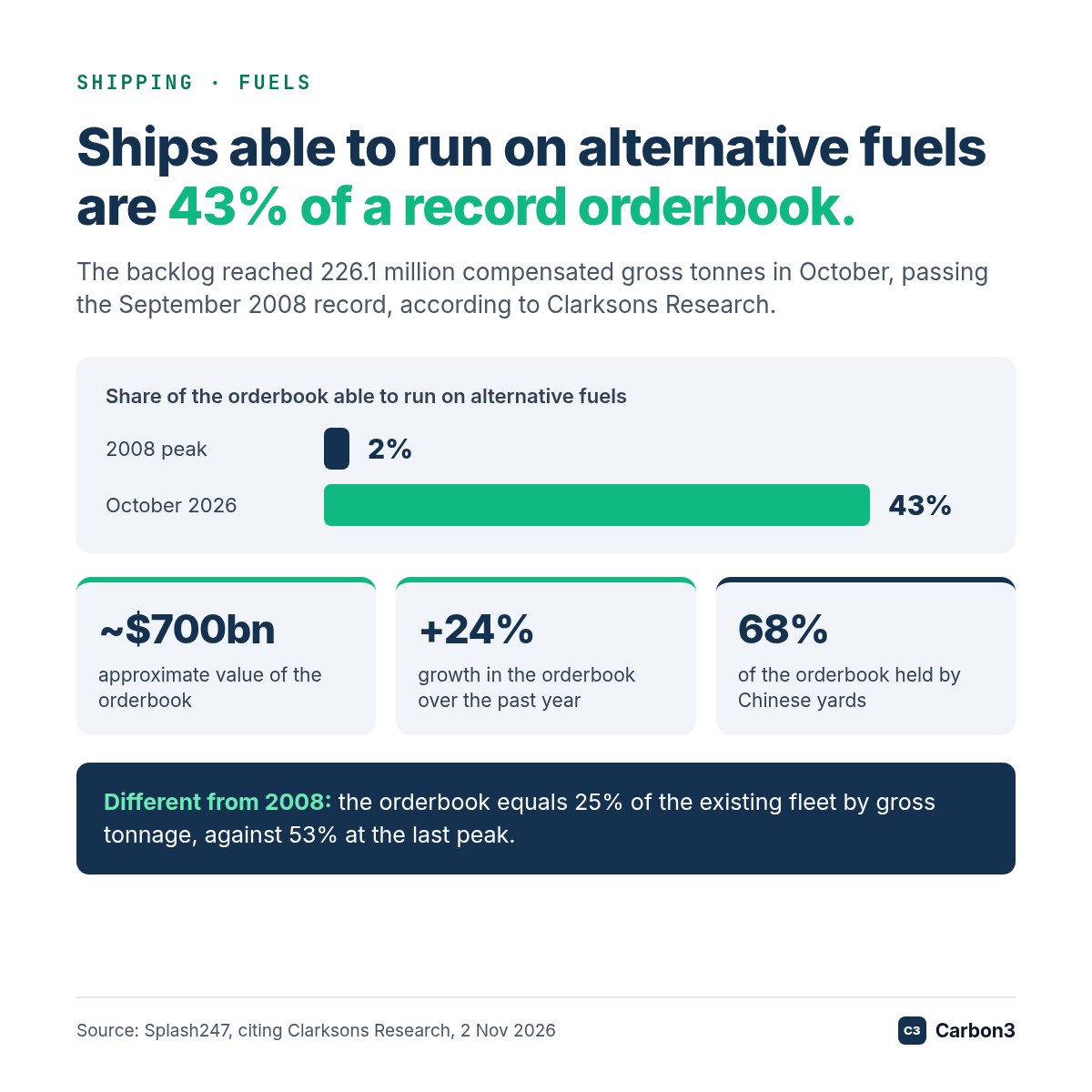
The global shipbuilding orderbook has passed its 2008 record. According to Clarksons Research, as reported by Splash247 on 2 November 2026, the backlog reached 226.1 million compensated gross tonnes in October, just above the September 2008 peak of 225.5 million. Ships able to run on alternative fuels make up 43% of it, against just 2% at the previous peak.
Able to burn a cleaner fuel is not the same as buying one
A dual-fuel engine gives a ship the option to run on a cleaner fuel, but the option only reduces emissions when someone pays for the fuel. Alternative fuels cost more than conventional marine fuel, so whether these ships reduce emissions depends on who covers that difference once they sail: the shipowner, the charterer or the cargo owners whose goods are on board.
A different orderbook from 2008
The orderbook is worth about $700 billion and has grown 24% in a year. Clarksons projects record deliveries in 2027, at 64 million compensated gross tonnes, 18% above the previous record set in 2010.
The market looks very different from 2008. The backlog equals 25% of the existing fleet by gross tonnage, against 53% at the last peak. Containerships account for 31% of the orderbook, almost double their 2008 share, and gas carriers have risen from 5% to 15%. Chinese yards hold 68% of the orderbook, twice their 2008 share.
Where cargo owners come in
For cargo owners, shipping emissions sit in Scope 3. A ship that can run on a cleaner fuel gives them a way to reduce those emissions, but only if the extra fuel cost is funded and the resulting reduction is recorded against their cargo.
Insetting, which means financing emissions reductions in a company's own value chain, is built for that kind of arrangement. Once a reduction has been checked against a verification report, the project developer issues inset credits on the Carbon3 registry, so each reduction is claimed only once. This is insetting, not offsetting, and the difference is explained at carbon3.net/insets-vs-offsets.
Claim treatment depends on the applicable reporting framework.
When these ships arrive, the open question is which cargo owners will be ready to pay for the cleaner fuel they were built to burn.
Source: Splash247, citing Clarksons Research, 2 November 2026
Learn more
How insetting works in shipping
Originally published on LinkedIn, 2 November 2026.
Read more from the research team.
Sector: Maritime
An electric barge in Vietnam gives Nike's cargo a saving that can be measured
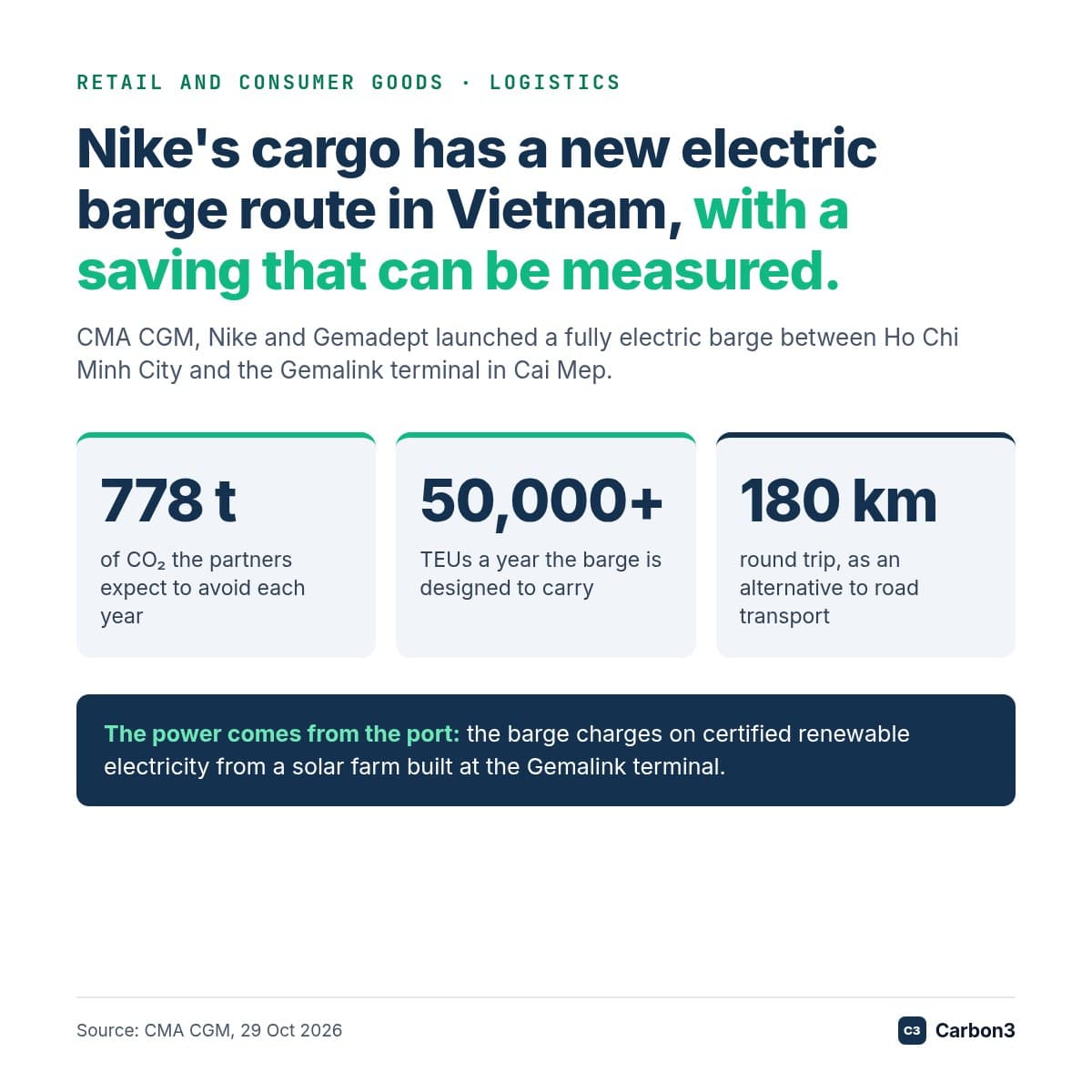
CMA CGM, Nike and Gemadept have launched a fully electric barge between Ho Chi Minh City and the Gemalink terminal in Cai Mep, expected to avoid about 778 tonnes of CO₂ a year.
Read the articleSector: Maritime
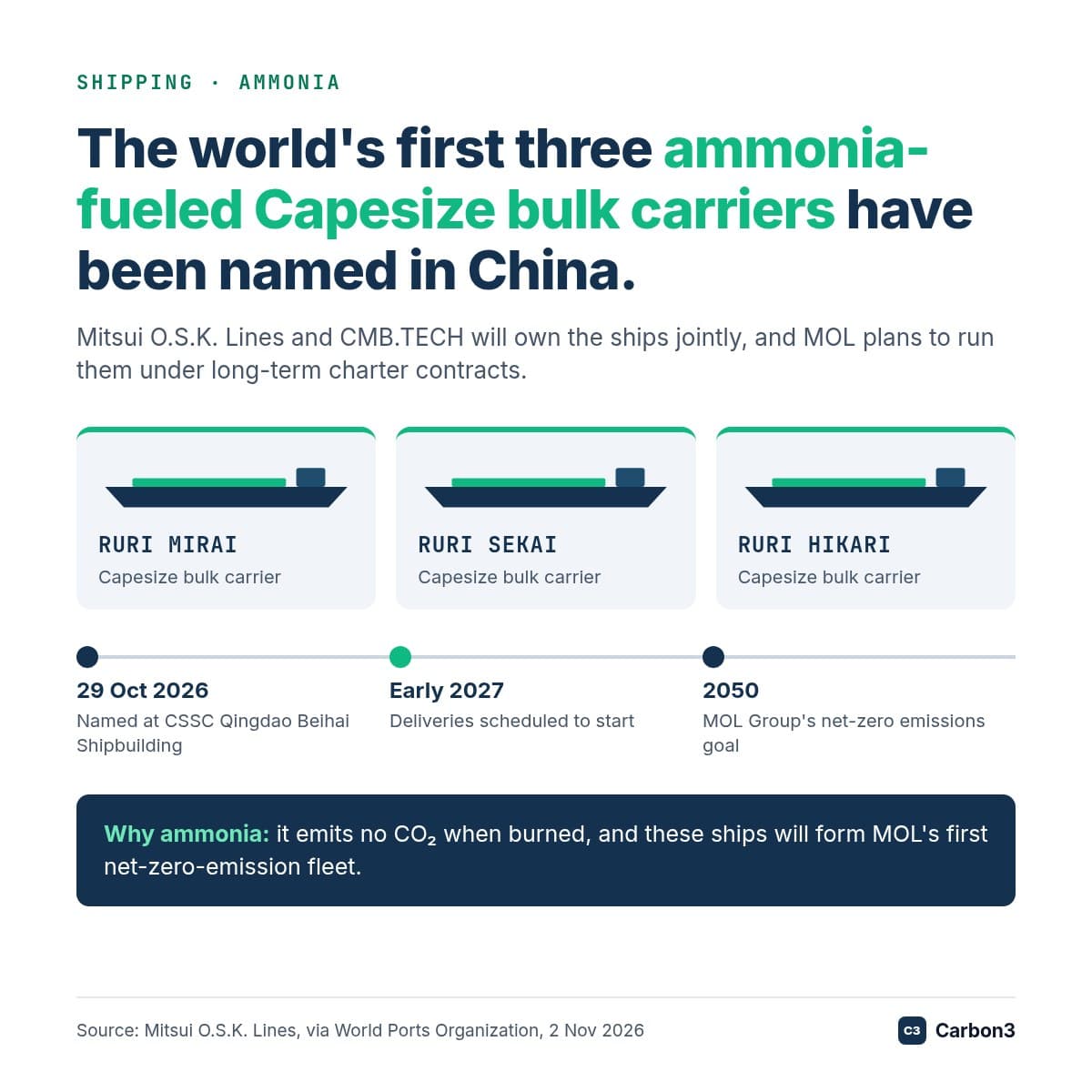
The first three ammonia-fueled Capesize bulk carriers have been named in China
Mitsui O.S.K.
Read the articleSector: Maritime
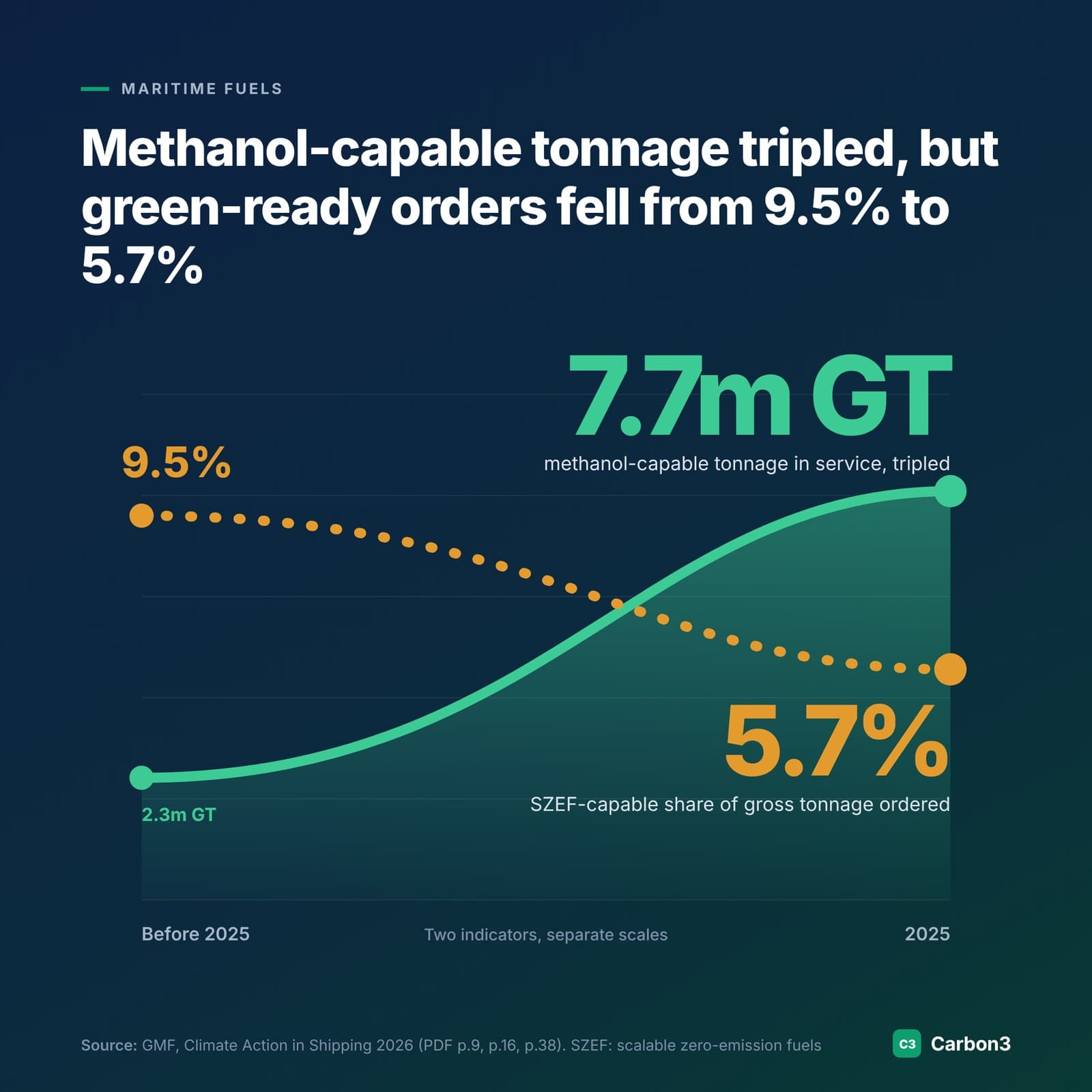
2025 delivered a record fleet of green-ready ships, and a weaker orderbook
Methanol-capable tonnage in service tripled to 7.7 million gross tonnes, while ships able to run on scalable zero-emission fuels fell from 9.5% to 5.7% of tonnage ordered.
Read the article
See the companies behind these figures in the Data Hub.
Look up your suppliers’ emissions and targets, free.