2025 delivered a record fleet of green-ready ships, and a weaker orderbook
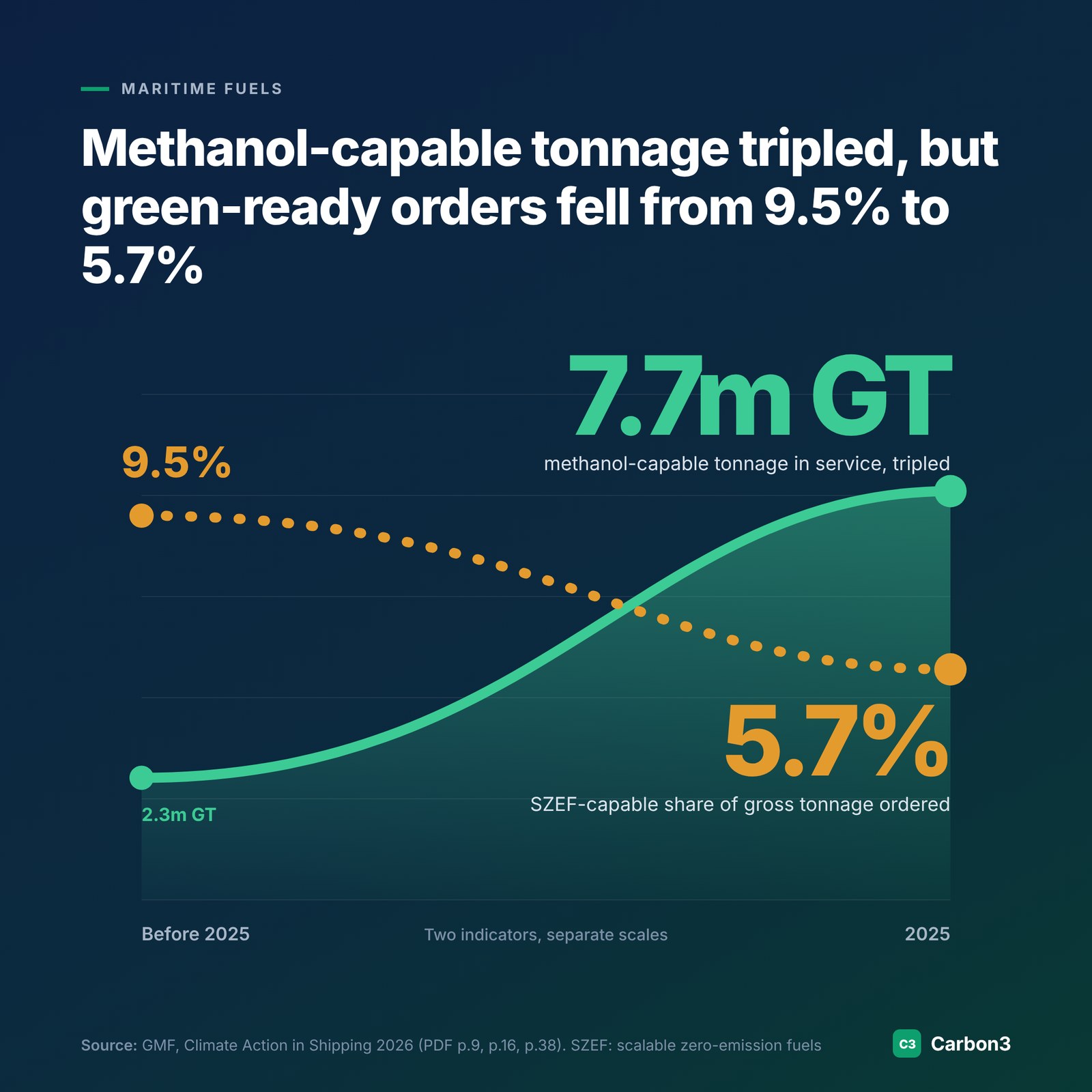
Methanol-capable tonnage in service tripled to 7.7 million gross tonnes, while ships able to run on scalable zero-emission fuels fell from 9.5% to 5.7% of tonnage ordered.
By Carbon3 team2 min read
2025 delivered a record fleet of green-ready ships, and a weaker orderbook.
The Global Maritime Forum's Climate Action in Shipping: 2026 Edition shows two trends moving in opposite directions over the same year.
Methanol-capable tonnage in service tripled, from 2.3 to 7.7 million gross tonnes. More ships able to run on methanol are now on the water than ever before.
At the same time, ships able to run on scalable zero-emission fuels fell from 9.5% to 5.7% of gross tonnage ordered, as owners shifted toward LNG dual-fuel.
Today's orders set tomorrow's fleet
Ships ordered now will sail for decades. The engines and fuel systems specified in this year's orderbook decide which fuels the fleet can burn well into the 2040s and beyond.
A falling share of orders able to use scalable zero-emission fuels means fewer future vessels designed for the fuels that hydrogen and e-fuel developers plan to produce. A fleet of methanol-capable ships in service is a strong start, but the orderbook is the leading signal of where demand goes next.
Owners need fuel; fuel developers need offtake
The two sides wait on each other. Shipowners hesitate to commit to new fuel-capable vessels without confidence that fuel will be available at a workable price. Fuel and hydrogen developers need offtake agreements before they can reach investment decisions and build supply.
Breaking that loop needs someone willing to commit to early volumes.
Where cargo owners come in
Cargo owners buy the transport, and the emissions from shipping their goods sit in their Scope 3 footprint. By co-funding early volumes of lower-emission fuel on the routes they use, they help create the demand that fuel developers need, and give shipowners a reason to order again.
On Carbon3, the reduction from those volumes can be measured, checked against a verification report and recorded as inset credits, linked to the fuel supply and voyages that delivered it. The cargo owner holds a verified record of a reduction inside its own value chain.
Claim treatment depends on the applicable reporting framework.
Source: Global Maritime Forum, Climate Action in Shipping: 2026 Edition.
Learn more
How insetting works in shipping
Originally published on LinkedIn, 22 October 2026.
Read more from the research team.
Sector: Maritime
Some of the cheapest shipping emissions to cut are burned at anchor
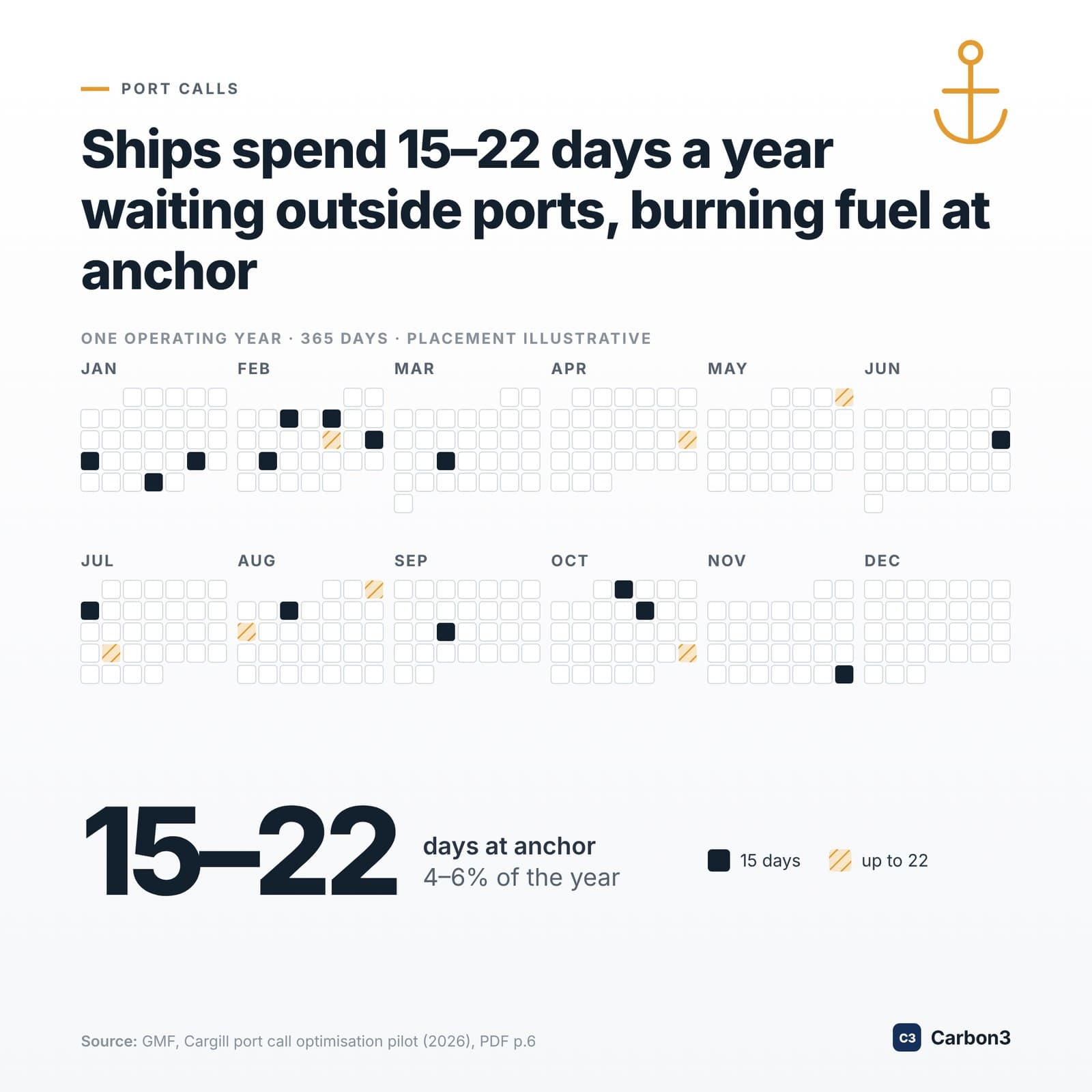
Ships spend 4–6% of their operating year waiting outside ports.
Read the articleSector: Maritime
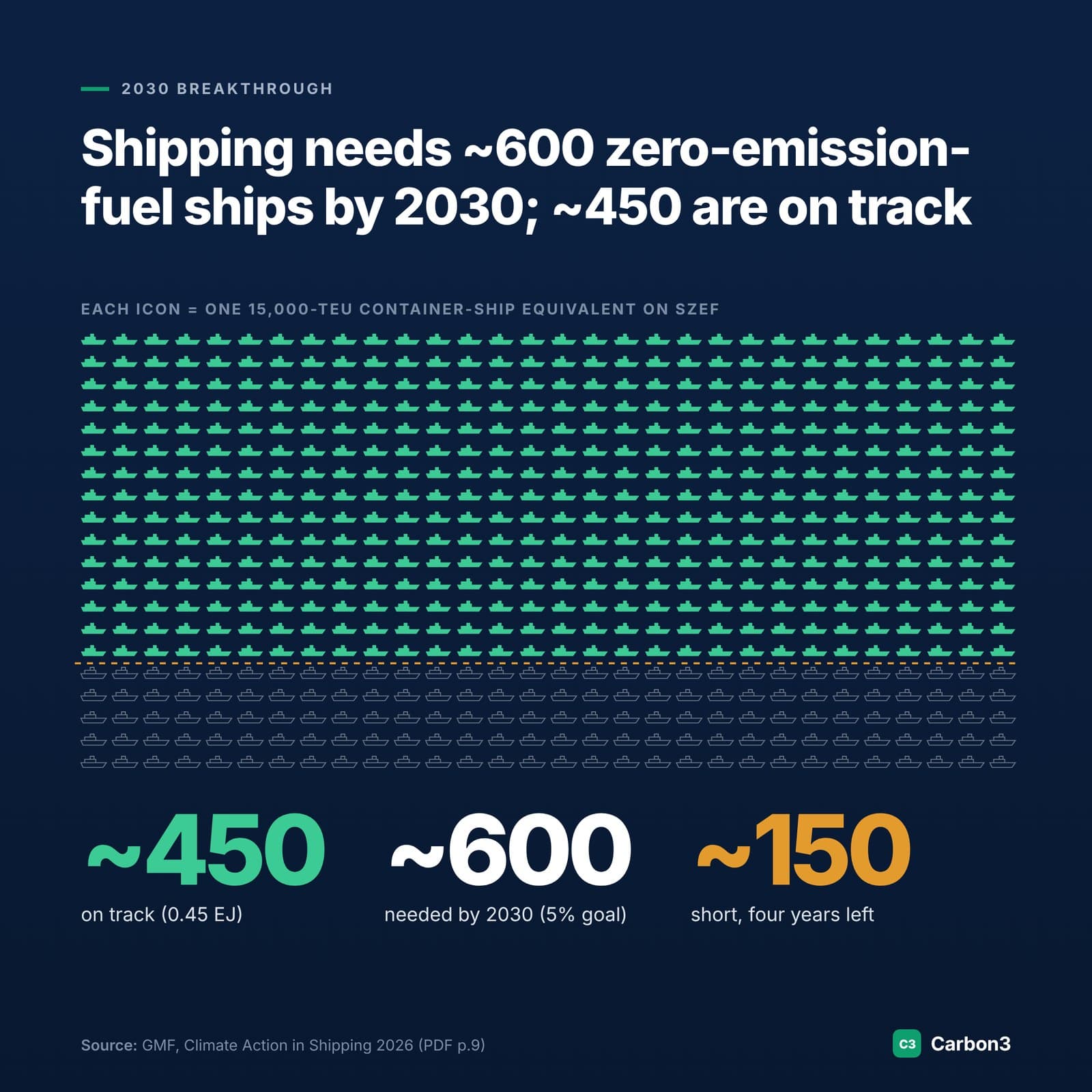
Shipping's 2030 fuel goal is about 150 ships short, with four years left
The Global Maritime Forum estimates the 5% breakthrough goal needs about 600 large container ship equivalents on scalable zero-emission fuels by 2030.
Read the articleSector: Maritime
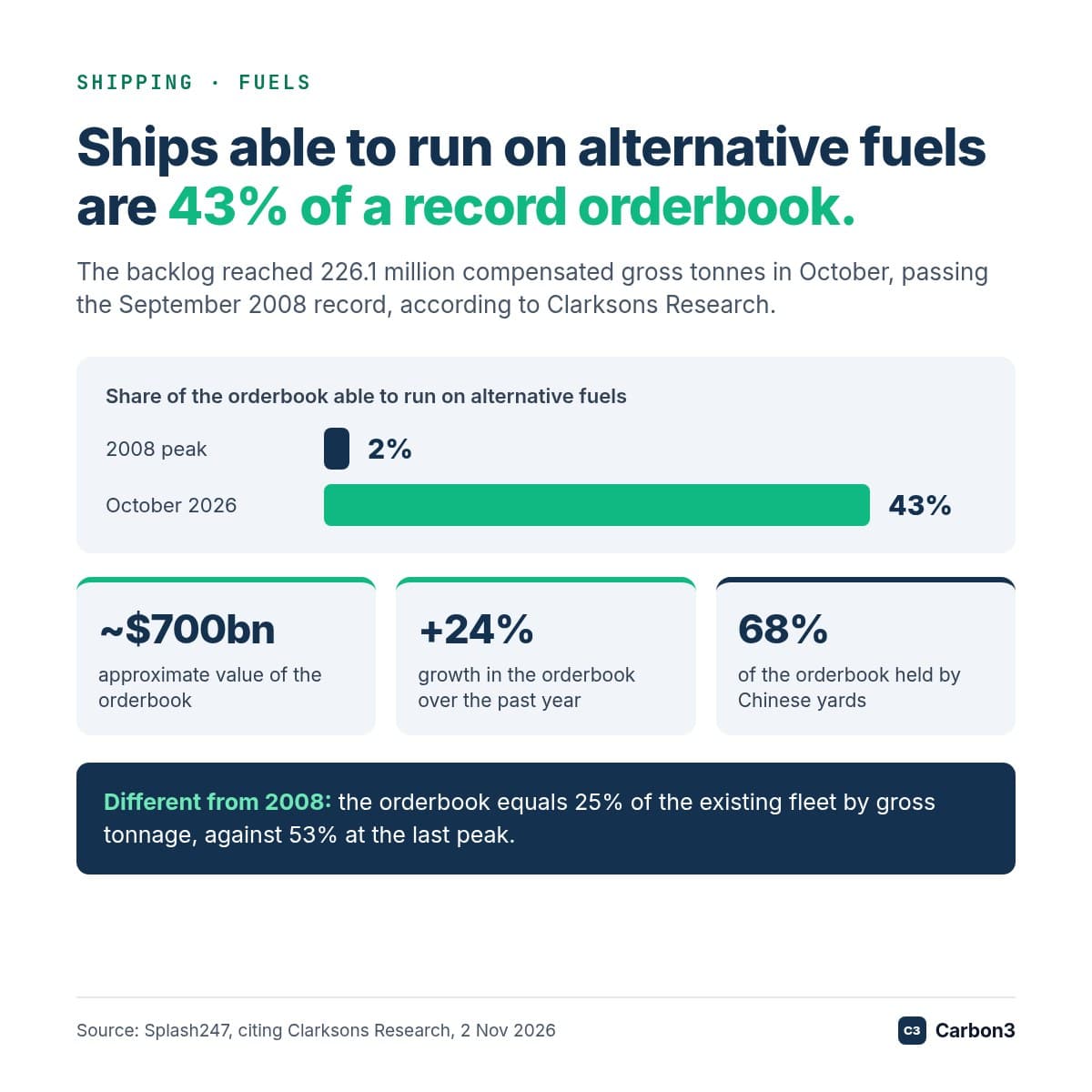
Ships able to run on alternative fuels are 43% of a record orderbook
The global shipbuilding backlog reached 226.1 million compensated gross tonnes in October, passing its 2008 record, according to Clarksons Research.
Read the article
See the companies behind these figures in the Data Hub.
Look up your suppliers’ emissions and targets, free.