Shipping's 2030 fuel goal is about 150 ships short, with four years left
The Global Maritime Forum estimates the 5% breakthrough goal needs about 600 large container ship equivalents on scalable zero-emission fuels by 2030. About 450 are on track.
By Carbon3 team2 min read
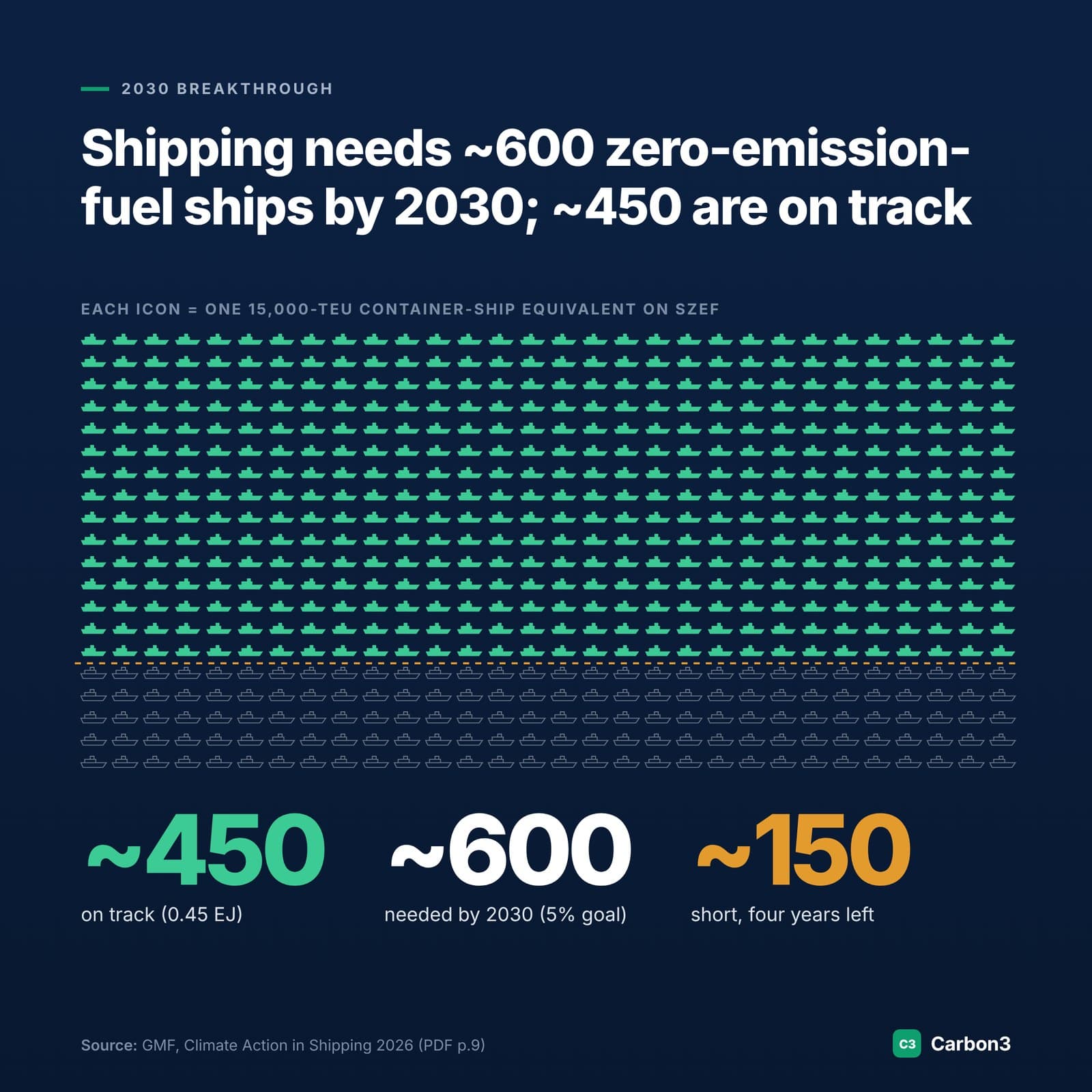
Shipping's 2030 fuel goal is about 150 ships short, with four years left.
The industry's breakthrough goal is for scalable zero-emission fuels to make up 5% of international shipping's energy use by 2030. In its Climate Action in Shipping: 2026 Edition, the Global Maritime Forum translates that goal into ships.
The gap in numbers
By the Forum's estimate, reaching 5% needs about 600 large container ships, measured in 15,000 TEU equivalents, running on scalable zero-emission fuels by 2030. Expected demand of 0.45 EJ puts about 450 of those on track.
That leaves a shortfall of roughly 150 ship equivalents, with four years to close it.
Why the next decisions count most
Ships are only half of the picture. Each of them needs fuel, and the fuel needs plants that are built, financed and producing.
Fuel and hydrogen projects take years to move from final investment decision to delivery. In practice, that means the projects reaching FID now are the ones that can deliver volumes by 2030. Projects that wait for clearer demand signals risk arriving after the window has closed.
For fuel and hydrogen developers, the challenge is firm offtake. For shipowners and operators, it is the cost premium of running on new fuels before they are widely available.
Where cargo owners come in
Cargo owners sit at the end of this chain. The freight they buy is where the emissions from these voyages land in their own Scope 3 reporting.
By co-funding early volumes of zero-emission fuel on the routes they already use, cargo owners help close the gap between what is on track and what the 2030 goal needs. They also give developers and operators the demand signal that early projects depend on.
On Carbon3, the verified reduction from that fuel switch can be recorded once as an inset credit and held by the cargo owner that paid for it, linked to the fuel, the voyages and the operator. Several shippers on the same trade can share a premium and each hold their verified share, without any tonne being counted twice.
Insetting is not offsetting. The reduction happens on the freight the cargo owner already uses.
Claim treatment depends on the applicable reporting framework.
Source: Global Maritime Forum, Climate Action in Shipping: 2026 Edition.
Originally published on LinkedIn, 23 October 2026.
The Carbon3 Newsletter
Weekly analysis of industrial decarbonization and insetting across Scope 1 to 3, from the Carbon3 team.
Read more from the research team.
Sector: Maritime
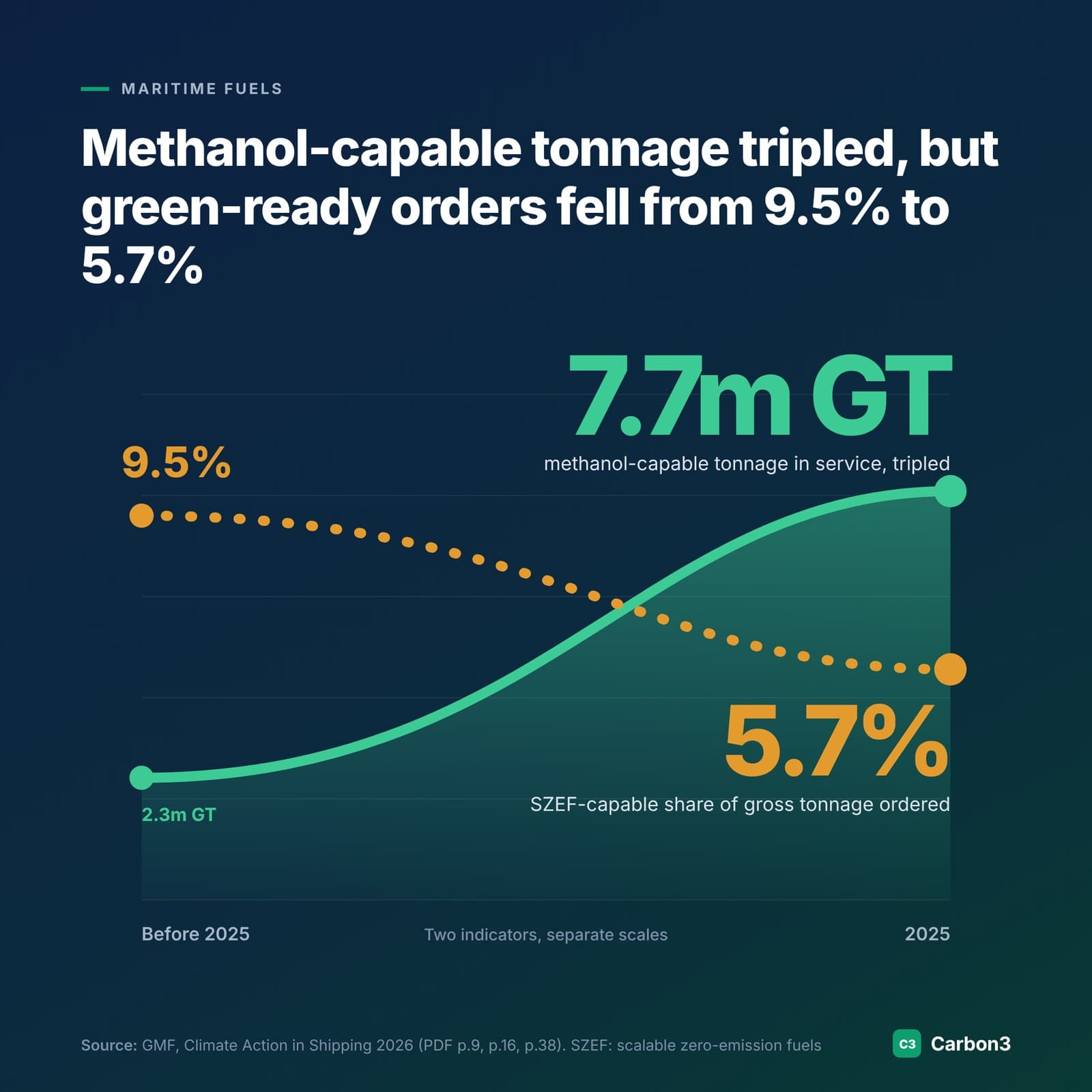
2025 delivered a record fleet of green-ready ships, and a weaker orderbook
Methanol-capable tonnage in service tripled to 7.7 million gross tonnes, while ships able to run on scalable zero-emission fuels fell from 9.5% to 5.7% of tonnage ordered.
Read the articleSector: Maritime
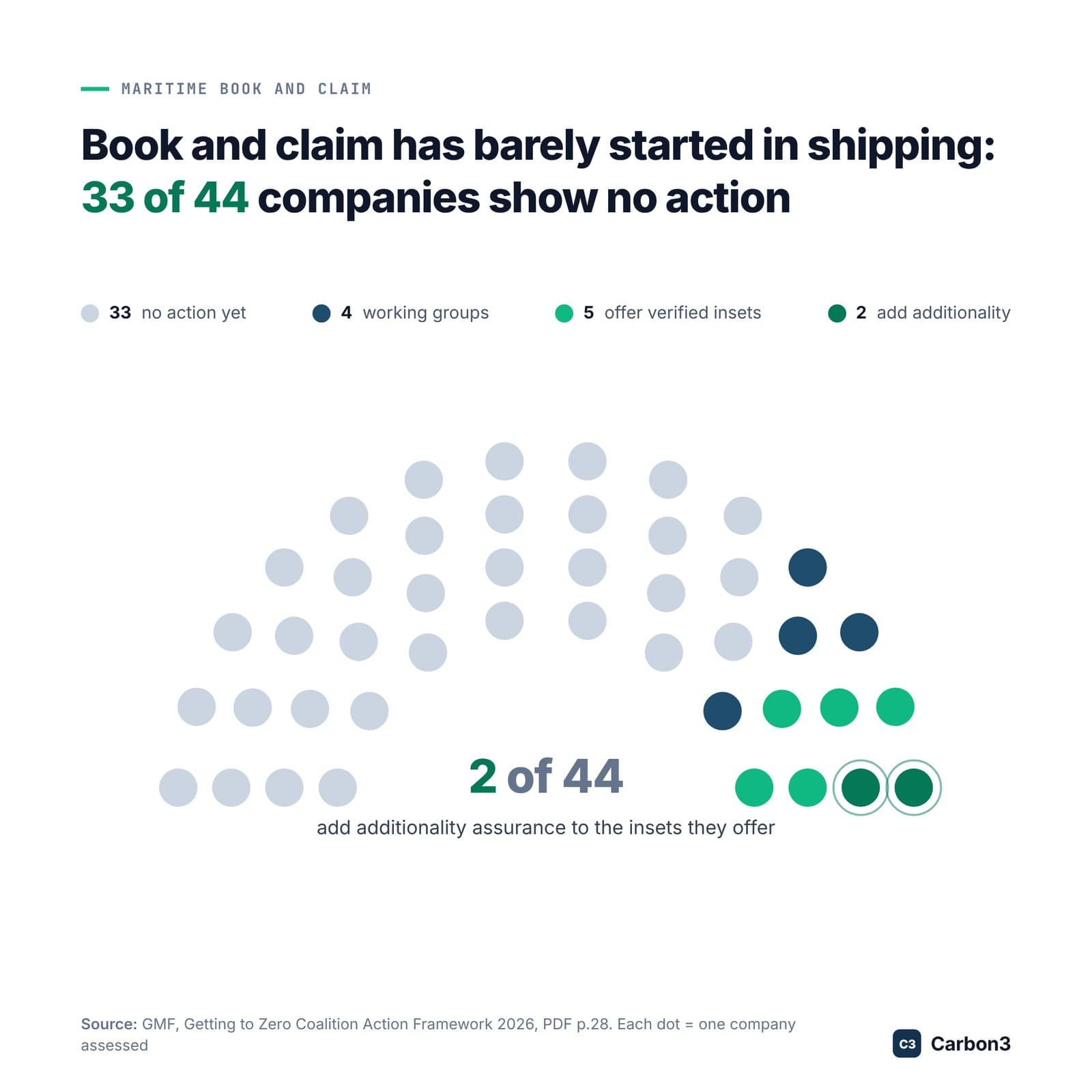
Book and claim has barely started in shipping
The Getting to Zero Coalition assessed 44 shipping companies on book and claim and found 33 showing insufficient action, while five offer verified insets.
Read the articleSector: Maritime
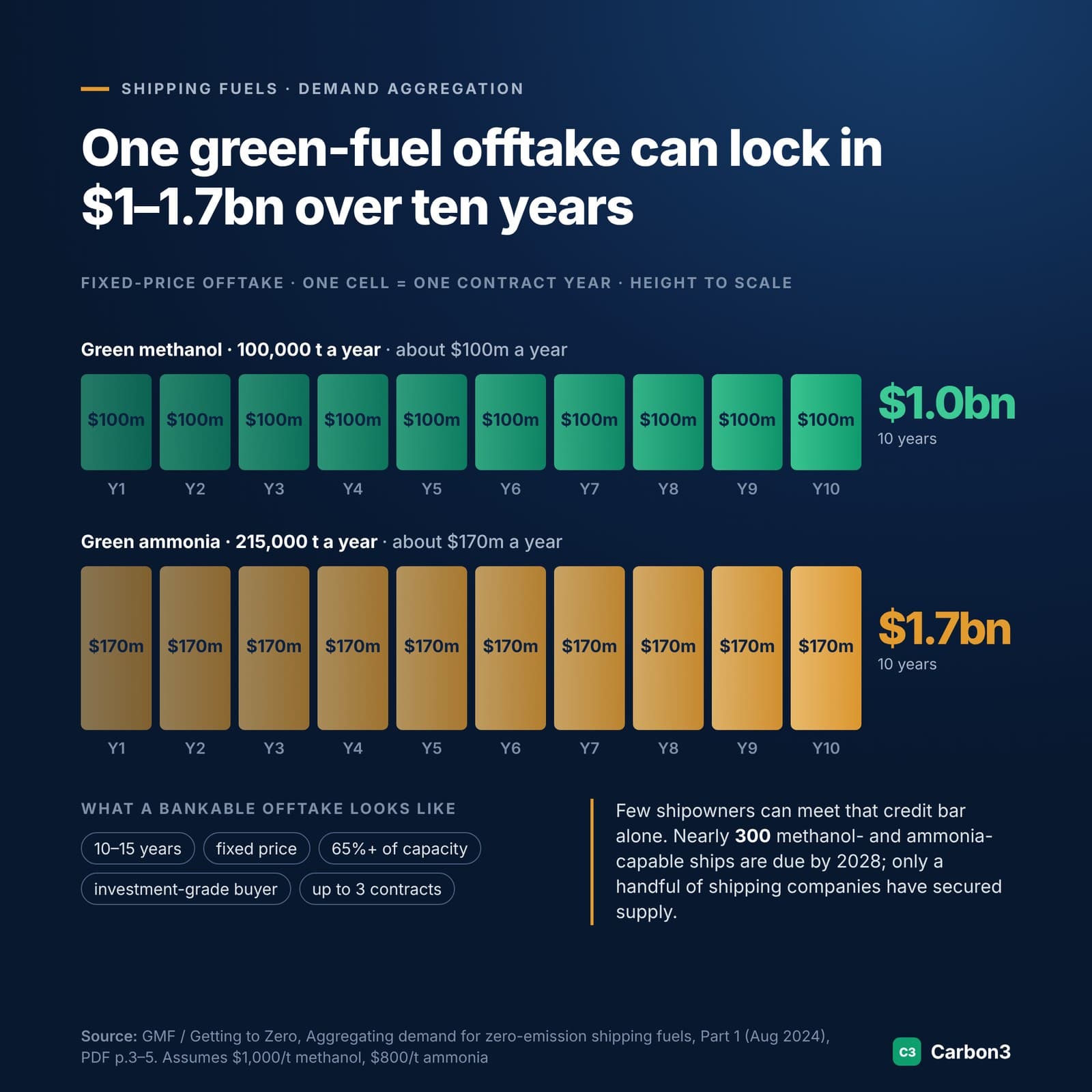
One green shipping fuel contract can commit a buyer to $1 billion or more
The Global Maritime Forum and the Getting to Zero Coalition price a 10-year green methanol or ammonia offtake at $1 billion to $1.7 billion, while nearly 300 capable ships are due by 2028.
Read the article
See the companies behind these figures in the Data Hub.
Look up your suppliers’ emissions and targets, free.