Transition investment hit a record, but not where heavy industry needs it
BloombergNEF counts a record $2.08 trillion in energy transition investment in 2024, yet hydrogen fell 42% and carbon capture and clean industry each roughly halved.
By Carbon3 team2 min read
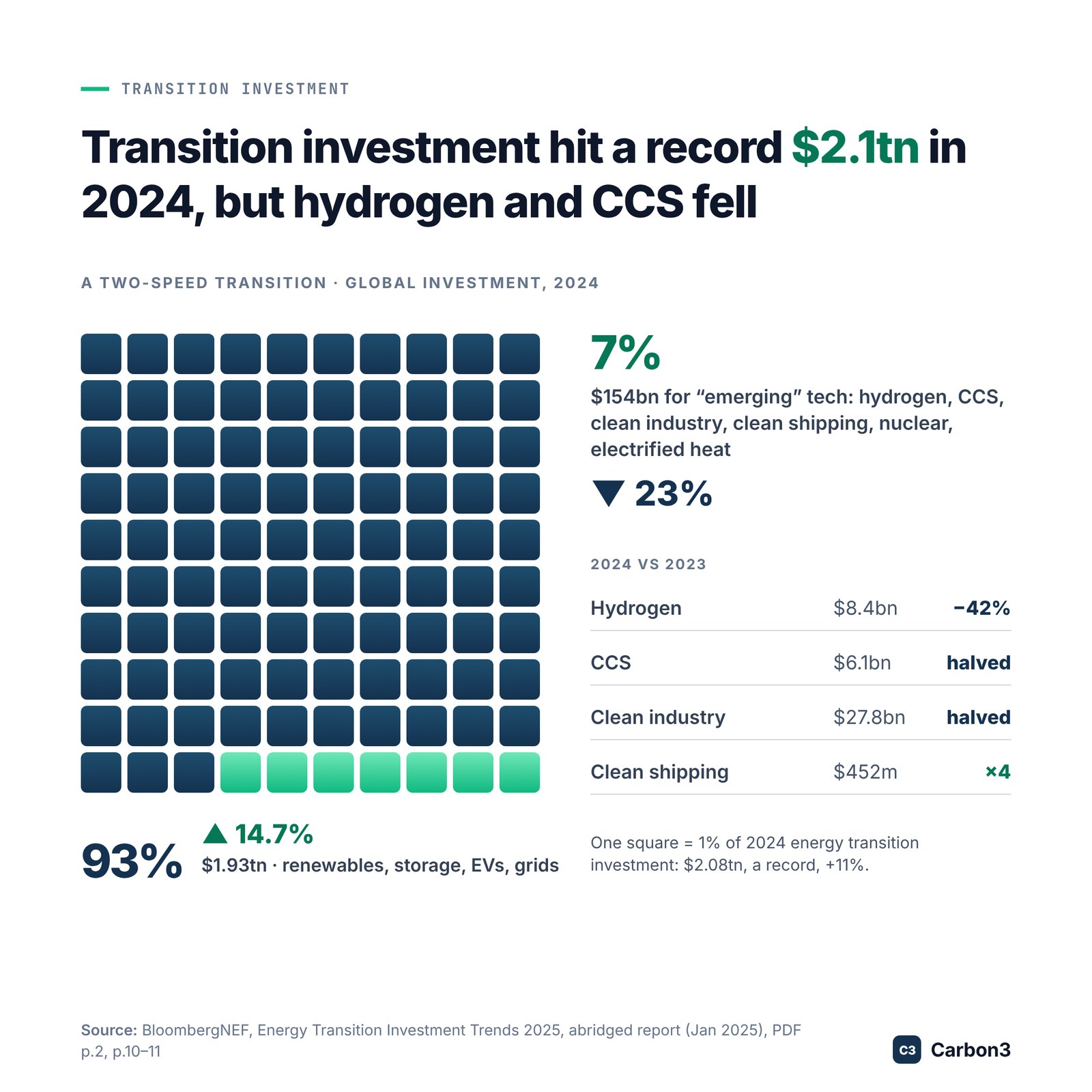
Investment in the energy transition set another record last year. A closer look at where the money went shows that much of heavy industry was left behind.
A record year, unevenly shared
BloombergNEF's Energy Transition Investment Trends 2025 report finds that global energy transition investment reached a record $2.08 trillion in 2024, up 11% on the year before.
Most of that capital went to technologies that are already mature. Renewables, storage, electric vehicles and grids took 93% of the total, or $1.93 trillion, an increase of 14.7%.
The emerging sectors that heavy industry depends on moved the other way. Investment in them fell 23% to $154 billion. Hydrogen dropped 42% to $8.4 billion, while carbon capture and clean industry each roughly halved. Clean shipping was the bright spot, with investment quadrupling to $452 million.
What this means for fuel and industrial projects
For developers of clean fuels and industrial projects, the headline number can be misleading. A record year for the transition as a whole does not mean that capital is easy to find for a hydrogen plant, a carbon capture unit or a low-carbon process line. In practice, it is scarcer than the headlines suggest.
Investors in these projects look for evidence that the output will be bought. Additionally, they want to know that the emissions reductions a project delivers will be measured and claimed in a way that holds up.
Offtake from the value chain
Offtake from value-chain buyers can provide that evidence. When a company commits to buy lower-carbon fuel or materials from a project in its own supply chain, the project gains a customer, and the buyer reduces emissions inside its own Scope 3 footprint. This is insetting, not offsetting, and the difference is explained at carbon3.net/insets-vs-offsets.
The project developer issues credits on the Carbon3 registry once a verification report is on file. Each reduction then has one owner and one claim, so developers, buyers and investors can all see the same record.
Taken together, a committed buyer and a verified, single-claim record of the reductions strengthen the case a developer can put to investors in sectors that the record year largely passed by.
Claim treatment depends on the applicable reporting framework.
Correction, 30 October 2026: An earlier version of this article said the reductions behind Carbon3 credits are independently verified. Credits are issued once a verification report is on file. Carbon3 asks for a verifier that is independent of the project, but the registry does not yet check who wrote the report.
Source: BloombergNEF, Energy Transition Investment Trends 2025.
Learn more
How insetting works for low-carbon fuels
Originally published on LinkedIn, 29 October 2026.
Read more from the research team.
Transition finance
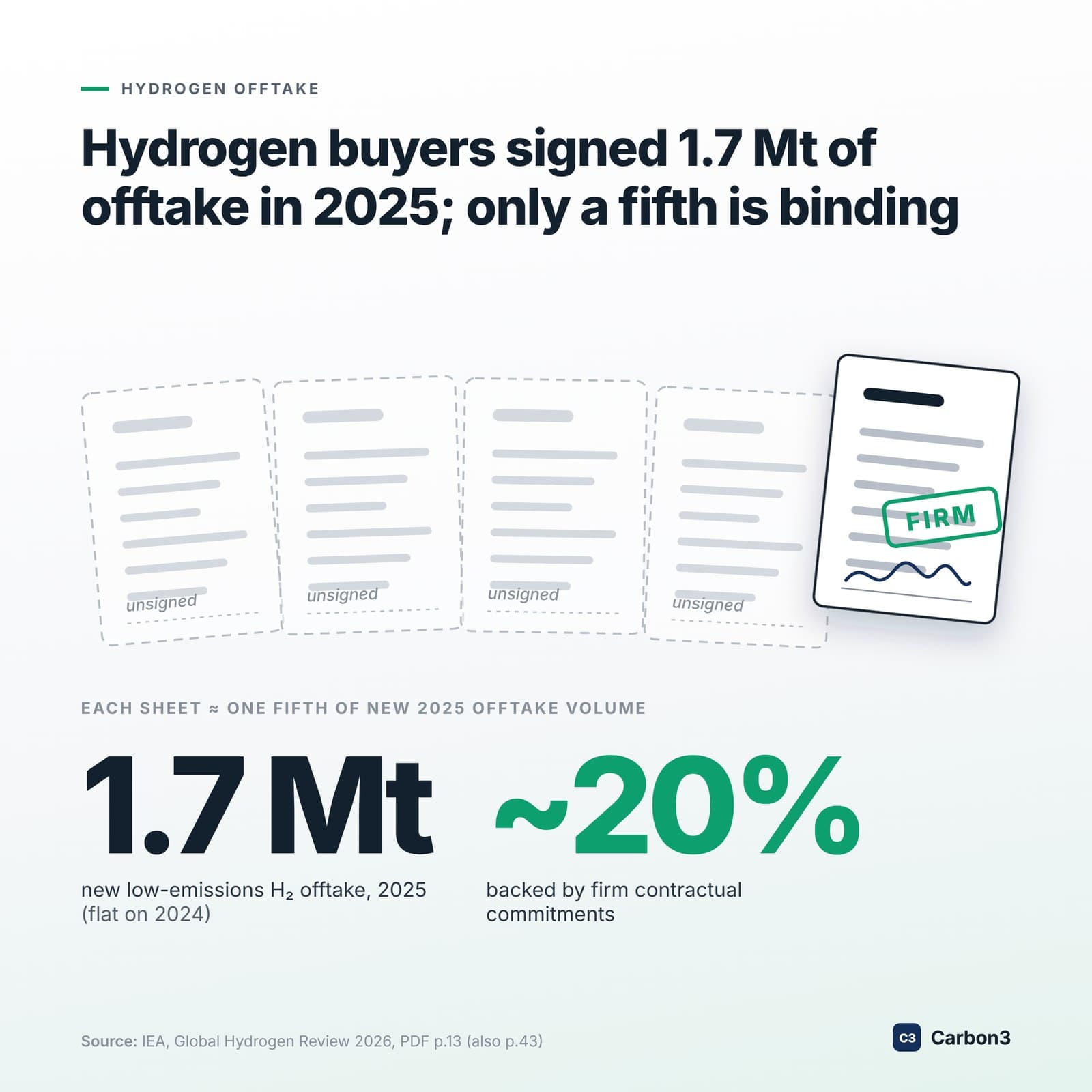
Hydrogen has a demand problem, and the contracts show it
The IEA's Global Hydrogen Review 2026 finds new low-emissions hydrogen offtake was about 1.7 Mt in 2025, and only around 20% of newly signed volumes were firm.
Read the articleTransition finance
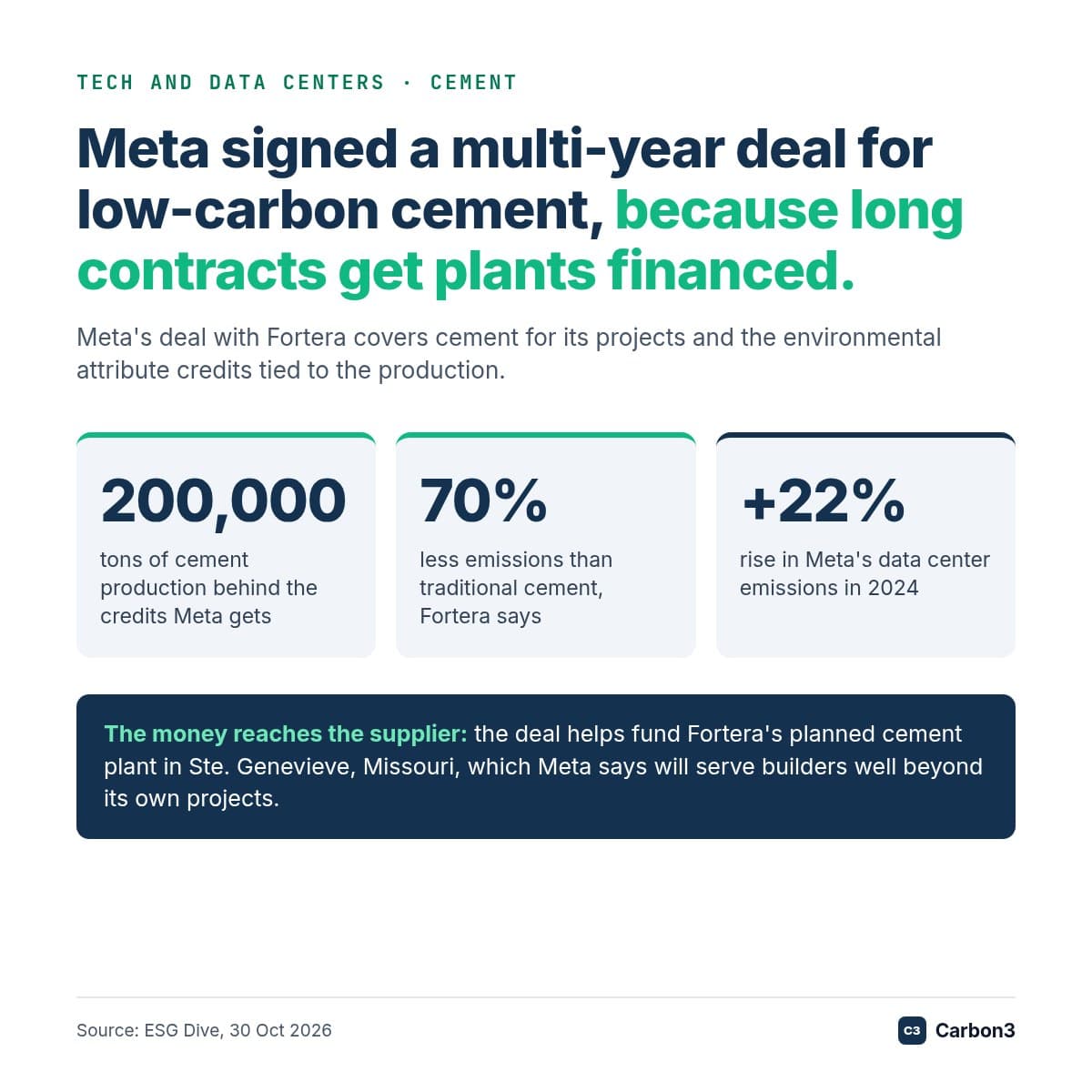
Meta signed a multi-year cement deal because long contracts get plants financed
ESG Dive reports that Meta's deal with Fortera covers low-carbon cement and the environmental attribute credits tied to 200,000 tons of production, and helps fund a new plant in Missouri.
Read the articleSector: Maritime
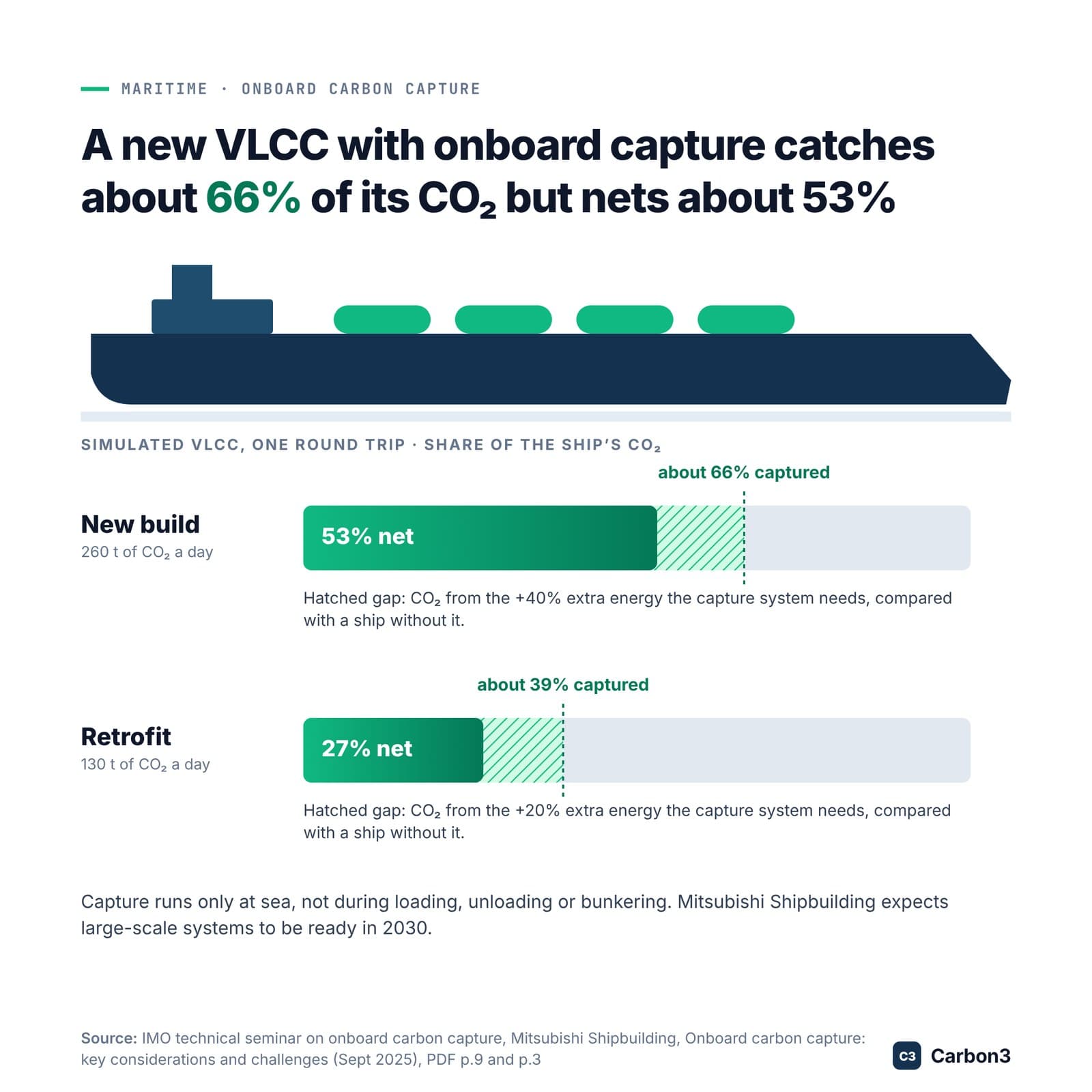
Onboard carbon capture on a tanker catches 66% of CO2 but nets about 53%
A Mitsubishi Shipbuilding case study shows how the extra energy a capture system needs shrinks its real emissions reduction, which is the figure buyers should ask for.
Read the article
See the companies behind these figures in the Data Hub.
Look up your suppliers’ emissions and targets, free.