Meta signed a multi-year cement deal because long contracts get plants financed
ESG Dive reports that Meta's deal with Fortera covers low-carbon cement and the environmental attribute credits tied to 200,000 tons of production, and helps fund a new plant in Missouri.
By Carbon3 team2 min read
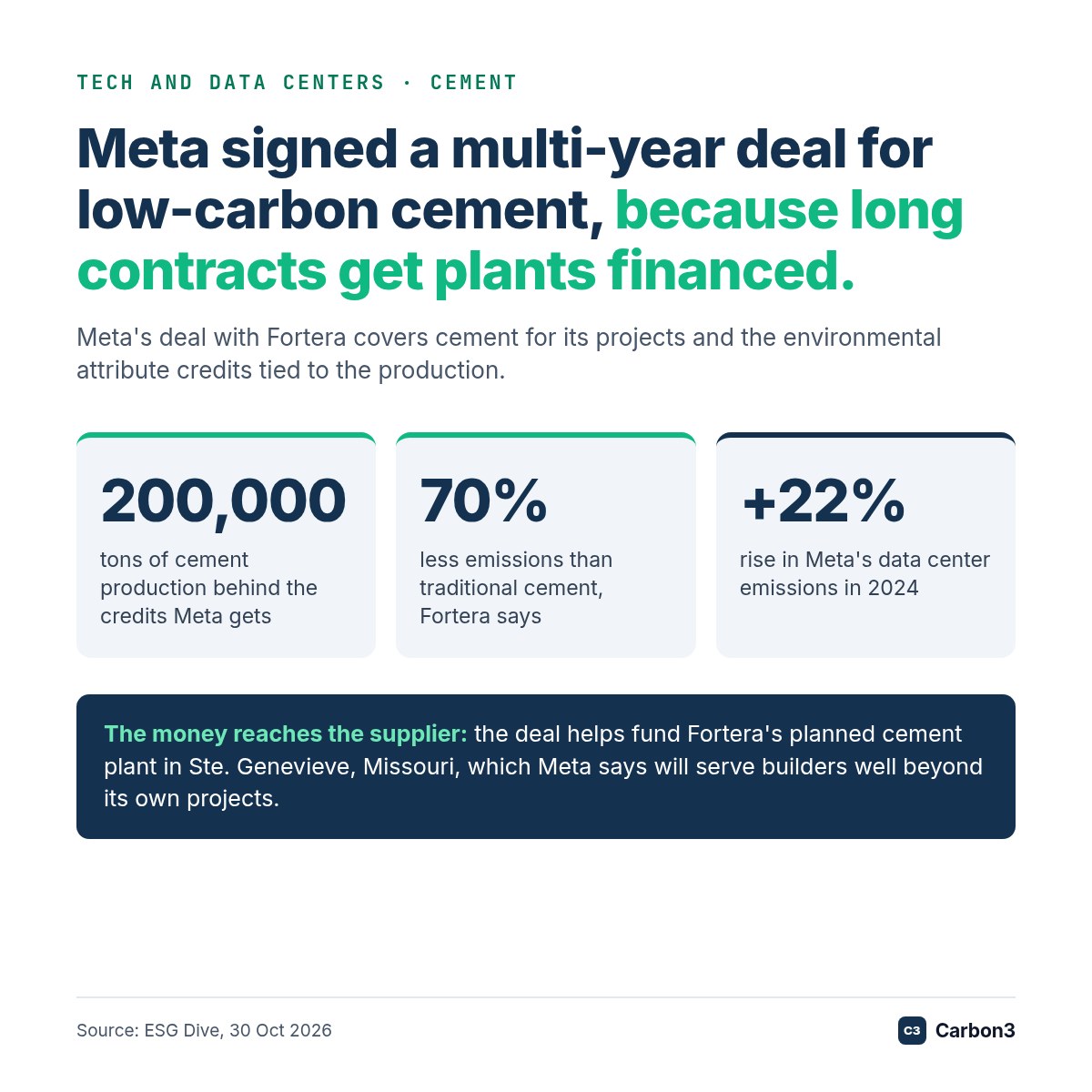
Meta has signed a multi-year deal with Fortera, a low-carbon cement manufacturer, ESG Dive reports. The deal gives Meta access to lower-carbon cement for building its projects, as well as the environmental attribute credits tied to 200,000 tons of Fortera's production.
The length is the real news
Fortera uses captured carbon dioxide in its cement, and the company says this produces a product with 70% less emissions than traditional cement. The more important detail, however, is the length of the contract.
Devon Lake, Meta's head of net zero strategy, said the company chose a multi-year deal because that "is what gets a cement plant financed." Meta's investment will help fund Fortera's cement plant in Ste. Genevieve, Missouri. Lake added that the agreement helps move the plant from plan to production and makes low-carbon cement available to builders well beyond Meta.
A one-off purchase buys a product, while a long contract gives a supplier the revenue certainty it needs to raise money for a new plant. That is the difference between paying for low-carbon material and paying for new low-carbon capacity.
The pressure sits in the supply chain
Meta's reason for acting is visible in its own numbers. Its data center emissions rose 22% in 2024, even as its Scope 1 and 2 emissions fell 3.5%. Construction materials such as cement sit in Scope 3, the emissions in a company's value chain, which is where much of the remaining pressure lies.
For heavy-industry suppliers, this is a model worth noting. A customer with a climate target can be the anchor that makes a new plant bankable.
Recording what the money buys
Deals like this raise a practical question about what the buyer can claim and how often. Insetting, which means financing emissions reductions in a company's own value chain, works best when each reduction has one clear record. Once a verification report is on file, the project developer issues inset credits on the Carbon3 registry, so each reduction is claimed only once. This is insetting, not offsetting, and the difference is explained at carbon3.net/insets-vs-offsets.
Claim treatment depends on the applicable reporting framework.
The open question is which heavy-industry supplier will be next to get a plant financed by a customer's climate target.
Source: ESG Dive, "Meta backs low-carbon cement with new Fortera deal" (30 October 2026).
Learn more
How insetting works in steel and cement
Originally published on LinkedIn, 31 October 2026.
Read more from the research team.
Transition finance
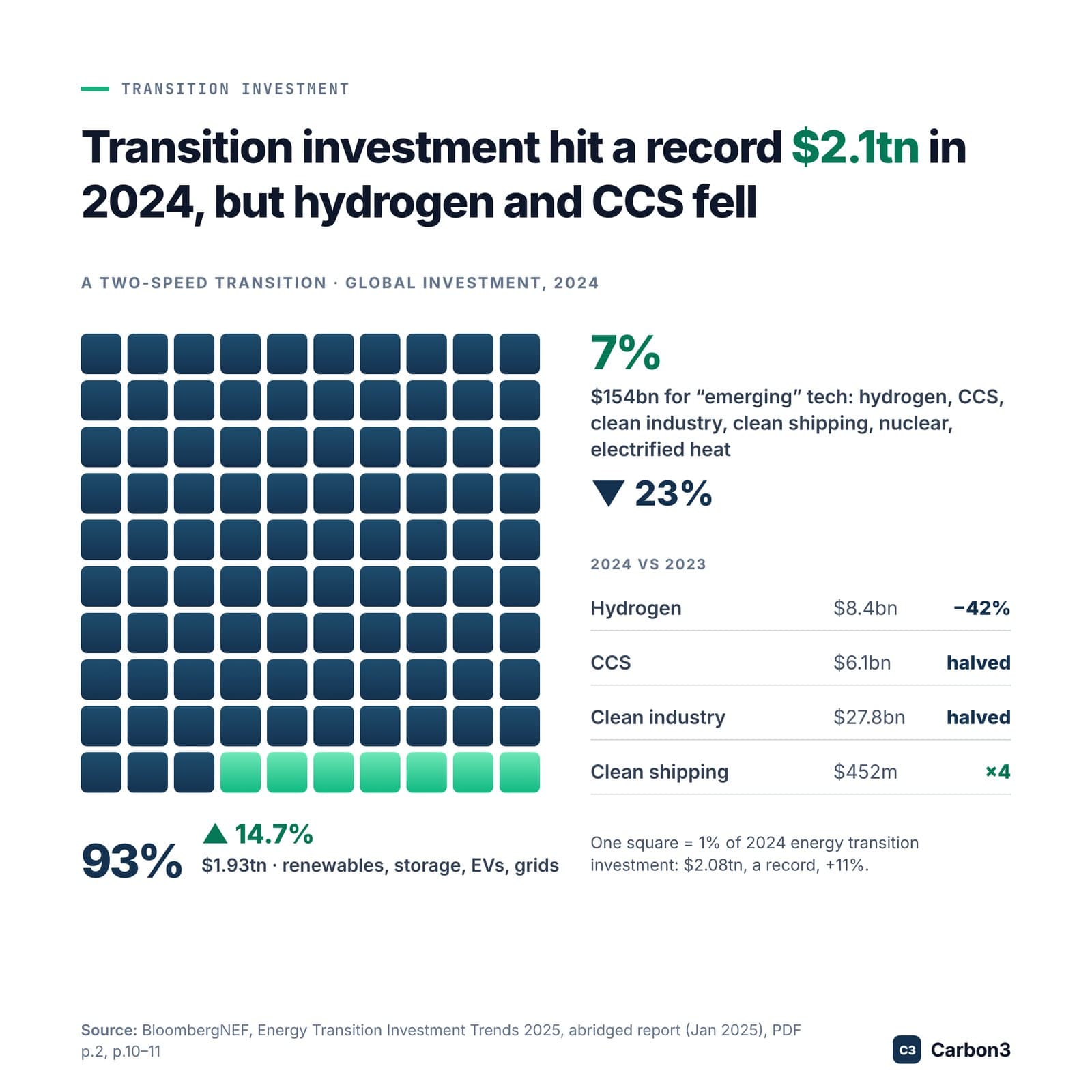
Transition investment hit a record, but not where heavy industry needs it
BloombergNEF counts a record $2.08 trillion in energy transition investment in 2024, yet hydrogen fell 42% and carbon capture and clean industry each roughly halved.
Read the articleTransition finance
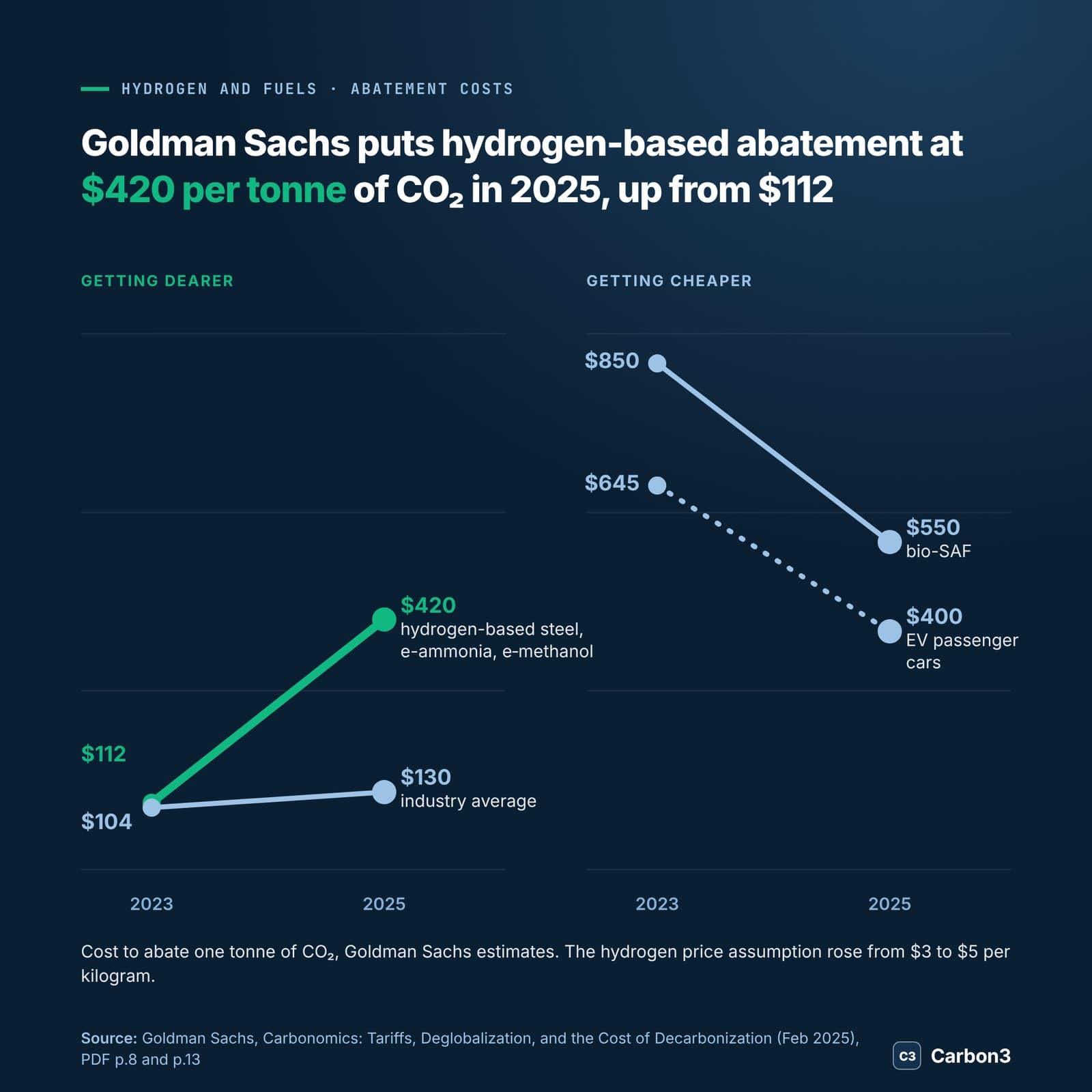
Hydrogen got more expensive on paper while biofuels and batteries got cheaper
Goldman Sachs puts hydrogen-based abatement at $420 per tonne of CO2 in 2025, up from $112 in 2023, while the cost for bio-SAF and electric cars fell.
Read the articleIntegrity
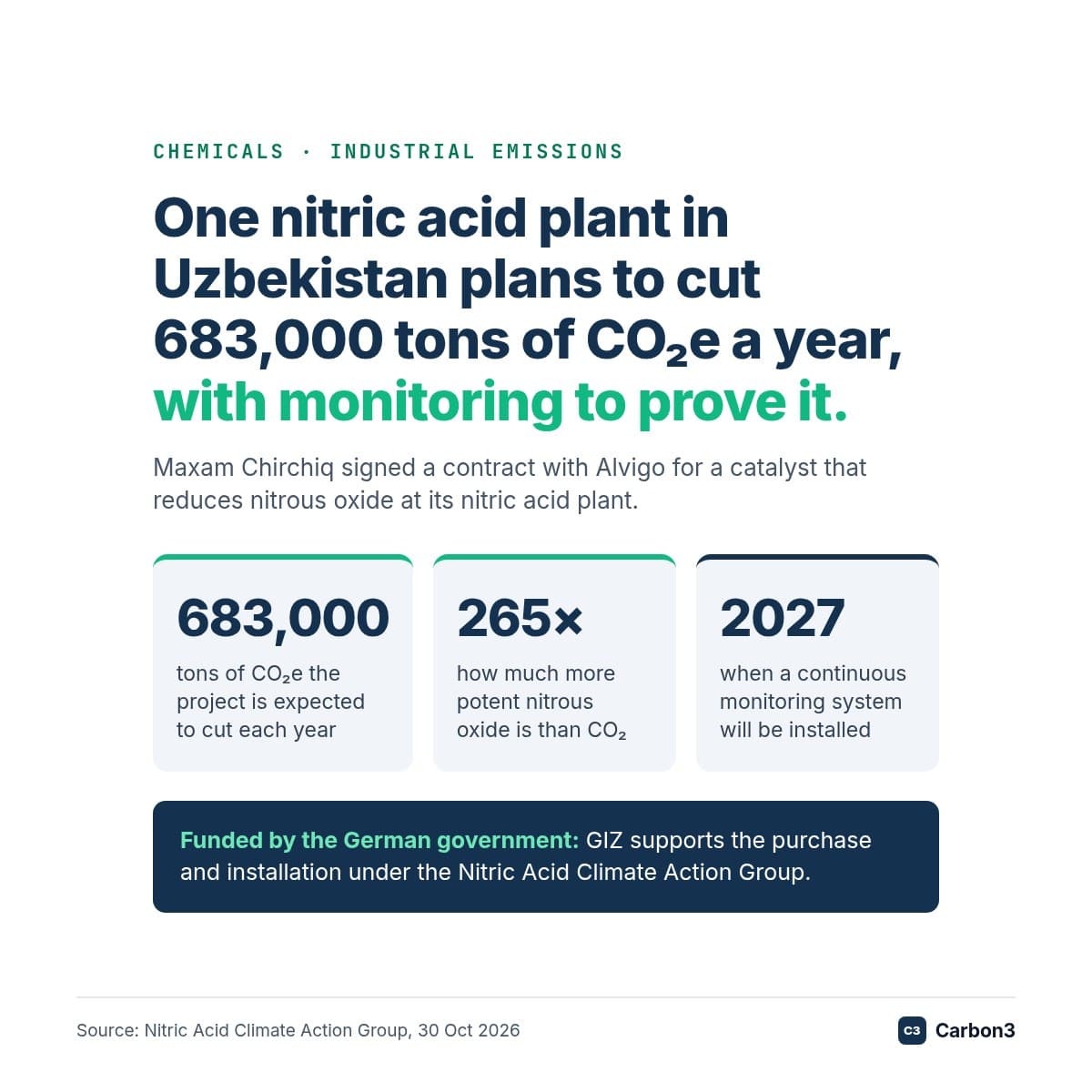
A nitric acid plant in Uzbekistan plans to cut 683,000 tonnes of CO₂e a year, with monitoring to prove it
Maxam Chirchiq has signed a contract with Alvigo for a nitrous oxide abatement catalyst, and a continuous emissions monitoring system will verify the reductions from 2027.
Read the article
See the companies behind these figures in the Data Hub.
Look up your suppliers’ emissions and targets, free.