Hydrogen got more expensive on paper while biofuels and batteries got cheaper
Goldman Sachs puts hydrogen-based abatement at $420 per tonne of CO2 in 2025, up from $112 in 2023, while the cost for bio-SAF and electric cars fell.
By Carbon3 team2 min read
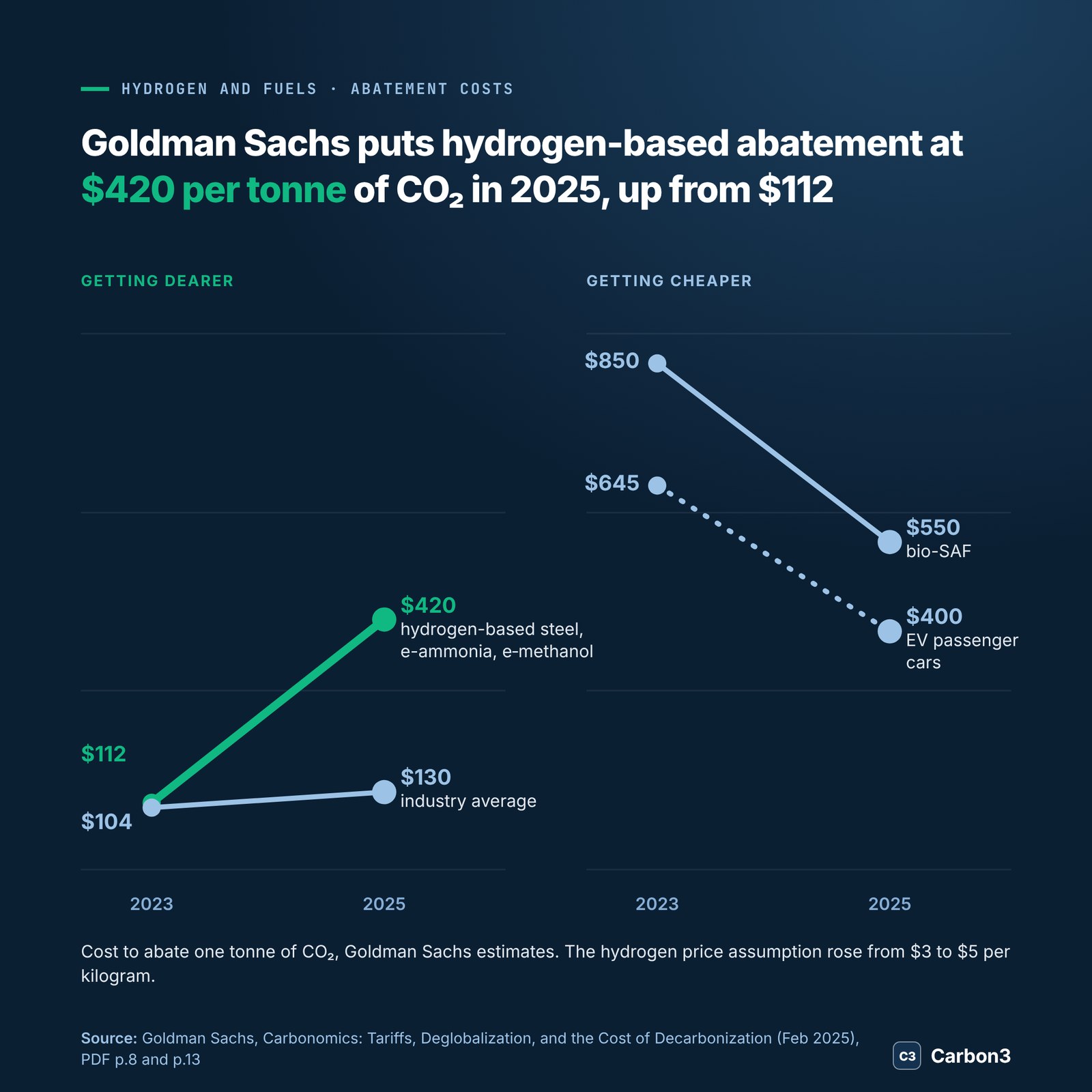
Clean hydrogen got more expensive on paper over the past two years, while biofuels and batteries got cheaper. That is the picture in Goldman Sachs' Carbonomics analysis of what it costs to abate one tonne of CO₂ across different technologies.
Hydrogen moved the wrong way
Goldman Sachs puts the cost of abating a tonne of CO₂ with hydrogen-based technologies, such as hydrogen-based steel, e-ammonia and e-methanol, at $420 in 2025, up from $112 in 2023. Most of that jump comes from one assumption: the bank now prices hydrogen at $5 per kilogram rather than $3.
The average across industries rose too, but by far less. It went up 25%, from $104 to $130 per tonne of CO₂.
For sectors that have few alternatives to hydrogen, such as steelmaking and the shipping fuels e-ammonia and e-methanol, a higher hydrogen price feeds straight into the cost of every tonne they avoid.
Biofuels and batteries moved the other way
Other routes got cheaper over the same period. The abatement cost for bio-based sustainable aviation fuel (bio-SAF) fell from $850 to $550 per tonne of CO₂, and for electric passenger cars from $645 to $400.
The contrast shows how cost curves are made. Technologies with growing markets and repeat orders come down in price, while those still waiting for their first large plants carry the cost of uncertainty.
Early buyers set the price
That is why buyers who commit early help bring green hydrogen costs down. A long purchase commitment from a customer gives a producer the revenue it needs to build at scale, and scale is what lowers the cost of each kilogram.
For buyers of steel, ammonia or methanol, such a commitment can also be a way to reduce Scope 3 emissions, the emissions in their value chain. Insetting, which means financing emissions reductions in a company's own value chain, lets a buyer fund that change at a supplier. Once a reduction has been checked against a verification report, the project developer issues inset credits on the Carbon3 registry, so each reduction is claimed only once. This is insetting, not offsetting, and the difference is explained at carbon3.net/insets-vs-offsets.
Claim treatment depends on the applicable reporting framework.
The open question is which e-fuel will reach cost parity first.
Source: Goldman Sachs, "Carbonomics: Tariffs, Deglobalization, and the Cost of Decarbonization" (February 2025), p. 8 and p. 13.
Learn more
How insetting works in aviation
Originally published on LinkedIn, 1 November 2026.
Read more from the research team.
Transition finance
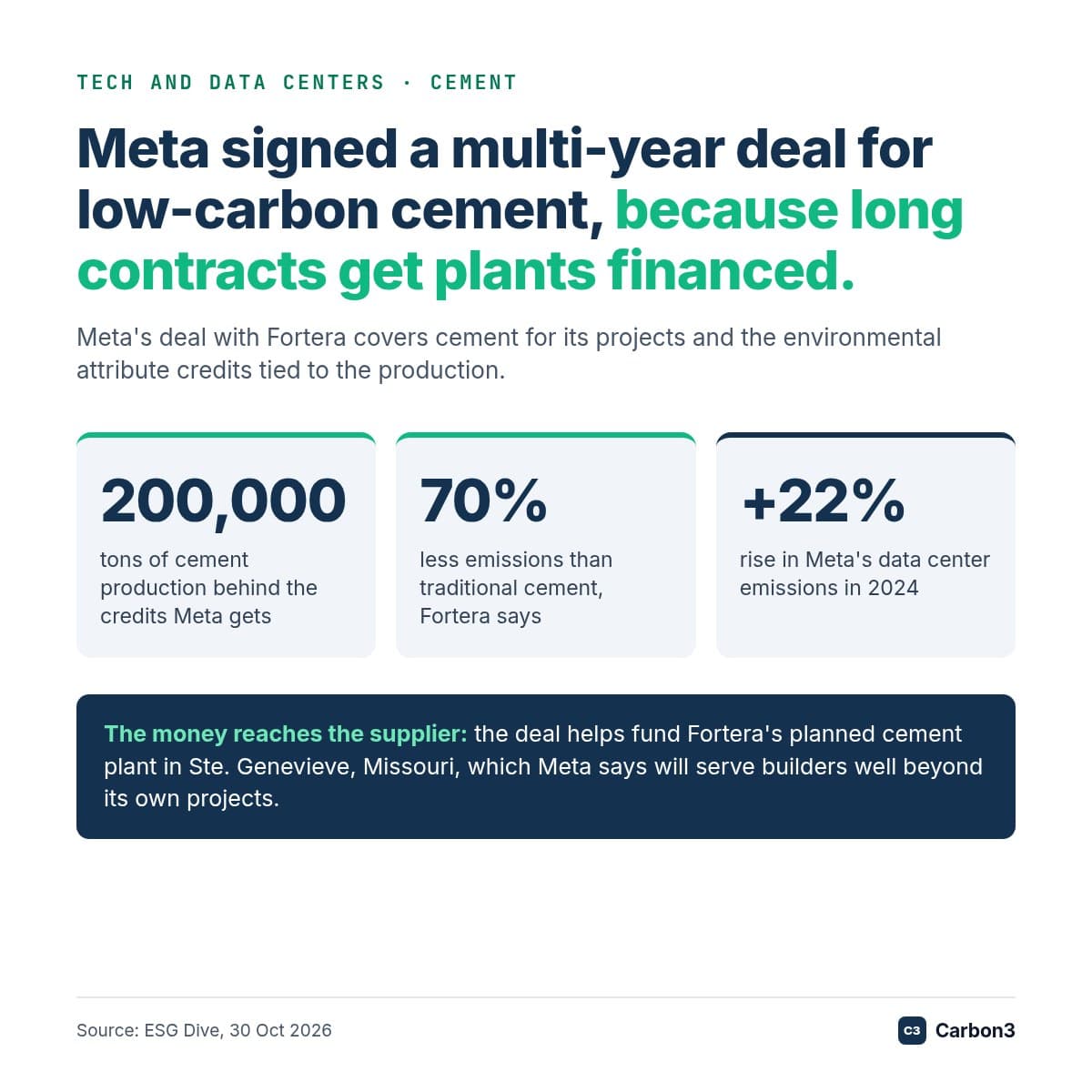
Meta signed a multi-year cement deal because long contracts get plants financed
ESG Dive reports that Meta's deal with Fortera covers low-carbon cement and the environmental attribute credits tied to 200,000 tons of production, and helps fund a new plant in Missouri.
Read the articleTransition finance
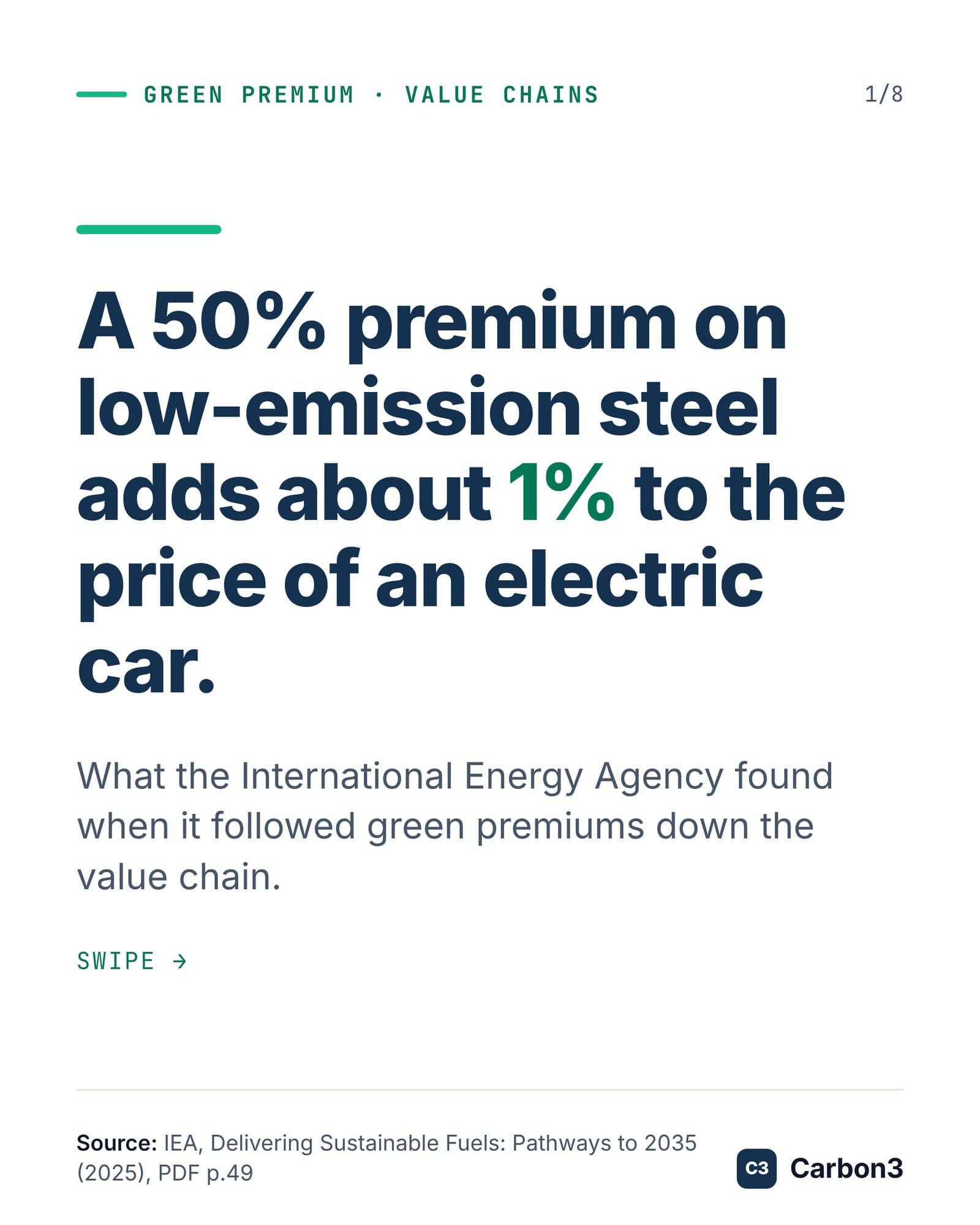
A 50% premium on low-emission steel adds about 1% to the price of an electric car
The International Energy Agency followed green premiums from steel to electric cars and from ship fuel to smartphones.
Read the articleSector: Steel
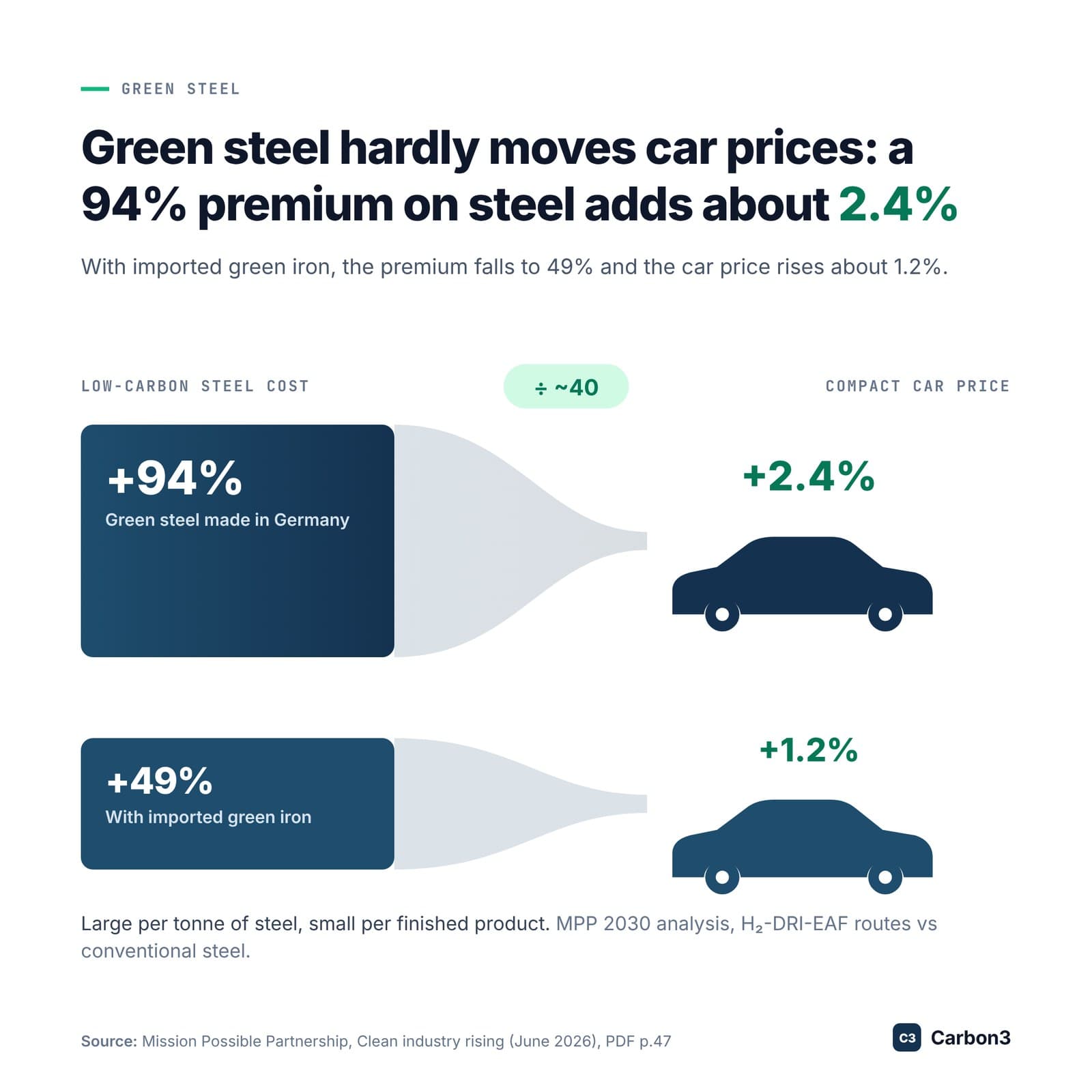
Green steel looks expensive at the mill and cheap in the showroom
Mission Possible Partnership finds a 94% premium on hydrogen-based steel adds only about 2.4% to the cost of a compact car in 2030, which gives buyers a cheap way to act on purchased-goods emissions.
Read the article
See the companies behind these figures in the Data Hub.
Look up your suppliers’ emissions and targets, free.